Blog Archives
Teamwork Lightens the Load

Chaos in the Courtyard follows a busy dingo running a hotel who tries to prepare for an approaching storm but keeps getting interrupted by guests who need his help. Why did you choose an approaching storm as the central challenge that brings the characters and their problems together?
Many children have experienced a storm, and perhaps watched or helped their parents prepare for it—moving pot plants, covering the pool, storing the furniture. This scenario brings plenty of tension and action, which is fun to write, especially since Dallas seems to be the only one preparing for the approaching storm. It gave me a chance to delve into his job as a hotelier who wears many hats, while also highlighting the importance of teamwork and kindness.
How did you approach creating six animal residents with distinct personalities, needs, and ways of communicating?
Anastasiya Halionka’s animated illustrations brought the characters’ personalities to life. It was really a blend of her vision and mine that gave each character that spark—Dallas’s willingness to please; Oma’s nervousness; Queenie’s dramatic flair.
How does the story encourage children to understand that asking for help can be just as important as offering it?
In the story, Dallas grows increasingly flustered as he tries to solve everyone’s problems and prepare for a storm. This shows how trying to fix others’ problems alone can be stressful. The turning point comes when they all see the devastation the storm left behind. Everyone pitches in to help Dallas clean up the courtyard, proving that teamwork can lighten the load.
Where does the next book in the series take the characters?
Besides Dallas, I’m quite fond of Tiny Tarsier. He’s naïve, and his English isn’t the strongest. As shown in “Chaos in the Courtyard,” he sometimes misinterprets colloquial expressions. I’ll explore this further, as it leads to some hilarious situations.
Author Links: GoodReads | Website
With so much on his plate, Dallas Dingo is feeling the pressure, but the residents of the Ragtag Hotel are counting on him. Can he secure everything amid the fierce winds while trying to fix everyone’s problems? Brace yourself, as a storm is brewing!
🌏 Learn about animals from the different corners of the globe
🎁 Perfect gift for teaching young children about friendship and kindness
🌙 A short bedtime story to send your child off to sleep with a smile
❤️ Charming characters and illustrations ideal for young children ages 4-9 years
Giving the House a Voice

The House as Witness is your debut poetry chapbook exploring how a New Hampshire home holds the sounds, memories, routines, and quiet acts of love that shape family life across generations. What inspired you to give the house its own presence as a witness?
I’ve always thought houses must know an awful lot about the people who live in them. They hear the arguments, the laughter, the crying babies, the conversations nobody else is supposed to hear. They see us at our best and our worst, and they’re still standing there the next morning.
When I started writing this collection, I was thinking about how much had happened within the walls of our home, particularly as my children were growing up and my mother was growing older. I was interested in the idea that the same hallway could hold the sound of children running through it and, years later, the memory of someone who was no longer there.
I wanted to give the house a voice because, in a way, it had been there for all of it. We tend to think of ourselves as the ones who make a house into a home, but I think the places we live shape us just as much as we shape them.
In poems like “Laundry Spinning Like Time,” everyday chores carry emotional weight. How do you decide which ordinary moments deserve closer poetic attention?
I have three children, so laundry is practically a permanent fixture in my life! There’s something funny and a little maddening about spending so much time on a task that’s never actually finished. You wash everything, fold it, put it away, and somehow the basket is already full again.
I think that repetition is what interested me when I wrote “Laundry Spinning Like Time.” So much of family life involves doing the same things over and over, often without anyone noticing. You make dinner, clean the kitchen, and do it all again the next day. But those routines are also a large part of how we care for one another.
I don’t sit down intending to write a poem about housework. Usually something about a familiar task catches my attention, whether it’s the sound of the washing machine or a stack of dishes that seems to multiply overnight. I like the challenge of finding something worth saying about the parts of life we usually rush through.
Your poems explore the overlapping responsibilities of being a parent and a daughter. How have these roles shaped your understanding of caregiving and home?
I think one of the strangest parts of adulthood is realizing that you can be responsible for raising your children while also worrying about the health and well-being of your parents. You’re still someone’s daughter, but suddenly you’re the one making decisions, checking on medications, bringing food, and wondering whether you’re doing enough.
My mother’s illness and death were a significant part of what informed this collection. The section about the apartment at the back of the house is particularly personal. Poems like “The Hallway Between Us” and “Tea Cups Left in the Sink” explore how complicated caring for a parent can be, especially when you’re watching someone you love become less independent.
As an emergency medicine and addiction medicine physician, I spend a lot of my professional life caring for people in difficult circumstances. You might think that would make caring for a family member easier, but it doesn’t necessarily. Knowing what might happen medically doesn’t make you any less of a daughter.
I think I’ve learned that caregiving isn’t always graceful or even particularly satisfying. Sometimes you’re tired, frustrated, worried, or all three. You still bring the glass of water. You still check on them. And sometimes those small things are all you can offer.
The changing New Hampshire seasons appear throughout the collection. How does the relationship between weather and domestic life reflect the emotional changes within a family?
I’ve lived in New England my entire life, so the seasons are a huge part of how I experience home. In New Hampshire, the weather has a way of making itself everyone’s business. Winter means snowbanks, wet mittens, and everyone spending a little too much time together indoors. By summer, we’re eating on the deck, leaving windows open, and trying to make the most of the daylight.
I wanted the seasonal poems to reflect those familiar rhythms, but also the way a house can feel different depending on what’s happening within the family. A snowstorm might be exciting when the children are little and everyone is hoping for a day off from school. That same storm can feel very different when you’re worried about an aging parent’s health or whether someone will be able to get to an appointment.
One of the things I love about living here is that the seasons don’t particularly care what else is going on in your life. Spring arrives whether you’ve had a wonderful winter or a terrible one. There’s something reassuring about that, although after a long New Hampshire winter, I’m usually more than ready for it!
Author Link: Instagram | Website
As you step inside, may you feel the presence of a house that has watched, held, and remembered. May its poems invite you to consider what your own walls have witnessed, your living, your loss, your letting go, and the tenderness found in every ordinary moment.
Welcome Home…
Pippin and the Lost Pup


Pippin and the Lost Pup is a sweet, engaging children’s book about friendship, compassion, and the importance of helping those in need. Set in the Australian bush, the story follows Pippin, a friendly black poodle, and his companion Blossom, a lively possum, as they encounter a frightened little dog in an unexpected predicament. What begins as an ordinary walk soon becomes an adventure that calls for quick thinking, kindness, and teamwork. Author Julia Seaborn introduces the situation without wasting time, giving young readers an immediate reason to care about the characters. There’s a lovely sense of warmth running through the story, particularly in Pippin’s willingness to help someone he’s never met before.
One of the most enjoyable aspects of this picture book for me is its cast of Australian animals, each bringing something different to the adventure. Alongside Pippin and Blossom, readers meet a bilby, a kangaroo named Skip, and Rosie, a colourful galah parrot. Their individual personalities come through in their conversations and actions, making the growing group of helpers entertaining to follow. The bilby is especially amusing, with his slightly grumpy manner adding a touch of humour. Seaborn keeps the language straightforward and the dialogue natural, making the story particularly suitable for reading aloud. Young children will enjoy following the animals as they work together, while the gentle emphasis on caring for others gives parents and educators plenty to discuss.
The colourful artwork brings the Australian setting to life through grassy landscapes, towering gum trees, sandy burrows, and bright blue skies. The animals are wonderfully expressive, with wide eyes, animated faces, and playful movements that help communicate their feelings. Pippin’s thick, curly black coat contrasts beautifully with the smaller dog’s scruffy golden fur, making both characters instantly recognizable. There’s plenty of visual humour, too, especially in the animals’ exaggerated reactions and their energetic attempts to solve problems. The illustrations complement the text while offering additional details for children to discover, encouraging them to linger over each page.
Beyond the main story, Seaborn includes several thoughtful extras that make Pippin and the Lost Pup particularly useful for shared reading. A selection of questions encourages children to recall events, identify animals, and think about how the characters might feel. There’s also an informative section about bilbies, introducing young readers to this fascinating Australian animal and its conservation challenges. These additions create opportunities for conversations about wildlife, empathy, and looking after one another. The story’s message about belonging is especially appealing, showing how small acts of kindness can make an enormous difference to someone who feels lonely or frightened. With its lovable characters, cheerful illustrations, and gentle sense of adventure, this is an inviting picture book for young animal lovers and families who enjoy stories with plenty of heart.
Pages: 33 | ASIN : B0HL85GQN3

At the Ragtag Hotel: Chaos in the Courtyard

Freya Novak’s Chaos in the Courtyard is a lively and heartwarming children’s book about kindness, cooperation, and the challenges of keeping everyone happy when there’s so much to do. Dallas Dingo has a busy job looking after the Ragtag Hotel, where an assortment of animal residents keeps him on his toes. With a storm approaching, Dallas needs to prepare the courtyard for some wild weather. Unfortunately, his plans are repeatedly interrupted by residents who need help with everything from missing belongings to household mishaps. Each new problem adds to his growing list of responsibilities, creating a playful story that captures the feeling of having too many things to do and too little time to do them.
Dallas is an appealing central character whose patience and helpful nature make him easy to root for. Novak gives the hotel residents distinctive personalities, from the dramatic Queenie Quokka to the endearing Tiny Tarsier, whose misunderstandings of everyday expressions add some especially funny moments. The dialogue is animated and conversational, making the story well suited to reading aloud. There’s a steady rhythm to the residents’ requests, with each interruption bringing another little surprise. Beneath the humor, the story explores how people can become so absorbed in their own concerns that they overlook what someone else might be dealing with. It’s a relatable idea presented through situations that young readers can easily understand.
The animal characters have wonderfully expressive faces, and their exaggerated gestures help communicate everything from panic and confusion to exhaustion and delight. Dallas’s changing expressions are particularly entertaining, offering visual clues to his growing frustration even as he continues helping his neighbors. The illustrations also make excellent use of movement, with swirling leaves, billowing fabric, and dramatic skies emphasizing the approaching storm. Bright blues, warm oranges, and rich purples create an inviting setting, while the darker storm scenes bring a welcome shift in atmosphere. There are plenty of amusing visual details for children to discover, and the pictures complement the storytelling with energy and humor.
One particularly appealing feature is the book’s celebration of different cultures and languages. The residents come from various parts of the world, and their conversations introduce words and expressions in Lingala, Spanish, Swahili, and Filipino. These touches feel like a natural part of the hotel’s lively community. A world map at the back shows where the animals come from, while additional pages share interesting facts about their real-life counterparts. These extras extend the reading experience and invite further conversations about animals, geography, and language. At its heart, Chaos in the Courtyard is an engaging story about looking out for one another, recognizing the efforts of others, and discovering what a community can accomplish when everyone lends a hand. It’s a cheerful, amusing read with a message that families can enjoy discussing together.
Pages: 36 | ASIN : B0HHWGM4Q7
Mortimer and Lily: Moose in Training
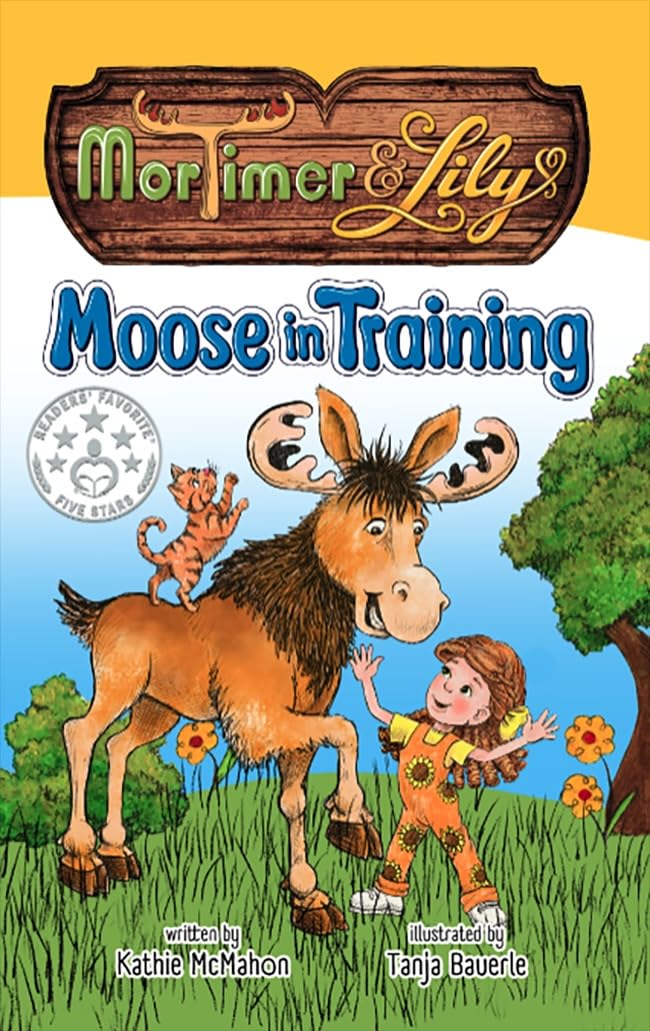
Mortimer and Lily: Moose in Training by Kathie McMahon is a lively and good-natured children’s book that brings together friendship, school adventures, and one very unusual moose. Lily Robertson is an enthusiastic third grader living in Peabody, Wisconsin, where her days are filled with family, friends, and a seemingly endless supply of ideas. Her most remarkable companion is Mortimer, a lovable moose who’s become something of a local celebrity. When Lily’s teacher assigns a community service project, Lily decides that Mortimer would make the perfect helper. Of course, training a moose to perform helpful tasks comes with some unexpected complications. McMahon builds a playful story around this wonderfully silly premise while exploring the everyday experiences that matter to young readers.
Lily is an especially entertaining narrator. She’s confident, imaginative, occasionally bossy, and determined to make things happen, even when her plans become a little too ambitious. One of her most endearing habits is inventing new words by combining familiar ones, such as “marvelsome” and “amazellent.” Each chapter introduces another of these creative expressions, giving readers a fun opportunity to experiment with language themselves. Her friendships with Keiko and Gabriel add warmth and personality to the story, while her interactions with her older brother, Jimmy, capture the familiar mixture of affection and sibling frustration. Mortimer, meanwhile, provides plenty of physical comedy. His enormous size, unpredictable behavior, and eagerness to participate in human activities make him an amusing presence throughout the book.
Beyond the humorous situations, McMahon weaves in meaningful lessons about kindness, responsibility, teamwork, and understanding others. Lily and her friends encounter teasing, disagreements, and the challenges of working together, all of which feel recognizable within an elementary school setting. Their teacher, Mrs. Murphy, brings additional personality to the story through her Irish heritage, introducing students to traditions, dancing, and cultural activities. These details give the classroom scenes a distinctive atmosphere and add an educational dimension to the adventures. McMahon also treats community involvement as something children can actively participate in, encouraging readers to consider how small acts of service can make a difference.
Tanja Bauerle’s charming black-and-white illustrations complement the story with expressive characters and delightful details. Mortimer’s shaggy coat, oversized antlers, and comical expressions are particularly appealing, while the drawings of Lily and her classmates capture the energy and emotions of childhood. The illustrations are sprinkled throughout the chapters, giving readers visual moments to enjoy alongside the text. Although the format is closer to an illustrated chapter book than a traditional picture book, the artwork contributes significantly to its personality. With its approachable storytelling, imaginative humor, and emphasis on friendship and compassion, Mortimer and Lily: Moose in Training is an enjoyable choice for elementary school readers, especially those who love animals, school stories, and characters whose big ideas lead to even bigger adventures.
Pages: 177 | ASIN : B0GV1XBZBM
The Most Meaningful Generosity

The Magical Beach Tree is a heartwarming Christmas story about a young girl named Hildi who, with her brother and dog, transforms a discarded evergreen tree into a symbol of kindness, creativity, and community spirit. What do you think makes Hildi’s decision to give the discarded tree a new purpose so meaningful?
Most people would have walked right past that tree. Someone had decided it wasn’t needed anymore. Hildi sees it differently. She looks at something forgotten and imagines what it could become. That’s what makes her choice meaningful: it’s a small act, but it comes from kindness and imagination, not from anything she was asked to do. And because she acts, others feel invited to join in. One child’s decision becomes something the whole community shares.
How does the story reflect your own beliefs about generosity and community?
I believe the most meaningful generosity is often the quietest. In the real story, no one organized anything. Neighbors simply added their own treasures from the beach, and painted-rock “presents” appeared beneath the branches. To this day, no one knows who left them. People just wanted to be part of something good. That’s the kind of community I love, and it’s what I hoped to capture in the book. You don’t need to buy something to make something magical. Sometimes the best gifts are what we find, make, and share together.
In a world that can sometimes feel divided, what do you hope The Magical Beach Tree inspires families and communities to do?
I hope it inspires people to notice what’s right in front of them, whether that’s a forgotten tree, a beautiful shoreline, or a neighbor they haven’t met yet, and to add something of their own. The beach tree brought together people who didn’t know each other at all: families, visitors, strangers with cameras, someone painting rocks in secret. No one had to agree on anything except that it was worth celebrating. If one small tree can do that, I hope families feel encouraged to start something small in their own communities and see who joins in.
Author Links: GoodReads | Website | Instagram | Amazon
It is a beautiful story about people who were able to see magic in an ordinary event and turn it into joy for all their neighbourhood.
So You Want To Be An International Aid Worker

Linda Soules’ So You Want to Be an International Aid Worker invites young readers into a world where compassion, courage, and practical skills come together to help people facing extraordinary challenges. This engaging children’s book explores the work of humanitarian aid professionals, from delivering clean water and medical supplies to helping communities rebuild after disasters. Soules takes a big, complicated subject and makes it understandable through clear explanations, relatable situations, and an encouraging conversational style. The book speaks directly to children who are curious about the wider world and might be wondering how they could make a difference. Its central message is that helping others begins with recognizing their humanity, listening to their needs, and treating everyone with dignity and respect.
One of the book’s strongest features is the way it introduces the many different responsibilities involved in humanitarian work. Kids learn about emergency relief, long-term development, supply chains, education, healthcare, and the importance of working alongside local communities. Soules explains concepts such as neutrality, impartiality, and independence in language young readers can understand. She also gives attention to the personal qualities that make someone effective in this field, including patience, humility, resilience, and problem-solving skills. Sections describing a typical workday, the challenges aid workers encounter, and the unexpected skills they use help children imagine what the profession actually involves. There’s also some welcome humor, including encounters with mischievous animals and the surprising role professional clowns can play in humanitarian settings.
The illustrations bring considerable warmth and personality to this picture book. Soft, earthy colors, expressive faces, and detailed backgrounds create inviting scenes of aid workers interacting with families, distributing supplies, organizing relief efforts, and collaborating with community members. The images convey kindness and connection, particularly when adults and children are shown sharing conversations or working together. There’s a pleasing sense of movement in the busier scenes. The visual approach makes unfamiliar environments feel accessible while reinforcing the book’s emphasis on cooperation. The illustrations also offer younger readers a way to engage with the subject even when the accompanying explanations introduce more sophisticated ideas.
Soules enriches the book with historical profiles of notable humanitarians, interesting facts, practical suggestions for aspiring aid workers, and a helpful glossary. These additions make So You Want to Be an International Aid Worker especially useful for curious children ages 10 to 14, as well as parents and educators looking to encourage conversations about global responsibility. The book’s substantial amount of information gives readers opportunities to return to individual sections and explore particular interests. I think what will stay with readers is its thoughtful understanding that meaningful assistance requires preparation, teamwork, and a willingness to learn from others. Soules presents international aid work as a deeply human endeavor, encouraging children to see kindness, curiosity, and service as qualities they can begin developing in their everyday lives.
Pages: 43 | ASIN : B0HM32KR8V
So You Want To Be A Documentary Filmmaker

So You Want to Be a Documentary Filmmaker by Linda Soules is a fascinating children’s book that invites young readers into the world of real-life storytelling. I loved how the book approaches documentary filmmaking as both an exciting career and a meaningful way to understand people. Soules has a wonderfully engaging way of explaining what documentary filmmakers do, from discovering interesting subjects to capturing moments that deserve to be remembered. The conversational writing makes you feel as though an experienced filmmaker is sharing everything they’ve learned over the years. There’s a genuine sense of curiosity running through the pages, encouraging children to look more closely at the world around them and recognize how many extraordinary stories are hiding in ordinary places.
One of my favorite things about this book is how thoroughly it explores the filmmaking process. Readers learn about cameras, microphones, interviews, editing, and the many decisions that go into creating a documentary. I especially enjoyed the sections describing a typical filming day and the unexpected challenges filmmakers encounter. The explanations are detailed and approachable, with entertaining examples that make technical information easy to understand. Soules also introduces fascinating figures from documentary history, including pioneering filmmakers whose work helped shape the profession. These real-life stories bring an additional layer of excitement to the book. I appreciated how naturally the author connects the practical skills of filmmaking with qualities like patience, curiosity, careful listening, and respect for others.
The illustrations are another reason I enjoyed this picture book so much. They’re colorful, expressive, and filled with inviting details that bring the filmmaking world to life. The warm lighting and richly illustrated environments give the pages a cozy, almost cinematic quality. One particularly charming illustration shows a filmmaker interviewing an older woman in her living room, capturing the personal connection that makes documentary storytelling so special. Other scenes take readers to dramatic coastlines, snowy landscapes, bustling streets, and behind-the-scenes editing spaces. I loved seeing the variety of people represented throughout the artwork, along with the cameras, recording equipment, and other filmmaking tools. The illustrations complement the informative text beautifully, making the different stages of filmmaking feel tangible and exciting.
I appreciated the book’s thoughtful message about the importance of paying attention to other people. Soules presents documentary filmmaking as a way to preserve memories, share overlooked experiences, and help audiences understand lives different from their own. I loved that the book also gives children practical ideas for getting started, including using a phone to record a short film, practicing interviews, and studying documentaries with a curious eye. There’s something genuinely inspiring about showing young readers that storytelling begins with noticing what’s happening around them. So You Want to Be a Documentary Filmmaker is an absorbing, informative, and heartfelt introduction to a creative profession. I’d happily recommend it to curious young readers, especially those who love movies, asking questions, and discovering the stories behind everyday life.
Pages: 41 | ASIN : B0HLYWSMGM


