Blog Archives
Writing Connects Me to the Universe
Conquergood & the Center of the Intelligible Mystery of Being follows a man living in a post-apocalyptic society who goes to work for a mega-corporation in hopes of finding his brother. What was the inspiration for the setup of your story?
Regarding the inspiration for the story, there are multiple sources, some literary and some existential.
The orphan tale of Jerome Conquergood (and his twin brother Vincent) is implicitly mirrored in the great work David Copperfield (1849) by Charles Dickens: an orphan, an outcast, rises through the ranks of society and ends with the protagonist, now mostly successful, finding family. Now, David Copperfield is set in the 19th century and focuses on issues of that specific time period, so I thought it might be interesting as a writer to explore what it might be like for an orphan finding himself alone and poor in the 22nd century and forced to deal with a completely different society than the one that challenged David Copperfield. Because of the book David Copperfield, I chose to write this futuristic sci-fi story in terms of not looking forward but imagining further into the future than 2183 and then looking back and writing the story as though it is history, despite it taking place far into the future. I would also be remiss to exclude Dickens’ novels Oliver Twist (1838), Hard Times (1854), A Tale of Two Cities (1859), and Great Expectations (1861) — although these books did offer some inspiration, they were minor inspirations compared to other literary works.
Without question, the tale of one person hating the very thing he/she comes to love—which touches on ideas pertaining to growth, education, maturity, perception, etc.—and that person struggling throughout with complicated concepts of society is also implicitly mirrored in the profound work Nineteen Eighty–Four (1949) by George Orwell. As a writer, I attempted to imagine what Orwell’s story and what society might be like in the 22nd century. Orwell took his world-building up to a certain point and stopped: he imagined a world still filled with warring nations set thirty-five years into his own future. The story of Conquergood is set one hundred and sixty years into the future (from our current time period), where all nations have been abolished, and basically, a one-world government found in the Korporation has been established through decades of societal erosion and societal evolution. This notion of the Korporation, and its system of Korporatilism, was loosely and roughly based (as somewhat of a launchpad) on a German book called Die Korporation Der Berliner Buchhӓndler (1898) by Ernst Vollert.
One more source of inspiration, out of countless others, is from my own personal experience of having been born and raised in America and then traveling abroad to eventually live and work in Ho Chi Minh City, Vietnam, at the age of twenty-seven. In 2007, I began writing Conquergood’s story, and in 2008, when I moved from South Korea to Vietnam, the novel took a significant shift and turning point. During the first month of living and working in Vietnam, I was captivated by Vietnam’s pride of Communism, a system of living that is abhorred by most Americans and seen as an evil. But from the viewpoint of most Vietnamese, Communism, illustrated in their symbols and flags, is seen as a necessary good. From this existential spring within — of how one society could love a thing, an idea, a system, and how another society could also hate that exact same thing, exact same idea, and exact same system — this paradox of the human heart and mind, is what drove me to create and shape Conquergood and his story.
Jerome is an outcast at the beginning of the novel but puts his ideals aside to find his missing brother and ends up on a journey of self-discovery as well. What were some driving ideals behind your character’s development?
To be completely honest, much of the character’s development is primarily due to the character himself, to Jerome Conquergood. As I began writing the story and followed the character on his journey, I wasn’t at all sure what or how he might be changed or if he would change at all. There were things I wanted him to do that he did not do. There were things I wanted him not to do that he ended up doing. This happened with all the characters, for that matter, and these were some of the big reasons why I struggled with writing this story and why it took fourteen years to finally publish or for me to finally let this book go out into the world.
By 2009 I had a completed first draft, and off and on for the next fourteen years, I wrote and reworked, and tweaked the novel, but a large part and all of the spirit of the novel have remained in place since the beginning. As to why that is, I can only attest to the fact that some stories live and some characters are alive and their contextual meanings have something far more important to say to the world than one writer’s personal agenda. As one-brief example, as a writer and reader, I had hoped and believed, or expected, that Jerome Conquergood would not find his twin brother Vincent, and Jerome Conquergood would eventually burn down and destroy the entire Korporation and its system, but both did not happen. I guess that is exactly like life. Sometimes we expect things to go a specific way, or the way we wish it to go, and by the end, the exact opposite has happened, despite our wishes and prayers and demands on reality, on a god, and on life in general.
One of the biggest ideals behind Conquergood’s development, out of the many ideals found throughout the novel, comes directly from me as a person. I cannot tell you how many days I have cursed myself and blamed myself (much like Conquergood does early in the book) for being a writer who writes novels (books no one really reads) and — despite taking decades to come to terms with myself and accepting who I am, ever since I first began writing stories at the age of eight, and dealing with family and friends hating me or despising me or also cursing me for focusing my time and energy on writing my novels, which have not come to terms (for them) to great financial or commercial success; they feel I have wasted and do waste my time with my writing, and perhaps they are right — what I’m trying to say, and what I’m doing a poor job at explaining, is that for the last twenty years I have wished to be someone other than who I am, to be someone who is content with working the farm from sunrise to sunset, to be someone satisfied with an office job from nine to five with no further aspiration than the next promotion, the next pay raise, and to simply go home and spend time with the family (using a historical reference, to be someone more like Lewis Strauss who cares only for his political career versus J. Robert Oppenheimer who has his head in the sciences and the stars, so to speak). How many nights have I stayed awake, sleepless in bed, wishing I could be that person who did not aspire to write books (and to not have family and friends bemoan and deride me for my fictional works), but to work a normal job and to be happy and content doing so. But there’s something in me, or there’s something in this crazy universe that won’t let that happen. When I stop writing, when I try to give up, and move on and just wish to focus my mind and labors on something else (like my wife and son, like Jujitsu, like a hundred other things), something, some unexpected tragedy, happens to me, things I would not wish on anyone, and it is only when I am back at writing and creating that I feel that I am connected and one with the universe again (in the 1990-film The Godfather: Part III, Michael Corleone has that great quote which sums it up perfectly for me, “Just when I thought I was out, they pull me back in” — but for me, “they” is the universe).
For Conquergood, I imagined it something like that — a path in life that moves us to and fro, and though he makes choices and decisions, outside forces help shape and navigate Conquergood to an outcome that even he might not have expected or desired but must come to finally accept by book’s end. Even though, for many readers, Conquergood might not be considered free from the Korporation, he is in many ways experiencing true freedom out of all the days of his existence. And as for Conquergood, I am happy he did not end up like me, stuck to a certain path, much like Prometheus or Sisyphus.
With many ideas relevant to the modern world, your story is extremely thought-provoking. What were some themes that were important for you to explore in this book?
In 2007, I first began contemplating the themes for this book, and I wanted to explore and touch on a vast array of themes, not just one or two — a challenge I feel I have failed at, but nonetheless I tried.
A few of the themes that brought me to task were the implications of Artificial Intelligence (A.I.) and the Soul, the terms and definitions of “reality”, the process of human evolution seeking immortality (and what that might mean in the digital and non-digital worlds), the importance of history and our ancestors and family, the dilemma of understanding “consciousness” and its direct relationship or connection to “love”, the meaning of self-sacrifice, the conflict and contradictions of “perception”, and the blind (or in many cases, not-so-blind) obedience and allegiance to corporate governance (at the time I began writing Conquergood I did not know this, but now, in today’s terms, we know this to be ESGs: “Environmental, social, and corporate governance” — which is exactly what the Korporation is guilty of doing in my book).
Even as far back as 1998, I understood the severe implications of peer pressure and cancel culture, the lies and radical distortion of brainwashing through the use of propaganda, which all of these things have only become more amplified and more extreme from then to now, and the sheer absurdity of it all.
When I first read Nineteen Eighty–Four (1949) by George Orwell, I was a senior in high school, and at the time, I was in a detention center separate from the high school (a place that imposed silence and independent work as punishment throughout the day — which is not that different from what I do now as a novelist). During those long-silent days, I sat and read Nineteen Eighty-Four, and between chapters, I would have to memorize the detention center’s propaganda.
One day I was called into the Director’s office, and the Director told me to tell my sister to stop smoking in the campus parking lot (even though my sister stayed in her car) when my sister came to pick me up. I repeated the “party line” verbatim and told the Director the very words she forced me to memorize: “I am not responsible for the actions of others. I am only responsible for my own actions”, or some such nonsense. The Director repeated her dire warning, and I repeated the propaganda. She then saw what I was doing and told me then that if my sister did not stop, then I would be punished for my sister’s actions, that I would never be able to leave, and I would not be able to graduate — the Director and I immediately saw the concrete contradiction in her own words and demands and threats: despite what the propaganda they made me memorize said, I was in fact responsible for another person’s actions. It was then, in the Director’s office, as the afternoon light lay soft and golden, I fully understood that the Director did not care if I followed the rules or obeyed the propaganda; the Director wanted power over me, she wanted me to do whatever it was she wanted, regardless of the rules in society or even the rules in her own propaganda she was forcing the students to memorize.
You would not be wrong to think that Conquergood was born out of that moment in the Director’s office, that moment of absurdity, because when I was finally allowed to leave that place and return to high school, I knew that one day I would write a book that could help illustrate what I had learned in the Director’s office, and you do see some of that in the early chapters of the book when Conquergood is being “educated” by his “teachers”.
What is the next book that you are working on, and when will it be available?
Currently, I’m working on two novels simultaneously (this helps with writer’s block: if I get stuck on one book, I just switch and work on the other book).
One of the two books is the third book in the “A Time To” series called A Time to Remember in Moscow, which I hope to be finished and published in 2025. The first book in the series is A Time to Love in Tehran (2015), and the second book in the series is A Time to Forget in East Berlin (2022) — so as you can see, this third book set in the Soviet Union in the late 1970s is going to be the culmination of ten years of work.
The second of the two books I’m currently working on is a historical fiction set in Texas in 1901. I do have a few titles for the novel but that can wait for now. The story follows a fifteen-year-old kid who, after a funeral, goes on an adventure where he meets some important historical figures along the way.
Author Links: Facebook | Instagram | Goodreads | LinkIn | Website
Conquergood & the Center of the Intelligible Mystery of Being
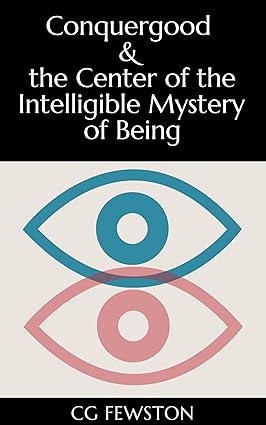

Conquergood & the Center of the Intelligible Mystery of Being is a captivating new dystopian science fiction novel by CG Fewston, an author already making a name for himself with his thought-provoking work. Set in the year 2183, Conquergood is set in a world where one company, Korporation, reigns supreme and has obtained world peace, through oppression.
The story follows Jerome Conquergood, a homeless outcast known as a strayer who lives in what is left of Old York City. His life is at its lowest point yet, but he has a goal, to find his mysterious brother, Vincent, who has gone missing.
This mission leads Jerome to being offered a job in the Turnkey Akweesitions Department of the authoritarian Korporation. He hates them for what they’ve done to the world, but he knows this job is perhaps his only hope of finding his brother. As Jerome navigates the dangerous world of the Korporation, his journey of self-realization unfolds, revealing the intricate web of secrets surrounding both the entity and his own identity.
The world-building in the novel is remarkable. Fewston has created a believable and authentic post-apocalyptic society with technological wonders and thought-provoking societal issues. The relevance of the themes to the state of the world today adds an extra wrinkle and makes the story even more compelling.
Speaking of the story, it is well-paced, quickly gaining momentum as it progresses, and big reveals begin to pile up. Fewston expertly weaves together multiple storylines, including Vincent’s mysterious story and the brothers’ family background. These serve to add a nice additional layer of emotional depth to the tale.
But the book’s true strength lies in its messaging. Good science fiction isn’t all about great world-building and fancy technology; it needs to say something. Fewston poses Jerome with fascinating moral quandaries as he is forced to become what he has always hated. His character growth is fascinating to watch. The questions Fewston raises about the future of humanity in a world full of genetic and mental manipulation are equally interesting.
Conquergood & the Center of the Intelligible Mystery of Being is just an excellent piece of dystopian sci-fi all around. The pacing and story are exciting enough to keep casual fans engaged throughout. Those who like their sci-fi to have some depth will likely fall in love with the book. There’s a lot to unpack in Fewston’s new novel, and doing so is a pleasure.
Pages: 318 | ASIN : B0BY84F3X7




 LITERARY TITAN