Blog Archives
Suicide: Hope Beyond the Darkness
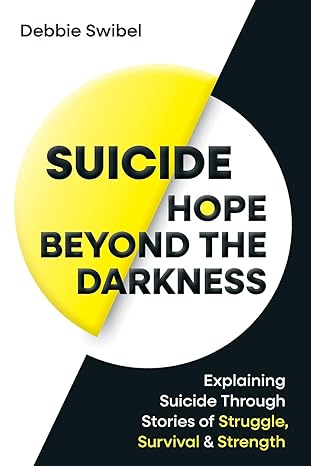

Debbie Swibel’s Suicide: Hope Beyond the Darkness is both heartbreaking and deeply hopeful. The book explores suicide through stories of people who have lived it, those who have tried to take their own lives, those who have lost loved ones, and those who’ve dedicated their lives to understanding and healing the pain behind it. It’s structured in four parts, blending firsthand accounts with Swibel’s professional insight as a suicidologist. The result is a raw, honest, and compassionate work that turns statistics and theory into human experience. Every story feels alive, sometimes painfully so, yet always threaded with the quiet pulse of hope that gives the book its title.
Reading this book was an emotional experience. I felt gutted at times, especially hearing the voices of people whose pain seemed bottomless, but I also found comfort in how Swibel handled each story. She doesn’t sensationalize suffering or rush toward neat conclusions. Instead, she lets silence and reflection do their work. I admired that restraint. The writing is simple but carries real weight. You can feel her empathy in the space she gives each voice. Swibel finds light in the small, steady acts of survival, therapy, friendship, words shared between strangers, that prove connection is often the thing that saves us.
What moved me most was Swibel’s balance between knowledge and humanity. She weaves psychology, cultural insight, and research into the stories, but she never loses sight of the people. Her explanations are clear and down to earth, and her belief in the power of storytelling feels genuine. The way she speaks about stigma, misunderstanding, and silence hit home. I found myself thinking about my own conversations, about how often we look away from pain because we don’t know what to say. This book reminds you that sometimes you just have to show up, to listen, to hold space.
I would recommend Suicide: Hope Beyond the Darkness to anyone who has been touched by suicide, whether personally or professionally. It’s for parents, friends, counselors, teachers, and anyone trying to understand what it means to live through pain.
Pages: 388 | ISBN : 978-0648758082

A Story of Self-Reflection

Blood Flow is a raw, unfiltered memoir that stitches together decades of family trauma, personal ambition, health battles, and the relentless search for meaning. Why was this an important book for you to write?
I believe that almost all people endure a significant trauma at least once in their lives. Mine was the suicide death of my father, soon after I turned thirteen years old. Parent loss is trauma, especially to the young, who may lack the information or understanding of why such tragedies happen. In my case, I began interviewing family and obtaining three sets of hospitalization records when my dad was admitted for severe depression and suicidal ideation. I traveled to Trieste, Italy, where he was stationed as an army doctor, and to the Eastern European town where he was born and emigrated from with his family when he was three years old, already fatherless himself. This decades-long search provided a deep understanding of my dad’s history and an appreciation that he was in my life as long as he was.
What were some ideas that were important for you to share in this book?
Sometimes, people need to make a concerted effort to overcome trauma and see life as a great gift. It’s good for adult children to learn what they can about their parents because that knowledge will inform their understanding of their childhood. As a writer, I think that a memoir should not just be a story of victimhood and blame, but rather a story of self-reflection and knowledge, realizing that most people do the best they can with what they have.
What was the most challenging part of writing your memoir, and what was the most rewarding?
The most challenging part of writing my memoir was twofold. One was trying to stay objective while remaining compassionate and emotionally attached to events that radically changed my life. Two was repeatedly redrafting and revising the writing until I found a narrative structure, voice, pacing, and succinct narrative style to engage readers.
How has writing your memoir impacted or changed your life?
Completing my memoir and having it published brought closure to a writing project that took me decades to “get right.” Revisiting the traumatic events and aftermath of my father’s suicide eventually helped me understand and practice compassion, love, and a full appreciation of life.
Author Links: GoodReads | Facebook | Website | Amazon
Blood Flow: A son’s 40-year journey to understand his father’s suicide


Larry Bograd’s Blood Flow is a raw, unfiltered memoir that stitches together decades of family trauma, personal ambition, health battles, and the relentless search for meaning. Starting with his heart surgery at age 53, eerily close to when his father died, Bograd flips back and forth through time, weaving stories of boyhood misadventures, a rocky writing career, and adult anxieties. It’s not a straight line; it’s a winding, messy journey through memories, many of them bittersweet, some of them laugh-out-loud funny, and others gut-wrenchingly sad.
One thing I really liked about Blood Flow was how unsparingly honest Bograd is about himself. He doesn’t polish the mirror. When he writes about dragging his broken post-surgery body across airports in “Canceled,” you can feel his pain and his stubbornness. I almost wanted to yell at the pages: “Larry, go home, man!” He talks about dragging his carry-on bag, stinking from a day’s worth of sweat and city grime, just to chase after the consulting career he had risked everything to build. It’s both hilarious and heartbreaking, and it made me really root for him, even when he made some obviously terrible choices. You don’t often see a memoirist so willing to look foolish, and it made him feel incredibly human.
Another thing that stuck with me was the way he tackled family history, especially the chapters where he digs into his father’s mysterious past and death. In “Bubbe Meises,” he interviews long-lost cousins Edna and Archie, piecing together the broken story of a man who was charming, brilliant, and ultimately crushed by depression. These scenes were deeply emotional, full of love but also full of pain. I teared up when Edna said, “Did he want to kill all of us? Because that’s what he did!” That moment hit like a gut punch. It made me think about how family stories are stitched together from grief and guilt just as much as from love.
That said, there were moments when the memoir became weighed down by its own melancholy. Certain sections, such as “Working in a Coal Mine, Going Down, Down, Down,” are particularly mired in introspection and financial anxiety. While the depth of personal struggle is understandable, I occasionally wished Bograd had broadened the perspective, offering a wider view beyond his internal battles. Nevertheless, even in the slower passages, his sharp humor and keen observations continued to offer compelling reasons to stay engaged.
By the end of Blood Flow, I felt like I had walked a long, hard road with Bograd, and weirdly, I didn’t feel sad. I felt grateful. Grateful for the honesty, for the messy way he told the truth, for the weird little triumphs tucked between all the losses. I would absolutely recommend this book to anyone who’s ever struggled with family legacy, creative dreams that don’t pan out the way you hope, or the sheer stubborn business of staying alive. If you like memoirs that are gritty, funny, tender, and sometimes a little heartbreaking, Blood Flow will absolutely be worth your time.
Pages; 264 | ASIN : B0F1TZYZ3R

The Suicide Prevention Family Handbook
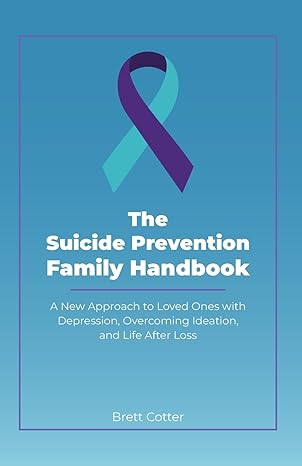
The Suicide Prevention Family Handbook, by Brett Cotter, is a deeply compassionate and practical guide for those facing the realities of depression, suicidal ideation, and grief. The book serves as a roadmap for families and individuals navigating these challenges, offering step-by-step techniques to provide support, regain emotional balance, and rebuild life after loss. While it does not replace professional medical or psychological treatment, it complements traditional approaches by focusing on mindfulness, emotional release, and effective communication strategies.
One of the most powerful aspects of this book is its emphasis on the role of emotional pain in suicidal ideation. Cotter explains that emotional pain is seeking to be “seen, heard, and loved.” This perspective shifts the focus from simply preventing suicide to addressing its emotional root causes. The techniques he provides, such as the 5 Prompts, which encourage open-ended, compassionate listening, are practical and immediately useful. His step-by-step breakdown of how to hold space for a loved one, particularly the sections on body language and tone, make this guide stand out. It’s not just about what to say but how to be with someone in pain, and that nuance is essential.
Cotter’s personal anecdotes make the book feel intimate and real. His description of working with veterans struggling with PTSD and suicidal ideation, along with his own past experiences with emotional pain, add authenticity to his methods. The story of how he guided someone out of suicidal ideation in 2003 by simply listening, grounding himself, and asking, “Please tell me more,” is a striking example of how small shifts in approach can make a life-saving difference. It’s one thing to discuss theories of emotional healing, but Cotter’s book is packed with real-life examples that prove the effectiveness of his techniques.
Another strong point is his approach to grief. He acknowledges that loss, especially from suicide, can be overwhelming, but he doesn’t offer empty platitudes. Instead, he provides tangible exercises, like the Letting Go with Love Visualization and Calling Loved Ones Into Our Dreams, which allow people to continue their relationship with lost loved ones in a meaningful way. His insight that guilt after a loved one’s suicide is a natural survival mechanism, rather than an indicator of personal failure, is a revelation that could provide comfort to many struggling with loss.
The Suicide Prevention Family Handbook is for anyone who has a loved one struggling with depression, those dealing with their own suicidal thoughts, and individuals grieving a tragic loss. It’s not just for mental health professionals; it’s written for everyday people who want to learn how to truly support those in pain. Cotter’s writing is clear, heartfelt, and filled with empathy, making it an accessible and invaluable resource. If you’re looking for practical tools to help yourself or someone you care about, this book is well worth the read.
Pages: 58 | ASIN : B0DPJKWXDT
Deadly Dilemma: A Memoir
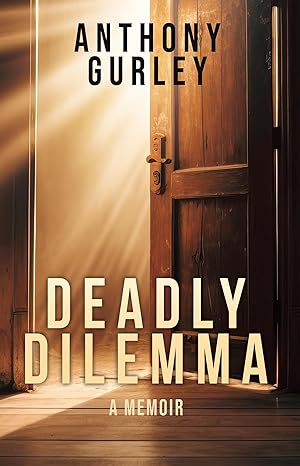
Anthony Gurley’s Deadly Dilemma is a raw and intimate memoir that explores the tumultuous emotional journey of a man grappling with his past, his fears, and his place in the world. From his childhood in a poor North Carolina housing project to his struggles with self-worth and his attempts to reconcile with faith and family, Gurley paints a vivid portrait of his life. The story begins with a poignant letter that sets the tone, one of unvarnished truth, pain, and introspection, before taking the reader through a labyrinth of formative moments, personal trials, and eventual reckonings.
What I liked most about the book was Gurley’s ability to convey vulnerability without self-pity. The letter at the beginning is a gut punch, laying bare his struggles with depression and fear. As he recounts his childhood memories, such as a terrifying encounter with Hurricane Hazel or his days playing sports at the Boys Club, Gurley brings a sense of nostalgia tinged with melancholy. These anecdotes felt relatable, especially his longing for recognition and connection. His descriptions of trying out for the basketball team and the heartache of not making it are heartbreakingly universal moments of rejection that linger long after adolescence.
At times, Gurley’s narrative meanders, pulling the reader into minute details of his early years or internal thoughts. While this makes the book deeply personal, some passages felt overly detailed and repetitive. For example, his recounting of ironing clothes and relating it to a George Washington Carver biography is insightful but I think it could have been condensed. That said, this unfiltered style makes the memoir feel like a candid conversation with the author, one where he is unafraid to show every bruise and scar.
I appreciated Gurley’s reflections on his relationship with faith and community. His introduction to Quakerism and his attempts to find solace in religion add depth to the book. However, the most powerful sections for me were his examinations of family. The story of his father leaving when he was a child, coupled with his own feelings of inadequacy as a parent, hit me hard. It’s in these moments that the memoir transcends its specific context and becomes a universal exploration of loss and resilience.
By the time I reached the conclusion, I felt both drained and inspired. Deadly Dilemma is not a light read. It forces the reader to confront uncomfortable truths about fear, loneliness, and the human need for love and belonging. I’d recommend this book to anyone who enjoys deeply personal memoirs that wrestle with life’s big questions.
Pages: 318 | ASIN : B0CQ6GXGRW
Grief is a Teacher

On the Ever-Lovely Morrow is an introspective poetry collection that explores themes of love, freedom, self-discovery, and personal transformation through honest reflections on life’s challenges and societal norms. Why was this an important book for you to publish?
I felt like I had more that I needed to say, and I needed to share it in a sense and a space that was new. On the Ever-Lovely Morrow is actually the companion to its predecessor At the Beginning of Yesterday, which was published under a different name, that being Tiffiny Rose Allen.
Sometimes, you take a look at your life and see how much you’ve changed, and in the process, you realize how much you need to reinvent yourself, how much you have reinvented yourself, and what image you want to share with the world. I believe as humans we are ever-evolving, and it’s important to show that change is just a staple of life and an important one at that.
In several poems, grief seems to act as a catalyst for transformation. How do you view the relationship between loss and personal growth in your writing?
My relationship with grief has been something that has at times felt like a constant, but I have always found ways to transmute it and make it into something beautiful. Grief is, in and of itself, a beautiful thing, which demands we look at ourselves and our lives and the parts that we are playing in it. Grief is a teacher. I try my best to translate that into my work when I write.
Your reflections on societal norms and expectations are powerful. What inspired you to address these topics so openly in your poetry?
I felt the need to express these topics because they were things that had affected me personally, things that had made an impact on how I held myself, how I viewed myself, and how people viewed me and treated me. I don’t think anyone is limited to being just one thing, and it was important to me to show how multifaceted I am as a person, and hopefully in sharing that, someone could see themselves within those views as well.
What is the next book that you are working on and when will it be available?
I currently have an anthology in the works, it being Volume II of the Dreams In Hiding anthology. The title is After Words We Go From Here and it is centered on After pieces and prose. For those unfamiliar, After pieces are pieces of writing that are inspired by other forms of art or artists. This should be published in the late fall or early winter of 2024.
Apart from that, I have a few different projects that are in the very early stages of development, and we’ll see how they progress, but I am very very excited to share them one day.
Author Links: GoodReads | Website | Amazon
What comes after Yesterday? There is the present, then tomorrow, what happens on the Ever-Lovely Morrow?
In this companion to the poetry collection At The Beginning Of Yesterday, the ship of the author’s emotions will navigate you through reinvention, resurfacing, and feeling out the waves of healing.
Everything, in some form or another, comes in waves. This is a collection that celebrates being a writer, acknowledges the non-linearity of emotions, and dives into the themes of what it means to step into one’s own definition of living.
Phil Was the Real Deal
That Man in the Gold Lamé Suit delves into the complex life and career of Phil Ochs, exploring his steadfast dedication to music and his unwillingness to conform to popular trends. Why was it important for you to tell his story?
There were several reasons why I felt Phil’s story had to be revisited.
First, one of the courses I used to teach was “Music & Politics.” Phil’s name & music kept popping up as I looked for materials for this class. As I looked at this material and became familiar with his music, politics, and who Phil was as a person, I had the epiphany that Phil Ochs was the person that everybody believed Bob Dylan was in the 1960s. Phil was the real deal–a committed topical songwriter and political activist, neither of which Dylan ever was.
Second, Phil’s story often gets told with too much emphasis placed on his alleged bipolarism, his alcoholism, and his suicide. They became the centrality of how his story was told rather than be presented and understood as simply parts of a very complex artist who struggled with a sense of who he was. These three circumstances in Phil’s life allowed people to glaze over that his very search for self was essential to understanding who he was, how Phil saw himself, and how that search was central to both his artistic creativity & his politics.
Third, I met his older sister, Sonny Ochs who is a force of nature in her own right and a champion in keeping her brother’s music alive and being played at the grassroots level. After my first meeting with Sonny, I knew I had to write about Phil.
Phil Ochs was an influential musician in his time. What were some goals you set for yourself as a writer in this book?
One of the goals I’ve already mentioned in response to the last question, and that was to address the imbalance in how Phil’s life story is usually told.
Beyond and above that is that I set for myself the goal of telling Phil’s story through his eyes and to present it as much as possible as he would if he was still here. That is why I employed the theory and method of Self Psychology in writing this book. By relying as much as possible Phil’s own words, he was then able to reveal to me what his search for self entailed; the triggers for this search; for what voids he was trying to compensate in this search; how his search manifested in his music, politics, and relationships to others; and how it ultimately led to his suicide.
Did you find anything in your research of this book that surprised you or a story that stood out and left an impression?
It’s not too far from the truth to say just about everything stood out and left an impression. Phil was not an easy person for me to get to know. There were times when I would pour over his words for hours only to have it take days for him to reveal what it was that he wanted me to know and write. However, one of the biggest things that stood out was how much his desire to be a hero and to see heroism in others defined his search for self, his music, and his politics. Phil desperately wanted to be like his heroes of the Silver Screen such as John Wayne. He embraced people based upon their perceived heroism. That’s why he could idolize both John Kennedy and Che Guevera. His own politics was defined by heroism. For instance he saw America in heroic terms. His opposition to the Vietnam War wasn’t an opposition to war per se, but to an unheroic war that wasn’t worthy of his heroic America. I could go on and on but I won’t.
Also what also stood out to me was just how much Phil needed and craved affirmation from others. He simply wasn’t secure enough in his self to see how talented he was and how worthwhile his own life was. This need and craving were scars left from early childhood trauma of parents unable to respond with the affection & affirmation their young son needed. That need & craving for affirmation drove Phil as much as did his desire to be a hero. Frankly, they are interconnected. That comes through throughout the various chapters in the book.
What is the next book that you are working on and when will that be published?
Hmmm—this book on Phil took 6 1/2 years of my life so I’m not certain if I have another one in me at the time being. Phil was a calling, a type of destiny, and I haven’t felt a similar calling yet. But never say never. I’ve got a couple of possible subjects if that call ever comes in. One would be a book on Kris Kristofferson. Another would be a book on Michael Nesmith.
In the short term, I’m focusing on music. I’ve got a new band called Calico Bunny, and I am trying to get back into songwriting again. For the curious, I have 3 CDs of original music on Spotify, Apple Music, and the other streaming services. Their titles are “Tequila Lips,” “No Apology,” and “Seeking Calm Waters.”
Author Links: GoodReads | Website
That Man in the Gold Lamé Suit explores who Phil Ochs was as he saw and understood himself to be; how he wanted to see himself; and how he wanted to be seen by others. In presenting this exploration of Phil Ochs, author Jim Bowers delves deep into Ochs’s personality to craft a narrative that allows the singer/songwriter to tell his own story rather than the story others would impose upon him. In letting Ochs tell his own story, Bowers in That Man in the Gold Lamé Suit provides the reader with insights into how Phil Ochs’s search for self came to define who Ochs really was and how it, in turn, shaped his music, his politics, and his relationships with such contemporaries as Bob Dylan.
That Man in the Gold Lame’ Suit: Phil Ochs’s Search for Self
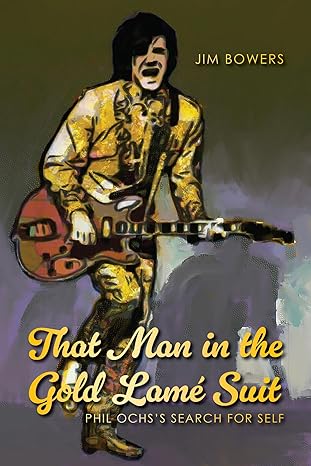
That Man in the Gold Lamé Suit by Jim Bowers delves into the complex life and career of Phil Ochs, exploring his steadfast dedication to music and his unwillingness to conform to popular trends. Bowers presents Ochs as a musician with a clear vision, unyielding in his artistic integrity. The book intertwines Ochs’ musical journey with his political views, shedding light on his perspectives on notable figures such as Mao Zedong and John F. Kennedy. It also highlights his admiration for icons like Elvis Presley and Bob Dylan.
The narrative begins with Ochs’ early influences, chronicling his struggles with addiction, turbulent relationships, and the challenges he faced with his fan base. Bowers meticulously portrays Ochs’ life, connecting his emotional experiences to his lyrics and providing readers with a deep understanding of the stories behind his songs. For instance, the song “First Snow” is illustrated to depict Ochs’ acceptance of his role in a romantic breakup, adding depth to his musical expressions. Several features make this book particularly engaging and informative. Each chapter opens with a quote that sets the tone, and a comprehensive reference section at the end offers additional resources for further exploration. Bowers effectively weaves together opinions from various individuals, Ochs’ own words, and insightful analyses, creating a rich tapestry of historical, political, and cultural contexts. Reading Bowers’ detailed account of Ochs’ life feels like a personal journey, fostering empathy for his struggles with depression and alcoholism. Despite these challenges, Ochs emerges as an admirable figure, passionate about his art and committed to authenticity. This book serves as a poignant tribute to Ochs’ legacy, emphasizing the importance of artistic integrity and balance in life, free from the pressures of public approval.
That Man in the Gold Lamé Suit stands as a comprehensive, creative, and enduring homage to Phil Ochs, offering valuable lessons for musicians and artists worldwide. It is a must-read for anyone seeking to understand the heart and soul of a true artist who remained unwavering in his commitment to his craft.
Pages: 360 | ASIN : B0CLKYF15N



 LITERARY TITAN