Blog Archives
Upward Mobility

In This Is How We Heal from Painful Childhoods, you provide readers with a guide for dealing with childhood traumas that leave an impact far into adulthood. Why was this an important book for you to write?
Throughout the doctoral program for my PhD in clinical psychology, I searched for a comprehensive program to address the many complex issues present in family environments that allowed for repeated trauma and dysfunction. While I learned many fantastic therapeutic approaches to treating trauma, I found that they addressed several key parts of the trauma picture while ignoring other critical components. And so I set out to create a more complete list of variables, along with solutions and guidance to address each variable. And it only took me 14 years to complete!
What is a common misconception you feel people have about growing up with a dysfunctional family dynamic?
So many young adults believe that all they have to do is get free of their dysfunctional family by getting a solid job and their own independent place to live, which usually works for about a decade until their late 20’s and early 30’s when the less obvious (but very damaging) lingering habits and unhealthy thinking prevent personal thriving and happiness. It is not until they learn about self-sabotaging cycles, interpersonal control dynamics, and other natural consequences of the dysfunctional family dynamic that these survivors are able to truly break free from their family’s trauma history.
Can you share with us a little about the research required to put your book together?
First of all, for many years I have directly served clients struggling with complex post-traumatic stress disorder (C-PTSD), like at the National Center for PTSD at the Veterans Affairs Palo Alto Healthcare System (amongst other places) where I studied and worked for 4 years in graduate school. Secondly, through continuing education programs, I purposefully learned many of the empirically validated therapies for treating trauma (EMDR, biofeedback, mindfulness, ACT, DBT, etc.). Third, by 2015, I had created my curriculum that included 13 variables that I turned into ‘rules’ that were easier for my clients to memorize and integrate into their lives. By 2017, the list had grown to 20 rules. By 2020, the 20 rules curriculum was highly refined and had successfully helped my clients and me address their family dysfunction in a comprehensive and detailed fashion. It was time to put the curriculum into book format!
What is one thing you hope readers can take away from This Is How We Heal from Painful Childhoods?
The lifestyle of upward mobility!! There is no one technique, one concept or skill, or one action that will heal a survivor and prepare them for a healthy, stable, happy life with their own successful relationships and family. So, much like the lifestyle of the martial artist, thriving survivors of childhood struggles have adopted a lifestyle of self-education, training, and self-empowerment that comes with tremendous challenges and victories throughout their lives. They just keep learning in their therapeutic activities–year after year–the many skills and insights that enable them to successfully handle life’s many challenges, as well as pass on their hard-learned education to the next generation!
Author Links: GoodReads | Facebook | Website 1 | Website 2
During prolonged periods of chronic stress, family traumas, or dysfunctional family dynamics, your young brain likely created deeply ingrained physical and mental habits to help you survive. Unfortunately, these habits and core beliefs work against your adult life and relationship goals.
Even if you did not directly experience childhood abuse or neglect, you have likely felt the harmful effects of intergenerational (generational) trauma from your family, inherited as genetic issues or passed along through skills deficits and dysfunctional relationships. When these ancestral issues go unaddressed, we hand them down to the next generation. Natural responses to childhood stress can include:Chronic anxiety symptoms
Unhealthy, chaotic, or toxic relationships
Survival-based thinking (short-term, defensive, distrusting)
Personal or family substance abuse (or addictions like gambling, work, porn)
Unstable work life
These perfectly normal reactions to a painful childhood do not automatically go away when you grow up! Recovery from such childhood experiences is challenging but quite possible when motivated survivors utilize self-education, therapy, and skills building to empower themselves.
This book presents 20 key concepts for comprehensively thriving past your stressful childhood. While many books focus on two to three of these issues in depth, they typically leave out entire concepts critical to beast-mode thriving! This book offers guidelines for you to develop yourself as an individual before moving on to enhancing your interpersonal functioning. Each chapter explains key concepts before offering solutions with realistic healing exercises to develop healthy habits that will help you heal and ultimately thrive! Here are just a few of the 20 rules:Trauma lies are just that…LIES
We must slow down to speed up
Practice treating yourself in a self-loving and self-respecting fashion
We are responsible for the decisions that we are aware of
It’s us against trauma world
This encouraging and reality-based guide was authored by Ernest Ellender, PhD, who has worked directly with trauma survivors from all walks of life since 1995. He combined insights from his clinical psychology doctorate education and career with training methods from his martial arts career (Jiu-jitsu black belt instructor) to create this comprehensive and effective curriculum for those on a healing journey toward emotional wellbeing.
Clients benefiting from this curriculum have included those struggling with mental health instability; those in codependent and dysfunctional relationships; single parents wanting to do better for their children; divorced parents struggling with healthy co-parenting; clients diagnosed with C-PTSD (complex post-traumatic stress disorder), ADHD, bipolar disorder, major depression, or dissociative disorders; clients whose prior therapists were poorly trained in trauma counseling and cptsd treatments; and parents seeking parenting tips to strengthen their family to prevent or minimize the impact of future traumas.
Following the guidelines of this book will lead to…More control, stability, and self-esteem
A daily life free of toxic shame!
Empathic and mature self-care and coping skills
Advanced self-advocacy and communication skills
Healthier, mutually supportive, and deeply engaged relationships when desired
The ability to articulate, set, and enforce healthier boundaries with both loved ones and toxic individuals
Positive parenting that fosters healthy families
A healthy lifestyle of healing and pursuit of long-term goals
Read less
This Is How We Heal from Painful Childhoods: A Practical Guide for Healing Past Intergenerational Stress and Trauma
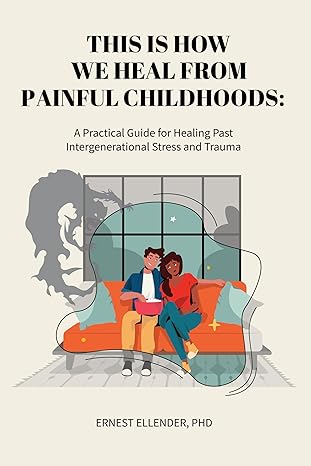

In This is How We Heal from Painful Childhoods: A Practical Guide for Healing Past Intergenerational Stress and Trauma, Ernest Ellender delves into the profound impact of childhood experiences on our adult lives. It’s a well-established notion that early childhood shapes our character and drives us through life. However, the journey is rarely without its challenges, and many of us carry the weight of childhood trauma into adulthood. Ellender’s book offers an insightful exploration of this trauma, particularly transgenerational trauma, and provides practical examples for beginning the healing journey.
Ellender emphasizes that transgenerational trauma doesn’t always stem from violence or horrific events; rather, it often arises from dysfunctional family dynamics that persist through generations. He asserts that now is the time to heal and grow from these inherited mistakes. The book is structured around 20 key points, or “rules,” designed to help readers overcome childhood trauma and live free from behaviors learned as self-protection mechanisms in childhood. One of the most compelling concepts in the book is the idea that “We must slow down to speed up.” This rule centers on the necessity of introspection. In our fast-paced lives, trauma doesn’t simply disappear; it requires deliberate and sustained effort to address and heal. To become stronger individuals, both for ourselves and those around us, we must take the time to engage in thorough self-work, allowing us to heal from our wounded pasts.
What sets Ellender’s work apart is its accessibility. Despite his academic background, the book is written in a relatable and comprehensible tone. It feels like a conversation with a trusted friend or a therapy session, making it easy for readers to connect with and learn from the material.
As someone with a background in psychology, I cannot overstate the importance of this book. Ellender’s career and expertise have culminated in a work that is invaluable for professionals in the psychology and mental health fields, as well as anyone struggling with past trauma or simply curious to learn more about the healing process. This is How We Heal from Painful Childhoods is a must-read for anyone on the journey to self-discovery and healing.
Pages: 367 | ASIN : B0CW1MJ1NH




 LITERARY TITAN