Blog Archives
This Is A Book Of Hope

The Remarkable Reefs of Cuba is a captivating exploration into the thriving coral ecosystems within Cuba’s waters, offering a beacon of hope in the face of global marine devastation. Why was this an important book for you to write?
Most important, this is a book of hope. The situation for coral reefs — like so many treasured ecosystems on Earth — is dire. There are estimates we have lost up to half of the world’s coral reefs and some questioning whether the reefs that remain can endure until the end of the century. There is a general perception that climate change alone is killing our reefs, so the situation seems helpless to many. However, there are, in fact, many factors that affect the health of coral reefs that are locally-caused. That means there are actions we can take immediately that will help coral reefs be more resilient to climate change. I also felt it was important to write this book to document a long and fruitful history of collaboration between U.S. and Cuban scientists, working across ever-changing political winds, with marine science and conservation held up as one of the best examples of collaboration between the two countries. Cuba’s unique history also figures prominently in this book, much of being an utter mystery to most.
As a marine scientist, what was the most surprising discovery you made about the reefs of Cuba that differed from other coral ecosystems around the world?
After seeing nothing but dead and dying reefs in the Caribbean for decades, it was a profound shock to come face-to-face with coral reefs that appeared even healthier than those I fell in love with in the Florida Keys when I was a teenager. (Tragically the reefs of the Florida Keys are now 80 to 90 percent dead.) It has also been an important discovery that the reasons Cuba’s coral reefs are so healthy — corals that are sitting in the same hot water as degraded reefs — rest in local factors (like fishing, nutrient pollution, etc.) that we can control.
How can we, as individuals, contribute effectively towards the conservation of coral reefs?
Of course, taking action against climate change — through changes in our own lives, through advocacy or otherwise — is critically important. But there are things we can do, literally in our own backyards, that can make an enormous difference. For example, using less fertilizer is important as it inevitably runs into streams, rivers, and ultimately the oceans, where it fuels the growth of algae which can smother coral reefs. Reducing overfishing is critical as many fish are important to coral reefs, grazing algae and keeping them clean. Ask questions of your server at the restaurant or of your grocer. Where are the fish from, how were they caught, and are they sustainable? Finally, support organizations in the fight to save coral reefs. I am biased, of course. The nonprofit organization I founded and run, Ocean Doctor (https://oceandoctor.org), is one of the leaders in coral reef conservation, especially in Cuba. There are many other worthy organizations as well, of course.
What is the next book that you are working on, and when will it be available?
I’m working on something that hasn’t yet been green-lighted, but I’m hopeful it will be. I can’t divulge too much at this point, but it deals with a tragic shipwreck with terrible consequences. I’m hoping it will be on the shelves in 2025.
Author Links: GoodReads | Twitter | Facebook | Website
After years and years of watching reefs deteriorate, Guggenheim was astonished to come face-to-face with Cuba’s remarkably healthy coral reefs overflowing with fish and other marine life. The Remarkable Reefs of Cuba reveals the hidden potential that Cuba’s reefs may contain for the reefs of the world.
While the past 60 years have seen the worst decline in ocean health in human history, Cuba’s oceans and coral reefs remain remarkably healthy, a living laboratory never-before-seen by this generation of scientists. Which begs the question: why are Cuba’s ocean waters so healthy? The answer is deeply intertwined with the country’s extraordinary and singularly unique history, from its dramatic political past to its world-class environmental protections influenced by an unlikely partner, Captain Jacques-Yves Cousteau.
This buoyant book tells the story of the demise of the world’s ocean ecosystems, the hard work of those desperately trying to save it, and an unexpected beacon of hope from an island full of mystery and surprises.
The Remarkable Reefs Of Cuba: Hopeful Stories From the Ocean Doctor
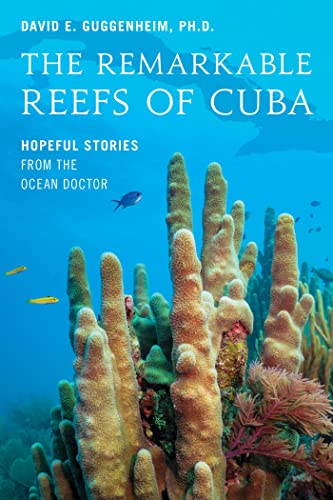

In The Remarkable Reefs of Cuba, marine scientist Dr. David E. Guggenheim presents a captivating and thought-provoking account of the worldwide devastation of coral reefs while offering a ray of hope through his remarkable discovery of thriving reefs in Cuba. Through artful storytelling, Guggenheim illuminates the decline of global ocean ecosystems and the unwavering efforts of conservationists dedicated to their preservation.
One aspect that truly resonated with me was the author’s inclusion of his firsthand experiences and expertise in marine science, which lends credibility and engages readers on a personal level. Guggenheim skillfully weaves scientific facts, historical context, and captivating personal anecdotes together, resulting in a highly accessible narrative that appeals to readers from all walks of life. Moreover, the author adeptly explores the various factors contributing to the exceptional health of Cuba’s reefs, shedding light on the country’s unique historical trajectory and its world-class environmental protections. The inclusion of Captain Cousteau’s influence adds a captivating layer to the narrative, underscoring the significance of collaboration and unlikely partnerships in the realm of conservation efforts.
Guggenheim’s ability to vividly and clearly convey information is commendable, as his writing transports readers alongside him on his explorations of the reefs. Not only does the author provide an educational experience, but his writing is also evocative and enthralling, leaving readers in constant anticipation. The intriguing and vibrant stories he shares are a testament to his expertise and experiences as a marine scientist, leaving readers eager to delve into more of his insightful work. Through his compelling prose, Guggenheim effectively conveys the dire consequences of coral reef loss, touching on the immense impact on biodiversity and the staggering economic losses incurred globally. The urgency to protect and restore these fragile ecosystems becomes palpable through his words.
The author’s ardent passion for marine conservation shines brightly throughout the book, instilling a profound sense of responsibility within readers and compelling them to join the collective efforts aimed at safeguarding our seas. Serving as a poignant wake-up call, the book reminds us of the pivotal role played by coral reefs in supporting diverse marine life and sustaining coastal communities.
The Remarkable Reefs Of Cuba: Hopeful Stories From the Ocean Doctor offers a glimmer of hope amidst the disheartening reality of coral reef decline. The Remarkable Reefs of Cuba is an indispensable read for anyone with an interest in marine conservation and environmental history or those seeking inspiration to protect our oceans for future generations.
Pages: 264 | ASIN: B0BQTJ34J7



