Blog Archives
Multidimensional and Relatable

Imber centers around a young woman whose family is dedicated to sustainable living as she finds herself drawn into the mystery surrounding the fate of Earth and the limits of science. Where did the idea for this novel come from?
For as long as I can remember, I have been drawn to wildlife and wild places – not necessarily in a clinical way, although I do enjoy learning about nature, but more often as feelings of deep affection and awe. The initial spark for Imber grew out of the idea that humanity has a profound connection with nature. I wanted to explore what might happen in a dystopian future where that connection is strained to a breaking point.
How do you capture the thoughts and emotions of a character like Violet?
Violet is a complex protagonist. While she has many admirable qualities, she is far from flawless. It was important to me that Violet be multidimensional and relatable. In the first moments of Imber, Violet is brooding and somber. She’s reading depressing poetry on a day when she is already sad. Although she is self-aware enough to stop, I love that the first time we meet her is in a moment of self-sabotage. When capturing Violet’s thoughts and emotions, I was careful to shine a light on both her strengths and weaknesses. And because she is highly intelligent and analytical, her inner life must reflect that as well. So, overall, I would say that characters like Violet require a layered approach that befits the complexity of their thoughts and feelings. Violet was challenging to write – but tons of fun, too.
Is there any moral or idea you hope readers take away from Imber?
One of the fascinating things about reading is that people can take away very different things from the same book. They might have dissimilar interpretations of the plot or characters, or certain aspects of the story might resonate differently with them. As an author, I think it’s exciting that my work can have a life of its own in that way. Nevertheless, there are themes in Imber that I hold dear: humanity’s responsibility as shepherds of the earth; the power of hope; courage and perseverance in the face of injustice; and the beauty of found family, to name a few.
What is the next book that you are working on, and when will it be available?
I would love to write a sequel to Imber. I have roughly outlined the story, but I haven’t started to write it in earnest yet. I am working hard to help Imber find an audience. If there is interest, I would be thrilled to continue this tale!
Author Links: Goodreads | X (Twitter) | Website | Amazon
The remnants of humanity are living in hiding, making the best of their circumstances while searching for a new celestial home. Just when salvation seems imminent, four strangers discover they have an unusual, inexplicable link—one that pitches them headlong into high adventure and intrigue.
Totally unprepared, the four must navigate shocking obstacles and trust unexpected allies as they race against the clock to unravel a chain of unsettling revelations that could impact the fate of the world.
The government has been concealing important facts about humankind’s promising hereafter. Will the efforts of a farmer, a hacker, a businessman, and an academic be enough to overcome impossible odds and expose the truth before it’s too late?
Imber
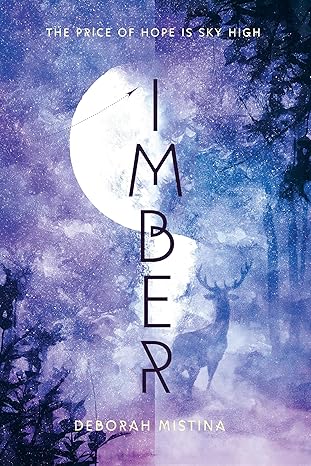

Deborah Mistina’s Imber is a speculative, soul-stirring tale set in a future where nature is both fragile and sacred. The novel follows Violet Murphy, a young woman devoted to her family’s farm and their legacy of sustainable, organic living amid a crumbling world. As the government’s strange motives begin to unravel, Violet is pulled into a deepening mystery that questions everything, from the fate of the Earth to the limits of science and memory. At once a dystopian adventure and an emotional meditation on grief and hope, Imber crafts a world that’s both fantastical and deeply familiar.
I enjoyed Mistina’s writing style. It’s poetic, even when it’s subtle. Take the opening pages where Violet feeds her horse Firestorm while mourning her lost parents. The imagery is soft and painful: “They broke like porcelain on the jagged rocks below, where the sea writhed with furious waves…”. Mistina doesn’t just write; she paints with words. She lets grief sit beside beauty. The prose made me feel something in every paragraph, like each sentence had its own pulse.
Then there’s the story itself, which is clever and unexpected. When Violet is summoned to present her work at the Science Bureau, things turn dark fast. The seemingly harmless coffee offered to her becomes a sinister turning point. “It was excessively bitter and altogether unsavory,” she says—a perfect metaphor for what comes next. That whole interrogation scene was haunting. It wasn’t just suspenseful, it was invasive and raw. The way Mistina writes Violet’s spiraling consciousness during that sequence made me uncomfortable, in the best way. I couldn’t stop reading, even though I wanted to yell at Violet to run.
But maybe the most surprising part of Imber was how it made me care so deeply about more than one character. Jack Collins, who shows up in a later chapter, is someone I didn’t expect to love. He’s a hunter mourning his father, caught in a storm of his own. At one point, he’s trying to shoot a deer but ends up crying in the rain because he suddenly feels the deer’s fear. Sounds absurd, but the way Mistina handles it is gentle and strange and real. I felt his grief. I felt his confusion. That’s powerful writing.
By the time I finished the book, I felt a little haunted, a little hopeful, and completely wrecked in the best way. Imber isn’t just a sci-fi story or a survival tale. It’s a quiet rebellion against numbness. It reminds us what it means to feel deeply, to protect fiercely, and to listen—even when it’s hard. I’d recommend this book to anyone who loves stories about resilience, about the intersection of science and emotion, and about what it means to fight for what you love. It’s perfect for fans of Station Eleven or The Overstory, or really anyone who needs to be reminded that the Earth, and our hearts, are worth saving.
Pages: 315 | ASIN : B0DV3V8L5K




 LITERARY TITAN