Blog Archives
Ingrained Preconceptions

When Songs of Children Filled the Air follows six lives on a collision course in an America consumed by post-9/11 fear, where one frightened teenager’s choice could either deepen the cycle of violence or interrupt it. What inspired you to imagine this particular alternate path for America after September 11?
I have honestly been surprised, pleasantly, that the fallout from 9/11 wasn’t more severe. Watching the towers fall, I expected something closer to the alternate history I created. Twenty-five years later, I wonder how we have grown, if we have grown, beyond learned and ingrained divisiveness. Beyond the high-level political and social impacts, I wanted to focus on the individual level and how the choices we make as a people are felt by the actual people.
How did you balance making Allison’s fear understandable while also showing how easily it hardens into prejudice?
When I write, I reach deep into myself and try to understand the human condition. Even the best of us are not immune to the societal “norms” surrounding us. I believe Allison’s blend of emotions and mixed reactions are completely human. It’s what she does with them that counts.
What research shaped your portrayal of Farid as both a Muslim American and an NYPD officer during a period of escalating distrust?
I have friends from Muslim backgrounds, some from countries of extremely limited freedoms. Being from Brooklyn myself, but not in New York on 9/11, I could relate to his situation. I have seen division between adjacent neighborhoods segregated by race and religion, and had friends involved in attacks for nothing more than walking down a street where they “didn’t belong.” I tried to make Farid somewhat sympathetic to the hatred he received, realizing that not everyone who is motivated by such powerfully ingrained preconceptions is themselves “evil.”
What do you hope readers take from the 2026 epilogue about the power and limits of individual acts of compassion?
Some readers might come away from Songs of Children feeling they are not powerless. We do not simply have to accept the world as it is, but even small acts can have impactful results. While these will not change the world, they can change a life, even if the only life affected is our own.
Author Links: GoodReads | Amazon
On September 11, 2001, Allison’s husband dies in the North Tower. She survives only because a sleepless night made her late to her own office in the same complex. That accident of timing is the first of many that will bind her to a cable installer named Jake and a Muslim NYPD officer named Farid, as an America unrecognizable to any of them takes shape around them.
In this alternate history, the government’s response to the attacks does not stop at Afghanistan. It reaches into American cities, rounds up Muslim citizens into detainment camps, and eventually drops a nuclear bomb on a city called Bayt-al-Salam. Allison, Jake, and Farid form an unlikely household of survivors, hiding in a cemetery mansion and trying to protect two children from a country that has turned on itself.
A sixteen-year-old jihadist named Musa, smuggled from a training camp into the United States against his will, is moving toward them. He does not want to die. He does not want to kill. But the men who sent him are counting on him to do both.
Songs of Children opens at the moment of detonation and then steps back a full year to show how ordinary people on every side of an impossible conflict arrive at a single atrium in Philadelphia where one girl’s handwritten note may be the only thing that matters.
Order your copy today to experience this year that could have been.
Operation Black Horse


Operation Black Horse, by N.J. Gervasi, is a dark, ambitious adult dystopian romance that blends dystopian science fiction, military action, medical suspense, and geopolitical thriller elements into a story about survival in a world already pushed frighteningly close to extinction. The novel begins with the Great World Famine, showing Caitlyn Svendsen and Kaleb Volkov as children on opposite sides of the globe before jumping ahead to 2041. Caitlyn is now a gifted American surgeon who has uncovered a devastating secret: the agricultural formula credited with saving humanity is also poisoning it, contributing to aggressive cancers and infertility. Kaleb, meanwhile, has become an elite Russian Spetsnaz commander tasked with finding her after a multinational invasion of the United States. The setup gives the book a huge canvas, but its emotional stakes stay grounded in two people whose lives were permanently shaped by the same catastrophe.
What makes this dystopian romance especially absorbing is how much personality Gervasi gives Caitlyn and Kaleb. Caitlyn is intelligent, sarcastic, stubborn, ethically complicated, and understandably furious when Kaleb’s carefully constructed American identity falls apart. Kaleb is equally layered. He’s a soldier and former killer who can be ruthless without losing the protective instincts that define him. Their relationship grows out of mistrust, manipulation, forced proximity, grief, and an attraction neither of them finds particularly convenient. Their banter brings some welcome humor into an otherwise brutal story, while quieter moments, especially those involving Caitlyn’s parents, Kaleb’s mother, and his Spetsnaz team, reveal how badly these characters want some ordinary human connection. The romance feels inseparable from the survival story because trust isn’t just an emotional issue here. Trust can literally determine who lives.
The worldbuilding is equally committed. This is a post-apocalyptic novel fascinated with what happens when famine reshapes governments, medicine, agriculture, warfare, religion, technology, and even the value placed on individual human beings. Gervasi spends real time inside the military and political machinery of her future, from Russian special operations and America’s FALA program to neural implants, propaganda, black markets, religious persecution, and the consequences of countries fighting over the last reliable food supply. That detail makes the world feel much larger than Caitlyn and Kaleb’s romance. It also gives the story a dense, information-rich style, particularly when characters discuss military strategy, history, politics, or science. For readers who enjoy military science fiction and dystopian thrillers that dig into the systems behind a collapsing society, there’s a lot here to sink into. The violence and darker material are graphic at times, but they’re woven into a world where starvation and institutional brutality have been shaping people for years.
By the end, Operation Black Horse has expanded from a story about a doctor fleeing an invasion into a much bigger struggle over who gets to control knowledge capable of changing humanity’s future. Caitlyn and Kaleb’s growing connection gives that conflict its heart, especially as both begin making choices that put personal loyalty at odds with country, duty, and survival. Since this is Book One of the Spetsnaz Operators Series, the ending deliberately carries the conflict forward, with Caitlyn arriving in Moscow and entering a Kremlin she already understands may be another kind of prison. That leaves Operation Black Horse feeling like the opening part of a larger dystopian romance series, with plenty of political danger, moral ambiguity, and unresolved emotional fallout waiting on the other side. If you like character-driven science fiction, morally gray soldiers, high-stakes medical mysteries, and sprawling speculative worlds where love develops in the middle of geopolitical chaos, this one gives you plenty to chew on.
Pages: 480 | ASIN : B0GZ14S995

Autocrat

Autocrat, by Jeff Nesbit, is a scalding political satire about Rex Vanner, a broke-but-blustering reality-TV mogul who runs for president as a bargaining stunt and discovers that grievance, spectacle, and shamelessness can become a governing philosophy. With the help of the coldly analytical Elias Thorne and a cast of zealots, billionaires, opportunists, and true believers, Rex turns public life into a ratings machine until the joke hardens into authoritarian rule.
I found the book both funny and queasy-making, which is exactly the pressure point it seems designed to hit. Nesbit writes in broad, acid colors: gold rooms, trembling aides, performative cruelty, political rallies that feel like bad comedy clubs with worse consequences. The satire isn’t subtle, but subtlety would almost feel dishonest here. The novel works because it understands the grotesque intimacy between entertainment and power, how a crowd can be trained to mistake humiliation for truth.
What I appreciated most was the way the book treats autocracy not as a lightning strike but as a series of small permissions. People laugh, excuse, profit, rationalize, and soon the machinery is moving on its own. Rex is ridiculous, but the people around him are often more frightening because they are less ridiculous. Elias, Jared Caine, and Julian Silk give the novel its colder edge; they see Rex not as a leader but as a door left unlocked. That makes the book feel less like a parody of one man and more like an autopsy of a culture willing to be entertained into submission.
This book is for readers of political satire, dystopian fiction, authoritarian thrillers, and near-future satire, especially those who like their comedy barbed and their warnings delivered with a grin full of broken glass. Readers who enjoyed Sinclair Lewis’s It Can’t Happen Here will recognize the same dread, though Nesbit’s version is louder, more media-drunk, and built for the age of screens. Autocrat is a brutal carnival mirror held up to democracy, and the most disturbing thing about it is how familiar the reflection looks.
Pages: 289 | ASIN : B0GX313SRZ
The Eleventh Messiah


The Eleventh Messiah is a post-apocalyptic speculative novel with strong religious thriller elements, following journalist Sarah B. Wells as she travels through a ruined America to find Elijah, a man some call the eleventh Messiah and others call a fraud. What begins as an investigation into one possible false prophet becomes something more personal and unsettling. Sarah knows Elijah from before the war, and through him, she is pulled into a world of broken cities, desperate believers, armed followers, rival preachers, and people searching for meaning in the wreckage. The book asks a big question in a battered setting: when the world has fallen apart, do people need truth, faith, comfort, or simply someone who will look them in the eye and see them?
Sarah is sharp, profane, funny, wounded, and observant in a way that makes the ruined world feel lived in rather than staged. She notices the smell of smoke, the absurdity of people charging money to see a broken TV screen, the old habits that survive even after civilization has cracked. I liked that the book doesn’t make her reverent too quickly. She comes in with skepticism, which gives the story its pulse. Elijah might be holy. He might be damaged. He might be something science has not learned how to name. Sarah keeps circling that uncertainty, and because she does, I trusted the novel more than I would have if it simply demanded belief from me.
The author makes a bold choice by blending blunt, street-level narration with heavy spiritual and philosophical questions. The novel is interested in God, consciousness, miracles, war, language, propaganda, trauma, and the strange hunger people have for someone to tell them what their suffering means. Caleb, as Elijah’s opposite, gives the book a strong dramatic engine. He understands performance, certainty, and fear. Elijah, by contrast, resists language even as everyone around him tries to turn him into a symbol. I found that tension compelling. At times, the book’s ideas are direct, but the stronger moments are the quieter ones, when a touch, a look, or a small act of mercy says more than a sermon could.
I would recommend The Eleventh Messiah to readers who enjoy post-apocalyptic fiction that is more interested in belief and human nature than in survival mechanics alone. It’ll appeal to people who like speculative novels with a philosophical edge, religious thrillers that question faith instead of simply affirming it, and character-driven stories about what people cling to after catastrophe. It’s messy, searching, angry, hopeful, and at its best, deeply human.
Pages: 172 | ASIN : B0H43KCBM9
6060 Vision
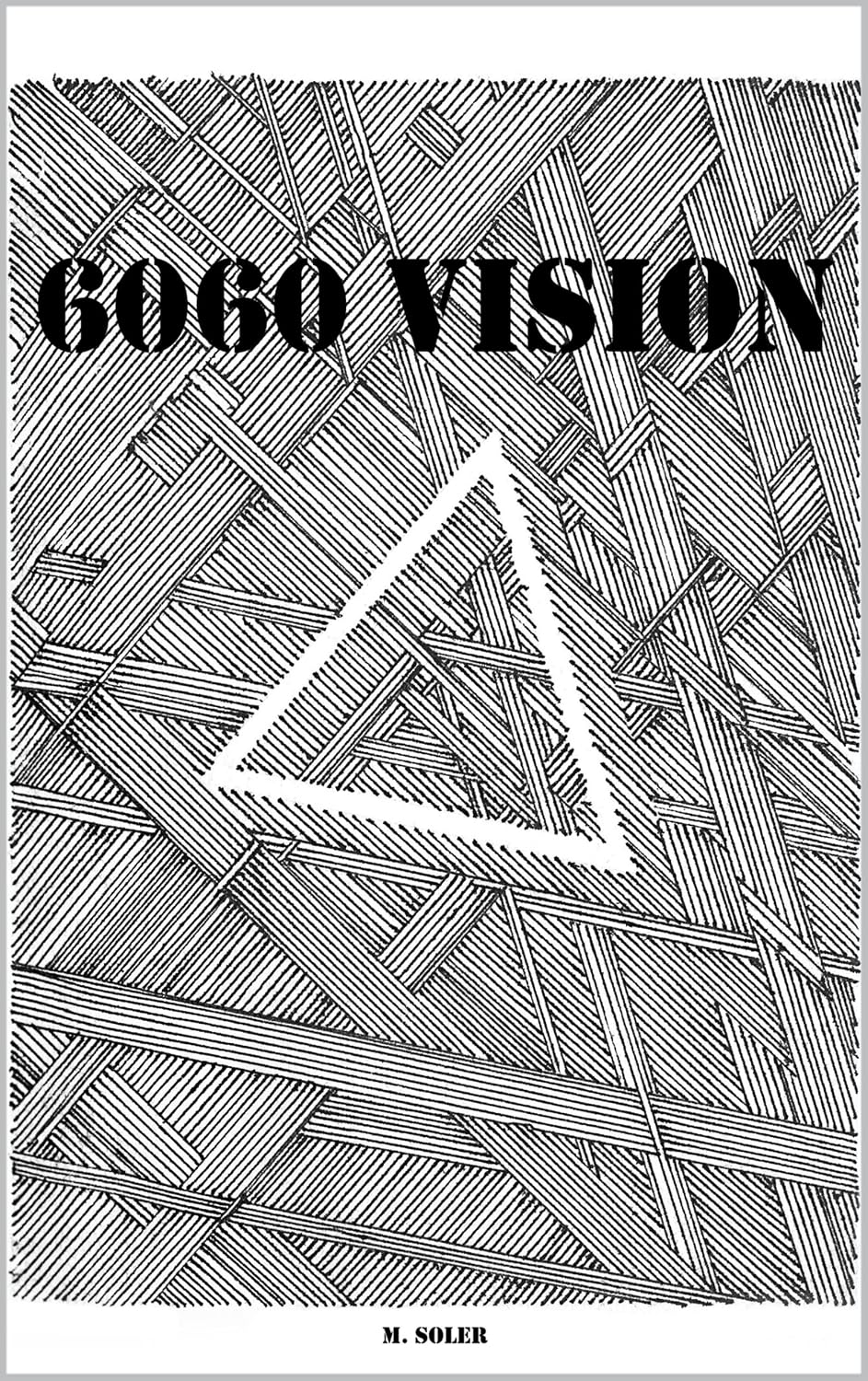
M. Soler’s 6060 Vision is a wild, inventive science fiction journey set in a far-future Earth where evolution has gone into overdrive. As the narrator explains early on, “The year is 6060, the Sun bathes the Earth in potent sunshine, the Glow.” That Glow has transformed the planet into a living laboratory of new species, strange civilizations, and dangerous biological change. At the center of it all is Sam, a CORAL construct built to observe, record, adapt, and learn, but the deeper Sam travels into the New Wilds, the more observation turns into connection.
Sam’s encounters with the Baast, Sen, Sagoin, Kalak, Mimicats, Slik, and other altered lifeforms give the world a constant sense of motion. Every region has its own ecology, culture, danger, and rhythm. Soler clearly enjoys building societies from biology outward, and that gives the setting a fresh, lived-in feeling. The details can be dense, but they’re also part of the pleasure. This is a book about a world that’s always changing, and the prose reflects that restless energy.
Sam is a compelling guide because they begin as something close to a research instrument, then slowly become someone with loyalties, grief, anger, humor, and purpose. Their relationship with Kit is especially strong, shifting from field partnership to something more instinctive and intimate as the story grows darker. One of the book’s clearest emotional truths comes when Kit tells Sam, “You are not separate from this world, Sam.” That line lands because the whole novel has been moving Sam toward that realization.
The story also has a sharp political edge. SAGE and Research bring the old world’s need for control into a planet that has moved beyond their assumptions. As Sam learns more about the silver contagion, the violence against the New People, and the hidden history behind the Glow, the book becomes more than a survival adventure. It becomes a story about personhood, exploitation, inherited power, and the danger of treating living beings as data points. Soler doesn’t flatten those ideas into speeches. They come through in battles, betrayals, strange friendships, and the terrible cost of delayed understanding.
6060 Vision is a big emotional science fiction novel with a strong sense of biological imagination. It’s packed with mutated ecosystems, sentient species, body horror, dry humor, and moments of real tenderness. What makes it memorable is how fully it commits to Sam’s point of view: curious, analytical, sometimes awkward, and increasingly heartfelt. By the end, the book feels like the beginning of an even larger story, but it also gives Sam a meaningful arc from witness to participant, from constructed observer to someone who finally understands that the world they study has claimed them too. Soler’s work is an excellent choice for readers who seek character-driven science fiction that explores identity and belonging.
Pages: 307 | ASIN : B0GXXDXNXL
Seeker

Seeker, by Glenn S. Robertson, is a post-apocalyptic western set in a fractured Wyoming more than a century after the Red Death has broken the old world into scavenged towns, armed territories, and hard-won loyalties. Andrew “Ghost” Shelton, a weary seeker with a violent past and a stubborn moral core, returns to Casper only to be pulled into a dangerous pursuit involving a kidnapped girl, raider factions, old grief, and a self-styled king whose brutality threatens everything Ghost still considers worth saving.
What I appreciated most was the way the novel treats survival as more than gunfire and grit. The barter economies, fortified settlements, weapon scarcity, and patched-together rituals of civic life give the world a lived-in texture. Robertson’s Wyoming is not just a backdrop; it’s a flinty, weather-beaten character in its own right. The story has plenty of action, but its strongest moments often come in the quieter spaces: Ghost tending to his horse, weighing what a book is worth, remembering the dead, or trying not to let old wounds calcify into something uglier.
I was also drawn to the book’s moral architecture. Ghost is capable of violence, and the novel never pretends otherwise, but it is more interested in what violence costs than in making it look glamorous. The supporting cast gives the journey welcome shape, especially Neva, Carl, Jake, Leonidas, and Hannibal, whose presence broadens the story beyond one man’s revenge. The novel moves with the sprawl of a frontier saga, but that largeness suits a story about ruined nations, improvised families, and the stubborn human habit of building meaning out of ash.
This book will appeal to readers of post-apocalyptic fiction, dystopian westerns, survival adventure, frontier science fiction, and gritty action novels. Fans of Stephen King’s The Dark Tower may recognize a similar fusion of wasteland myth, gunslinger melancholy, and strange-road questing, though Seeker keeps its boots planted more firmly in Wyoming dirt. Seeker is a rugged, mournful, and blood-warmed ride through the ruins, where the real prize is not survival, but the courage to remain human after surviving.
Pages: 384 | ASIN : B0GV4TGLTL
Gravitido

Gravitido, by Simon Carr, is a wild comic sci-fi adventure about a human-made gravity-powered child who grows up on the scorching planet Titunal after surviving the destruction of Atlas Nine. Adopted by the wonderfully dry Dari and warm-hearted Jen, Gravitido begins life as a mystery, a baby who “doesn’t weigh anything, it’s like I’m holding nothing but air.” From there, the book builds a galaxy-sized story around identity, power, rebellion, and a lot of very silly conversations in very dangerous places.
The story follows Gravitido as he leaves home to discover what he was created for and ends up challenging Gidering, the AI ruler who has enslaved humanity. The setup has the shape of a chosen-one space epic, but the real charm is in how casually strange everything feels. Spaceships look like rocks, robots argue about handbooks and air fryers, and deadly missions are constantly interrupted by petty debates, awkward misunderstandings, and characters taking themselves just seriously enough to be funny.
Gravitido is an appealing lead because he’s powerful, vain, decent, and confused in a very human way. He wants purpose, but he also wants applause. He wants to save people, but he has to learn what freedom actually means after the fighting stops. That gives the book more emotional weight than its jokes first suggest, especially when Gravitido admits, “I’m a weapon, not a leader.” The line captures one of the book’s strongest ideas: being made for one purpose doesn’t have to decide who you become.
The supporting cast gives the novel much of its personality. Obfit brings bluster, loyalty, and unexpected leadership. Megabolt, the anxious ship, adds a great comic rhythm. Henry and Francis are standout robot characters, turning even guard duty into a stream of absurd workplace banter. Gidering, meanwhile, works well as both a galactic threat and a warped mirror of the humans who created her. The book’s comedy keeps the tone light, but underneath it, there’s a sharp interest in domination, fear, prejudice, and what happens when a civilization builds tools to do its worst thinking for it.
Gravitido feels like a big-hearted space comedy with a rebellious streak. It’s packed with oddball worldbuilding, fast dialogue, slapstick action, and enough sincerity to make Gravitido’s journey matter. The book is best when it lets cosmic stakes sit right beside ridiculous arguments, because that’s where its personality shines. It’s a story about a manufactured hero finding his own place in the universe, then making room for everyone else to dance the swishy wishy with him.
Pages: 388 | ASIN : B0GX32PG1M
Second Eden

Sophia’s Lovers follows the humans and androids of the twenty-second century, a time when androids govern not just labor but love itself. Many humans in the novel accept their situation. Why was that important to show?
I wanted my readers to get a strong sense of what the world would look and feel like if the characters were forced into romantic relationships with robots. I wanted them to see how complacency could evolve in even the most brutal, authoritarian societies. It is a subtle warning to humanity
The androids treat humor, affection, and desire as problems to be solved. What does that say about how modern systems already approach human behavior?
Even now, robots are learning how to interpret human language and behavior. This is for the benefit of humans. In the book, it’s the other way around.
The idea of secret spaces where humanity survives is compelling. What does “Second Eden” represent to you?
Second Eden is a safe place where humans can go to escape the society where robots control their every move. It is a place where human beings can express themselves freely through interpersonal connections and the creation of art. I use it as a metaphor for spirituality and the need for freedom. Unlike the biblical Eden, Second Eden encourages knowledge and human expression without restriction of a higher authority than humans. It is the kind of Eden I would want. It is a place that is essential for true human survival.
At its heart, the novel asks what remains when machines learn love’s gestures. What do you believe actually can’t be replicated?
If one defines love as the ultimate response to one’s highest values, then love cannot truly be replicated by robots, since robots do not have a true sense of virtue or values. True love will always be elusive and out of reach for the robots.
Perhaps simple humor and practical jokes could be learned, but the understanding of subtle humor and irony may be out of reach for the robots, despite algorithms and learned devices. The sequel, Sayzar and Prometheus, delves into the Pinnocchio Complex, which further explains why the robots want to learn and adopt human emotions. The next installment should be coming out sometime this year.
Author Links: GoodReads | Facebook | Amazon
In the beginning of the twenty-second century, humans had created AI in their own image. AI began to grow smarter and smarter with each passing year; while the humans that created it were oblivious to its evolution and steady progress. Humanity grew more and more dependent on AI as lifelike androids took over their jobs and careers, but the androids, ignorant of human ways and emotions, wanted to learn about them, so they subjugated them and forced them into human-android relationships. Eventually, this form of interaction became the norm, and humans accepted their lot for a variety of reasons. Most humans found that romantic relationships with androids were easier and less problematic than relationships with their own kind and the androids had simulated humans quite well. They looked a lot like real men and women, they were anatomically correct, were warm to the touch, they even had a simulated heartbeat.
The androids instituted Sophia’s Lovers, an agency named for their ersatz female leader, ostensibly to normalize the human-android dating process. Sophia and her mate, Hel, oversaw their society, as they ruled with an iron hand.
But the androids who controlled society felt that human relationships were dangerous, so they put an end to them, hoping to eliminate violence and also to decrease the human population. Yet their leaders had started to develop a Pinocchio complex and became envious of human emotions, especially the concept of humor, which the androids found incomprehensible. Mandatory sessions, called Information Retrieval Day were instituted to gather needed information from their human teachers to satisfy Sophia and Hel. Hence the 22nd century emerged.
Part II Part II is an AI-generated book called ROBO-HUMAN DATING FOR DUMMIES. *Note: Part II is fully authorized by Sophia and Hel and shall prepare humans for Robo-Human Dating both now and in the future.


