Dying to Live takes readers on an intimate and eye-opening journey, revealing how making peace with mortality can unlock a richer, more meaningful life. Why was this an important book for you to write?
For most of my life, death has been a silent companion, something that shaped my choices more than I realized. From losing my mother when I was young to the many moments since where mortality came close, I’ve learned that it isn’t something to fear as much as it is something to learn from. Writing this book was a way of bringing those lessons forward, not only for myself but for anyone who has ever felt the weight of impermanence and wondered how to live more fully because of it.
What were some ideas that were important for you to share in this book?
I wanted to show that death is not just an end but also a mirror. It reflects back the stories we’ve been telling ourselves, the identities we cling to, and the fears we avoid. One idea that mattered to me was the practice of “dying to live,” which is about shedding old roles, patterns, and emotional baggage so that we can step into a freer, more authentic life. I also wanted to share that this work isn’t abstract philosophy. It is lived, messy, human. My stories are meant to open space for readers to look at their own lives with gentleness and courage.
How has writing Dying to Live impacted or changed your life?
The writing process forced me to sit with truths I might have preferred to leave buried. It slowed me down, made me listen more deeply to myself, and invited me to face the places I still resisted. In doing that, I found more ease, more gratitude in the everyday. By leaning into death I became more alive, more playful even. It reminded me that life is fragile, fleeting, and far too precious to postpone.
What do you hope is one thing readers take away from your story?
That it is possible to turn toward death without being consumed by it. My hope is that readers will feel less alone in their fears and more connected to the beauty of simply being here. If even one person puts the book down and feels a little lighter, a little freer to live with love and presence, then it has done its job.
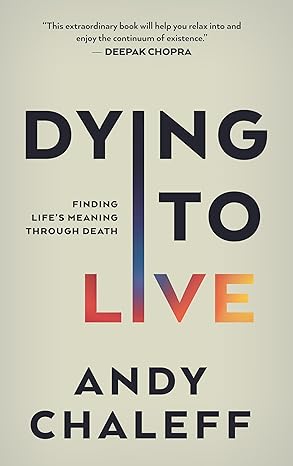
What if embracing death is the key to truly living? We spend our lives avoiding the thought of death-yet its presence shapes everything we do. In Dying to Live, Andy Chaleff takes readers on an intimate and eye-opening journey, revealing how making peace with mortality can unlock a richer, more meaningful life. Blending memoir, philosophy, and deeply personal reflections, Chaleff invites us to step beyond society’s distractions and face death with curiosity rather than fear. Through poignant stories and thought-provoking questions, he helps us see that dying isn’t the end of life’s meaning-it’s where we finally begin to understand it.
Andy Chaleff’s Dying to Live is part memoir, part meditation, and all heart. With the tone of an honest friend and the vulnerability of someone who’s walked through fire, Chaleff invites readers into an intimate, sometimes raw conversation about death and, maybe more importantly, about how thinking about death helps us actually live. This isn’t a book that preaches answers. Instead, it’s a meandering, deeply personal journey through loss, fear, letting go, and making peace. From the death of a childhood dog to the gut-wrenching loss of his mother, and on through reflections on identity, legacy, and even sex and silence, Chaleff wrestles openly with life’s biggest unknown.
What struck me first was how disarmingly simple and powerful the writing is. Chaleff doesn’t try to impress with fancy language. He speaks like someone who just wants to be understood. He writes about the death of his dog, Apricot, when he was six, and how that loss introduced him to what he calls the “gray zone,” a numbing fog that returns every time grief visits. His ability to recall that moment without filtering it through adult logic gives the story a punch of realness. And when he says, “Buying this toy is just a way to bring a little joy back into your life, not a reward for your grief,” I teared up. It reminded me of how often we try to patch grief with distractions and don’t realize we can feel two things at once, sad and grateful, broken and hopeful.
One of the most impactful chapters, for me, was Chaleff’s account of learning about his mother’s death in a car accident, a moment that irrevocably altered the course of his life. He connects this devastating event to the parable of “The Farmer and the Horse,” suggesting that it is often impossible to immediately discern whether a moment is truly good or bad. That kind of spiritual patience is rare and difficult to cultivate, yet Chaleff communicates it with quiet clarity. It’s this calm, unembellished insight that elevates the book beyond memoir; it becomes something closer to healing.
Another particularly striking section is when Chaleff reflects on the profound shift that occurs after the loss of both parents, the realization that he now stands closest to death. While the subject is inherently somber, his description of sorting through old boxes and choosing to let go of long-kept mementos carries a quiet elegance. “It wasn’t about erasing the past,” he writes, “but making space for the present and future.” That sentiment lingered with me. It prompted me to consider the things I’ve held onto, not out of necessity, but because they anchor a sense of identity. Chaleff’s exploration of detachment is neither rigid nor emotionally distant; it is sincere, deeply personal, and quietly resonant.
Dying to Live is not so much a book about death as it is a meditation on how to live with greater presence and depth. It speaks to those who have experienced profound loss, who find themselves quietly wrestling with mortality in the still hours of the night, and who carry unresolved grief just beneath the surface of daily life. It is especially meaningful for readers who yearn to live more intentionally but may not know where to begin. I would recommend it to anyone prepared to pause, reflect deeply, and perhaps be moved in unexpected and lasting ways.





 LITERARY TITAN