Blog Archives
Racism is Messy

White Folks Be Trippin’ is a thoughtful collection of poetry that explores people and culture. What were some ideas you felt were important to highlight in your poetry?
Honestly, I wanted to create a space where I could be truthful about the absurdities of maneuvering through the white gaze as a Black person. When folks read this text, I want them to feel like they were immersed in a workshop where we got to cry, and laugh and throw things together. From naming the ways we protect white innocence, to understanding the nuances of how we rob Black/Brown/Indigenous children of theirs, I used poetry, micro-memoir and worksheets to play out all the darting thoughts that come across a mind forced to bear witness to the realities of whiteness in it is truest forms. Incarceration sites to the slave owning history of our Bank lenders, racism is messy and the gaslighting runs deep.
There is deep examination of race and justice in the book. What do you feel is something that doesn’t get discussed a lot when it comes to race?
When it comes to discussing race, especially as authors, we are demanded to write about race from a perspective that is about teaching white people how to be better versions of themselves, rather than pouring into Black, Brown and/or Indigenous folks who suffer under the weight of racism and white supremacy. That in and of itself is racism and white supremacy. The notion that the people that we should invest the most in intellectually are white people robs Black/Brown/Indigenous folks of our right to learn more about the systems we live in, about our own people, about our own capacity for growth. Many racial justice learning spaces operate from this perspective as though the learning of the most targeted peoples is unimportant. I am invested in writing books that center our awareness when it comes to race and justice rather than feel compelled to write for an audience that refuses to up their game and be in it with the experts rather than at the starting place.
Did you write this collection of poetry over time or did you write it specifically for this book?
I started this collection a few months after I moved from NYC to Seattle, WA in early 2016. Moving from a city as large as New York, to a place like Seattle was a culture shock. What was even more interesting, is that as white as Seattle is, people spoke of it as if it was (and is) a huge progressive bubble. Meanwhile, I was experiencing some of the most direct racism I had ever encountered. I needed a place to express what I was observing- that what white folks were telling themselves about who they are, was different than how they showed up. I made a short chapbook version of this book, and thought that would be it. Then the pandemic hit, and then the Black Uprising, and I wanted to make a tool for us. For Black folks. It’s almost normal for Black folks to be expected to absorb all the violence we deal with in these systems and just keep going as if we are superhuman. This Spring reminded me of our need to reflect.
What do you hope is one thing readers take away from your book?
I hope readers of this book understand Black folks, Brown folks & Indigenous folks have a right to our humanity, which includes talking about our experiences in a way that is not meant to coddle white people.
Author Links: GoodReads | Twitter | Facebook | Website | Instagram
White Folks Be Trippin’
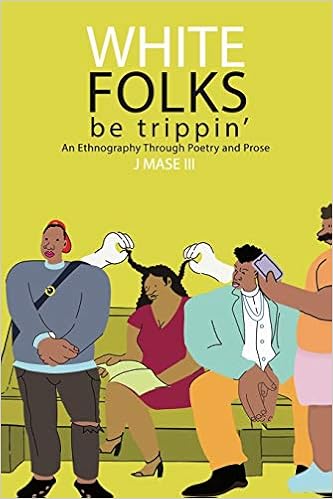

The modern-day history of America is filled with police brutality and racial injustice towards black, brown and indigenous people. The unjust murders of people of color by the hand of police officers continue. But we cannot tie the racism only with these murders. Racism is a deep-rooted social evil that exists in every bit of this country. People express their racial mindset rather proudly. It is often presented as a national pride. Every raising voice against this is branded as anti-national. But the more they oppress, the higher will be the voice. This anthology propels that voice beyond limits. Every line, every word is filed with the personal experiences. Every poem reflects the anger, pain and injustice.
White Folks be trippin’ is not a typical collection of prose and poems. While reading this striking collection of poetry, you will feel the intensity of the underlying emotions. They speak volumes. You will experience a sudden urge to express your emotions too. This is our inner voice and our expression against oppression. Suddenly, we will find a space to pen down our raising thoughts. J Mase III speaks to his readers through his passionate and emotive language. Because he knows every black, brown, indigenous, and queer person has gone through the same experiences at least once in their lifetime. If you can relate to the poetry you’ll find truth within the pages, if you cannot relate you’ll still be able to feel the authenticity in the words.
The feeling of sarcasm permeates some of the poetry. The author uncovers the contradictory nature of people and their weak efforts to create a liberal, empathetic, compassionate face for themselves. Although the author presents this true face with a touch of humor, these words can still pierce your heart. White Folks be trippin’ is an engaging and poignant collection of thought-provoking poetry.
Pages: 92 | ISBN: 1716758637




 LITERARY TITAN