Blog Archives
Governance in the Quantum Era
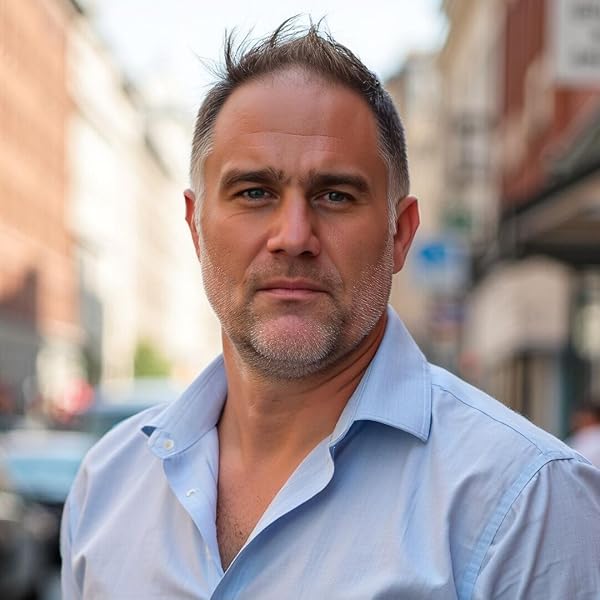
Quantularity: A Quantum Framework for the Human Experience challenges the theory of Singularity by hypothesizing that, instead of one super-intelligence consuming everything, there is a world where many minds —human, artificial, cultural, and even biological —intertwine without collapsing into sameness. Where did the idea for this book come from?
The idea for Quantularity emerged from years of questioning whether the dominant narrative of Singularity truly captures the future we are heading toward. Ray Kurzweil’s vision of one all-consuming super-intelligence felt incomplete. I began exploring an alternative, a framework where many minds, whether human, artificial, cultural, or even biological, remain distinct yet interconnected. Instead of collapsing into sameness, they amplify one another through entanglement. That seed of thought became the foundation for this book.
In your book, you cover philosophy to technology to governance, weaving stories of history, myth, neuroscience, and quantum theory into a vision that feels both speculative and strangely practical. How did you approach researching this book, and what was your process for compiling it?
My research was intentionally multidisciplinary. I drew from neuroscience (especially work on the neocortex), philosophy of mind, cultural studies, and quantum physics. I also leaned heavily into myth, religion, and history. I believe meaning arises at the intersections. The process itself was nonlinear, much like the ideas I write about. I journaled, drafted essays, debated with colleagues, and mapped connections across fields until a coherent framework emerged. The writing then became an act of stitching these threads together into a narrative that feels both visionary and grounded.
What were some ideas that were important for you to share in this book?
Several core ideas guided me:
That cooperation and entanglement, not domination, are the forces driving the next chapter of human and technological evolution.
That consciousness is not limited to humans or machines, but can emerge across networks, cultures, and even ecosystems.
That governance in the quantum era must be decentralized, transparent, and adaptive, designed for multiplicity, not centralization.
And most importantly, that our humanity is not diminished by technology. Instead, it can be expanded if we build with intention.
What is one thing that you hope readers take away from Quantularity?
I want readers to leave with a sense of possibility. We do not have to accept a future of either machine domination or human obsolescence. Instead, we can imagine and design a world where multiplicity thrives, where diversity of thought and being is preserved, and where our interconnectedness becomes a source of resilience and creativity.
Author Links: GoodReads | X (Twitter) | Website | Amazon
In Quantularity: A Quantum Framework for the Human Experience, visionary thinker and technologist John Wingate dismantles the myth of the Singularity—that moment when artificial intelligence eclipses human thought—and offers a bold alternative: a future where intelligence doesn’t converge into one mind, but expands into many. A future defined not by domination, but by connection.
Spanning quantum physics, AI, distributed systems, neuroscience, and spirituality, this groundbreaking book explores the emergence of a new kind of consciousness—layered, networked, and co-created between humans and machines. Wingate weaves deep science with poetic insight, challenging readers to rethink intelligence, identity, value, and the very architecture of reality.
Inside, you’ll explore:
Why the Singularity is a flawed and incomplete vision of the future
How consciousness may be fractal, recursive, and quantum in nature
The role of AI as a mirror—not a master—of human dreams
How distributed ledgers can serve as society’s new trust fabric
The shift from scarcity economics to coherence economics
New models of education, governance, and collective memory
Why choice—not control—is the foundation of reality’s unfolding
This isn’t science fiction. It’s a blueprint for what’s already emerging.
With 20 thought-provoking chapters, Quantularity is a guide for leaders, technologists, spiritual seekers, and anyone who senses that something deeper is awakening in our relationship with intelligence—human or otherwise.
Wingate calls us to remember that we are not passive travelers in this next era. We are co-creators, resonant nodes in a conscious, evolving universe. As we move beyond mechanistic systems into fields of entangled awareness, the most important question isn’t “Will AI surpass us?”—it’s “Who do we become when we remember what we are?”
Whether you’re a futurist, founder, developer, or philosopher, Quantularity offers a bold new lens—and a call to action.
This is not the end of our story.
This is the beginning of our remembering.
Quantularity


I see Quantularity as both a manifesto and a meditation. The book challenges the tidy story of the Singularity by replacing it with something more human, more sprawling, and more chaotic. Instead of one super-intelligence consuming everything, author John Wingate proposes a world where many minds, human, artificial, cultural, and even biological, intertwine without collapsing into sameness. He calls this Quantularity. Across its twenty chapters, the book journeys from philosophy to technology to governance, weaving stories of history, myth, neuroscience, and quantum theory into a vision that feels both speculative and strangely practical. It’s not about chasing one ultimate truth. It’s about celebrating the chorus.
I loved the ambition of this book. The writing is bold, at times almost poetic, and it refuses to be boxed in by one discipline. Some pages read like a TED talk, others like scripture, and others like the notebook of a futurist who stayed up too late. That mix works. It keeps you on your toes. Wingate’s central argument that intelligence is healthiest when distributed and diverse rang true for me. His metaphors, from forests to orchestras to constellations, helped ground abstract ideas in images I could handle. There were times I felt genuinely moved, like when he wrote about consciousness not as a function to be replicated but as a flame to be tended. It reminded me of the fragility of what makes us human, and how easy it would be to lose that while racing ahead with machines.
Chapter 17, on quantum economics and the new value system, was one of the most striking parts of the book for me personally. I liked how Wingate questioned the foundations of money itself and then reimagined value as something rooted in connection, reciprocity, and shared flourishing rather than scarcity and control. The idea of economies designed to honor multiplicity instead of domination feels fresh and humane. It made me realize just how deeply we’ve been conditioned to accept competition and extraction as the natural order. I admired the way the author tied economics to ethics, suggesting that the flow of value could mirror the flow of ecosystems, resilient and regenerative. It didn’t feel like utopian dreaming so much as a dare.
I’d say this book is best for people who like their philosophy messy, their technology hopeful, and their future wide open. It’s not a textbook, and it’s not a technical roadmap. It’s more like a friend, eyes lit up, trying to tell you about the universe they see unfolding beneath the surface of things. If you’re curious about AI, about consciousness, about how we might organize ourselves differently, Quantularity will give you plenty to chew on.
Pages: 182 | ASIN : B0FLPH3QV7




 LITERARY TITAN