Blog Archives
Quell the Cringe with Curiosity
Rosemary, Now and Then is a heartfelt memoir that chronicles a paramedic daughter’s care for her mother, Rosemary, through the labyrinth of strokes and dementia and lessons learned about life along the way. Why was this an important book for you to write?
In addition to honoring my inimitable mother, Rosemary, Now and Then tells a story of quality living with dementia, end-of-life surprises, and afterlife intrigue based on near-death experiences. These topics–too often ignored–can be uplifting experiences for all of us, as mortal human beings.
What were some ideas that were important for you to share in this book?
Asked what I wrote about, if I were to simply say, “dementia and dying,” people would naturally cringe. So familiar we are with associated misery, but less acquainted with the amazing phenomena of these transformative experiences. Rosemary, Now and Then aims to quell the cringe with curiosity.
What was the most challenging part of writing your memoir, and what was the most rewarding?
An author, not a marketing strategist, the post-launch world requires a PR hat not in my wardrobe. But connecting with writing groups and other authors has proven invaluable.
It is most gratifying to share with readers the wonderful person I had the privilege of calling “Mom.” Beyond a daughter’s devotion, when readers relate to the broader message–virtually redefining dementia, dying, and death–we join together in a paradigm shift; an understanding of mortality as a gift of lifelong opportunities and death as immortal reacquaintance with the infinite, loving Beyond.
Fine threads of brilliance weave intricate Irish-veil thoughts through her filigree mind. Her three-year-old self emerges, radiant and quizzical. Grappling with the nature of existence, Rosemary laughs her way to the grave. Devoted daughter Christina devises caregiving innovations and connects dots of amazing coincidences. Paradoxes of mortality balance gravity with hilarity, pain with joy, absurdity with wisdom, practicality with mysticism.
The “Now and Then” format depicts leaps in time, place, and person that challenge reality, in league with Rosemary’s mind.
A journey of wit, wisdom, and sheer determination, Rosemary’s story concludes with her signature cinnamon bun recipe for readers to bake and share with loved ones . . . as Rosemary would do.
Rosemary, Now and Then
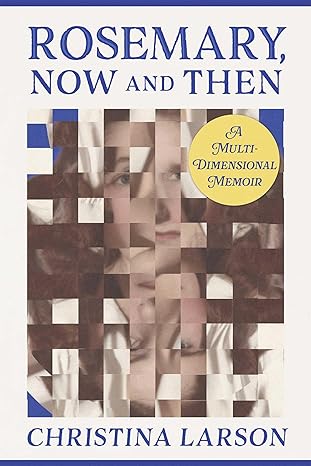

Rosemary, Now and Then is a heartfelt memoir that chronicles the author’s experience caring for her mother, Rosemary, through the labyrinth of strokes and dementia. This story is about resilience, love, and finding moments of humor and grace amid decline. The book paints an intimate portrait of a woman whose vibrant personality and sharp wit remain luminous despite her fading health. It delves into the challenges of caregiving, the philosophical reflections on mortality, and the surprising gifts of dementia, offering readers an unexpectedly uplifting perspective on life’s inevitable final chapter.
The writing is unflinchingly honest and emotionally raw, yet it’s peppered with humor that keeps the tone buoyant. One moment that stood out to me was when Rosemary, in the throes of a stroke-induced episode, commented on walking backward into a wall, comparing it to her mother’s wringer washer. It’s poignant and hilarious, a testament to Larson’s ability to capture the absurdity and humanity of such situations. These anecdotes keep the narrative personal and relatable, transforming it from a clinical account into a deeply human story.
I particularly appreciated Larson’s exploration of dementia not as a linear descent but as a reorganization of memories and self. Rosemary’s “mental excursions” into her past and imagined realms are described with a mystical reverence that challenges the stigma surrounding cognitive disorders. The book doesn’t shy away from showing the hard truths of caregiving, from burnt meals to late-night hospital runs. It also highlights the transformative power of love, like Larson’s determination to honor her mother’s wishes to maintain her dignity and humor to the very end.
One of my favorite sections was the rehabilitation episodes, especially Rosemary’s knack for connecting with strangers at the rehab center. The way she toasted “to the witnesses” at lunch, a subtle nod to Longfellow’s poem about slavery, demonstrated her sharp intellect and enduring sense of justice. It’s these moments of depth and insight that elevate the book from being just a caregiving memoir to a broader reflection on life’s interconnectedness and the enduring strength of character.
Rosemary, Now and Then is a beautifully written and deeply moving memoir that will resonate with anyone who has cared for a loved one through illness or who is curious about the interplay between life, death, and memory. Larson’s storytelling is warm and conversational, making complex topics accessible and relatable. I’d recommend this book to caregivers, healthcare professionals, and anyone seeking a profound yet uplifting exploration of the human condition.
Pages: 355 | ASIN : B0DQLNNFQN




 LITERARY TITAN