Blog Archives
Honoring the Clubmobile Women

Forged in Fire tells the true story about the women who joined the American Red Cross’s Clubmobile program during World War II, sharing what life was like for the courageous young women who served in war zones to bring some humanity to the soldiers. Why was this an important book for you to write?
Because my mother was in the clubmobile program and the program served as the perfect way for her to get past a personal tragedy, and assist American GIs directly. Her World War II experiences helped shape the person she was to become.
How much research did you undertake for this book, and how much time did it take to put it all together?
My research for this book stretched over four decades, including extensive interviews, and the actual writing of the book took seven years.
What were some ideas that were important for you to share in this book?
I wanted to underscore and highlight how unique and brave the women of the Red Cross clubmobile program were, and the substantial contribution they made to the war effort. But I didn’t want to sugarcoat the story or ignore the real issues they all faced with sexism, sexual assault, racism, and people undervaluing their efforts.
What is one thing that you hope readers take away from Forged in Fire?
Although the sexism of the 1940s severely limited what American women were allowed to contribute to the war effort, millions of women found a way to get involved at home and abroad. The women of the clubmobile program left home and family for years at a time and risked their lives simply to bring a little taste of home to millions of GIs and to help their morale. In that effort they were highly successful. And it should not be forgotten that at least eleven clubmobile volunteers were killed and never returned home.
Author Website
They weren’t soldiers, but they served in war zones. They didn’t carry weapons, but they fought every day—to lift morale, restore humanity, and bring a taste of home to battle-weary troops.
Forged in Fire tells the true story of the Red Cross Clubmobile Department—an innovative wartime effort that deployed courageous American women on a remarkable mission across Europe during WWII. Driving 2½-ton trucks loaded with coffee and doughnuts, these women braved bombings, buzz bombs, and battlefield trauma to serve those risking their lives.
Through the eyes of Blanche Barnes, a shy Midwestern woman transformed by tragedy and service, we follow the clubmobilers from England’s foggy airfields to the ruined cities of France and Germany. They flew in B-17s, danced with spies, and crossed paths with generals and journalists—showing resilience and humor in the face of war.
More than just a support operation, the clubmobiles became a lifeline to thousands of soldiers—and a proving ground for a generation of strong, capable women.
For readers of World War II history and biographies, this is an unforgettable, true account of grit, compassion, and an untold story on the front lines of World War II.
Forged in Fire: Grief, Purpose, and Devotion of a Woamn at War


Robert L. Gangwere’s Forged in Fire tells the true story of Blanche Barnes, a young Midwestern woman who joins the American Red Cross’s Clubmobile program during World War II. Through her eyes, we witness the war from an unusual vantage point, one shaped not by combat but by coffee, doughnuts, and determination. Blanche’s journey is full of heartbreak, resilience, and unexpected adventure. She faces devastating personal loss, brushes with death, and the realities of war’s chaos, while also encountering generals, spies, and musicians. What begins as an ordinary life of music and marriage transforms into a remarkable testament to courage, purpose, and survival in the face of global upheaval.
I was struck by how alive Blanche felt on the page. The writing doesn’t just record her story, it breathes with it. Some passages are quiet and tender, while others hit hard with sudden violence or grief. I found myself laughing at her boldness, then minutes later, my throat tightened as she endured unimaginable loss. Gangwere manages to capture both the sweep of history and the tiny, intimate details that make it real. The prose is clean and direct, which kept me moving, but it also left room for my own emotions to rise up and spill over.
What stayed with me most was Blanche’s spirit. She was not painted as flawless or untouchable, but as relatable. She doubted, she stumbled, she hurt, and she kept going anyway. That stubbornness felt familiar and comforting. I also appreciated how the book didn’t shy away from the darker truths: the Red Cross’s policies, the ever-present danger for women, the moral compromises of war. It reminded me that history isn’t tidy. It’s messy, layered, and often unfair. And yet, through Blanche’s story, I felt a surge of pride and gratitude for the ordinary women who chose to step into extraordinary circumstances.
Forged in Fire left me both heartbroken and inspired. It is a book that stays with you, one that makes you think about resilience and the quiet forms of heroism that often get overlooked. I would recommend it to anyone who enjoys World War II history told through a personal lens, especially readers drawn to stories of women who found strength in unexpected places. It’s not just for history buffs. It’s for anyone who believes in the power of ordinary people to do extraordinary things when the world demands it.
Pages: 324 | ASIN : B0FFN4HKHP

The Tennis Champion Who Escaped the Nazis

Felice Hardy’s The Tennis Champion Who Escaped the Nazis is a deeply personal and emotionally charged biography of her grandmother, Liesl Herbst, who went from being Austria’s national tennis champion in the 1930s to a Jewish refugee fleeing Nazi persecution. The book is part historical investigation, part memoir, and part tribute, tracing Liesl’s life from her privileged upbringing in Moravia through the horrors of World War II and eventually to her quiet resilience in post-war Britain. What sets it apart is the way it weaves together family history, European politics, sport, and trauma, without ever losing its heart.
Reading this book felt like rummaging through an old trunk in an attic and finding not just letters and photos but whole lives. Hardy’s prose is warm and immediate, but the subject matter cuts deep. The opening chapter alone, describing Kristallnacht from the viewpoint of her grandfather David, is as vivid and harrowing as any historical account I’ve read. I could feel my stomach clench reading about a doctor being humiliated and urinated on in the streets of Vienna, and later seeing Liesl’s cousin Emil beaten and carted away. Hardy doesn’t soften the truth; she hands it to you raw, but wrapped in compassion.
I was especially struck by Liesl’s emotional restraint. Despite witnessing and experiencing so much loss, she managed to carry herself with grace, never speaking much about the past. In one powerful scene, Hardy recalls asking her grandmother about her family, only to see her flinch and change the subject. The silence spoke louder than any confession. Yet Liesl wasn’t just a survivor; she was also a star. Her tennis career, glossed over in most other narratives, takes center stage in chapters like “Tennis Champion,” where she goes from the clay courts of Europe to playing at Wimbledon. I found myself cheering her on, not just in matches, but in life.
What makes this book resonate most is Hardy’s own journey of discovery. Her transformation from someone hiding her Jewish roots to someone reclaiming them with pride is its own compelling arc. She brings an honesty to her process, admitting she didn’t ask questions when she could have, or that she felt ashamed at times to even mention her family’s past. These raw confessions gave the book its emotional core. Her visits to Vienna, Krnov, and Bratislava read like ghost hunts, piecing together a broken mirror, shard by shard.
By the end, I felt like I knew Liesl, but also like I knew Felice. The Tennis Champion Who Escaped the Nazis is more than just a Holocaust biography. It’s for anyone grappling with identity, silence, and inherited memory. I’d recommend this to readers of historical nonfiction, lovers of family sagas, and especially those curious about the forgotten women of sport. It broke my heart, and it patched it up again.
Pages: 321 | ASIN : B0BYQSDVXG

Honor Them for Their Sacrifice
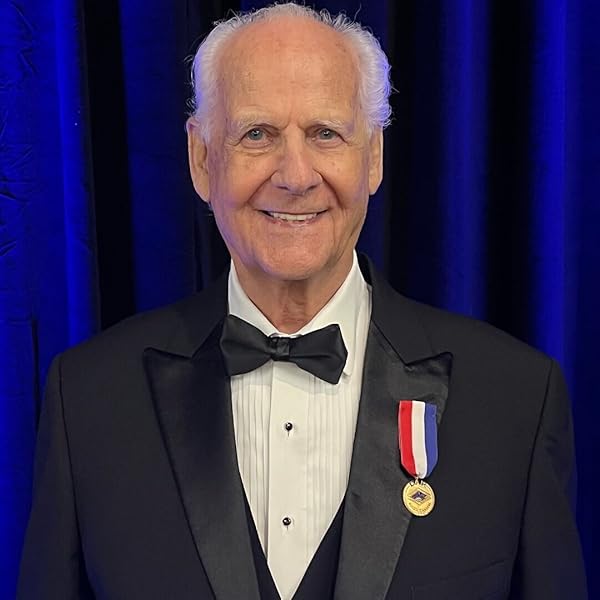
The B-17 Tomahawk Warrior: A WWII Final Honor is a poignant exploration of a hidden WWII saga, where the crash of a B-17 Flying Fortress unravels the untold stories of its heroic crew. Why was this an important book for you to write?
As a young schoolboy watching auxiliary crews retrieving body parts of the deceased crew from the field where the Flying Fortress crashed and exploded, remained as a vivid image in my mind for the rest of my life.
That I had seen horrific scenes during my time in the bombing and rocket attacks on London paled in comparison with this incident. The thought that this plane had almost crashed into my house before exploding about 30/40 seconds later in a nearby field made me think that some of those body parts could have been mine.
While it remained in the back of my mind for many years afterward, and I had mentioned it to my wife and children, I had no compunction to seek further information. However, while researching for another project, I accidentally came across the story of the plane online. It was after I posted information about this story on my Facebook page strange connections were made. The connection with the pilot’s daughter who never knew her father, the navigator’s diary which came into my possession, and whose descendant relatives never knew he had written a diary.
All of this and many other strange coincidences occurred in which it seemed the souls of those nine airmen had waited for me to reach this stage of my life to cause me to want to honor them for their sacrifice. Thus, in my eighties, a book was born.
What research did you undertake to ensure you had everything you needed to write this book?
The research was intensive and never-ending. One can never really have everything one wants to write a book of this sort. There is always that ‘something more’ one feels one must have, but eventually, the story takes shape. I was fortunate in the sense that having many years of experience in my business of consulting, personnel search, and recruiting, I began tracing the relatives of four of the deceased airmen. Additionally, I made use of the 1940 Census for one family. Using the Freedom of Information Act (FOIA) I obtained information about the 8th Air Force and 398th Bomb Group. Delving even deeper, I obtained the specific Secret Operational Records for the 600th Squadron to which the Tomahawk Warrior crew belonged. The major difficulty of tracing relatives was the fact only one of the crew was married. Therefore, only that crew member had any surviving progeny.
Was there anything that you uncovered in your research that surprised you?
There were so many incidents of serendipity that clearly indicated to me we are all linked in this quantum universe. I feel strongly that I was led, not only by my tenacity to find out what happened to this crew but also by some unknown force. While meeting and interviewing relatives, I fully understood the emotional impact I was having on them. After all, I was the last living person on earth who had seen their loved ones and related to the ultimate sacrifice they made that morning.
Among the several corrections to history I made concerning this accident was the solving of the so-called, ‘Frank Snyder mystery.’ Snyder was the tail gunner for the Tomahawk Warrior but did not fly on its last fateful mission. There was never an official explanation. He returned to the USA and nobody ever heard from him again. A local historian said he traced Snyder and published his findings on the internet. I disproved this theory by showing he had identified the wrong Frank Snyder and began my own independent investigation.
The result of my investigation was both shocking and very emotional for me. Without going into the details here but which are fully described in my book, it is obvious this man deserves full recognition for his service as a member of the TW crew. He suffered a violent and unexpected death in an auto-train accident 19 years after the TW crash. He is buried in a small cemetery in California, and I will spend as much time as possible to persuade local veterans’ groups to lay an annual wreath on his grave. I will continue to reach out to surviving relatives and persuade authorities he should be buried with full military honors in Arlington National Cemetery with his fellow crew members. Snyder flew on every single mission with the Tomahawk Warrior crew except the last fateful one.
What is the next book you are working on, and when will it be available?
Prior to the Tomahawk Warrior, I had started my memoir, Alliance d’Amour: The Rise of Love and Devotion from the Ashes of WWII.
It would tell the story of my late wife Sophie and I, and our life over three continents and many countries. I had survived the Blitz in London and Sophie had lived under German occupation of France. We met after the war and were married for 62 years before Sophie went to heaven in 2018. I am not sure if at 87-years-old I still have the energy to complete this one.
Author Links: GoodReads | Twitter | Facebook | Website | Amazon
He started his own research and began asking himself many questions about the disaster. How did this plane crash and why, particularly in that location? For what reason was the plane misnamed ‘The Tomahawk Warrior’ through all those years? What strange circumstance led the author to come into possession of the navigator’s diary that no one knew even existed? Why did one airman not take his place on board that day and become a part of the ‘missing airman’ legend?
Despite the coincidence that the plane of the ‘Tomahawk Warriors’ and the plane of Lt. Joseph P. Kennedy Jr. crashed on the same day; Huntley revealed a further significant link between them. This incident adds a further little-known aspect about the Kennedy’s in American history.
Based on Declassified Secret Operational Records, analysis of other official and unofficial records, the author’s personal observations on the day of the accident, and his pursuit of other facts, those mysteries became fully resolved. This story provides a distinct understanding of the immense courage those young 20 to 26-year-old American airmen displayed. Mission after mission, they climbed aboard their craft and carried out their respective duties at 28,000 ft in sub-zero temperatures, hoping their electric-heated protective clothing would not short out during the 9 to 10-hour flight. They prayed that flak and enemy fighters would give them that 70 percent chance of getting back home.
The book offers vivid descriptions of those who got shot down, baled out, and died or got captured to spend the rest of the war as POWs.The narrative places its emphasis on the lives of the heroes who served in WWII and their loved ones who have grown up in their shadows. He obtained a posthumous honor to the deceased crew, as well as a Permanent Commemorative Marker, and brought relief and closure to the descendants’ relatives. This is not a post-mortem of wartime machinery, but a window into the lives of some heroes who sacrificed themselves for a cause, as well as a personal insight into the familial relationships with their loved ones at home.


