I Strive to Connect My Stories to the Past
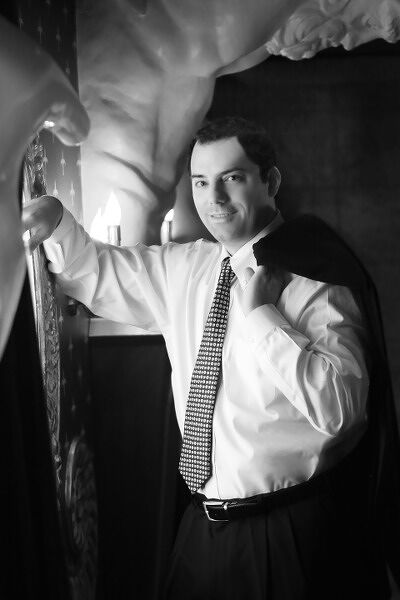
The Recyclers’ Paradise: Dust of the Gods unveils a dystopian world where seven interwoven stories explore the dire costs of rebellion, the perils of a society bound by mechanical obedience, and the dance between free will and destiny. What inspired you to write this collection?
The inspiration was twofold.
First, my wife shared with me stories from her childhood, where she grew up under Stalinist communism. The hardships they experienced were a sharp contrast to my own, even though Medellin, Colombia, my hometown, had its own share of unique problems. Her family fled their native country and sought refuge here, in the United States. While we always hear people stating that Americans take their freedoms for granted, her family’s accounts really hammered that home.
On one hand, there were the ideals espoused by her native government, where everybody would, in theory, get what they needed. But it was also a central-planning regime, where people had little say in their futures.
The stories in this book borrow from her experiences, and magnify certain aspects by orders of magnitude, but they are not a recounting of any specific incident. After all, these stories are fictional and set on another planet.
Second, there is a famous line in the Bible that states that we are created in God’s image. This was an opportunity, for aside from surveillance and punishment, the galactic authorities have their hands in creation, too. As a result, humanity’s origins, as well as its ultimate demise, takes on a narrative very different from the typical theories of nuclear Armageddon, boiling ourselves in a climate-induced hell, or an AI revolt.
How did you conceptualize the dystopian society in The Recyclers’ Paradise, and what influenced the creation of the mechanical brain implants as a mechanism for control and maintaining order within this universe?
The implant offers the ultimate form of control. It allows the authorities to monitor people’s thoughts as well as direct punishments remotely. With a realm spanning the galaxy, it would be inconvenient to have fleets squashing rebellions in far-flung regions, so this offered a means of absolute and immediate domination over the populace.
But the implant has its benefits, too. People can use it to exert control over themselves, as several characters do in the book. Balancing it was important, so it would not just be an instrument of terror.
As a basis, I borrowed from the ideals espoused by the communists that ruled over my wife’s native country. For example, there is no currency or wealth, and everybody automatically gets everything they need. Scarcity is non-existent. However, they also get no say in their future. Everything is perfect and harmonious insofar as people enjoy the mandates assigned to them by bureaucrats.
But people always want to push the boundary. That is evident all around us here on Earth. This opposition took various forms throughout the stories, with the most overt coming from the privateers.
And finally, all of this could not have just popped up out of nowhere. As we see here on Earth, decisions made during times of hardships or war tend to outlive their original purpose and take on a new role. Thus, the historical elements of the society feature prominently, and, much like former Soviet cities exhibit the aggrandized architectures showcasing the Soviet Imperial style, so, too, do the galactic authorities have their own flavor of that. This also borrows heavily from my wife’s experiences, where entertainment primarily focused on heroic clashes during WWII. Here, the Great Galactic War takes the place of Earth’s world wars, and the heroic victories and defeats in that past conflict decorate all the government buildings, as well as drive such mundane things as children’s lullabies. An example of this was when one of the characters recalls his mother singing the Hymn of Falaclaza, which celebrated a notorious defeat.
The subtle and varied acts of rebellion by different characters in the stories are intriguing; can you delve into your process of character development and how you navigated embedding resistance within individuals in a world stringently opposed to such defiance?
Rebellion is a key component of these stories, but the implants definitely make it challenging to pull off successfully. And few do. For some of the characters, such as Silfreda and and Colfred, they are natural emotional responses to the things happening around them. Crushing your own dreams or willfully ignoring the safety of your family are not things people are used to doing, especially in a world where hardships have mostly been eliminated.
Solla, in The Illness of Wayward Citizens, brings a new dimension to rebellion. Inspiration for this character came from the many procedural shows that fill television’s primetime, where the police run informants to root out crime. Simple concept, but the combination of technology and enforcement transform it into something far more perilous than simple crime-and-punishment. That offered some interesting dynamics, especially with the bouts of paranoia Solla experienced. But it also offered a great opportunity for him to expose how life in the shadows can survive despite the authority’s total control.
The trailing stories, starting with The Refugee Conundrum, really begin to take on a new dimension. These give the Nosfelen a lot more prominence, both in the distant history as well as with recent events. For Danfirth, it was important to put this starship captain in a position that his mandate never really considered, both with having to deal with a rescue of a brutish race of primitives, as well as putting him on a collision course with the galaxy’s nemesis. But his journey was also very emotional, both in having to cope with things beyond his control, as well as feelings of connection and loss. For the ships behaviorist, Jellumis, I took inspiration from the political officers that would oversee the commanders on former Soviet naval vessels.
To further deepen the controls that the authorities exert over the populace, it was key to make citizens infertile. Control reproduction, and you can control everything else. This is the origin of the galaxy’s ruling Institute, for example, which shares its acronym with a rather notorious agency right here on Earth. As a result, The Recycler’s Apprentice gave me a chance to peek under the hood of a process that is critical to this centrally planned society. Galhan represents, as much as he can, the elite citizen. He has a cushy job with a lot of latitude. For him, like with the cat, curiosity is what gets him in trouble.
The final stories, Doomsday and Brew of Chaos, are transitions to the main series. For Doomsday, Deepallan represents the typical radar technician stationed in Alaska that had to watch for incoming ICBMs or nuclear-armed bombers. That Cold War post was what drove both his role as well as the Doomsday story itself.
In addition, each story tackles a different aspect of the galactic society. Whether it is family life, infiltration, environmental stewardship, war, law enforcement, or creation and recycling, each story puts a character in place to expose that facet of control.
What is the next book that you are working on and when will it be available?
I’m working on two books. The first is the Book 1 of the Dust of the Gods series, which will pit the galaxy’s rulers against the mysterious angels that appear in Doomsday and Brew of Chaos. At this point I should note that The Recyclers’ Paradise is part of that series, and as a Book Zero, represents an ancillary collection of prequels.
The other book is a historical sci-fantasy that takes place in the Amazon jungle. While this will be a fictional tale with sci fi elements to it, it is rooted in actual events.
As a student of history, I always strive to connect my stories to something from our past. Even Dust of the Gods upholds that principle, though the tie-in is more subtle, and is reserved from the core books in the series.
It will probably be about a year, give or take, before either of these hits the market.
Author Links : GoodReads | Twitter | Facebook | Website
Sure, there is safety. Everybody receives a predefined purpose before birth. And scarcity is nonexistent! But there is a hidden cost.
The law has reduced free will to a fantasy. People can make any choice they want, but obedience and selfless dedication to purpose are the only ones that do not invite punishment. Beneath the imposed veil of peace and abundance, however, is a grim reality where torture is but one thought away and war continues to fester in distant outposts. This collection of interconnected stories exposes the pitfalls ordinary citizens face under the watchful regime that rules our Milky Way, but they also redefine the meaning and origin of life itself.
Posted on October 16, 2023, in Interviews and tagged author, book, book recommendations, book review, book reviews, book shelf, bookblogger, books, books to read, dystopian, ebook, goodreads, indie author, J. N. de Bedout, kindle, kobo, literature, nook, novel, post-apocalyptic, read, reader, reading, science fiction, scifi, space opera, story, The Recyclers' Paradise: Dust of the Gods, writer, writing. Bookmark the permalink. Leave a comment.



 LITERARY TITAN
Leave a comment
Comments 0