Blog Archives
The Desperation of Humans

Earth’s Last Hope follows a retired general and his family as they retreat underground after a catastrophic eruption from Yellowstone, where they encounter an alien civilization that offers humanity a chance at survival. What larger questions about humanity did you want to explore through an extinction-level crisis.
I wanted to portray the underground bunkers at the Denver Federal Center as fully working bunkers, because in real life these bunkers do exist, storing ice cores and the like. NORAD was researched heavily and all written about NORAD is true. I wanted to portray the desperation of humans, and the depravity one can succumb to. I wanted to portray that hope remains, if one does the right things, and one works together for the common good.
How do prayer, marriage, childbirth, family traditions, and celebrations contribute to the community’s resilience?
Each person must see the pure hope in any situation, and they must pull and do their share in the bunkers, as they are working bunkers, and adding in prayer, marriage, childbirth, family traditions, and celebrations bring a semblance of continuity of real life and arr cause to feel happy and more content, it also offers ways in which one can change their surrounds in a positive manner.
What does humanity’s relationship with the Nyard reveal about cooperation and accepting help in the face of overwhelming problems?
Six Nyard have been on Earth since their ship crashed in Roswell, NM in 1947. The commander, Kryonn, was hurt in the crash and all six plus their ship were taken to Area 51. Humans tried to help Kryonn as best they could to help heal him. Kryonn realized that not all humans do bad things. None were treated as test subjects or anything like that since they crashed. The six Nyard stayed to see what was happening on Earth worldwide. The wars and those from other countries not allied with the USA doing harm to the world bothered them. So, the Nyard, helped with new tech for military assets. Humans respected the Nyard and so the Nyard respected the humans they worked side by side with the same. Accepting help was easier after the president was made aware of the Nyard, when they actually crashed, and the help provided since 1947. The president knew she could trust them.
Does Earth’s Last Hope open the door for further stories about humanity and the world that emerges during reconstruction?
Earth’s New Hope will be out by November 2026. What happens is amazing and shocking.
Author Links: GoodReads | X | Facebook | Website
What would you do?
What if you thought you had two or more years of warning before the caldera of Yellowstone would erupt as a super volcano, and suddenly you are told you have one day at best to survive?
Dr. Theodore Grey decided that the scientists under him had their measurements wrong or there was a glitch in the system. Yes, Yellowstone was rumbling, but it did that every day, and the scientists at the USGS Yellowstone Volcano Observatory (YVO), led by Scientist-in-Charge Dr. Theodore Grey, utilized a sophisticated network of GPS sensors and seismometers to monitor the heartbeat of this active super volcano. All the movement in and around the caldera that is Yellowstone National Park is monitored and measured every day, 24/7, with computerized resources. Many scientists and technical people are necessary to monitor the computers, all the equipment, and cover Yellowstone’s large expanse of crater and park land. Yellowstone has thousands of small quakes each year. The subtle Chicago-sized area of ground deformation near Gibbon Falls had buckled upward by one inch in January 2026, but these new numbers must be wrong! Even the newly discovered magma cap 3.8 km deep in January rose sharply overnight! Seven inches of rapid, sustained uplift? No way. That was too phenomenal for the caldera. Seven inches meant high-pressure fluid movement and is indicative of a significant magma intrusion. Real-time information stared back at him from the monitors. Real-time quakes were more pronounced in and around Yellowstone, and some areas close to Yellowstone certainly felt this shift and change. Dr. Rick Long confirmed what Dr. Grey saw in front of him. SEVEN inches in ONE day!! The ground was tilting and rising by inches, not centimeters! The Earth’s crust was reaching its breaking point! The energy built up was too much, too fast. Dr. Grey knew he had to update the President right away. Time was critical. Everything was critical. So much for having a ten to twelve year plus warning! That powerful atmospheric river and a “monster blizzard” projected to drop up to twenty feet of snow over much of the US, including Yellowstone, would not stop the eruption!
Can Earth be saved? If so, who or what will save Earth?
The Bath Salts Journals, Volume One
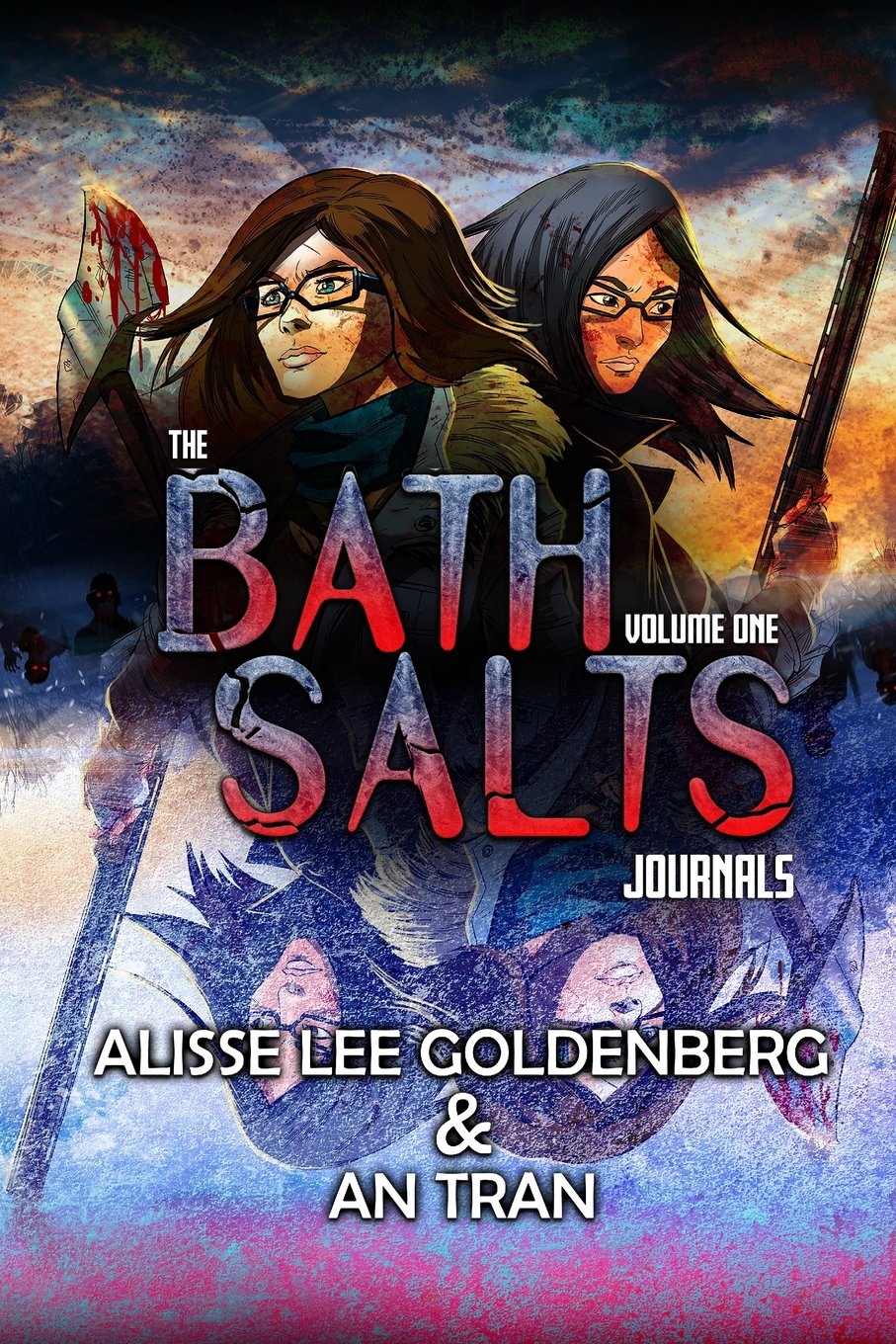

The Bath Salts Journals, Volume One drops readers into a zombie apocalypse through dated entries rather than panoramic spectacle, and that choice gives the book its pulse. Alexis, a Toronto mother of triplets, notices early signs that the so-called “bath salts” attacks are really the beginning of the undead, then drags her skeptical family and a fiercely funny friend, Xuân, into a survival plan that leads north to a fenced compound in Nunavut. What begins as domestic paranoia hardens into a trek through wreckage, then into a rough new life built from hydroponics, fishing, grief, and vigilance. The book’s premise is familiar; its texture is not. It keeps returning the apocalypse to the scale of diapers, canned food, improvised childcare, and whether there will be enough light, warmth, and patience to get through one more day.
What I enjoyed most was the doubleness of the narration. Alexis writes with earnest resolve and maternal terror, while Xuân’s entries slash across the page with profanity, gallows humor, and a kind of anti-sentimental clarity. That contrast keeps the novel from going slack. Alexis can verge on idealized competence, but the book is sharper when it lets exhaustion, pettiness, boredom, and small comforts sit beside the horror. I believed this world most when the characters were arguing over what to pack, improvising meals, hauling children through danger, or trying to preserve scraps of normal life with movies, karaoke, and make-do celebrations. The apocalypse here is not sleek; it’s cramped, messy, and often absurd, which makes it feel oddly convincing.
I also appreciated that the novel is less interested in zombie mythology than in endurance and social reassembly. Even after the gore and flight, the story keeps asking what survival is for. The answer is not heroics alone, but routine, community, and the stubborn decision to remain human. The prose is sometimes blunt, and the emotional beats land a little squarely, yet the journal format forgives some of that by making immediacy more important than polish. I came away feeling that the book’s real engine is not fear but tenacity. It has an unvarnished, handmade quality that suits the material: less a polished studio production than a barricade built overnight that somehow holds.
I’d hand The Bath Salts Journals to readers who enjoy zombie horror, survival fiction, post-apocalyptic fiction, diary novels, and character-driven speculative fiction, especially those who want domestic detail and dark comedy mixed into the bloodshed. It reminded me less of World War Z’s global architecture than of The Walking Dead filtered through a colder, more intimate, more homespun lens, with a streak of irreverence that feels closer to Mira Grant at her loosest. This is a good fit for readers who like their end-of-the-world stories scrappy, human, and a little feral. The end of the world is still, maddeningly, a matter of keeping the house together.
Pages: 216 | ISBN : 978-1945502521

Brilliant Genesia
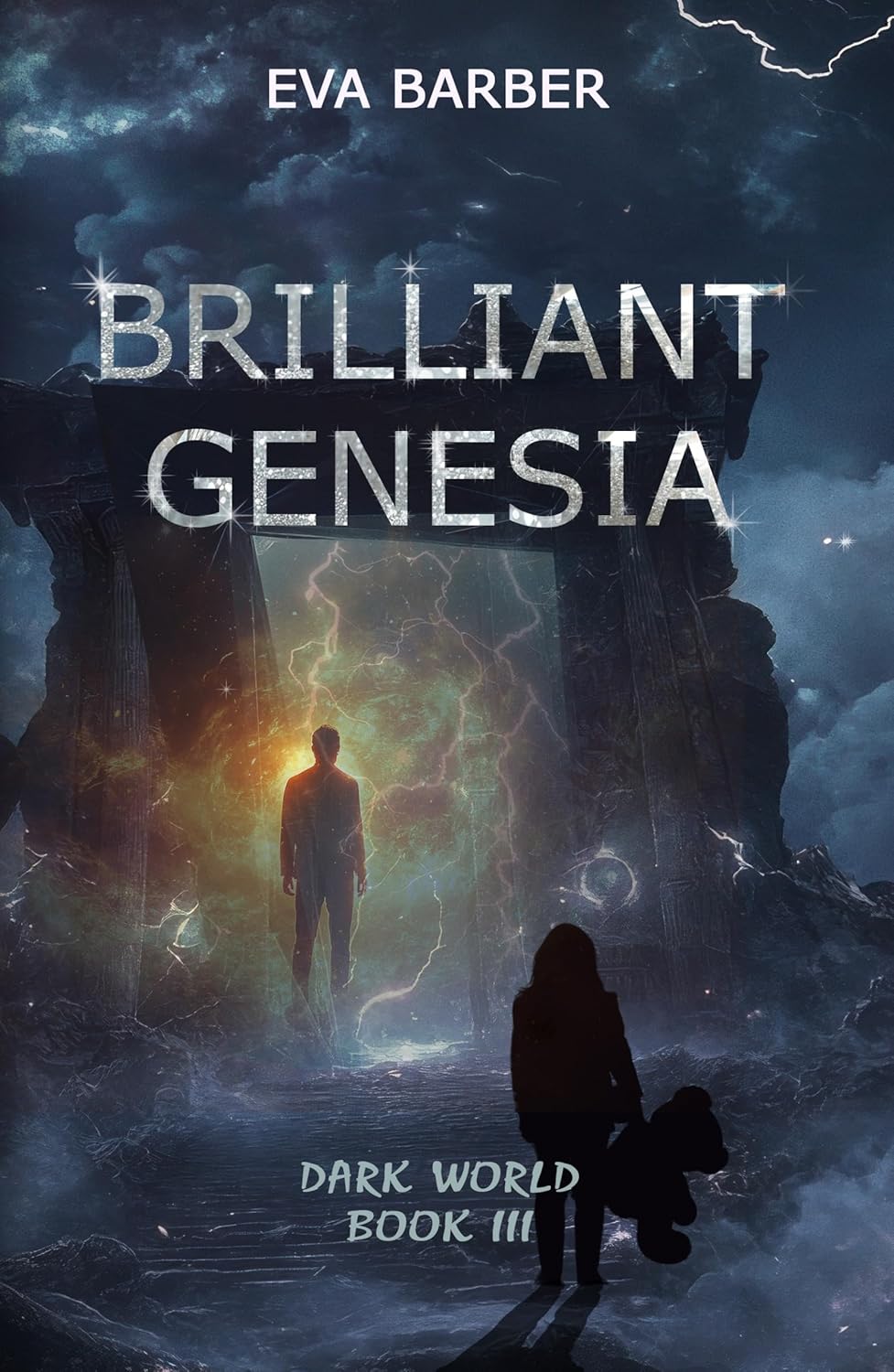

Brilliant Genesia by Eva Barber is a genre-blending speculative science fiction novel that starts like a quiet dystopian coming-of-age story and grows into a high-stakes, reality-hopping fight for humanity. It opens in Andalia, where twelve-year-old Zara is taken to a mental health clinic because she keeps seeing a dark-haired woman in frightening, increasingly vivid “visions.” As Zara grows up, her brilliance bumps up against a society that hems girls into narrow roles, and her secret inner life becomes the seed of something much bigger. Eventually, the story pivots into adult Zara’s life as a top scientist and mother, tangled in time travel experiments, missing people, and a chilling technology called “Brilliant Genesia” that promises immortality by stripping away the parts of us that make us human.
What I kept noticing, in a good way, is how Barber writes with a strong visual hand. The early pages linger on soft colors, quiet art, robes, and ritual, which makes the control in Andalia feel normal at first, almost cozy, until you realize that is the point. Those details do more than decorate the scene. They build a kind of polite cage. I also liked that Zara’s intelligence is not presented as a quirky trait, it is a pressure point. When she is forced to stay small, you feel it in her silences, and in the way she measures what she can safely say. The writing has an earnest, direct quality. It is not trying to be cool. It is trying to be clear, and I appreciated that.
The author also makes a bold structural choice: the book doesn’t just “raise the stakes,” it changes the whole playing field. One minute you’re in a tightly controlled society with a girl being studied, and later you’re dealing with a grown Zara, the Vortex, and forces that literally call her by another name, insisting she is “Olesya Solensky,” pulling her into a broader web of dimensions and old relationships. That kind of shift can feel risky, but here it mostly worked for me because the emotional through-line stays consistent: a woman trying to protect her child, and a child trying to get her mother back. When the villain argues that “Brilliant Genesia” improves life by removing love, empathy, and messy human needs, I found myself oddly unsettled because the logic is smooth on the surface, like glass, and still wrong in the bones. And the book doesn’t let you forget the social cost either. Zara’s past includes hiding who she is, even pretending to be a man to pursue her work, which gives the later ethical questions real weight instead of making them abstract.
I’d recommend Brilliant Genesia most to readers who like speculative sci-fi with a dystopian spine, especially if you enjoy stories that start intimate and then swing wide into big-idea territory (time experiments, parallel lives, and moral battles over what “progress” means). If you want a neat, single-lane plot, the genre shift might feel like whiplash. But if you like ambitious sci-fi that’s still rooted in family bonds and anger at unjust systems, you’ll enjoy this story. And if you’re the kind of reader who finishes a book and immediately wants to talk it through with someone, it gives you a lot to think about.
Pages: 408 | ASIN : B0GF8R2N5Z

Closer to Reality

Arid follows a desperate man and a dwindling band of survivors who struggle to stay alive in a scorched wasteland where water is controlled by the rich and greedy. Joshua is ambitious but deeply worn down. What were some driving ideals behind your character’s development?
I give fragments of my personality to a lot of my characters, and Joshua is no exception. All he really wanted was a normal life and to live in a world that hasn’t lost its humanity. I don’t think he will ever stop striving for that.
Beyond survival, what do you see Arid saying about greed and power?
That what happened in Arid is closer to reality than some may think.
Will there be a follow-up novel to this story? If so, what aspects of the story will the next book cover?
I’m not sure at this point. I’m currently working on a novel that is set to be published this spring, but it’s a totally different subject matter. I definitely haven’t ruled out the possibility of a sequel.
Author Links: GoodReads | Facebook | Website | Amazon
It’s the distant future. The earth is scourged by nuclear warfare and natural resources have become scarce. The country is overtaken by wealthy moguls who dominate the water supply and sell it back to the public at ridiculous prices. After a drastic crime increase “indigents” who can’t afford water are stripped of their belongings and forced out of town by an army of brutes called Purifiers.
Life becomes harsh and ominous for the bright, ambitious Joshua Wyman and his group until they begin to occasionally receive food and other basic amenities after Joshua is deemed useful. When a blatant abuse of Purifier power during a routine visit leaves them reeling, Joshua and his friends reach their breaking point.
They devise a plan to steal the Purifiers’ vehicle during their next visit and escape their hell. Their journey across the uncharted wastelands filled with murderers and thieves proves to be far more than this civilized, benevolent crew bargained for. This tense, divided city will soon face its greatest fear-uprising!
Army of Three

Army of Three follows the Fassbinder brothers through a life shaped by loss, love, violence, and the weight of impossible gifts. The story opens small and personal, then builds into something that stretches across decades, worlds, and even versions of reality. It starts with two young men chasing criminals at night and grows into a tale about loyalty, grief, and destiny. Along the way we meet Azrael, a mysterious and powerful woman whose bond with Axel becomes the heart of the book, and later we see how her death fractures everything the brothers knew. By the time I reached the final pages, the story had folded back on itself in ways that felt both surprising and strangely right, and the letter from Karl brought a quiet and emotional sense of closure.
The writing is straightforward, yet it carries a sincerity that makes the emotional moments land with real weight. Scenes like Axel holding Azrael after the attack shook me. His heartbreak felt blunt and unfiltered. The author is not afraid to lean into big feelings, and the story benefits from that. I liked how the quieter moments in forests or diners or rooftops created space for the characters to breathe. Those scenes let me sit with them, and I grew to care about them, even when they made choices that frustrated me. There is an earnestness to the prose that makes the chaos of superhuman fights and government conspiracies feel grounded.
I also found myself surprised by how much the book weighs in questions of fate and identity. Axel’s struggle to figure out what kind of man he wants to be resonated with me. The story plays with the idea that heroism is not clean or noble, and sometimes it is just two broken people trying to survive what life handed them. Karl’s evolution unfolded cleanly and was emotionally potent as well. Watching him carry the burden of protecting his brother and then eventually writing that final letter made him feel painfully human. Even the supernatural touches, like Azrael’s powers and the strange forces lurking in the dark, worked best when they mirrored the characters’ inner fears. Sometimes I wanted the pacing to slow a bit so I could sit longer with those moments, but the urgency of the plot has its own appeal.
The story closes in a way that honors its emotional core, and it left me thinking about sacrifice and second chances. I would recommend Army of Three to readers who enjoy character-driven science fiction and action stories that are fueled by emotion as much as spectacle. It is a good fit for anyone who likes tales about brothers, unlikely heroes, and love that changes the course of a life.
Pages: 219 | ASIN : B0G26F47K1
The Last Orbit

The Last Orbit is a science fiction novel that follows a small crew aboard the ISS as they witness the end of the world unfold beneath them. It starts in warmth and routine, with astronauts teasing each other over birthday cake and Bowie songs, and then shifts as they detect what looks like a simple anomaly near the sun. That flicker becomes an approaching asteroid, and soon the crew is watching the Earth fall apart as fragments strike Berlin, Naples, Rio, and eventually the entire Atlantic coast. Cut off from Houston, stranded in orbit, the four astronauts are left with nothing but each other, the damaged station, and the impossible weight of survival in a world that no longer exists below.
The writing is simple and vivid, almost cinematic, but what pulled me in most was the emotional pacing. Author Mark Heathcote lingers on quiet moments: a tomato drifting in a hydroponic bay, a Polaroid stuck to a wall, the metallic creaks of the station as it flexes in shadow. These details make the early chapters feel warm and lived in, which makes the later horror hit harder. When the asteroid fragments start landing, the scenes are brutal, shown through the detached silence of orbit. That contrast makes everything sharper. I kept thinking how strange it is that a catastrophe can look almost beautiful from far away. The author plays with that feeling a lot, letting awe and dread sit side by side.
What I enjoyed most was how grounded the characters felt. Their reactions aren’t heroic or polished. Sometimes they panic. Sometimes they shut down. Sometimes they argue because there’s nothing left to do and nowhere left to go. I appreciated that the author didn’t try to tidy their emotions. Ava’s insistence on discipline, Greg’s grief-strained anger, Koji’s quiet resilience, Lena’s obsession with data as a kind of ritual. None of it feels dramatic for drama’s sake. It feels like people are trying to hold on to something solid when the world below them is literally being torn apart. The book leans into the psychological weight of isolation rather than into action-heavy sci-fi, and that choice makes the story feel more intimate.
The book is bleak, yes, but also reflective, in a way that reminds me of standing outside on a cold night and realizing how small you are. If you like science fiction that mixes disaster with character-driven storytelling, or if you enjoy space settings that feel tactile and real instead of glossy, this book will be right up your alley. Readers who appreciate slow-building tension, emotional honesty, and apocalyptic fiction seen through a very human lens will get the most out of it.
Pages: 154 | ASIN : B0FVTTJFT4
Humans Amaze Me
I, Robot Alien follows Scoots, a robot created by transcendent alien beings and sent to a devastated Earth to guide humanity back from devolution, while avoiding involvement in any significant event.
What are some things that you find interesting about the human condition that you think make for great fiction?
I am constantly amazed at the vast gulf between the highest qualities, skills, and positive attributes of human beings and their propensity for depravity, ignorance, and violence. Due to the apparently infinite reservoir of possibilities, there is no dearth of material for great fiction.
I find that, while writing, you sometimes ask questions and have the characters answer them. Do you find that to be true? What questions did you ask yourself while writing this story?
Yes, that’s true, because every character has an individual answer to every question, thus revealing much about themselves through their answers. My personal questions have much more to do with maintaining credibility, continuity, consistency, and clarity—a whole lot of ‘Cs’ to keep in mind.
I hope the series continues in other books. If so, where will the story take readers?
There will be 2 more books in the series. I am currently writing I, Robot Tessa, about a female robot, which will be published on August 10, 2026. The fourth book, I, Robot Human, promises to be darker and less optimistic than the first three.
Author Links: GoodReads | Facebook | X (Twitter) | Website | Amazon
I was created by beings who couldn’t touch this world … only watch it crumble.
Every twenty years, a new tribe … a new hope … a new failure.
I was told, “Do not interfere.”
But watching them die … again … again …
I wasn’t meant to change history … only guide it.
Silently.
Humanity had a second chance … I was left to make sure they didn’t waste it.
But I broke Directive Three.
Can they survive a second collapse … can I?
I, Robot Alien

I, Robot Alien follows Scoots, a robot created by transcendent alien beings and sent to a devastated Earth to guide humanity back from devolution. His mission sounds simple on paper. He must stop humanity’s decline, reverse it, and redirect human evolution, all while avoiding involvement in any significant event. The paradox of that directive shapes the entire story. Through encounters with primitive tribes, a treacherous hummingbird-shaped drone companion named Billy, and generations of humans who view him as everything from saint to monster, Scoots records a centuries-long confession of mistakes, discoveries, and unintended consequences.
I liked how author Joel R. Dennstedt uses Scoots’s calm, clinical voice to highlight the strangeness of human behavior. Scoots cannot eat, sleep, age, or reproduce, and each of these gaps pushes him into awkward and often funny situations. His early fumbling attempts to understand social expectations, especially around food and intimacy, made me grin. His encounter with Myra, for example, forces him to lie for the first time, something he revisits with both guilt and amusement. The writing works best in these grounded moments. I felt the tension between his programmed serenity and the messy reality he walks through. The book never rushes. The measured pace fits a being who experiences centuries as casually as humans experience hours.
What surprised me most is how emotional the story became even though Scoots claims to feel nothing. That contrast hooked me. When he tries to save the broken boy Alexander, only to watch his legacy twisted by Alexander’s son Damon, I felt a pull of frustration and sadness, even though Scoots insists he does not experience those things. The detached narration makes the violence colder and somehow more tragic. The book balances dark turns with odd sweetness, and I really enjoyed that mix.
I would recommend this book to readers who enjoy reflective science fiction with philosophical edges. If you like stories that linger on ideas of perception, evolution, and what it means to guide others without losing yourself, this book will speak to you. It is also a good fit for anyone who likes Asimov-inspired fiction that plays with the spirit of the Three Laws while carving out something more personal and strange.
Pages: 336 | ASIN : B0F9QKYDVL


