The Second Coming: Divine Deception
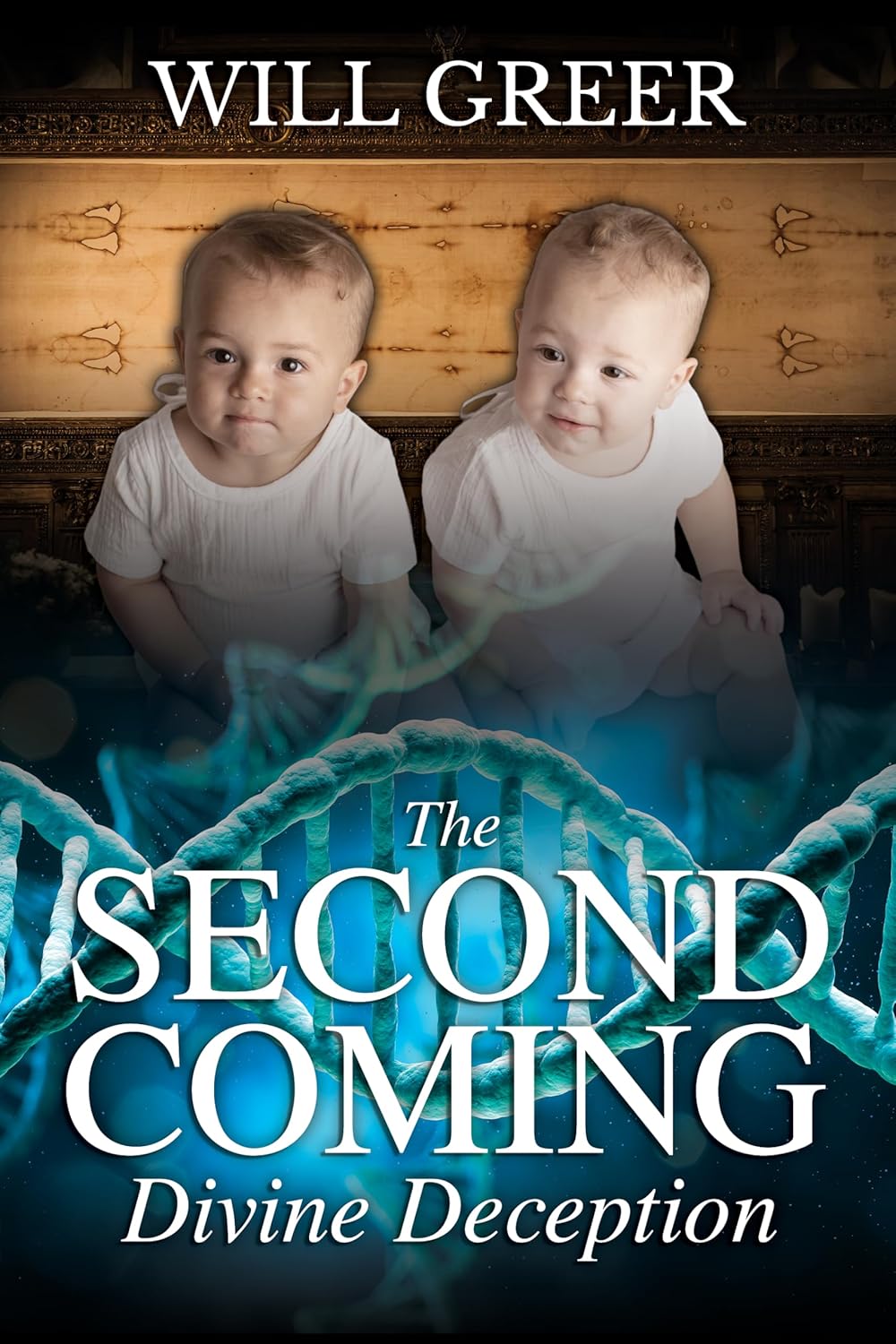

In this religious science fiction thriller, the Vatican secretly launches Project Genesis, using DNA from the Shroud of Turin to create a child they hope will be the new Messiah. At the exact same time, in Nazareth, a struggling young woman named Rachel miraculously conceives a son of her own. The lab-grown boy, Michael, is raised in a hidden Swiss facility and slowly groomed into a global spiritual superstar, while Joshua grows up poor, loved, and quietly gifted, healing people in back alleys and shelters. The novel follows both of them from birth toward a foretold showdown at thirty-three, moving from Vatican back rooms to “New Rome” in Switzerland and refugee camps in Jerusalem as the world decides which “second coming” it believes in.
What I liked most about the writing is how straightforward it is. The opening in the cold Turin lab is tight and visual, and the book keeps that almost cinematic style as it jumps between Sarah in the Vatican project, Rachel in Nazareth, and later Joshua and Michael as they age. The pacing is very much in a thriller mode: short chapters, scene breaks that end on a hook, time jumps that move you from embryo to child prodigy to viral press conference without getting stuck in the weeds. The tech and theology are kept pretty simple. You get just enough genetic jargon to buy the premise, then the story goes back to people in rooms making scary choices. Sometimes the dialogue is a bit on the nose, but this is a book that wants you turning pages, not dissecting sentences.
Where it got interesting for me was in the author’s choices around the two “messiahs” and the whole obsession with proof. Michael, the lab child, is polished and almost inhuman from the start, his miracles wrapped in spectacle and data and political theater. Joshua, the boy from the shelter, is messy, kind, and often unsure of himself, his “powers” showing up in subtle moments like sitting with a dying woman or patiently talking a selfish kid into sharing. Watching the Church, governments, and media fall for Michael’s controlled displays while Joshua refuses to market himself felt uncomfortably close to how we treat charisma and certainty in real life. I liked that the book keeps circling that tension: faith versus proof, love versus control, free will versus “certainty.” At the same time, the moral lines can feel very clean, although you do get flickers of regret and doubt that hint at something more complicated under the surface.
By the time the story moves into the later chapters, with New Rome rising around Michael’s empire and Joshua building a much smaller, scrappier movement in Jerusalem, the book starts to feel less like a standard thriller and more like a long parable about what kind of power we actually want shaping us. The religious science fiction frame lets it play with mind control, viral media, and miracle tech in a way that feels familiar without needing real-world brand names spelled out. I found myself thinking about algorithmic feeds, personality cults, and our cultural hunger for “certainty” while Joshua insists that truth does not need to shout or trend to be real. The ending is hopeful, more about the legacy of ordinary courage and love than about who can throw the biggest miracle, and that choice left me with a warm feeling.
I’d recommend The Second Coming: Divine Deception to anyone who enjoys religious thrillers but wants something a bit more heartfelt than puzzle-box conspiracy stories, and to readers of soft science fiction who like their big ideas wrapped in very human stakes. If the idea of an Antichrist born in a Vatican lab squaring off against a quiet healer from a homeless shelter sounds intriguing, and you are curious about how faith, science, and power might collide in a hyperconnected world, this novel will give you a lot to think about while still being a fast and engaging read.
Pages: 101 | ASIN : B0F7K3JQ5V


Posted on March 11, 2026, in Book Reviews, Four Stars and tagged author, book, book recommendations, book review, book reviews, book shelf, bookblogger, books, books to read, ebook, fiction, Genetic Engineering Science Fiction, goodreads, indie author, kindle, kobo, literature, Metaphysical Science Fiction, nook, novel, read, reader, reading, Religious Science Fiction & Fantasy, sci fi, story, The Second Coming-Divine Deception, thriller, Will Greer, writer, writing. Bookmark the permalink. Leave a comment.



Leave a comment
Comments 0