The Original Human Beings
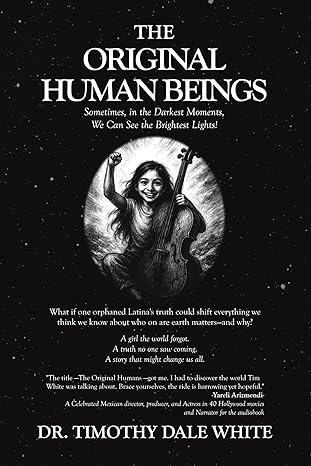

Most novels that revolve around music treat performance like a spotlight and leave it at that. The Original Human Beings treats music like a tool you can use to pry open a sealed life. The cello is described not only as an instrument but as a surrogate voice, capable of “cries” and “whispers of pain and joy,” and the book keeps faith with that idea even when the plot lunges into danger. When a professor says human beings dance because we’re sad and happy, it’s not a cute line; it’s a thesis about embodiment, about refusing to go numb.
I loved the sections that show craft, not just talent: technique sharpening, fingers blistering, the social machinery of being “discovered.” The glamour arrives with a shadow attached, expectation, scrutiny, panic, until the book captures that brittle feeling of being pulled too tight, “like the strings of my cello,” ready to snap. It’s one of the more accurate depictions I’ve read of what acclaim can do to a nervous system.
Then the New York sequence: immigration memory colliding with the Statue of Liberty, grief and hope walking together, and the private terror of possibly failing in a place that pretends it’s neutral but isn’t. The book refuses the lazy “America saved her” arc; it keeps the cost on the page, including the kind of quiet hate that “wants you to disappear.”
By the time Never reaches Carnegie Hall, the triumph isn’t written as a fairytale. It’s written as a claim, late, battered, and absolutely intentional. When she tells a reporter, “Music is our humanity… Without art, we are merely flesh and blood,” the line feels like a blade made of sound. This is a novel for readers who believe art doesn’t just reflect life, it metabolizes it, turns the unbearable into something you can carry without collapsing.
If you loved a novel where music isn’t garnish but a force that rearranges lives, you might feel an echo of Bel Canto by Ann Patchett, with the key difference that here the instrument becomes a lifeline threaded through immigration, violence, and reinvention rather than an enclosed social experiment. In emotional voltage and the way childhood catastrophe ripples into adulthood, The Kite Runner by Khaled Hosseini is a good comparison, though The Original Human Beings is more overtly braided with myth and spiritual argument than Hosseini’s comparatively realist frame.
Pages: 356 | ASIN : B0G42BPC2T


Posted on March 25, 2026, in Book Reviews, Five Stars and tagged action, Action Thriller Fiction, author, book, book recommendations, book review, book reviews, book shelf, bookblogger, books, books to read, Dr. Timothy Dale White, ebook, fiction, goodreads, indie author, kindle, kobo, literature, nook, novel, read, reader, reading, story, The Original Human Beings, thriller, Thriller & Suspense Action Fiction, thrillers, writer, writing. Bookmark the permalink. Leave a comment.



Leave a comment
Comments 0