Blog Archives
Sprinkling of the Absurd

Lonely When You’re Dead centers around a freelance writer sent to Quebec City to cover a poetry festival that quickly turns into a murder investigation, complete with riots, biker clubs, and drug debts. What was the inspiration for the setup of your story?
Good question. The obvious inspiration is simply the breaking news on any given day. It seems there is no shortage of large groups of people running seriously amok at one public or not-so- public gathering or another: rock concerts, sporting events, political rallies, children’s birthday parties. I haven’t as yet heard of an authentic poetry riot, but I’m sure it’s coming down the pike, unfortunately. But the idea of a poetry riot—rather than the actuality—is kind of intriguing, if you like your plots garnished with a sprinkling of the absurd.
Quebec City feels vivid and uneasy throughout the novel. What drew you to that setting?
My wife and I lived in Boston during the 1990’s. Quebec City was a day’s drive away, and a fine place to spend a long weekend. The city is lovely, and the old town looks like a slice of Europe set down on the St Lawrence River. Charming. The question of Quebecois sovereignty was the hot issue during the years that we visited Quebec City. There was a definite tension in the air throughout Quebec province. Sovereignty was a can of worms that hadn’t been opened yet, and no one on either side of the question was sure what might pop out. So, potent times.
The humor in the novel is very dry and sideways, even during violent scenes. How important was comedy to the book?
Quite honestly, I don’t consider myself a humorist, or even a particularly humorous writer. The humor seems to seep in, no matter what I intended originally. Lonely When You’re Dead may have a bit more humor than my other novels, because of the slightly absurd nature of the premise. Also, I think the noir/hardboiled approach to the narrative lends itself well to a bit of humor. Dashiell Hammett and Raymond Chandler are thought of as the patron saints of hardboiled mystery writing, and their work certainly displays a sense of humor mixed in with the grim mutterings and threats of bodily harm. Maybe it provides a kind of respite from the bare knuckles of the story.
What is the next book you are working on, and when will it be available?
I seem to be attracted to the mystery and thriller type of novel, and I’ve got a few ideas kicking around. I’m hoping to have a new book out by early next year. Best laid plans of mice and men…
Author Links: GoodReads | Website | Fingerprint File Books | Amazon
The Original Human Beings
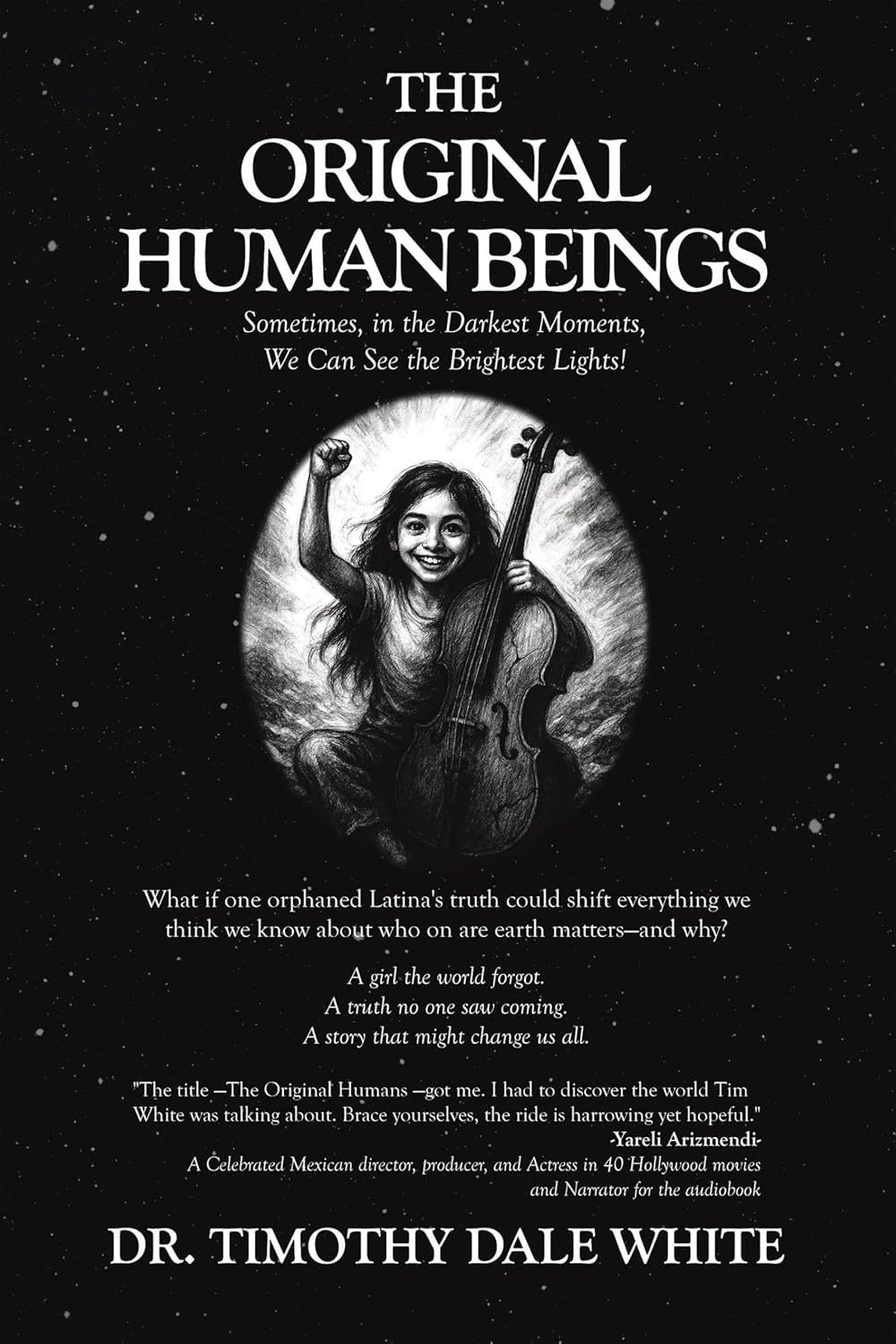

The Original Human Beings doesn’t introduce pain politely. It slams the door open and says: look. The early chapters carry the stench of the Tegucigalpa dump and the constant calculus of threat, who can be trusted, who can be bought, who will vanish. When music appears, it isn’t decorative; it’s defiance made audible, played on a soccer field that no safe child would touch.
The tenderness that surprised me most is how the novel treats naming, not as branding, but as breath. Sister Rosa’s speech about names carrying “history, hope, and resilience” is one of those scenes that feels personal. “Never” lands not as a gimmick but as a vow with splinters in it.
I also didn’t expect the book to be funny in its own way. It has moments where absurdity slips in, people being people even while the plot keeps sharpening its knives, and that contrast makes the grief hit harder. Later, when the story pivots toward chosen family and the messy work of becoming “something new,” it doesn’t pretend restoration is clean. It shows care arriving through awkward neighbors, unlikely protectors, and the weird grace of second chances.
And then there’s the part where a father figure tells Never, plainly, to stop hunting for a rescuer: “You are already enough.” It’s not self-help; it’s a hard-earned verdict delivered without sentimentality. I’ll remember this novel less for plot twists than for the way it insists, again and again, that love isn’t a soft thing. It’s a muscle. It’s practice.
If you like novels where survival isn’t just plot but a pressure that shapes every sentence, and where music becomes a second language for what can’t be said, The Original Human Beings is for you. It’s especially good for readers drawn to immigration stories that refuse tidy uplift, and for anyone curious about how Indigenous cosmology can widen a personal narrative into something elemental. Expect grit, grace, and a kind of hard-won beauty that doesn’t ask permission.
Pages: 356 | ASIN : B0G42BPC2T

The Original Human Beings
Most novels that revolve around music treat performance like a spotlight and leave it at that. The Original Human Beings treats music like a tool you can use to pry open a sealed life. The cello is described not only as an instrument but as a surrogate voice, capable of “cries” and “whispers of pain and joy,” and the book keeps faith with that idea even when the plot lunges into danger. When a professor says human beings dance because we’re sad and happy, it’s not a cute line; it’s a thesis about embodiment, about refusing to go numb.
I loved the sections that show craft, not just talent: technique sharpening, fingers blistering, the social machinery of being “discovered.” The glamour arrives with a shadow attached, expectation, scrutiny, panic, until the book captures that brittle feeling of being pulled too tight, “like the strings of my cello,” ready to snap. It’s one of the more accurate depictions I’ve read of what acclaim can do to a nervous system.
Then the New York sequence: immigration memory colliding with the Statue of Liberty, grief and hope walking together, and the private terror of possibly failing in a place that pretends it’s neutral but isn’t. The book refuses the lazy “America saved her” arc; it keeps the cost on the page, including the kind of quiet hate that “wants you to disappear.”
By the time Never reaches Carnegie Hall, the triumph isn’t written as a fairytale. It’s written as a claim, late, battered, and absolutely intentional. When she tells a reporter, “Music is our humanity… Without art, we are merely flesh and blood,” the line feels like a blade made of sound. This is a novel for readers who believe art doesn’t just reflect life, it metabolizes it, turns the unbearable into something you can carry without collapsing.
If you loved a novel where music isn’t garnish but a force that rearranges lives, you might feel an echo of Bel Canto by Ann Patchett, with the key difference that here the instrument becomes a lifeline threaded through immigration, violence, and reinvention rather than an enclosed social experiment. In emotional voltage and the way childhood catastrophe ripples into adulthood, The Kite Runner by Khaled Hosseini is a good comparison, though The Original Human Beings is more overtly braided with myth and spiritual argument than Hosseini’s comparatively realist frame.
Pages: 356 | ASIN : B0G42BPC2T
The Original Human Beings
Timothy Dale White’s The Original Human Beings shifts between two gears: immediate survival and reflective, symbolic storytelling, without letting either one feel like an interruption. It begins in ash and refuse, childhood lived under the vocabulary of disposal, and keeps returning to a single, stubborn question: what counts as human when the world keeps voting no? The prose is unafraid of earnestness, but it’s an earnestness with teeth; it doesn’t merely petition your sympathy, it drags you across terrain where sympathy is insufficient.
What makes the novel stranger and better than a straightforward “overcoming” narrative is its second spine: Indigenous cosmology and the idea of identity as something older than paperwork, older than borders. The Nimiipuu creation story, with beings “walking out of the monster,” becomes more than local color; it’s a lens that recasts migration and historical violence as recurring species-level ordeals, not isolated tragedies. The book’s title starts to feel less like a label and more like a dare: remember who you were before you were taught to shrink.
The social conscience here is explicit, sometimes sermon-clear, but it’s also integrated into narrative pressure. There’s a fierce generosity in the argument that “our shared humanity” is a binding imperative and that love is not decor but a “survival strategy.” Even when the book edges toward manifesto, it keeps pulling back to the specific: the small humiliations of being stared at, the interior weather of panic, the stubborn mechanics of trust.
The novel occasionally overexplains, yet its ambition is difficult to dismiss: it braids myth, theology, immigration, and art into a single rope strong enough to haul a person out of the pit. By the time the story arrives at its later meditations on love and personhood, the grandness feels earned, not because life becomes tidy, but because the book insists that dignity can be constructed, plank by plank, even on scorched ground.
Pages: 356 | ASIN : B0G42BPC2T
The Original Human Beings: Sometimes, in the Darkest Moments, We Can See the Brightest Lights!
The Original Human Beings tells the life story of Never Morales, a Latina girl born in the Tegucigalpa garbage dump, who grows into a woman shaped by brutality, resilience, music, and a search for belonging. The novel follows her childhood in “Dante’s Inferno,” her encounters with dangerous men, her strange protector Loco Lucy, the death and revival prank of her mother, and the long journey that eventually leads her to the Nez Percé people and a deeper understanding of what it means to be human. Dr. Timothy Dale White blends raw memories with cultural history, weaving in philosophy and anthropology in a way that makes the story feel both personal and sweeping.
The writing swings between heartbreaking and strangely joyful, almost like the story breathes in pain and then exhales laughter. I kept feeling jolted by how quickly the author shifts from horror to humor. For example, the scene where Never’s mother fakes her own death to taunt her abuser left me shocked and then suddenly laughing through the tension. That moment hit me hard because it showed how joy can survive even when everything else is falling apart. The style feels bold, sometimes messy, sometimes poetic, but often intimate. I found myself pausing to absorb pieces of dialogue or reveling in small images.
I also felt a lot of admiration for how the book forces readers to sit with uncomfortable truths. The dump scenes are vivid and painful, and the children’s reality is harsh. Yet the story never sinks into hopelessness. Instead, it pushes toward questions about humanity, oppression, and identity. The inclusion of Indigenous philosophy and the Nez Percé worldview surprised me at first, yet it worked. It gave the story a bigger frame, like Never’s life was part of something older and wider. I appreciated that the book doesn’t pretend to have easy answers. It asks you to feel your way through the darkness instead and trust that something bright might show up.
I think this book would be perfect for readers who seek stories that blend emotional honesty with cultural depth. It suits people who want fiction that challenges them and surprises them, people who enjoy character-driven narratives, and anyone drawn to themes of survival, dignity, and identity. If you like stories that break your heart a little, this one is worth your time. Author Dr. Timothy Dale White has written a fierce and soulful novel that turns darkness into meaning.
Pages: 356 | ASIN : B0G42BPC2T
Storytelling and Research

The Nalanda Manuscript follows a former paratrooper who gets pulled into a high-stakes quest to recover a long-lost Nalanda manuscript that mysteriously surfaced in Mali. What first drew you to Nalanda and Timbuktu as the historical anchors of this story?
I was drawn to Timbuktu when I read a National Geographic article about its libraries in 2011. A few months later, Al Qaeda in the Islamic Maghreb invaded Timbuktu. During the pandemic, I read a book by Joshua Hamer — The Badass Librarians of Timbuktu (don’t miss it) — about how one librarian rescued 400,000 manuscripts from destruction. I just had to find a story around that incident. Then I thought: hey, didn’t India have its own ancient library at Nalanda. I researched Nalanda, its intelligentsia and far-reaching influence on astronomy, mathematics, poetry and philosophy. And the best part, several internet articles about long-lost libraries failed to mention Nalanda. As an Indian, I felt duty-bound to do my part to make Nalanda known. When I read about how Nalanda was destroyed by invaders, it gave me my ‘what if’ scenario. The link between the two was easy — the Muslim empires that sprawled across the Indian subcontinent to the west of Africa.
Qānūn ad-Dam feels frighteningly plausible. How did you approach creating an antagonist that feels real rather than sensational?
The terrorist founder of Qānūn ad-Dam is based on real Al Qaeda in the Islamic Maghreb leaders and police who were active in Algeria and Timbuktu. He went through several reincarnations during my drafts, to turn out the way he did.
The novel blends real historical events with high-stakes action. How did you balance research with storytelling momentum?
Now that you mention it, yes, this is a book with a sweet-spot between the storytelling and research. It took three complete re-writes to get the book out. I’m sure that perseverance and frustration helped forge what you observed. I’m glad it turned out to be enjoyable.
Do you see more stories for Izak Kaurben?
Yes, there are more stories, which will see Izak uncover links between Indian history and contemporary events.
Author Links: GoodReads | Website | Amazon
For 800 years, the grand monastic complex at Nalanda (in present-day Bihar in India) was the epicentre of knowledge and wisdom in the ancient world.
In 1193 AD, a Turkic warlord destroyed it. Legend says its three great libraries burned for months!
Half a world away, Europe’s colonial powers race to locate the fabled city of gold and knowledge, Timbuktu. By the time a European arrived in Timbuktu in 1826, the Moroccan sultan had plundered the city… but Timbuktiens hid, buried or scattered their private manuscript collections among nomadic tribes for safekeeping.
NOW
Timbuktien antiquarian Abdel Haidara is on a mission to recover Timbuktu’s lost manuscripts. Deep in the Sahara, one manuscript carries a tantalising provenance: the seal of Nalanda.
Under the auspices of the National Archives of India, the Chancellor of the New Nalanda University and ex-paratrooper Izak Kaurben head to Timbuktu to repatriate the manuscript.
Before the expedition can achieve its objective, terror group Qānūn ad-Dam — The Law of Blood — kidnaps the chancellor and Abdel, and leaves Izak for dead.
Qānūn ad-Dam demands a ransom for its prisoners, but the price for Abdel’s release — the destruction of every Timbuktien manuscript — is something the Malian government will never concede to.
If Abdel is executed, the Nalanda Manuscript will be lost forever, because only he knows where to find its nomad caretaker in the desolate expanse of the Sahara.
With the clock ticking, an injured Izak and a ragtag team of Timbuktiens must find the Qānūn ad-Dam lair and rescue Abdel before it is too late.
Unexpected Psychologies

Drinking from the Stream follows two young men on the run for different reasons who cross paths and set out together exploring East Africa and their own morals in a world where dictatorship and mass murders are the norm. What was the inspiration for the setup of your story?
I left the US to travel one week after graduating college. When I came back five years later, my mother kept asking me, “What did you really do in Africa?” How to explain what I was thinking, whom I had met, where I had gone, what I had seen and felt and heard, smelled and tasted, what I had learned, what scared me, what made me laugh, and what inspired me? I decided to write a novel, a kind of anthem for the generation that came out of the wreckage of the ’sixties and whom I met on the road. I thought the story I wanted to tell would have more weight if the character who kills his antisemitic persecutor was not actually Jewish, thus forcing him into unexpected psychologies. Having two narrators allowed me to broaden the scope and to develop the characters in many more settings and situations than would otherwise be possible, and through their eyes also to show more of Africa and of the world.
You took your time developing the characters and the story, which had a great emotional impact. How did you manage the pacing of the story while keeping readers engaged?
There are novelist tricks that I had to learn. A novel consists of scenes. Something must happen, or else there’s no reason for the scene to be there. Scenes should ”start late and end early,” not waste time, and leave the reader wanting to know what comes next. I alluded to massacres at the start of the book, which I hoped would give readers a feel for what came next. There is a rhythm to travel which speeds up and slows down, and the action of the book also speeds up and slows down.
What were some themes that were important for you to explore in this book?
A partial list: friendship, long-distance travel on bad roads with little money, politics and history, courage, the world of the early 1970s, East Africa and Ethiopia, judgment, colonialism, revolution, mass murder, dictatorship, insurrection, racism, loyalty, small acts of bravery.
What is the next book that you are working on, and when can your fans expect it to be out?
Next book: A TRIP BY CANOE (short stories) to be published by Koehler Books July 2026.
Author Links: GoodReads | Website | Amazon
Jake Ries, a twenty-two-year-old Nebraska farm boy turned oil roughneck, turns fugitive when he unintentionally kills a homicidal White supremacist on an oil platform in the Gulf of Mexico. On the run, he meets Karl Appel, a restless Oxford dropout and former anti-war activist struggling with his own personal demons. Together they throw caution to the wind and plunge into the Ethiopian and East African hinterland, where they discover that dictatorship and mass murder are facts of life.
The Third Twin: Love, Lies, and Billionaire Secrets
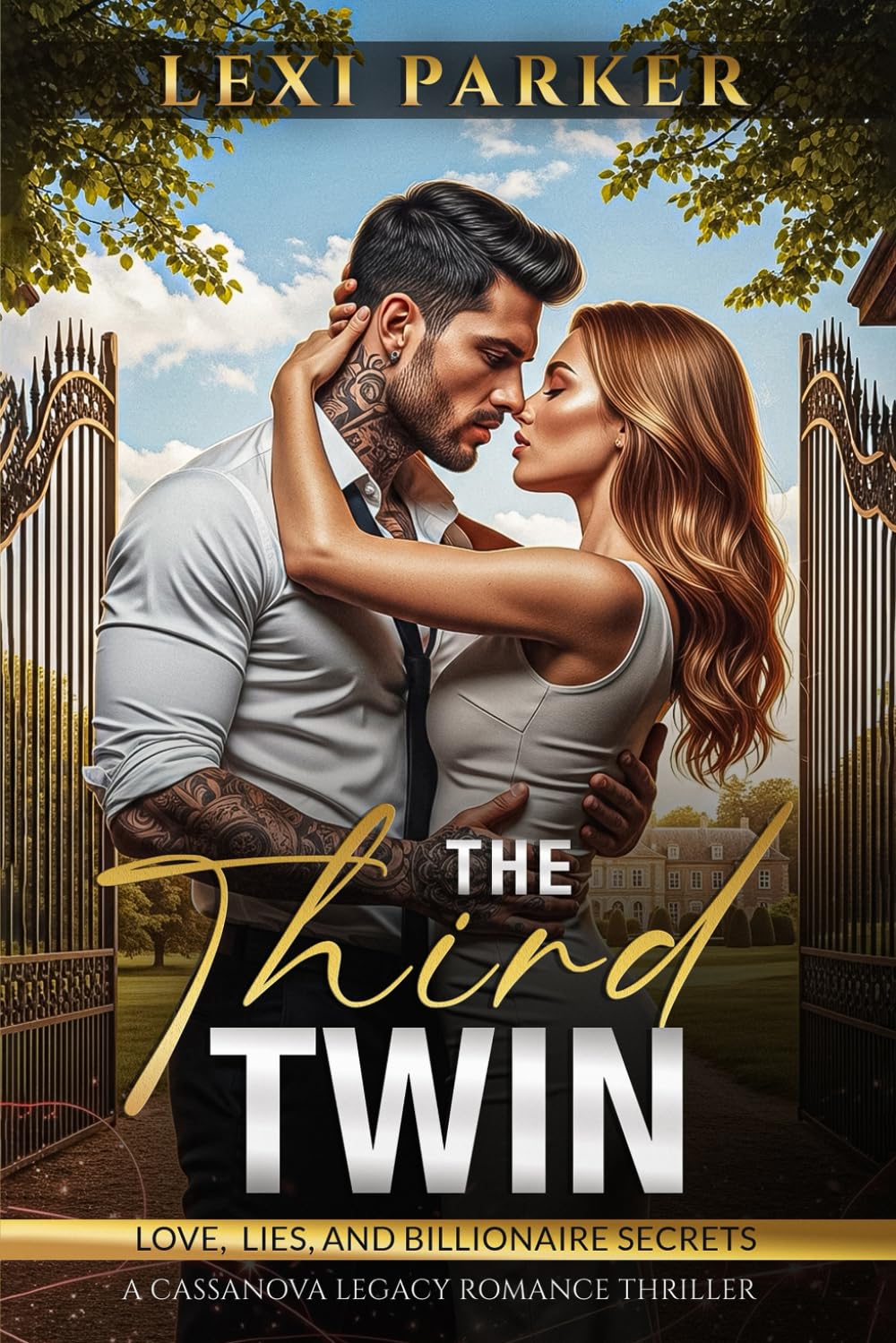
The Third Twin is a romance thriller that follows Sienna Casanova, an ER nurse whose world fractures the moment she feels her identical twin, Savannah, scream. Savannah, a famous investigative journalist, has gone dark, leaving behind only a bloodied necklace and a trail of danger. As Sienna races to find her, she’s pulled into a violent web involving black-market adoption rings, corrupt insiders, and Luca Stone, her sister’s brooding head of security. The story blends high-stakes suspense with an evolving, combustible romance. It’s very much a romance thriller at heart, stitched together with family secrets, danger, and the messy intensity of twinhood.
Reading it felt like riding in a car that never dips below fifty. The writing is fast and cinematic, with fight scenes that crack like glass and emotional beats that don’t waste time getting to the point. Parker leans fully into immediacy. Characters breathe hard, move fast, and react without overthinking. There were moments when I wanted the prose to linger or soften, but the clipped style fits the story’s heartbeat. Sienna’s voice oscillates between raw fear, jealousy, tenderness, and grit, and I found myself liking her more whenever she admitted something uncomfortable. Luca, meanwhile, carries that familiar romance-thriller energy: stoic, lethal, frustrating, and of course, irresistible. Their dynamic is chaotic in a way that feels intentional, like sparks thrown off metal.
What surprised me most was how the book knits an intimate relationship into the tension of a broader conspiracy. The author could have relied on the dangerous-man-protective-woman trope alone, but she gives the siblings’ bond real weight. The “twin sense” isn’t just a gimmick. It becomes the emotional spine of the story and gives the romance a stronger foundation than heat alone. Some emotional transitions happen fast. One chapter, you’re dodging gunmen, and the next, you’re collapsing into each other’s arms. But honestly, the abruptness works in a romance thriller. Bodies crash together under pressure. People cling to whatever feels solid. It all felt believable within the world that author Lexi Parker is building.
I’d recommend The Third Twin to readers who love romance thrillers packed with danger, devotion, and a relentless pace. If you enjoy bodyguard-romance energy, high stakes, and stories where fear and attraction tangle together until you can’t tell them apart, this one will hit the mark. And if you like your books to read like movies playing out in real time, you’ll have a good time here.
Pages: 190 | ASIN : B0FWC5VJFP


