Blog Archives
Not As Crimes, But As A Masterpiece

A Twisted Crucible follows a murderous woman who steals her dead best friend’s identity and fortune, only to discover during a cross-country crime spree that no disguise can save her from. What were some sources that informed this novel’s development?
During the 1990s, an acquaintance used my phone. I was unaware he was using it to conduct a drug deal. Since it was my phone, I was arrested and convicted. While serving time in prison, I encountered several notorious female killers. They agreed to speak with me about their crimes to gather realistic details for a book character.
What interested you about writing a killer who sees herself not simply as violent, but as an artist and protagonist in her own grand narrative?
Traditionally, killers in fiction are viewed as anomalies or disruptions to the social order. By making Julie Cromwell the “protagonist in her own grand narrative,” she takes complete ownership of her story, viewing her actions not as crimes, but as a masterpiece of art.
How did you approach balancing Julie’s genuine desire for companionship with her manipulation and grooming of Jamie?
Balancing Julie’s genuine desire for connection with her manipulative grooming of Jamie requires leaning into the contradiction at the heart of toxic relationships. A delicate line has to be walked showing that while Julie’s longing for companionship is real, it is simultaneously entirely self-serving. She genuinely wants someone close, yet she views that person as an extension of herself, rather than an independent individual with their own boundaries.
Why was it important for the novel’s final reckoning to center on family and identity rather than simply on Julie’s crimes?
Centering the final reckoning on family and identity rather than just Julie’s crimes shifts the story from a standard thriller to a deeper psychological study. Readers remember how characters change and heal far more than they remember the mechanics of a crime or a court case. Bringing it back to family and self-discovery gives the emotional closure that true psychological drama demands.
Author Links: Goodreads | Facebook | Website
Some secrets refuse to be buried. Some desires refuse to be denied. Haunted by her shadowed past and desperate for peace, Julie Cromwell accelerates full-throttle on a cross-country escape to the sanctuary of Trenton, New Jersey—her childhood home. But this journey isn’t one of solace. Instead, it’s a roadmap of derangement and bone-chilling encounters, punctuated by unforeseen alliances and an unsparing litany of killings.
A Twisted Crucible delves into the abyss of human depravity and the agonizing sacrifices made by a loving father when justice demands the ultimate price.
Tell them Daniel Smith sent you.

The Biltmore’s Mona Lisa follows a web of curators, soldiers, spies, politicians, and art dealers as the world’s most coveted painting becomes the prize in a wartime heist at North Carolina’s grandest estate. What was the inspiration for the setup of your story?
The idea for The Biltmore’s Mona Lisa gelled after I watched a television special about German U-boats off the Florida coast during WWII. Soon after, my wife and I visited the Biltmore Estate in Asheville, North Carolina. The tour guide mentioned that the National Gallery had stored many paintings at Biltmore House during WWII. The third input came from my background. I’m retired from the U.S. Navy and a military historian. I already knew that Adolph Hitler and Hermann Goring considered themselves art collectors. Those three “inputs” led me to produce an outline for my novel, “The Biltmore’s Mona Lisa.” After producing my first short outline, the idea floated around in my mind for twenty years before I finally got serious and wrote something every day for seven months before finishing my first draft. My wife, daughter, and son are all excellent editors and went through each chapter as I finished them. After incorporating input from my beta readers, I contracted with a professional editor and spent another couple of months rewriting to incorporate his valuable suggestions.
How did you research the logistics of moving, guarding, and potentially stealing a masterpiece during wartime?
I found some photos of the moving vans that moved the art pieces from the National Gallery to Biltmore House. With my military background, the Army squad and State Police activity guarding the estate came easily. Deciding where to store the artwork required some research on the rooms available at Biltmore. I needed the curators and Declan Donahue, the handicapped Army captain, to be near the storage area.
What were some themes that were important for you to explore in this book?
I spent a good deal of my research time examining how Da Vinci devoted so many years to painting the Mona Lisa. He never considered the painting finished. I also conducted extensive research into how those in the art world detect forgeries. With today’s detection methods, detecting forgeries is much faster and more accurate. That was not the case in 1941 and before.
Researching prisoner-of-war camps in the United States during WWII was an area I was not well-versed in. I knew we had a few camps, but I didn’t know there was one in East Tennessee before. That made the journey to the Biltmore Estate in Asheville, North Carolina, after the prisoner swap, more straightforward.
The Biltmore itself feels almost like a character. What drew you to its architecture, history, and hidden spaces as the center of the story?
The book didn’t start out that way, but as I researched the history and layout of the Biltmore Mansion, I became captivated by the estate’s grandeur and scale. George Vanderbilt built a small town to house the workers and their families needed to build Biltmore. To this day, Biltmore, with 250 rooms, remains the largest private home in the United States. Anyone with the chance to visit the estate should certainly take the time to do so. Tell them Daniel Smith sent you.
Author Links: Amazon | Website
In 1941, France’s national treasure, Leonardo da Vinci’s Mona Lisa painting is moved to the Biltmore House
near Asheville, North Carolina, for safekeeping.
German General Hermann Goring hears about this move and sends a special Luftwaffe detachment to America by submarine.
Their mission is to break out a German art expert from an American POW camp and continue to Asheville to steal the Mona Lisa, leaving a masterful forgery in its place.
Unbeknownst to the Germans, a second scoundrel has a similar plan in place. However, while his wealth may provide him with the resources to succeed, his greed may be his undoing.
Will this villainy succeed? Only a disabled Army Air Corps captain and a French art curator from the Louvre stands in their way…
What stories could emerge from such a place?

In Twin Spirits, a young girl is tricked into touching a dead body and later meets a woman who bears an uncanny resemblance to the deceased. Where did the idea behind this novel come from?
As a child growing up in the heart of Cabrini-Green on Chicago’s North Side, I often felt imprisoned by my surroundings. Economic hardship shaped our lives. Although we lived only two miles from downtown Chicago, it felt like another world. Yet the one place where I always felt free was in my imagination. As the youngest in a large family, my stories and imagination became my safe haven—a place where no circumstance could limit where I could go or who I could become.
One place that especially fascinated me was the neighborhood funeral home. Almost everyone has, at some point, walked through the doors of a funeral home. It is a place filled with grief, memories, unanswered questions, and unexpected encounters. I began to wonder, What stories could emerge from such a place?
That simple question became the spark that gave birth to Twin Spirits.
Leona and Lillian’s history carries deep trauma, but also humor, music, and resilience. How did you approach balancing the darker elements of their past with their vitality and spirit?
For me, it was important that my characters were never defined by the painful things that happened to them. Trauma can shape a person, but it doesn’t have to become their entire identity. I wanted my characters to laugh, dream, make mistakes, love, and find moments of joy despite the hardships they endured.
Growing up in Cabrini-Green, I witnessed people who faced extraordinary challenges, yet they still found reasons to smile, celebrate, and care for one another. That resilience influenced how I wrote Twin Spirits. The darker elements of the story provide the emotional weight, but the vitality and spirit of the characters remind us that hope and healing are always possible.
I believe the human spirit is remarkably resilient. Even in our darkest moments, there is the capacity for compassion, forgiveness, and transformation. That balance between pain and hope is at the heart of Twin Spirits.
The story moves from what could feel like a ghost story into something more grounded and human. How did you decide where to draw that line between the supernatural and emotional reality?
I have always loved mysteries, and one of the things I appreciate most about them is that not every mystery has to be solved. Some questions are meant to linger, inviting readers to wrestle with their own interpretations long after the final page.
I chose to begin Twin Spirits as a ghost story because it provided a gentle way to ease readers into the far more complicated lives of the twins. But this novel is about much more than one set of twins. It is also about “twin spirits”—people who experience similar circumstances yet make entirely different choices. Their lives echo one another, but their paths ultimately diverge.
As a writer, there comes a point when you no longer worry about whether you’ve clearly drawn every line between mystery and reality. Instead, you trust the story to breathe. You allow the characters, the unanswered questions, and the emotional truths to exist together, giving readers the freedom to discover their own meaning within the mystery.
What is the next book you are working on, and when will it be available?
My next fictional work is the second book in the Adventures with the Shortiez series, titled The House. As a writer, I am always working on something new, whether it is fiction or nonfiction. It is my home that the “The house”, will be available in December.
Author Links: Facebook | Website
Margarita’s sisters force her into a funeral home and make her touch a dead body—Lillian Smith’s. From that moment on, Margarita starts seeing Lillian everywhere, only to discover that the woman she keeps seeing isn’t Lillian’s spirit—it’s Leona, Lillian’s living twin.
Leona is everything Margarita is not—wealthy, magnetic, and impossible to ignore. She draws Margarita into a world of beauty, confidence, and possibility she never imagined. Over the years, their bond deepens, and Leona’s stories of a life marked by violence, early abandonment, and fractured relationships reveal that everything Leona is has come at a cost.
And the past Leona took such care to conceal will not stay buried. Truths begin to surface, and Margarita is forced to question who Leona really is and why their lives seem so uniquely tied together. What she discovers won’t just change who Leona is to her. It will rewrite her entire life.
Polaris


Polaris is a polar adventure thriller with strong speculative and supernatural elements. The novel follows Mark Steiner and Robert Granek, two experienced expedition guides who agree to lead a wealthy client, Leandro Grass, and his group to the North Pole. What begins as a dangerous but manageable expedition soon turns into something stranger and darker, as grief, obsession, hidden history, climate anxiety, and myth all press in on the travelers. The ice is not just a setting here. It feels like a force with memory, hunger, and secrets of its own.
I appreciated how grounded the survival material feels. The cold has weight. The wind has teeth. The planning, training, exhaustion, and fear all give the story a believable base before the novel starts bending toward the uncanny. I felt the author’s own experience with polar landscapes in the way the expedition is described, not as postcard beauty, but as a place that strips people down to whatever they have been hiding from. That choice gives the book its best tension. The North Pole becomes both destination and mirror.
I also found Mark’s grief to be one of the stronger emotional threads. His memories of Misaki, his journal entries, and his struggle to return to life give the novel a more reflective shape than I expected from an adventure thriller. The story takes big swings, bringing in Nazi occult history, Agartha, the Voynich Manuscript, mysterious creatures, ecoterrorism, and visions that blur the line between madness and revelation. It’s a lot. But I respected the ambition. Kamiński seems less interested in writing a clean survival story than in asking what happens when human arrogance, private pain, and the planet’s own wounds collide in a place most people will never see.
I would recommend Polaris to readers who like expedition fiction, Arctic survival stories, and thrillers that are willing to wander into myth and mystery. It will especially appeal to those who enjoy books where the landscape feels alive and where adventure is tied to questions about loss, nature, and what people are willing to risk for meaning. Readers open to a bold, icy, and unusual thriller will find plenty to think about.
Pages: 278 | ASIN: B0H4S7R9TM

My Fascination With Memory

Thief of Echoes follows a woman who works inside a system built to extract and alter memories, who uncovers a buried part of her own past. Where did the idea behind this novel come from?
The idea came from my fascination with memory—how much of who we are depends on what we remember, what we forget, and who gets to decide which parts of a life remain intact. I wanted to explore a world where memory could be treated as data, but where the emotional cost could never truly be measured.
How much of the worldbuilding did you develop before writing, and how much emerged during the drafting process?
I began with the central system and the moral question behind it, but much of the world expanded as the characters moved through it. The rules, history, and consequences became clearer during the drafting process, especially as the story revealed how personal and dangerous memory control could become.
Which relationship in the novel surprised you the most as you were writing?
The relationship that surprised me most was the one built on uncertainty—where trust had to grow in a world where even memory could not be fully trusted. I expected the external conflict to drive the story, but the emotional tension between characters became just as important.
Can you give us a glimpse inside Book 2 of the Echoes of the Forgotten series? Where will it take readers?
Book 2 expands the world beyond the first discovery. Readers will see that the memory system is larger, older, and more deeply embedded than anyone realized. The next book raises the stakes, forcing the characters to question not only what was taken from them, but what truths may have been hidden for a reason.
Author Links: Goodreads | sboyle4.com | Website
In a world where memories are archived, edited, and controlled, Elara Vale makes a quiet living helping others recover fragments of their forgotten pasts—until one illegal restoration changes everything.
When a grieving client brings her a corrupted neural file tied to a girl who never officially existed, Elara is drawn into a mystery the system was designed to erase. The deeper she searches the memory net, the more she sees traces of someone familiar. Someone who feels like… her.
But Elara’s own past is a patchwork. Years ago, she willingly purged part of her identity to escape grief. Now, she must confront the possibility that the system didn’t just take her memories—it rewrote them. And she wasn’t the only one.
As the echoes she unearths grow louder, Elara faces a devastating question:
What if the life she remembers isn’t her own?
Blending introspective sci-fi with psychological tension and emotional depth, Thief of Echoes launches The Echo Cycle, a haunting exploration of identity, memory, and what it means to be real when your past has been engineered.
The Original Human Beings
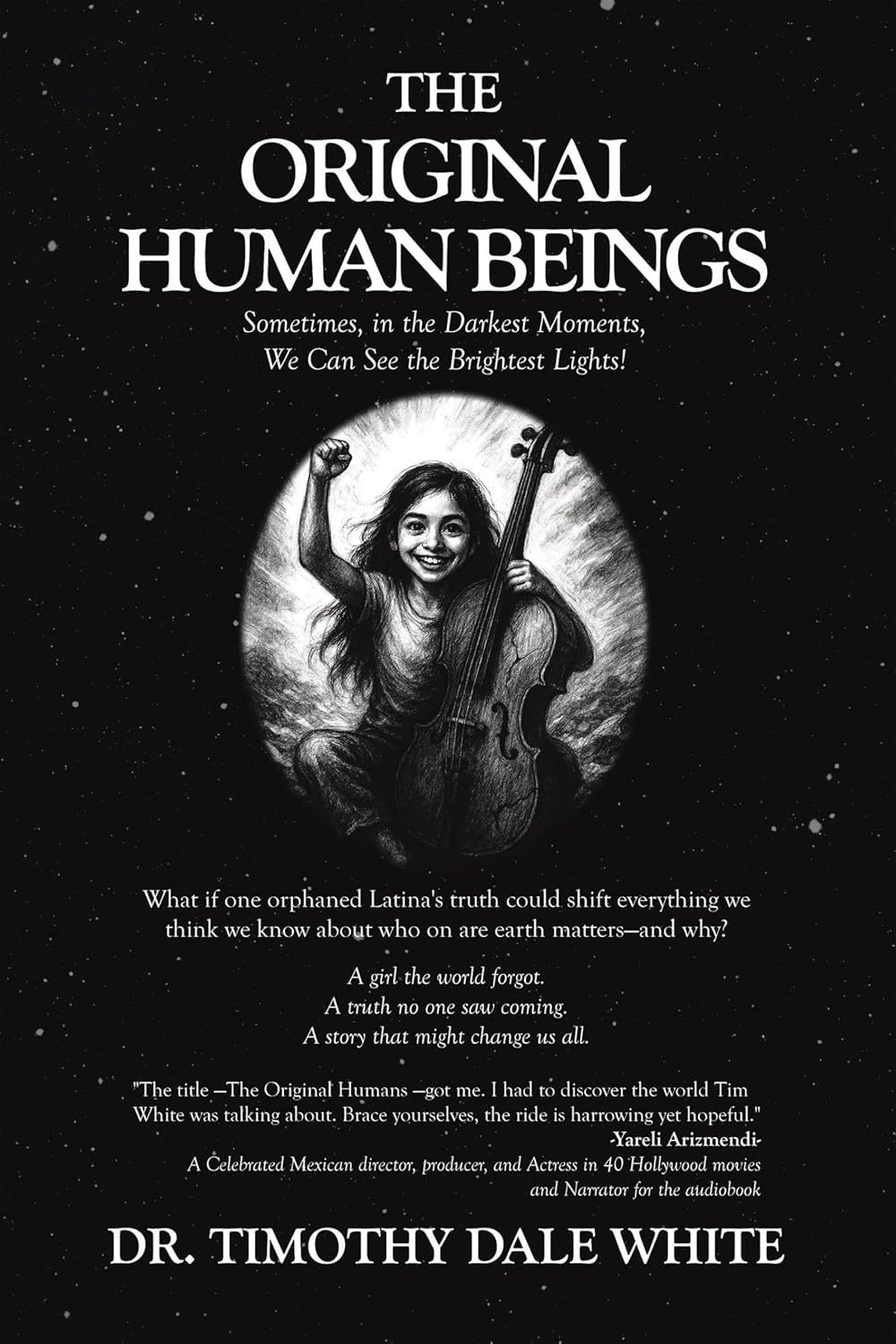

The Original Human Beings doesn’t introduce pain politely. It slams the door open and says: look. The early chapters carry the stench of the Tegucigalpa dump and the constant calculus of threat, who can be trusted, who can be bought, who will vanish. When music appears, it isn’t decorative; it’s defiance made audible, played on a soccer field that no safe child would touch.
The tenderness that surprised me most is how the novel treats naming, not as branding, but as breath. Sister Rosa’s speech about names carrying “history, hope, and resilience” is one of those scenes that feels personal. “Never” lands not as a gimmick but as a vow with splinters in it.
I also didn’t expect the book to be funny in its own way. It has moments where absurdity slips in, people being people even while the plot keeps sharpening its knives, and that contrast makes the grief hit harder. Later, when the story pivots toward chosen family and the messy work of becoming “something new,” it doesn’t pretend restoration is clean. It shows care arriving through awkward neighbors, unlikely protectors, and the weird grace of second chances.
And then there’s the part where a father figure tells Never, plainly, to stop hunting for a rescuer: “You are already enough.” It’s not self-help; it’s a hard-earned verdict delivered without sentimentality. I’ll remember this novel less for plot twists than for the way it insists, again and again, that love isn’t a soft thing. It’s a muscle. It’s practice.
If you like novels where survival isn’t just plot but a pressure that shapes every sentence, and where music becomes a second language for what can’t be said, The Original Human Beings is for you. It’s especially good for readers drawn to immigration stories that refuse tidy uplift, and for anyone curious about how Indigenous cosmology can widen a personal narrative into something elemental. Expect grit, grace, and a kind of hard-won beauty that doesn’t ask permission.
Pages: 356 | ASIN : B0G42BPC2T
The Original Human Beings
Most novels that revolve around music treat performance like a spotlight and leave it at that. The Original Human Beings treats music like a tool you can use to pry open a sealed life. The cello is described not only as an instrument but as a surrogate voice, capable of “cries” and “whispers of pain and joy,” and the book keeps faith with that idea even when the plot lunges into danger. When a professor says human beings dance because we’re sad and happy, it’s not a cute line; it’s a thesis about embodiment, about refusing to go numb.
I loved the sections that show craft, not just talent: technique sharpening, fingers blistering, the social machinery of being “discovered.” The glamour arrives with a shadow attached, expectation, scrutiny, panic, until the book captures that brittle feeling of being pulled too tight, “like the strings of my cello,” ready to snap. It’s one of the more accurate depictions I’ve read of what acclaim can do to a nervous system.
Then the New York sequence: immigration memory colliding with the Statue of Liberty, grief and hope walking together, and the private terror of possibly failing in a place that pretends it’s neutral but isn’t. The book refuses the lazy “America saved her” arc; it keeps the cost on the page, including the kind of quiet hate that “wants you to disappear.”
By the time Never reaches Carnegie Hall, the triumph isn’t written as a fairytale. It’s written as a claim, late, battered, and absolutely intentional. When she tells a reporter, “Music is our humanity… Without art, we are merely flesh and blood,” the line feels like a blade made of sound. This is a novel for readers who believe art doesn’t just reflect life, it metabolizes it, turns the unbearable into something you can carry without collapsing.
If you loved a novel where music isn’t garnish but a force that rearranges lives, you might feel an echo of Bel Canto by Ann Patchett, with the key difference that here the instrument becomes a lifeline threaded through immigration, violence, and reinvention rather than an enclosed social experiment. In emotional voltage and the way childhood catastrophe ripples into adulthood, The Kite Runner by Khaled Hosseini is a good comparison, though The Original Human Beings is more overtly braided with myth and spiritual argument than Hosseini’s comparatively realist frame.
Pages: 356 | ASIN : B0G42BPC2T
The Original Human Beings
Timothy Dale White’s The Original Human Beings shifts between two gears: immediate survival and reflective, symbolic storytelling, without letting either one feel like an interruption. It begins in ash and refuse, childhood lived under the vocabulary of disposal, and keeps returning to a single, stubborn question: what counts as human when the world keeps voting no? The prose is unafraid of earnestness, but it’s an earnestness with teeth; it doesn’t merely petition your sympathy, it drags you across terrain where sympathy is insufficient.
What makes the novel stranger and better than a straightforward “overcoming” narrative is its second spine: Indigenous cosmology and the idea of identity as something older than paperwork, older than borders. The Nimiipuu creation story, with beings “walking out of the monster,” becomes more than local color; it’s a lens that recasts migration and historical violence as recurring species-level ordeals, not isolated tragedies. The book’s title starts to feel less like a label and more like a dare: remember who you were before you were taught to shrink.
The social conscience here is explicit, sometimes sermon-clear, but it’s also integrated into narrative pressure. There’s a fierce generosity in the argument that “our shared humanity” is a binding imperative and that love is not decor but a “survival strategy.” Even when the book edges toward manifesto, it keeps pulling back to the specific: the small humiliations of being stared at, the interior weather of panic, the stubborn mechanics of trust.
The novel occasionally overexplains, yet its ambition is difficult to dismiss: it braids myth, theology, immigration, and art into a single rope strong enough to haul a person out of the pit. By the time the story arrives at its later meditations on love and personhood, the grandness feels earned, not because life becomes tidy, but because the book insists that dignity can be constructed, plank by plank, even on scorched ground.
Pages: 356 | ASIN : B0G42BPC2T


