What The Ground Remembers
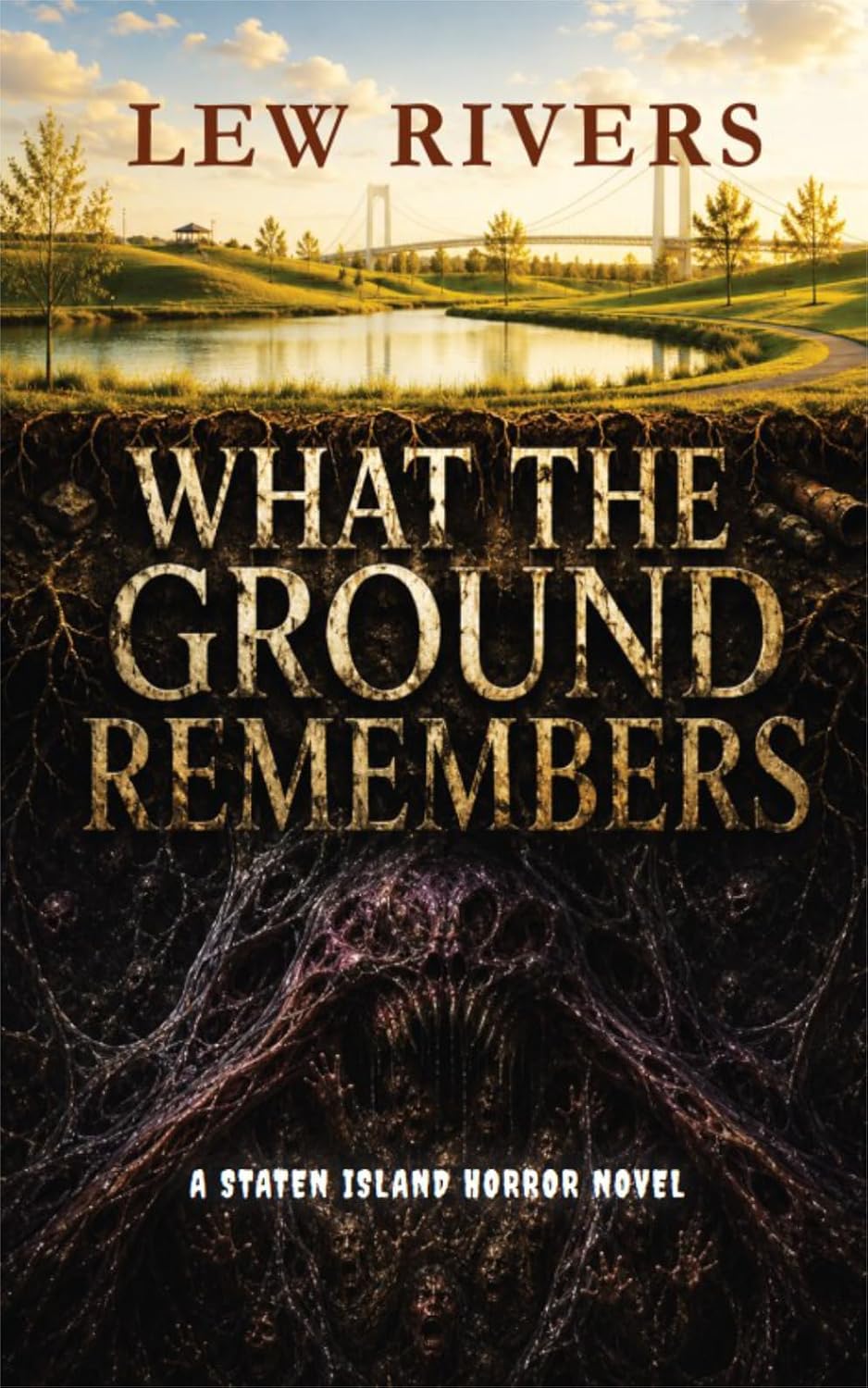

In What the Ground Remembers, Lew Rivers delivers an atmospheric work of science-fiction horror that explores the relationship between memory, grief, and the places people call home. Set against the sprawling landscape of Staten Island, the novel follows Anthony Bruno, a construction supervisor overseeing the transformation of the fictional Arthur Kill Landfill into public parkland. What begins as an ordinary reclamation project becomes increasingly unsettling when workers uncover personal belongings buried beneath decades of refuse. Strange dreams, troubling disappearances, and an inexplicable sense of familiarity suggest that something beneath the landfill has remained undisturbed for far too long. Rivers builds his premise around a compelling intersection of scientific experimentation and psychological horror, establishing an atmosphere in which the ordinary becomes threatening through subtle changes in perception. The result is a story that draws much of its suspense from the unsettling power of human memory and the emotional vulnerabilities that accompany it.
One of the novel’s strongest qualities is its convincing portrayal of Staten Island as a living community with a distinct identity. Rivers incorporates recognizable streets, neighborhood businesses, family traditions, and local history into the narrative, giving the setting considerable texture and personality. Conversations over coffee, lunches at neighborhood delis, and Sunday dinners filled with familiar family arguments establish a sense of belonging that becomes increasingly important as the mystery develops. Anthony’s relationship with his Aunt Arlene is particularly effective, grounding the supernatural elements in generations of shared experience. During one family gathering, she reminds him, “Your family’s been on this island longer than half the streets have had names.” The observation captures a central concern of the novel: the enduring connection between people, their histories, and the land they inhabit. These everyday interactions also allow Rivers to develop characters whose loyalties and personal attachments give emotional significance to the dangers they encounter.
Rivers approaches horror through a measured progression of discoveries, combining scientific speculation with an increasingly oppressive atmosphere. The introduction of environmental scientist Laura and local historian Jonathan Petrocelli expands the investigation, bringing different perspectives to a mystery that crosses decades. Jonathan’s research into unexplained disappearances complements Laura’s examination of biological anomalies, creating an engaging blend of historical investigation and scientific inquiry. The novel’s most distinctive unsettling moments emerge from its treatment of nostalgia. Familiar sounds, cherished childhood experiences, and memories of loved ones acquire an unexpected menace, turning sources of comfort into instruments of suspense. Rivers frequently emphasizes sensory details, particularly smells, sounds, and physical sensations, to make these experiences immediate. His deliberate pacing allows apprehension to develop gradually, although some explanatory passages and repeated descriptions of unease occasionally slow the narrative’s momentum. Even so, the combination of investigative detail and emotional tension gives the story a consistent and recognizable character.
What the Ground Remembers is concerned with the responsibilities people carry toward one another and the consequences of allowing difficult histories to remain buried. Its speculative premise raises questions about scientific ambition, institutional accountability, and the ways personal attachments can shape human behavior. Rivers gives these concerns emotional weight through Anthony’s determination to understand what has happened to his community, especially those whose disappearances have left families without answers. The novel’s title becomes increasingly meaningful as the relationship between physical remains and human remembrance comes into focus. Its blend of biological horror, local history, and family relationships gives the story both an intimate scale and a broader sense of consequence. With its carefully established setting, accessible prose, and distinctive approach to psychological suspense, Lew Rivers’s novel offers a memorable reading experience for audiences drawn to atmospheric thrillers that connect extraordinary dangers to deeply recognizable human emotions.
Pages: 179 | ASIN : B0HPGW225H


Posted on October 28, 2026, in Book Reviews, Four Stars and tagged author, book, book recommendations, book review, book reviews, book shelf, bookblogger, books, books to read, ebook, fiction, goodreads, indie author, kindle, kobo, Lew Rivers, literature, nook, novel, read, reader, reading, story, suspense, technothrillers, thriller, What The Ground Remembers, writer, writing. Bookmark the permalink. Leave a comment.



Leave a comment
Comments 0