Blog Archives
The Last People Who Knew
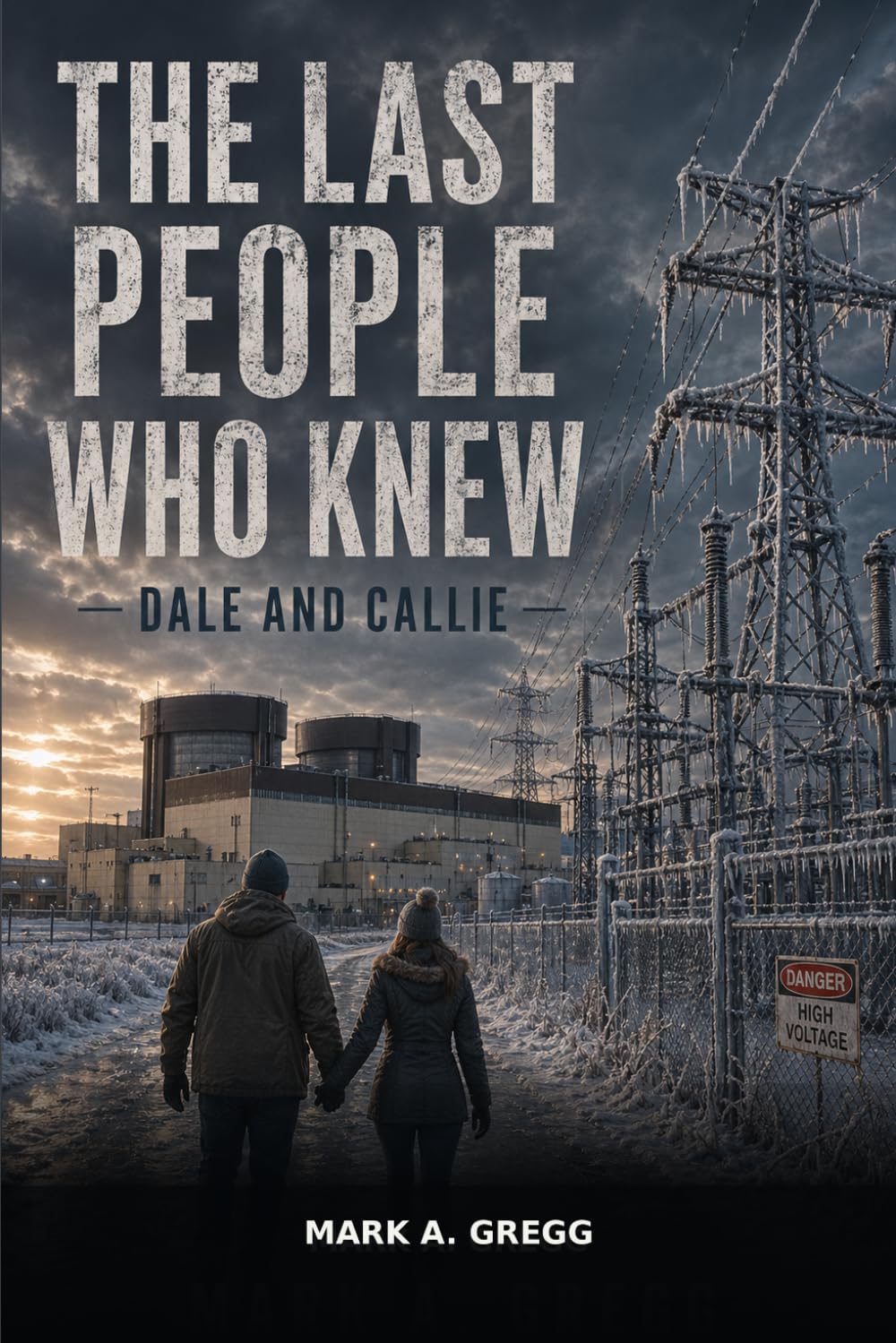

The Last People Who Knew by Mark A. Gregg is a techno-thriller and infrastructure disaster novel about an electric utility, MidAtlantic Energy, slowly trading depth, experience, and maintenance margin for cleaner balance sheets. What begins with small plant problems, thin staffing, aging equipment, and corporate pressure grows into a wider crisis involving the power grid, nuclear plants, black start capability, and a severe storm that exposes how fragile “managed risk” can become when everything goes wrong at once.
I found the book most compelling when it stays close to the machinery and the people who understand it. The control rooms feel alive. Alarms, radios, valve positions, transformer gases, turbine vibration, ice loading, and operator judgment all become part of the tension. It’s a very practical kind of suspense. Not glamorous, exactly. More like watching a hairline crack spread across something everyone assumed was solid. The writing has a plainspoken confidence, and that works well for the genre. This isn’t a sleek spy thriller or a character-first literary novel. It’s a systems thriller, and its real monster isn’t one villain, but the slow narrowing of safety margins.
I also appreciated how candid the book is about leadership choices. Stephen Langford and Warren Buffton are not written as cartoon villains. That makes the story more interesting. Their decisions often sound reasonable in isolation: cut waste, demand efficiency, trust smart people, avoid unnecessary spending. But the novel keeps showing how a reasonable choice can become dangerous when it is made far away from the equipment, the weather, and the people who know where the weak points are. The technical explanations are heavy. The book wants the reader to feel the weight of what operators, engineers, and plant managers carry.
The title is not just dramatic. It’s sad. The “last people who knew” are the ones who remember why a spare part mattered, why a transformer report could not be ignored, why a black start plant was more than an old asset on a spreadsheet. I read the novel as a warning about modern life’s hidden dependence on people whose work is only noticed when it fails. That idea lands hard, especially because the book doesn’t end with a neat fix. Repairs happen. Lessons are written down. Some changes stick. Some don’t. That felt painfully believable.
I would recommend The Last People Who Knew to readers who enjoy technical fiction, disaster novels, workplace thrillers, or grounded techno-thrillers where the suspense comes from systems under stress rather than gunfights or conspiracies. It’ll especially appeal to engineers, operators, utility workers, and anyone curious about what keeps the lights on. Readers who like their fiction built from real bolts, budgets, weather maps, and human judgment will find a lot to admire.
Pages: 427 | ASIN : B0GVYNL1DQ



