Blog Archives
Nurse Florence®, What are Platelets?
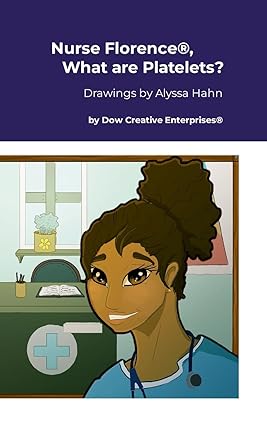

Nurse Florence®, What Are Platelets? is a short, engaging educational book that takes kids on a lunchtime chat between three curious girls and the ever-wise Nurse Florence. As they munch away in the school cafeteria, Nurse Florence answers their questions about platelets: what they are, where they come from, what they do, and how we keep them healthy. With clear illustrations and gentle storytelling, this book aims to teach kids real medical terminology in a friendly, digestible way.
What really charmed me about this book was how it managed to be both informative and warm without ever feeling preachy. The tone is friendly and respectful to kids’ intelligence, which I absolutely appreciated. The question “Is there something like a beaver dam in our body?” turns into a simple yet powerful metaphor: “Yes, that would be platelets.” It’s such a smart way to connect a science lesson to something they’ve just learned in class. It’s these small but intentional moments that make the book feel like a true conversation.
What stood out to me was how committed the book is to teaching real science in a clear, respectful way. Nurse Florence’s explanations, like the conversation on how platelets are made from stem cells in the bone marrow, are solid and easy to follow. The dialogue leans more toward the informative side, which really helps kids grasp the concepts. It’s clear the author knows his audience and wants to make sure the facts come through first. And for kids who love to learn, that’s a gift.
One of my favorite parts came near the end, when Nurse Florence shares everyday tips to keep platelets healthy: don’t smoke, limit alcohol, wear safety gear. It’s the kind of life advice that sticks because it’s simple and said with care. I found myself smiling at how the girls wrap things up, “Science is amazing,” says Jean.
Nurse Florence®, What are Platelets? is a great pick for curious young readers who love asking “why” and “how” about their own bodies. It’s also a nice resource for parents and teachers who want to boost science literacy without boring anyone to tears. If you’re raising a little scientist or just want your kid to know what platelets do in case they skin a knee, this book’s worth picking up. It’s a gentle nudge toward wonder, and sometimes that’s the best kind of lesson.
Pages: 66 | ISBN : 1304343227

Nurse Florence®, Tell Me About the Colon.

Nurse Florence®, Tell Me About the Colon is a charming, educational children’s book that mixes science with everyday curiosity in a simple but effective way. Written by Michael Dow, a nurse with a deep commitment to health literacy, the story follows three young girls, Jean, Sonia, and Condi, who sit down at lunch with Nurse Florence and end up learning all about the colon. Through a calm, friendly conversation, they explore the parts, functions, and importance of the colon, complete with illustrations and gentle scientific explanations.
Author Michael Dow uses real medical terms like “cecum,” “peristalsis,” and “ascending colon,” but makes them easy to understand. Nurse Florence explains the cecum as a kind of one-way gate for food. This kind of clear, relatable comparison makes the science stick. It’s not just a biology lesson, it’s about sparking curiosity and showing that adults can actually explain things in a way that makes sense.
Another strong point is the balance between education and real-life application. It doesn’t just say, “This is what a colon does.” It connects it to healthy habits. The parts where Nurse Florence talks about fiber, hydration, and colonoscopies are handled with such a matter-of-fact tone that it normalizes health care in the best way. I actually found myself thinking, “I need more veggies,” right along with the girls at the end. That’s powerful, when a kids’ book can nudge adults into reconsidering their habits.
The illustrations are clean, approachable, and thoughtfully designed to support the educational content without feeling overly simplistic. While the artistic style leans more toward clarity than creativity, that choice serves the book’s purpose well. What truly impressed me, though, were the detailed visuals of the colon under a microscope and the diagram explaining peristalsis. These images offer a striking and memorable glimpse into real biology, adding a sense of wonder that brings the science to life. It’s the kind of visual element that could easily spark genuine excitement in young readers, encouraging them to see science as both fascinating and accessible.
Nurse Florence®, Tell Me About the Colon is perfect for parents, teachers, or caregivers who want to sneak a little real science into story time. It’s great for curious kids who ask “why” a lot and for grown-ups who sometimes forget the answers. If you’ve got a budding doctor or biologist in the house, or even just a kid who isn’t afraid of learning big words, Nurse Florence® is a warm and clever way to start talking about the human body.
Pages: 70 | ISBN : 1304397289
Nurse Florence®, Why Do We Need Vitamin K?
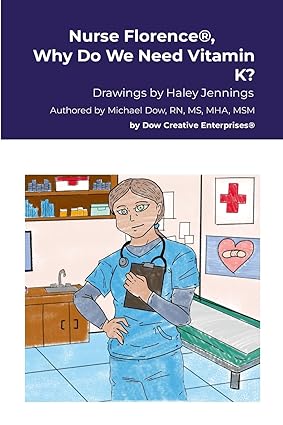
This book follows three curious schoolgirls, Jean, Condi, and Sonia, who sit down with the ever-patient Nurse Florence during lunch and dive into a simple, yet surprisingly thorough conversation about vitamin K. Through a friendly back-and-forth, they explore what vitamin K is, why our bodies need it, where to get it from, and even what happens if we don’t have enough. It’s basically a mini science lesson in storybook form, with bright illustrations and a lot of real, useful health knowledge.
The tone of the story has a calm and comforting energy to it, like a favorite teacher explaining something with genuine care. Nurse Florence never talks down to the kids, even when she’s dropping terms like “osteoporosis” or “jejunum” making this a refreshing read. There’s a scene where she pulls up an image of the intestines and explains how vitamin K is absorbed in the jejunum and ileum. Few children’s books introduce anatomical terms so seamlessly and make them feel entirely appropriate within the context of the story.
When Nurse Florence discusses how newborns are given vitamin K injections, it offers a poignant reminder of how often health education fails to connect meaningfully with its audience. In contrast, this book communicates essential information in a way that is both accessible and impactful. The discussion about green leafy vegetables as sources of vitamin K, followed by Condi’s cheerful remark about pumpkin pie, adds a charming, authentic moment that captures a child’s perspective. Rather than presenting facts in isolation, the book effectively weaves them into relatable, everyday contexts.
While I enjoyed the flow, I did wish the illustrations were a bit more dynamic. They’re fine, and the warm pastel palette suits the gentle tone of the book, but a little more visual engagement wouldn’t hurt, especially for young readers who might get distracted. Still, the visuals do enough to support the content, and Nurse Florence is drawn with the perfect friendly energy. Also, the little journal page at the end is a nice touch.
Nurse Florence®, Why Do We Need Vitamin K? is informative without being boring, honest without being overwhelming. I’d definitely recommend it for parents, teachers, or anyone looking to boost a kid’s science curiosity without resorting to dry textbooks. If you’ve got a little one always asking “Why?” this one’s for you.
Pages: 69 | ISBN : 130441423X
Nurse Florence®, Why Do I Need to Have Iron in My Diet?
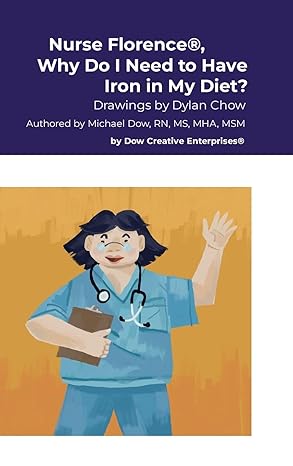
Nurse Florence®, Why Do I Need to Have Iron in My Diet? is a kid-friendly dive into the importance of iron in the human body, told through a lunchtime conversation between three curious girls and a knowledgeable nurse. Nurse Florence breaks down what iron is, why our bodies need it, how it helps us function, and where we can find it in our diet, all in simple language supported by illustrations and some surprisingly detailed explanations for a children’s book.
I found this book genuinely engaging. It respects its young audience by presenting accurate information in a clear, approachable format without oversimplifying or speaking down to them. Instead, it delivers meaningful content in manageable, well-structured segments. For example, when Nurse Florence shows a hemoglobin molecule and explains how iron helps red blood cells carry oxygen, that’s the kind of detail most kids’ books would skip. But here, it’s handled in a way that doesn’t feel overwhelming. The way the characters ask honest, relatable questions like, “Can we get iron from fruits?” helps keep things natural and engaging. That moment made me smile because Condi’s curiosity is contagious.
Some sections of the book delve more deeply into scientific detail, such as the explanations of iron’s role within cells and the immune system. While these concepts may be advanced for some younger readers, this depth adds educational value and creates opportunities for meaningful conversations between children and adults. The inclusion of a glossary and a thoughtful note to parents about the use of complex terminology further demonstrates that the book is intentionally designed to promote learning, curiosity, and shared discussion rather than just passive reading.
The art supports the story without distracting from it, and it was sweet seeing the three girls so excited to learn. The friendly tone of Nurse Florence made the info feel less like a science lesson and more like a chat with a favorite aunt who happens to know a lot about health. And little bits like Jean saying she’ll never eat oysters made it feel grounded and funny in a very real way.
Nurse Florence®, Why Do I Need to Have Iron in My Diet? is a great book for kids around 7 to 11, especially if they’re the type who ask a ton of questions or have even a hint of curiosity about how the body works. It’s perfect for parents or teachers who want to introduce science early in a no-pressure, conversation-style way. Honestly, even as an adult, I learned a few things. So if you’re raising a little scientist or just want your kid to understand why spinach matters, this one’s a winner.
Pages: 70 | ISBN : 1304665607
Nurse Florence®, Why Do We Need Vitamin B3 or Niacin in our Food?

This charming little book is part of the Nurse Florence® series, and in it, three curious kids have a lunchtime chat with Nurse Florence about Vitamin B3, also known as niacin. Through their conversation, readers get a simple, friendly explanation of what niacin does in our bodies, what happens if we don’t get enough, and which foods contain it. It blends health science with day-to-day situations, like eating frosted cornflakes or enjoying grandma’s homemade bread, to teach kids something useful in a gentle, conversational way.
I love how Michael Dow’s writing is direct, respectful, and confident in the young readers’ ability to handle words like “dermatitis” or “dementia.” The author even includes a note to parents about why big words are used, basically saying, “Hey, kids are smart. Let’s teach them real stuff.” So many educational books oversimplify or sugarcoat things. This one assumes kids are capable, and I really respect that.
The writing style is warm and easygoing, kind of like if your favorite school nurse sat with you at lunch and just started dropping science knowledge in the nicest way possible. There’s a part where Nurse Florence whips out her phone to show the molecular structure of niacin. It felt real and modern. And when Sonia says she loves steak tacos after learning niacin is found in meat? That moment was sweet and very human. The story balances facts with personality in a way that keeps things light and digestible.
The dialogue throughout the book is clearly crafted to introduce and reinforce important medical concepts, and it does so in a way that maintains clarity and accessibility for young readers. Phrases such as “What are the signs and symptoms of niacin deficiency?” serve to model thoughtful questions that children can ask when learning about health topics. The book also excels in presenting a well-rounded view of Vitamin B3, highlighting not only its benefits but also the potential risks of overconsumption, such as flushing, dizziness, and liver damage. This balanced approach reinforces the importance of moderation and informed decision-making, all while keeping the tone educational and reassuring.
Nurse Florence®, Why Do We Need Vitamin B3 or Niacin in our Food? is a great fit for curious kids, science-loving parents, and elementary school teachers who want to sneak some nutrition knowledge into story time. It’s also great for anyone trying to raise kids who ask smart questions about their health. I came away feeling smarter and kind of inspired to eat more whole foods. If only all science books made me feel like I’d just had a wholesome chat with a cool nurse.
Pages: 70 | ISBN: 130456777X
Nurse Florence®, What is Progressive Supranuclear Palsy?
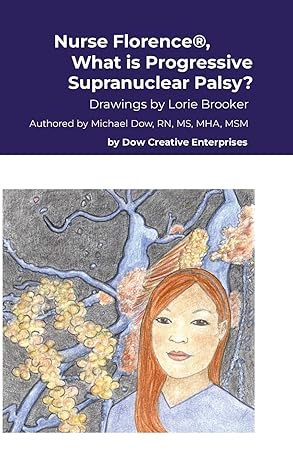
This book is part of the Nurse Florence® series and follows a young girl, Sonia, who visits her school nurse to learn more about her great granddad’s diagnosis of Progressive Supranuclear Palsy (PSP). Through a friendly, accessible conversation with Nurse Florence, the reader gets a simple breakdown of what PSP is, how it affects the brain, the symptoms, how it’s diagnosed, and what treatments or lifestyle changes might help. It’s written like a picture book but aimed at educating kids with accuracy and care.
I was impressed by how effectively this book presents such a complex and often intimidating neurological condition. Progressive Supranuclear Palsy is not an easy topic, yet the author manages to make it both accessible and engaging. Nurse Florence’s tone throughout her conversation with Sonia is warm and reassuring. She communicates the seriousness of the condition without making it frightening. One moment that stood out to me was when she explained how PSP can cause people to fall backwards and have difficulty moving their eyes to look downward. It’s a detail that might seem small, but it highlights how much we take certain basic movements for granted. The writing strikes a thoughtful balance that is clear and informative without ever feeling oversimplified.
What really stuck with me was how the book gently leans into the emotional side of things. When Sonia asks if she might get the disease too, Nurse Florence says, “It is not inherited… you may not get this even though your great granddad has this.” It shows how worried kids can be and how important it is to explain things in a calm, caring way. I also appreciated the real talk about depression and mood changes. It’s not just about brain science; it’s about how this disease changes a person’s whole life.
The book also stands out for its practical guidance, offering straightforward tips without sounding preachy. While some suggestions, like installing grab bars in the bathroom or removing rugs, may seem obvious, they can be easily overlooked in the midst of managing a serious illness. Having someone explicitly state them can be both helpful and reassuring. The book covers a wide range of topics, including therapy, vision aids, feeding tubes, and even Botox, yet it maintains a balanced and approachable tone. The information is presented in a straightforward manner.
Nurse Florence®, What is Progressive Supranuclear Palsy? surprised me with how useful and comforting it is. It’s perfect for kids who have a family member with PSP or anyone trying to understand this rare disease without digging through dense medical articles. If you’re a parent, a teacher, or just someone with a curious kid in your life, this is a great tool to have. This book makes hard things feel manageable, and that’s kind of the magic.
Pages: 130 | ISBN : 1304589587
Nurse Florence®, Why Do I Need My Wisdom Teeth Removed?
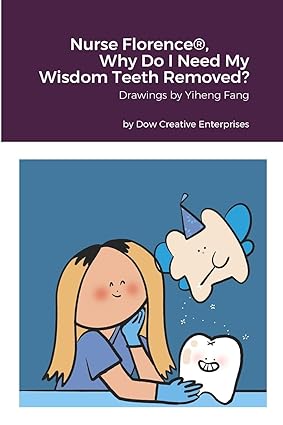
Nurse Florence®, Why Do I Need My Wisdom Teeth Removed? is a cheerful, educational picture book that uses a friendly lunchtime chat between three girls and a school nurse to explain what wisdom teeth are, why they might need to be removed, and what the removal process involves. Written by Michael Dow and beautifully illustrated by Yiheng Fang. Aimed at children, it introduces real medical terms in a simple way, encouraging curiosity and building early science literacy.
What struck me first was how calm and approachable the tone is throughout. There’s no rush, no panic. Nurse Florence takes her time explaining everything, from why wisdom teeth might grow in crooked to how anesthesia works. It’s all delivered through conversation, which gives the book a cozy, trustworthy vibe. I especially liked the part where she talks about anxiety before surgery and how listening to music or thinking about happy places can help. That advice isn’t just for kids, and it reminded me to slow down and breathe next time I’m nervous, too.
One thing I really appreciated was the honesty. The book doesn’t sugarcoat the procedure. It says clearly that people may have swollen faces, stitches, and need to be careful about infection. But it’s done in such a matter-of-fact, caring way that it doesn’t feel scary. It’s empowering. I also liked the glossary and journal pages in the back of the book, as it’s a nice nudge for kids to reflect and ask their own questions. The book teaches facts, yes, but it also teaches curiosity and self-awareness, which I think is rare and valuable in a book like this.
What makes this book shine is how grounded and purposeful it is. It’s not flashy. It’s not trying to be silly or overly clever. It knows what it’s doing: giving kids (and maybe even adults) a solid, confident understanding of a common medical procedure. The illustrations are soft and expressive, and the layout keeps things moving while offering enough detail for kids who like to linger on each page. I even found myself smiling when the girls all responded, “You too!” in unison.
Nurse Florence®, Why Do I Need My Wisdom Teeth Removed? is perfect for elementary school kids, especially those who are starting to hear big, scary-sounding words like “surgery” and “anesthesia” and need someone to break it all down for them in a gentle, respectful way. It would be great for parents to read with their kids before a dental visit, or even just as a way to boost science confidence. I came away impressed and a little more relaxed about my own dentist anxieties, too.
Pages: 97 | ISBN : 1304783669
Hello, My Name Is Harper
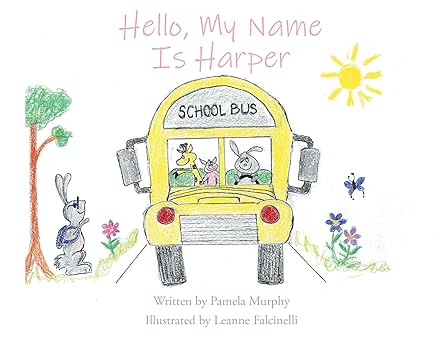

Hello, My Name Is Harper is a sweet and simple children’s book about a bunny named Harper who’s absolutely terrified to start first grade. From the very first page, Harper’s nerves are front and center—heart thumping, name forgotten, knees like jelly. But as the story hops along, we see Harper’s day unfold with gentle surprises: a kind teacher, a new friend who’s just as nervous, and classmates who turn out to be kind and welcoming. By the end, that first-day fear fades into sunshine and smiles.
Harper’s little rhyming thoughts feel like they came straight from a kid’s brain. The writing doesn’t overcomplicate anything. That’s what makes it work. The fear feels real, but so does the comfort that slowly builds up.
The artwork has a charming homemade vibe, like a kid might’ve helped draw it with crayons. The lines aren’t too sharp or polished, and the colors have that soft, scribbly texture that makes the whole book feel warm and familiar, like something you’d hang on the fridge. That style makes it feel accessible, like it’s coming from a kid’s world instead of being made for one.
And the ending is such a sweet touch, with space for kids to write about their own day. I love that it turns into a little keepsake or even a conversation starter. The helpful tips from Harper were adorable and solid advice for anyone with first-day jitters.
I think this picture book is a gem. It’s perfect for kids about to start school, especially those who feel nervous or shy. It would make a great gift for kindergartners or first graders, and even better if a parent or teacher reads it with them. It’s comforting, light, and full of heart.
Pages: 32 | ASIN : B0DH4FNPC1



 LITERARY TITAN