Blog Archives
The House With the Mango Tree
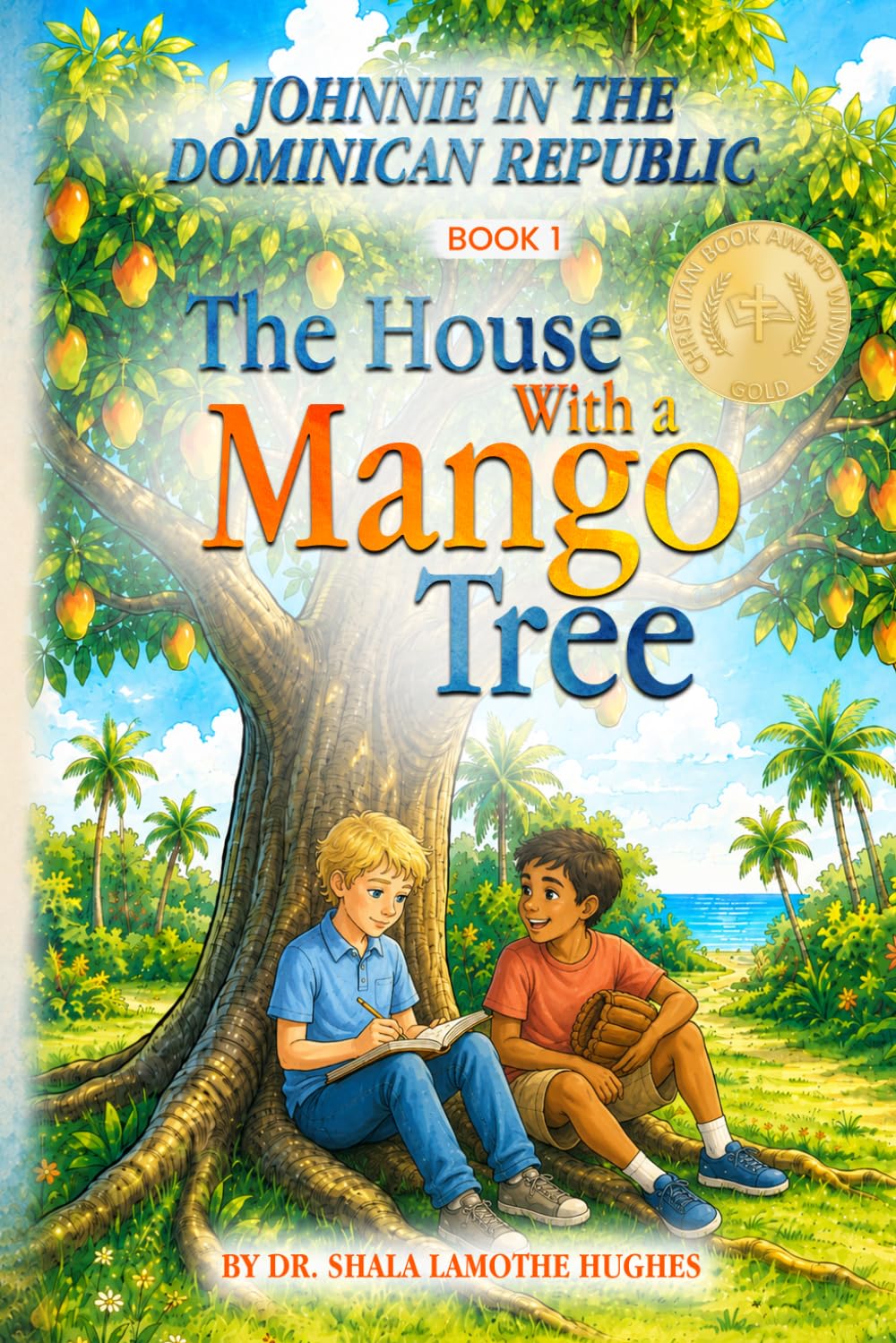

The House With the Mango Tree, by Dr. Shala Lamothe Hughes, is a thoughtful and engaging children’s book about adjusting to change, finding friendship, and discovering what it means to belong. The first installment in the Johnnie in the Dominican Republic series introduces twelve-year-old Johnnie, whose life takes an unexpected turn when his parents move their family from the United States to the Dominican Republic for missionary work. Leaving behind his friends, school, and familiar routines, Johnnie struggles with the uncertainty of living somewhere new. Hughes captures the emotional weight of this transition through Johnnie’s observations and inner thoughts, creating a relatable story for young readers who’ve experienced change or wondered what it would be like to start over in an unfamiliar place.
One of the book’s strengths is its attention to the everyday experiences that shape Johnnie’s understanding of his new surroundings. From the bustling streets of Santo Domingo to the unfamiliar sounds outside his bedroom window, Hughes brings the Dominican Republic to life through details that reflect Johnnie’s curiosity and discomfort. His developing friendship with Mateo, a local boy who shares his interest in baseball, adds warmth and humor to the narrative. Their interactions feel natural, especially as Johnnie begins learning Spanish words and discovering how shared interests can bring people together. The story also incorporates themes of faith, kindness, and service, showing how community connections can influence a child’s perspective during a difficult adjustment.
Illustrated by Stella Johnson, the picture book features colorful, expressive artwork that gives readers a strong visual connection to Johnnie’s experiences. The illustrations depict tropical greenery, neighborhood streets, modest homes, and welcoming community spaces, creating an inviting sense of place. Particularly appealing are the scenes featuring the enormous mango tree, whose leafy branches and golden fruit establish a comforting visual presence throughout the story. Johnson also pays attention to the characters’ facial expressions and body language, allowing readers to recognize Johnnie’s uncertainty, hesitation, and growing curiosity. The nighttime illustrations are especially atmospheric, using deep blues, warm lighting, and glowing fireflies to convey the beauty of the neighborhood after dark. These images complement the storytelling and provide plenty of details for children to explore.
The House With the Mango Tree offers a gentle, accessible exploration of friendship, cultural adjustment, and the importance of feeling connected to others. Hughes writes with compassion for Johnnie’s struggles, acknowledging that adapting to a different environment takes patience and emotional courage. The book’s Christian perspective is woven into its emphasis on service, encouragement, and trusting God through unfamiliar circumstances. Its concluding discussion guide, reflection questions, and suggested Bible passages also make it useful for families, church groups, and faith-based classrooms. With its approachable characters, inviting illustrations, and meaningful themes, this is a picture book that encourages conversations about welcoming newcomers, appreciating different communities, and recognizing the small gestures that help people feel at home.
Pages: 50 | ASIN : B0HKVBPR5Q

Jar of Tears: Moms Aren’t Supposed to Die

Jar of Tears: Moms Aren’t Supposed to Die is a heart-wrenching story that captures the poignant journey of a young girl, Miracle, who grapples with the loss of her mother to cancer. Before her mother’s death, Miracle leads a joyful life filled with painting, church visits, and gardening. However, her world shatters when her mother’s illness recurs, and she succumbs to an infection in the hospital. This tragic event forces Miracle to move in with her father, stepmother, and two half-siblings. Struggling with denial and grief, Miracle finds it hard to accept her new family. Yet, through newfound friendship, faith, and familial bonds, she slowly begins to paint a new life on a fresh canvas.
Jar of Tears is a comforting read that holds immense value for young readers dealing with grief. Miracle’s struggles and emotions echo the experiences of many children who must adapt to a new life after a profound loss. One particularly moving moment occurs when Miracle’s best friend abandons her for a new girl, adding to her already heavy burden. This betrayal makes Miracle hesitant to share the news of her mother’s death with her new schoolmates. Over time, she learns to trust again, and the overarching message of rebuilding after loss is delivered with profound and powerful prose.
The novel also offers a realistic and sympathetic portrayal of anxiety. Miracle’s experiences, including panic attacks at school, especially during her first Mother’s Day without her mother, are depicted with sensitivity. She begins to speak with a school counselor and attends a support group for grieving children. Her unique coping mechanism is to collect her tears in a jar, believing that God treasures them. This act serves as a tangible reminder of how much she misses her mom. Despite her name, Miracle’s journey is not about miraculous recoveries but about tender, gradual healing. She ultimately understands that love does not vanish with death but transforms and endures.
Jar of Tears is an essential read for young readers navigating the complexities of grief. Its tender portrayal of loss, anxiety, and the path to healing provides comfort and insight. This book is particularly well-suited for children who have experienced the death of a loved one and are seeking solace in stories that reflect their own journeys.
Pages: 170 | ASIN : B0CZQB75GK


