Blog Archives
Meaningful Memories

The House With the Mango Tree follows a twelve-year-old as he adjusts to moving from the United States to the Dominican Republic, navigating change, new friendships, and the search for belonging. Where did the idea for this book come from?
My own experience living and serving as a missionary in the Dominican Republic gave me the foundation for this story. Moving to another country brings wonderful opportunities, but it also means leaving people and familiar things behind. Even when you believe God has led you somewhere, the adjustment can be difficult.
I wanted to explore that experience through a child’s eyes. Adults often decide on a move, while children have to find their place in a life they didn’t choose. Johnnie’s story leaves room for both the sadness of leaving and the possibility that a new place can become home.
How did you approach portraying his sadness about leaving behind friends, school, and familiar routines?
I wanted to take his feelings seriously. For a twelve-year-old, friends, school, and everyday routines make up so much of his world. Leaving those things is a real loss, even when the adults around him are excited about what comes next.
It was important to give Johnnie room to miss home without making him seem ungrateful. Children can enjoy a new friendship and still wish they could see an old friend. They can trust God and still feel lonely. I wanted his adjustment to feel gradual, because belonging usually grows through small experiences rather than one moment that suddenly makes everything better.
Why was it important to show ordinary neighborhood life rather than focus only on the differences Johnnie notices?
Some of my most meaningful memories of the Dominican Republic are of ordinary moments—teaching, sharing meals, having conversations, and spending time with people. Those experiences helped me build relationships and feel connected to the community.
I wanted that sense of everyday life in Johnnie’s story. His neighbors have their own families, responsibilities, friendships, and concerns. As he gets to know them, he begins to see beyond what feels unfamiliar. I hope young readers experience that with him and recognize feelings they understand: wanting a friend, wanting to be included, and wanting somewhere to belong.
What advice would you offer aspiring authors who want to explore cultural experiences and faith in children’s literature?
Begin by listening. Learn from people who live in the culture you’re writing about, and give them an opportunity to tell you what you’ve misunderstood or overlooked. Personal experience is valuable, but there is always more to learn.
Give the child’s emotional experience the same care. Let children ask questions, make mistakes, feel disappointed, and grow. Faith can come through naturally in how characters respond – offering kindness, asking forgiveness, praying when they’re unsure, or learning to trust God through change.
Above all, tell a story children want to read. Give them people to care about and a reason to turn the page.
Author Links: GoodReads | Facebook | Website | Amazon
What if leaving everything familiar is the first step toward discovering where you truly belong?
Twelve-year-old Johnnie never asked to move to the Dominican Republic.
Back home, he had his school, his best friend, his basketball hoop—and a life that made sense. But when his parents move the family to a colorful new neighborhood for missionary work, Johnnie suddenly finds himself surrounded by unfamiliar sounds, unfamiliar words, and a culture he isn’t sure will ever feel like home.
Then he meets Mateo.
With a baseball glove, a quick sense of humor, and plenty of patience for Johnnie’s Spanish, Mateo gives the new kid something he desperately needs: a friend. And beneath the branches of a sprawling mango tree, through neighborhood adventures, unexpected power outages, glowing fireflies, and opportunities to serve others, Johnnie begins to see his new home differently.
Maybe belonging doesn’t happen all at once.
Maybe sometimes it begins with one friend, one act of kindness, and the courage to make room for something new.
The House with the Mango Tree is the heartwarming first book in the Johnnie in the Dominican Republic series—a faith-centered children’s story about friendship, courage, cultural discovery, service, and trusting God through life’s biggest changes.
Perfect for young independent readers, family read-alouds, Christian families, homeschoolers, classrooms, churches, and children’s reading groups.
A warm and hopeful story for every child who has ever left something familiar and wondered if a new place could ever feel like home.
The House With the Mango Tree
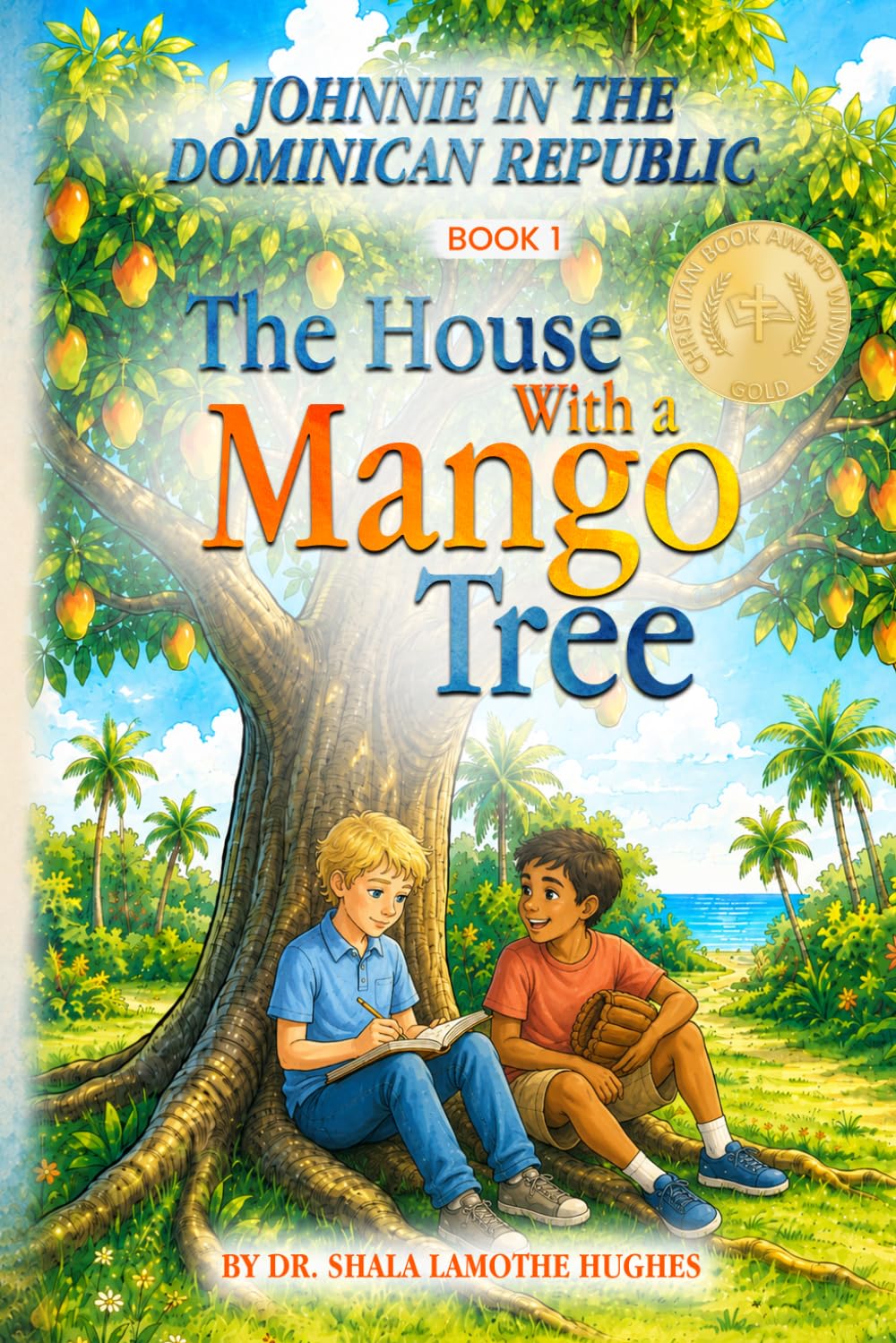

The House With the Mango Tree, by Dr. Shala Lamothe Hughes, is a thoughtful and engaging children’s book about adjusting to change, finding friendship, and discovering what it means to belong. The first installment in the Johnnie in the Dominican Republic series introduces twelve-year-old Johnnie, whose life takes an unexpected turn when his parents move their family from the United States to the Dominican Republic for missionary work. Leaving behind his friends, school, and familiar routines, Johnnie struggles with the uncertainty of living somewhere new. Hughes captures the emotional weight of this transition through Johnnie’s observations and inner thoughts, creating a relatable story for young readers who’ve experienced change or wondered what it would be like to start over in an unfamiliar place.
One of the book’s strengths is its attention to the everyday experiences that shape Johnnie’s understanding of his new surroundings. From the bustling streets of Santo Domingo to the unfamiliar sounds outside his bedroom window, Hughes brings the Dominican Republic to life through details that reflect Johnnie’s curiosity and discomfort. His developing friendship with Mateo, a local boy who shares his interest in baseball, adds warmth and humor to the narrative. Their interactions feel natural, especially as Johnnie begins learning Spanish words and discovering how shared interests can bring people together. The story also incorporates themes of faith, kindness, and service, showing how community connections can influence a child’s perspective during a difficult adjustment.
Illustrated by Stella Johnson, the picture book features colorful, expressive artwork that gives readers a strong visual connection to Johnnie’s experiences. The illustrations depict tropical greenery, neighborhood streets, modest homes, and welcoming community spaces, creating an inviting sense of place. Particularly appealing are the scenes featuring the enormous mango tree, whose leafy branches and golden fruit establish a comforting visual presence throughout the story. Johnson also pays attention to the characters’ facial expressions and body language, allowing readers to recognize Johnnie’s uncertainty, hesitation, and growing curiosity. The nighttime illustrations are especially atmospheric, using deep blues, warm lighting, and glowing fireflies to convey the beauty of the neighborhood after dark. These images complement the storytelling and provide plenty of details for children to explore.
The House With the Mango Tree offers a gentle, accessible exploration of friendship, cultural adjustment, and the importance of feeling connected to others. Hughes writes with compassion for Johnnie’s struggles, acknowledging that adapting to a different environment takes patience and emotional courage. The book’s Christian perspective is woven into its emphasis on service, encouragement, and trusting God through unfamiliar circumstances. Its concluding discussion guide, reflection questions, and suggested Bible passages also make it useful for families, church groups, and faith-based classrooms. With its approachable characters, inviting illustrations, and meaningful themes, this is a picture book that encourages conversations about welcoming newcomers, appreciating different communities, and recognizing the small gestures that help people feel at home.
Pages: 50 | ASIN : B0HKVBPR5Q

Clancy: A Gift of Christmas Story

A.K. Miller’s Clancy is a children’s book about the uneasy feeling of being asked to do something special when you’re convinced you don’t belong. In bustling Cameltown, preparations for a Christmas production bring plenty of excitement, but Clancy’s attention keeps returning to his crooked hump, awkward knees, unruly hair, and troublesome tooth. He’s an easy character to care about because his worries are so specific. Children who’ve felt uncomfortable with their appearance or nervous about speaking in front of others will recognize something familiar in this anxious camel, even with all the festive silliness around him.
Miller tells the story in rhyming verse, giving Cameltown a chatty, slightly goofy vocabulary of its own. The invented camel expressions and playful names are fun to say aloud, and they give the town a personality that extends beyond its central character. There’s a lively contrast between the crowd’s excitement and Clancy’s private uncertainty, which helps the emotional thread stand out. Some lines invite a little adjustment in pace when read aloud, especially where the phrasing gets elaborate, but the short stanzas offer useful breathing room. It’s a story that benefits from a reader willing to enjoy the sounds and give the characters distinct voices.
William “Bubba” Flint’s illustrations bring a great deal of humor and feeling to this picture book. The camels have wonderfully expressive faces, with large eyes, toothy grins, raised brows, and drooping mouths that make their moods easy to read. Clancy’s curled forelock and uneven smile give him an immediately recognizable look. Loose washes of turquoise, green, yellow, and orange sit behind bold, sketchy outlines, creating pages that feel bright and lively. Christmas trees, wreaths, ribbons, confetti, and a splendid top hat provide plenty for children to notice. I especially like how Clancy’s posture and expression communicate his discomfort, giving young listeners a way into his feelings through the pictures.
The book’s Christian faith is central to its treatment of worry, belonging, and Christmas. Prayer and trust in God shape the conversations, and the religious language is direct enough for families to discuss together. The mayor’s patient attention is particularly appealing: he listens to Clancy’s concerns and speaks from personal experience, making their exchange feel caring and personal. There’s room here to ask children what makes them nervous, whom they can talk to, and how faith fits into those feelings. For families seeking a Christmas read with explicit Christian teaching, an affectionate animal cast, and colorful illustrations, Clancy offers plenty to share during a quiet reading session together.
Pages: 34 | ASIN : B0HDNTLP25
God, Love, and Family
Marion, Faith & Ice Cream follows an eight-year-old’s simple question about believing in God as it unfolds across one day, where family love, sensory wonder, and everyday beauty teach her how to see faith for herself. What was the inspiration for the setup of your story?
The inspiration was my daughter’s family. The gift of becoming a grandparent is being able to view the development of a child from 30 thousand feet. As a parent, you are in the thick of the day-to-day duties and responsibilities, but as a grandparent, your experience allows you to see what really matters. Therefore, God, love, and family are the central elements.
How did you balance writing about faith for children in a way that feels gentle and discovered?
Thank you for asking the question this way. Children are so much more sensory-focused than intuitive, so it was important to me to connect the faith to something they can observe with their own senses. The unseen concepts of air and wind are ones children understand, so drawing the connection gives them a tangible connection to believing versus simply a spiritual one.
Marion’s father, being a scientist, adds an interesting dimension to the story. What drew you to pairing scientific observation with spiritual belief?
My son-in-law is an MD, so pairing a science angle that relies on “proof” with a child’s desire for something concrete seemed like a natural fit.
What do you hope children, and the adults reading with them, feel or talk about after they finish the book?
That God is calling us all to take a leap of faith. I think we all have a deep yearning to believe in something beyond what we can see. Therefore, I hope it gives children (and maybe even some adults) the simple framework to connect this tangible world with the spiritual one.
Author Links: GoodReads | Amazon
Marion isn’t sure. She’s eight years old, full of questions, and she’s never seen God. So how can she know He’s real?
Everything changes during one breezy Saturday. As she watches eagles glide above her, leaves swirl around the yard, and delights in a sparkling lake that seems to wink at her, Marion discovers that the world is filled with things she can’t see but still knows are true. And, maybe faith works the same way…
A beautiful picture book that helps children explore faith, family connections, and the amazing wonders all around us. With loving guidance from her dad, Marion learns that belief is so much more than just what meets the eye.
Philomena: The Brave Daughter of Light

Philomena: The Brave Daughter of Light tells the story of a Greek king and queen who turn to Jesus when they cannot have a child, then receive a daughter whose whole life burns with faith and courage. As Philomena grows, she loves the poor, refuses the Roman emperor’s offer of marriage, suffers prison and brutal trials, and finally dies as a young martyr while staying loyal to God. The book ends with her in heaven, close to Jesus, and with hints of the miracles that later come through her prayers.
I really liked the writing style. The whole thing moves in gentle rhyming lines that feel almost like a lullaby, even when the story gets tense. The language stays simple and clear, yet the author sneaks in big feelings. I could feel the parents’ ache at the start, then their joy when Philomena is born, then that cold knot of fear when Diocletian appears. The book keeps saying the same core idea in different ways. God is near, God is kind, God gives courage. That repetition worked for me, especially for kids who need to hear it more than once.
The ideas behind the story were emotional for me. This isn’t a soft little tale about being nice. It’s about a girl who chooses God over safety, comfort, even her own life, and that is heavy. The book shows real danger and pain, yet it keeps the focus on peace and light. The prison scenes, the arrows, the river, all of that could feel scary, but the art and words keep pulling the mood toward hope. I found myself feeling both sad and calm at the same time. Reading this with children will lead to some deep talks afterward. Why would someone die for their faith? What does courage look like today? Those questions hang in the air once you close the book, and I like that it doesn’t spell everything out.
I would recommend this picture book for families and classrooms that want strong Christian stories about saints, especially Catholic families and parish schools, and for kids who can handle a serious, martyr-style story, maybe around ages six and up, with an adult nearby to chat. It feels perfect for bedtime if you want quiet, thoughtful talks afterward, or for feast days when you want to highlight a particular saint. If you want a beautiful, faith-filled tale about bravery, purity, and trust in God, I think Philomena: The Brave Daughter of Light is a perfect choice.
Pages: 46 | ASIN : B0GDJ9VSDR
Wagon of Worries
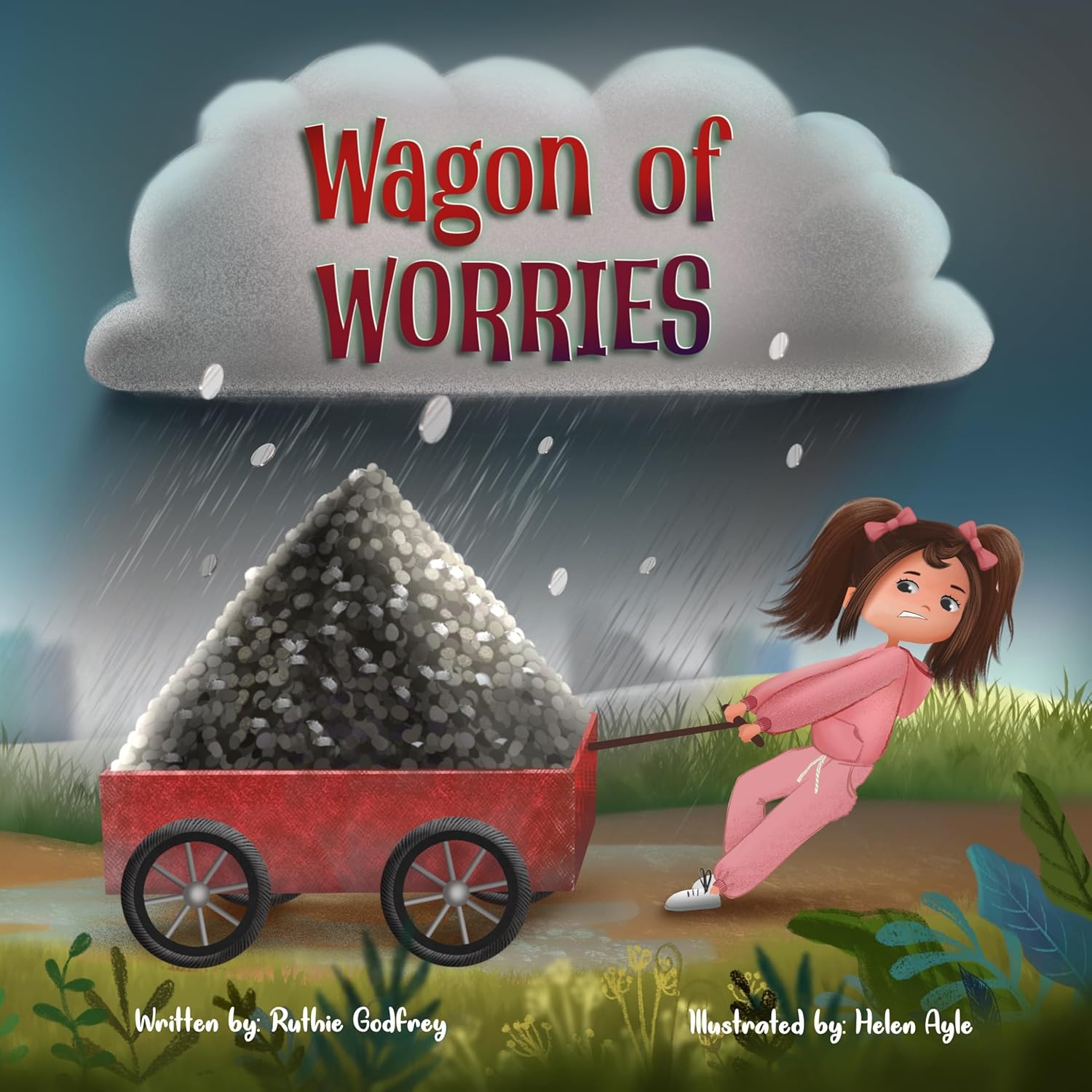
Mabel is gathering something in her little red wagon, though it’s hardly the sort of collection that brings comfort. What she piles inside are worries. They appear everywhere, multiplying with ease, and Mabel scoops them up almost without thinking. Soon the wagon swells with these gray tokens of unease, growing so weighty that she can scarcely drag it along. She tries to abandon it, to shake herself free, yet finds she’s somehow bound to it, tethered by forces she doesn’t fully grasp. The question becomes urgent: how can she move forward? A turn toward a higher power may hold the key.
Wagon of Worries, written by Ruthie Godfrey, targets readers roughly ages 4 through 11. While older children may find the message too direct, younger readers are likely to enjoy its vibrant illustrations and the gentle wisdom woven throughout.
Godfrey introduces the idea of anxiety with refreshing creativity. The dull gray coins Mabel gathers function as symbols for the small but persistent stresses that follow us through life, whether we are children learning to navigate the world or adults juggling responsibilities. As those worries accumulate, steering one’s life can feel increasingly difficult. Mabel’s journey demonstrates that seeking help from the divine can offer a release, a way to surrender the heaviest burdens and trust in something beyond oneself. Once she does, her wagon and her path forward grow lighter.
The symbolism may lean toward the obvious, yet the message remains valuable for young readers. Godfrey emphasizes that even those outside the Christian faith can find meaning in the book’s core principle. A “let go, let God” mindset, whether interpreted literally, spiritually, or metaphorically, can help anyone overwhelmed by anxieties regain perspective. In an era where worry feels nearly universal, the book presents a gentle, sensible approach to coping, wrapped in a story children can understand and remember.
Pages: 36 | ASIN : B0F6M8Y7BH
Higher Callings for Our Lives

The Mighty Mountain follows a tall and mighty mountain who is struck by an earthquake and reduced to a pile of sticks and has to find a new purpose in life. What was the inspiration for your story?
I recall praying for ideas about 8 years ago for something of value that would be impactful to people, build a legacy for my family, and God imparted a parable about a mountain to my mind and I couldn’t shake it. I felt the message behind the story was so powerful and moving to everyone young and old that it had to be shared. I wanted this book to be a classic story that will stick with people for a lifetime like The Little Engine That Could, The Giving Tree, or The Hungry Caterpillar. When I expanded the parable into an illustrative story, I was motivated to have others see and feel what I experienced in that moment when the story was first placed on my heart.
What were some ideas that were important for you to share in this book?
Some of the ideas that I wanted to share in this book were about the idea of change and discovering your purpose. In life, you sometimes find out that you are good at something and you devote all of your energy into it and believe you found your thing. So much so that you’ve placed your entire worth in that thing and if you can’t do that thing you fall into the trap of believing you’re worthless. The truth is we evolve, go through seasons, and have higher callings for our lives. Sometimes it’s related to what we were doing before but sometimes it isn’t. Young and old go through tragedies of different magnitudes impacting what they were doing and I want to share the idea of hope within them. Hope that they are more and will make an impact somewhere else.
The art in this book is fantastic. What was the art collaboration process like with illustrator Wilker Aguiar Souza?
Working with Wilker was fantastic, I felt we worked very well together! The Mighty Mountain was my first book, and I had a vision for how the mountain should look. Early in the process, I made sketches of how each character would look and respond in the different scenes. Several years later when going through character development, I provided Wilker with the manuscript, explained how I wanted the mountain to look, and when he provided his initial sketches for the character development I was shocked! They were eerily close to what I drew years before. That was confirmation for me that Wilker was supposed to be the illustrator for this project. I gave him creative freedom to make the story come alive with vibrant colors and tones to convey the emotion of the mountain as it went through its transformational process.
What is the next book that you are working on, and when will it be available?
I have several books that I am working on. The adult companion book for The Mighty Mountain is in the editing stage and should be available within the next six months. That book will go a little deeper and provide the adults and parents with more insight to help them apply the ideas that are embedded within The Mighty Mountain to their circumstances. Additionally, I have inspired my daughter to write a book. She has a love of baking and co-authored a magnificent book called Cookie-Day, Cookie-Day which is available on Amazon.
Author Links: GoodReads | Instagram | Website | Amazon
The Girl and Her Noble Steed

The Girl and Her Noble Steed by Kirthana Fanning is a delightful and imaginative story that centers on Ofe, a young orphan with a remarkable affinity for animal riding. Set on the island of Ginobe, the story unfolds as Ofe endeavors to utilize her unique skill to rescue her orphanage. The annual Gino Games, featuring a pivotal race, presents Ofe with an opportunity to win a prize that could secure the orphanage’s future. However, achieving this goal requires the unlikely assistance of a curmudgeonly old man, humorously dubbed “Sir Frowns-a-lot,” and his donkey, Zo.
Fanning’s storytelling is refreshingly original and imbued with a whimsical charm reminiscent of Roald Dahl’s work. The narrative is sprinkled with humor and warmth, engaging readers of all ages. The book’s illustrations, evocative of the early 2000s animated series “The Proud Family,” add a layer of visual appeal with their exaggerated, comedic style.
The writing style is a standout aspect of this book. Fanning employs language that resonates with younger audiences without sacrificing depth or humor. Ofe’s portrayal is particularly endearing and authentic; she is depicted with the innocence and humor characteristic of her age. For instance, in a light-hearted moment, Ofe checks her breath before embarking on a task, adding a touch of humor and depth to her character. Beyond the underdog theme, the story delves into themes of faith and reliance on higher powers. Ofe’s trust in God to aid her and the orphanage adds a meaningful dimension to the tale.
The Girl and Her Noble Steed is a skillfully crafted story that combines humor, imagination, and heartfelt moments. It’s a compelling read for a diverse audience, offering more than just entertainment but also a poignant message about faith and perseverance.
Pages: 100 | ASIN : B0CKS19H5T


