Blog Archives
Hanged: Execution in the Top End
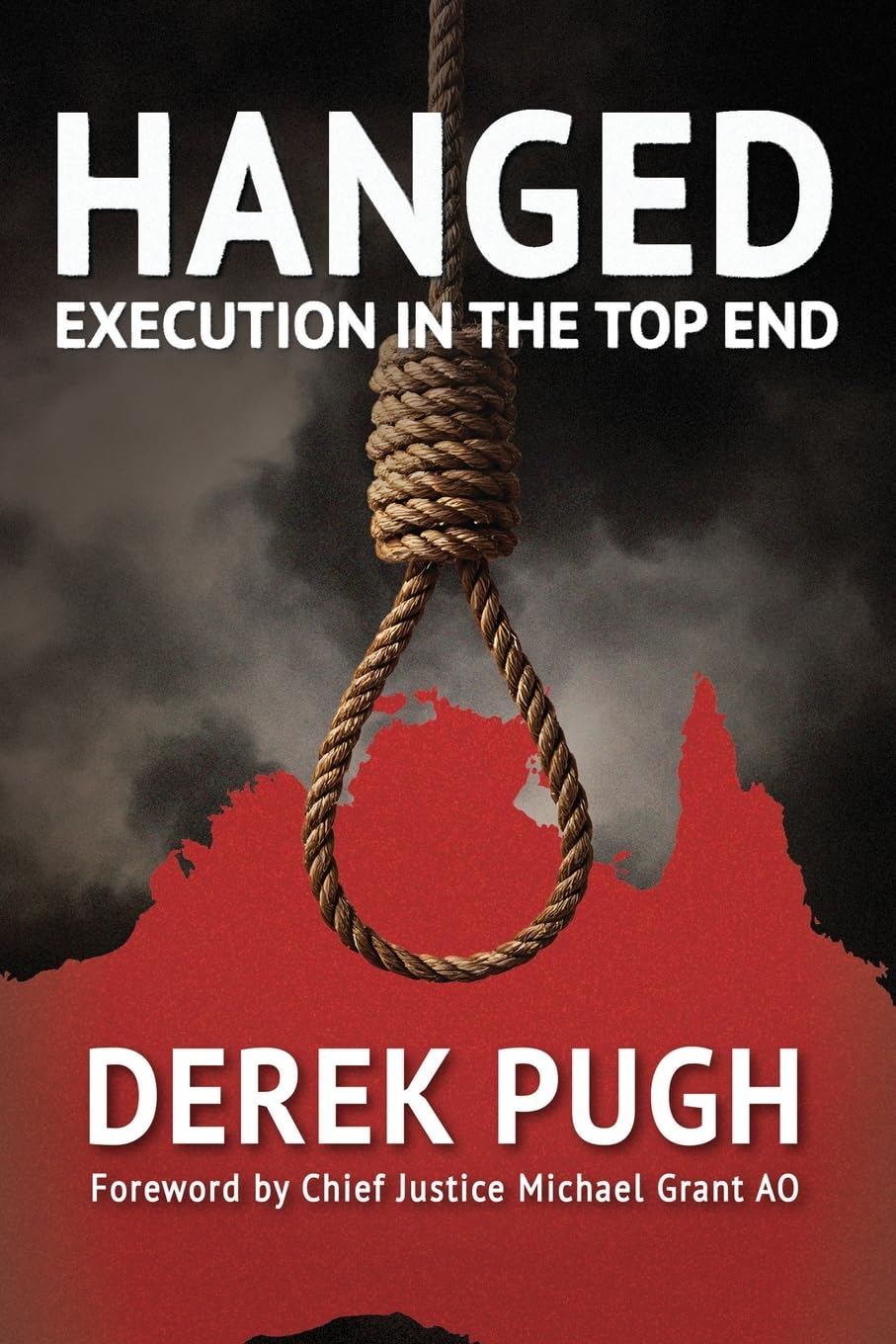

Hanged: Execution in the Top End is a tightly focused history of the ten men who were judicially executed in the Northern Territory between 1893 and 1952, from Charlie Flannigan at Fannie Bay Gaol through to Jaroslav Koci and Jan Novotny after the killing of taxi driver George Grantham. Author Derek Pugh walks through each case in turn, sets it inside the wider story of frontier violence, racism, and the slow death of capital punishment in Australia, and finishes with reflections on how we remember these hangings today, including the transformation of Fannie Bay Gaol into a museum. The book mixes court records, newspaper reports, maps, photographs, and government correspondence, and it opens with a strong foreword by Chief Justice Michael Grant that frames the whole thing as a warning about how easily a society can accept state killing as normal.
The book is clear, steady, and surprisingly vivid. Pugh has a plain style that does not show off, which fits the subject. He lets witnesses speak in their own words, he recreates scenes like the “hanging carnival” around Flannigan’s execution, and he is good at picking the small detail that sticks in your head, such as the careful testing of the second-hand gallows or the way bodies were sewn into blankets and dropped into rough graves. Sometimes the narrative feels a bit stop-start, since each chapter repeats the pattern of “the victims, the trial, the gallows,” and the many quotations from old newspapers can slow things down, but the payoff is a strong sense that he has done his homework and is not cutting corners. I appreciated the timeline, the map of execution sites, and the appendix of murder trials; they make the book feel like both a story and a reference, which is not easy to pull off.
What stayed with me most, though, was the moral argument running quietly underneath the case summaries. Pugh does not rant. He just lines up the facts and lets the pattern appear. Most of the men who died on the gallows were Aboriginal or Chinese, while white killers often saw their sentences commuted. Juries would not convict white men for killing Aboriginal people, yet black men were hanged on the basis of evidence that everyone knew sat on shaky ground. The book shows how the language of “civilising” and “deterrence” covered over massacres and revenge raids that never saw a courtroom at all. The foreword talks about capital punishment as a barometer of a society’s values, and by the end, I felt that very strongly; these executions tell you as much about power and race as they do about crime.
I came away thinking this is a heavy but important read. I would recommend it to readers who enjoy true crime but want more history than sensation, to people interested in Northern Territory or frontier Australian history, and to anyone who cares about the death penalty and how the law treats different groups of people. If you want detailed descriptions of violence and injustice, Pugh offers a careful and humane look at lives that ended at the end of a rope and at the system that put them there.
Pages: 196 | ISBN : 1763667154



