Blog Archives
Black Is My Ethnicity: American Is My Nationality
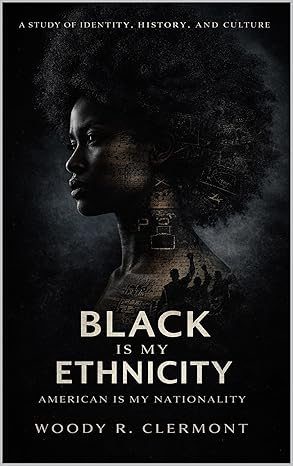

Black Is My Ethnicity, American Is My Nationality argues that Blackness in the United States is better understood not merely as a racial label but as an ethnicity formed through forced displacement, shared historical trauma, cultural reconstruction, and consistent systemic treatment. The book moves from a broad discussion of ethnicity and ethnocentrism into precolonial African civilizations, the wreckage of the transatlantic slave trade, and the making of a new collective identity through language, religion, music, kinship, and foodways. From there, it widens into Reconstruction, suppression, Black economic life, and the modern machinery of exclusion, insisting that redlining, school segregation, employment discrimination, and criminal justice disparities are not scattered facts but parts of one long pattern. Its central claim is clear from the outset and never wavers: Black identity in America is a historically produced peoplehood, and the language of ethnicity names that reality more precisely than the language of race does.
The author writes like someone trying not just to make an argument, but to rescue a framework from distortion, and there are moments when that urgency gives the book real heat. I found the sections on cultural reconstruction especially compelling, because they shift the book from taxonomy into lived human texture: hush harbors, spirituals carrying double meanings, fictive kinship, jumping the broom, AAVE as structure rather than “broken” speech, foodways shaped out of memory and deprivation. Those passages have life in them. They show the book at its strongest when it starts revealing. I also admired how often the author refuses the deadening abstraction that can flatten books like this. The emphasis on survival, adaptation, and continuity gives the work a heartbeat.
I think the book is more persuasive in conviction. There’s a lawyerly quality to the writing, especially in the prefatory and structural passages, that gives the book rigor. The prose favors repetition. Some case studies and examples are vivid, like the Zong, Mansa Musa, Eatonville, or the discussion of how school funding and redlining reproduce inequality. The ideas are powerful. It’s not coy, not detached, and certainly not interested in false neutrality. It wants accuracy, naming, and historical continuity, and it pursues all three with unusual steadiness.
I found Black Is My Ethnicity, American Is My Nationality intellectually earnest, emotionally charged, and most moving when its historical argument becomes cultural witness. It’s not a subtle book, but it’s a deeply intentional one, and its strongest pages carry the weight of someone trying to name a people in full rather than leave them trapped inside an old and inadequate vocabulary. I finished it feeling that, whatever one makes of every turn in the argument, the book has genuine stakes and a real pulse. I’d recommend it most to readers interested in Black identity, American history, ethnicity, and the language we use to describe collective experience, especially those willing to engage a book that is less interested in polish for its own sake than in saying something it believes urgently needs to be said.
Pages: 353 | ASIN : B0FHSH4X4S

Dear Mama: A Journey Through Poverty, Race, and Resilience
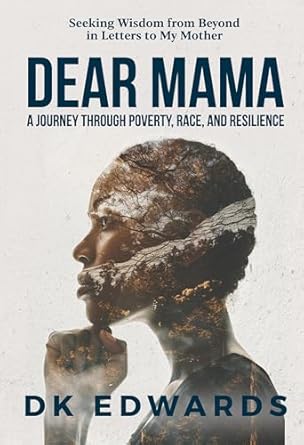
DK Edwards opens his heart in Dear Mama: A Journey Through Poverty, Race, and Resilience, offering a deeply personal account of growing up in an impoverished household. This poignant memoir provides Edwards a chance to reflect on his journey and the sacrifices made by his single mother. With each chapter ending in a heartfelt letter to his mother, Edwards pays homage to her unwavering determination, illuminating how her accomplishments shaped his life and resilience.
The writing is heartfelt, but at times, almost heartbreakingly raw. Edwards doesn’t shy away from the uncomfortable truths about abandonment, hunger, and violence. The book also delves into the complexities of systemic racism with piercing honesty. These moments are recounted with a mixture of youthful confusion and adult clarity, making them deeply impactful. What stands out is Edwards’s ability to weave in nuanced reflections on poverty and resilience. He describes with striking candor the shame of using food stamps, the hunger that drove him to steal from his mother’s purse, and the bittersweet irony of his mother working in social services while their family relied on welfare. Yet, the narrative doesn’t dwell in despair, it showcases his mother’s unwavering determination to provide, her strength in adversity, and the profound impact she had on her children. The story of her helping a struggling client with her limited resources was a moving reminder of her generosity despite their own hardships. Edwards’s prose is simple yet evocative, and his storytelling brims with authenticity. The book left me reflecting on the resilience it takes to transcend generational poverty and the ways systemic inequalities shape lives, even as the human spirit finds ways to persevere.
Dear Mama: A Journey Through Poverty, Race, and Resilience is a heartfelt and relevant memoir that resonates with today’s struggles. The story’s emotional depth and raw honesty make it an engaging read. Edwards’ tribute to his mother is a testament to the enduring power of love and perseverance, offering hope to those facing similar trials. This is a book that deserves a place on the shelves of readers drawn to stories of resilience and the human spirit.
Pages: 113 | ASIN : B0DBZQ3PS1
When Liberty Enslaves: The Toxic Blend of Faith and Politics
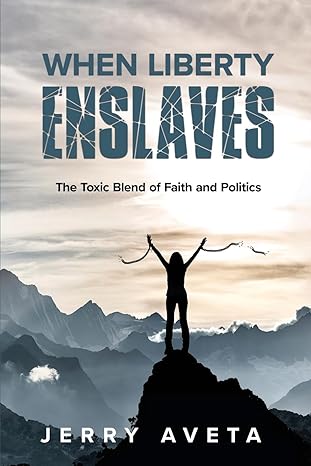
When Liberty Enslaves: The Toxic Blend of Faith and Politics by Jerry Aveta offers a detailed look at how the intersection of faith and politics has shaped the course of American history, particularly through the lens of liberty. The book draws comparisons between the pre-Civil War era and the present day, exploring how issues like faith, politics, and social justice continue to divide the nation. It examines themes like freedom, enslavement, and the consequences of intertwining religious beliefs with government decisions. Aveta ultimately reflects on the parallels between America’s past and its current political climate.
Aveta’s writing gets personal quickly, which makes the book feel relatable. The introduction about his disinterest in history early on hit home for me. I wasn’t expecting such a confession in a book that digs into heavy political and social themes. But it worked. The way he ties his personal disinterest in history to his eventual realization of its importance drew me in. There’s a clear shift when he discusses how today’s political climate echoes the tensions before the Civil War. That felt eerie and relevant, especially the parts comparing faith’s role in both eras. Aveta doesn’t just lecture; he reflects and invites you to think about it with him. One thing that kept me hooked was the comparison between old and current political issues. Aveta draws bold parallels between the pre-Civil War issues of slavery and today’s debates around gun rights and abortion. I didn’t expect the sections about the sanctity of life and how they pit people of the same faith against each other. That hit hard. The discussion on gun rights, especially how people interpret “liberty” differently in this context, made me stop and think. Aveta’s point about one person’s liberty potentially enslaving another was something I hadn’t considered before, and it made the book feel timely.
When Liberty Enslaves is a thought-provoking and timely read that encourages deep reflection on the role of faith in politics. Jerry Aveta’s personal approach, historical insight, and the way he connects the past to our present make the book both engaging and eye-opening. It’s a call to reconsider the impact of intertwining religion with governance, and it challenges readers to think critically about the state of liberty in America today. I’d highly recommend this book to anyone interested in politics, history, or religion.
Pages: 223 | ASIN : B0DCMG8MYK


