Blog Archives
It Starts With Respect

Another Day in Post-Racial America reflects on the lives and deaths of individuals whose encounters with police officers or vigilantes became part of America’s national conversation about race. What inspired you to bring your personal experiences and essays together in this memoir?
The murder of Trayvon Martin left me emotionally shattered. It was so unjust—a teenager walking to the store to buy a snack, only to be pursued and gunned down upon his return to his father’s gated community, as if he had no right to be there. And the punishment for that was death. Can you imagine your own child walking home and being told by a neighbor that he doesn’t belong? And then that neighbor shoots and kills him? To many white Americans, that might seem unfathomable. To Black Americans, it is an everyday truth they live with.
It is also the truth I have lived with for over fifty years since meeting my husband during our freshman year of college. I had been writing about my experiences of being interracially married in a racist America since 2010, when I first started my blog. Obama’s election had caused an atmospheric change in American politics. As a political junkie, I became a close observer of these shifts and predicted a massive backlash to what the media had prematurely started calling a “post-racial America.”
Then a chance encounter pulled so hard at my heart strings, I consider it a life-defining moment. My husband and I were out having lunch, and I looked over to see Sybrina Fulton, Geneva Reed-Veal, Gwen Carr, Lucy McBath, and Maria Hamilton sharing a table in the very same restaurant. I was entirely overcome by emotion. It is unbearable to lose a child to sickness or an accident—but what depth of despair must you feel when you lose a child simply because of the color of their skin? Yet, throughout the history of this country, Black women have endured that loss over and over.
Seeing these courageous women in person steeled my resolve. They took their unimaginable sorrow and turned it into fierce activism. They did it not for themselves, but for the millions of families they hoped would never have to feel the pain of losing a child viewed through a racist lens—in a country that has failed miserably at reconciling its past racial history and righting the codified systems that benefit some while disadvantaging others. When I got home that day, after having a good cry because I had been too emotional to offer my condolences to those mothers in person, I made a decision. I would finally bring my blog posts and essays together into a cohesive memoir to honor them the only way I knew how.
What have your experiences raising a multiracial family taught you about the challenges of navigating different racial and cultural expectations?
Inside my home, I’ve learned that living in and navigating multicultural/multiracial spaces is easy if you keep an open mind. That’s equally true in the workplace, in schools, and in the larger world. It starts with respect and a willingness to understand that the way you were raised and the cultural lens through which you learned about the world aren’t the only ways. Being open-minded allows you to truly see and accept other perspectives, enhancing your own life and understanding of the world, while introducing you to new possibilities and experiences.
Out in the world, however, it can be incredibly difficult. We routinely ran into judgmental people who made it their business to tell us they thought we shouldn’t be together. We faced socioeconomically impactful decisions that were made based entirely on how a particular person felt about our interracial relationship, like when we tried to buy our first home and the seller thought we’d ruin the neighborhood and refused to sell to us. Those biased decisions hurt us in ways a lot of people don’t think about—housing, jobs, and even our physical safety, particularly my husband’s. Imagine forty men ganging up on your fiancé because they didn’t think a Black man should be with a white woman. That happened to me. They assaulted him because of me. I pushed my little 5’2” body into the fray to try to stop them, endangering myself, too. That’s what we have to negotiate, even now as seniors, like when a carful of young people tried to run us down in a theater parking lot. For Black Americans, the most mundane activities can turn unpleasant and, worse, dangerous.
How did the changing social and political climate during the Obama and Trump administrations influence the subjects and perspectives you explored in your essays?
As early as the 1980s, I could feel a societal sea change growing. The vital progress made during the 1950s,’60s, and ’70s in terms of race and gender equality, labor rights, and family-oriented workplace benefits—like paid maternity leave—was systematically being dismantled. Nixon had engineered the Southern Strategy and invited the Southern segregationist Democrats into the Republican Party. Reagan tackled unions and workers’ rights when he dissolved the air traffic controllers’ union, while simultaneously mainstreaming racially coded political propaganda through tropes like the “welfare queen.”
By 2008, Obama’s election was secured, and hope for a better America was pervasive. But I knew the pendulum would swing in the other direction, and the backlash would be massive. The rise of Trump was no surprise. His brand of campaigning, and later, his leadership and policies, ushered in a new level of racial division, a rabid gun culture, cruelty, and an “us vs. them” ethos that ensured the backlash got national traction. Seeing someone like Roger Stone, who was on Nixon’s team in the 1970s, show up again in grand fashion on Trump’s campaign team perfectly illustrates the throughline and connectivity of each era. It might have taken them decades to orchestrate this new America, but here we are. However, almost twenty years after Obama’s election, the pendulum is swinging back to finding a more decent America with the results of the 2026 mid-term election being reported.
How do you hope the book contributes to readers’ understanding of empathy, personal responsibility, and the challenges involved in addressing racial inequality?
As Americans, we need to be stewards of everyone in this country. The divisive concept of “enemies within” is a political strategy to win votes; it does nothing to make this country a better place for its citizens. I often use the saying: A rising tide lifts all boats. Every single child in America should feel safe. They should have a decent home to go to, nutritious meals to eat, and a school with adequate resources so they can thrive and learn.
As people, we have to see each other—not as a skin color, not as an ideology, and most certainly, not as vermin, but as human beings. Only then can we effectively address the systemic inequalities still operating in this country, allowing the tides to lift all of our citizens.
Author Links: GoodReads | Facebook | Website | Amazon
Love of the Community

Run traces the extraordinary story of Wilmot Collins, whose life carried him from the devastation of Liberia’s civil war to the mayor’s office in Helena, Montana. As both a writer and filmmaker, how did your background influence your approach to the book?
I came to this project without any direct connections to an extraordinary life such as Wilmot’s. But I DO have an abiding interest in stories about courage, resilience, and survival. And Wilmot’s is chock full of all those things. (I explored some of these themes in my feature documentary work, FEBRUARY ONE: THE STORY OF THE GREENSBORO FOUR, about the 4 young men who took on the entire racial order in the U.S. when they sat down for service at the Greensboro Woolworth Store on Feb 1, 1960, thus unleashing much of the youthful driving force behind the civil rights movement of the 1960s. So Wilmot’s treacherous journey from the Liberian civil war (which killed over 250k of his fellow countrymen, including two of his own brothers, one of whom was beheaded) was a powerful attraction to me: how could someone take on that much danger and not only survive an ocean way (in Helena, MT) but thrive, indeed LEAD an entire community? Incredible.
A recurring theme throughout the book is that leadership begins with service. How did you see that idea reflected in Wilmot Collins’s life? Why do you think so many people connected with his message?
People were attracted to him because over the course of more than 20 years living in Helena, they had come to know and respect, even admire, him. He demonstrated his love of the community and commitment to being an American citizen–by joining the US military; serving as a youth counselor, coaching youth soccer, even singing karaoke at local bars. To him, it was all about being a public servant–listening and learning what the community needed and wanted, and then serving those needs. NOT styling himself as some ideologue or professional politician. We could learn a lot today about his ‘politics of decency’, far healthier than our current polarized, hyper-partisan politics of destruction.
The book devotes considerable attention to the long process of immigration and family reunification. Why was that aspect of the story so important to include?
Family was and is a pivotal feature of Wilmot’s life–and that goes for his wife, Maddie, and their two kids (now grown), Jaymie and Bliss. Everything was done by majority vote in their household. The difficulty and long wait he had to endure (his own daughter, born two months after arriving with her mother, Maddie, was two years old before a patient, but long-suffering Wilmot, could join them in America for the first time. But being resilient, persistent, and pursuing education (which got Maddie over to the US in the first place–to pursue a nursing program at Carroll College in Helena, MT) were binding threads in their family tradition.
What do you hope readers will remember most about Wilmot Collins and his family?
I hope readers remember how love takes courage and resilience, and the Collins family epitomized those traits. Also, I hope people will see in their remarkable journey the essence of the American Dream at work – a fast-fading goal for many native born Americans, but on vivid and compelling display with Wilmot Collins!
Author Links: GoodReads | X (Twitter) | Facebook | Website | Amazon
Run tells the inspiring story of Wilmot Collins, who fled the brutal and bloody Liberian Civil War in the early 1990s—where over 250,000 Liberians were killed, including two of Collins’s brothers—and managed to make it to Helena, Montana, one of the whitest places on the planet. Enduring and overcoming racism and xenophobia, he joined the Montana National Guard, became an active member of the Helena community, and in 2017 rose to become mayor of the capital city and the first Black mayor in Montana’s history.
Collins garnered a national reputation not only as a beloved Democratic politician in a ruby red state but also as a shining example of how being a racial and political outsider in a highly partisan society can be transformed into an effective and engaging form of political leadership.
Wilmot’s story highlights the tragic decision to abandon one’s homeland when it turns on its people. Collins came from a highly educated family and, when civil war erupted, he was fresh out of college working as a middle school teacher at Monrovia’s SOS Children’s Village School. He had recently found a great companion, Maddie Muna, whom he met after college graduation. They became fast friends and soon life partners in marriage. But they first had to negotiate forces threatening their very lives.
Through extensive interviews and his masterful command of storytelling, award-winning author and filmmaker Daniel Blake Smith tells how Wilmot and Maddie, through great perseverance, plenty of ingenuity, and inspiring displays of generosity, journeyed to the United States and have made their new home a better place for everyone. Run offers an emotional, inspiring, and deeply personal story of survival, racial injustice, political hope, and the challenges one family faced to realize the American dream.
RUN–The Wilmot Collins Story: From Liberian Refugee to First Black Mayor in Montana
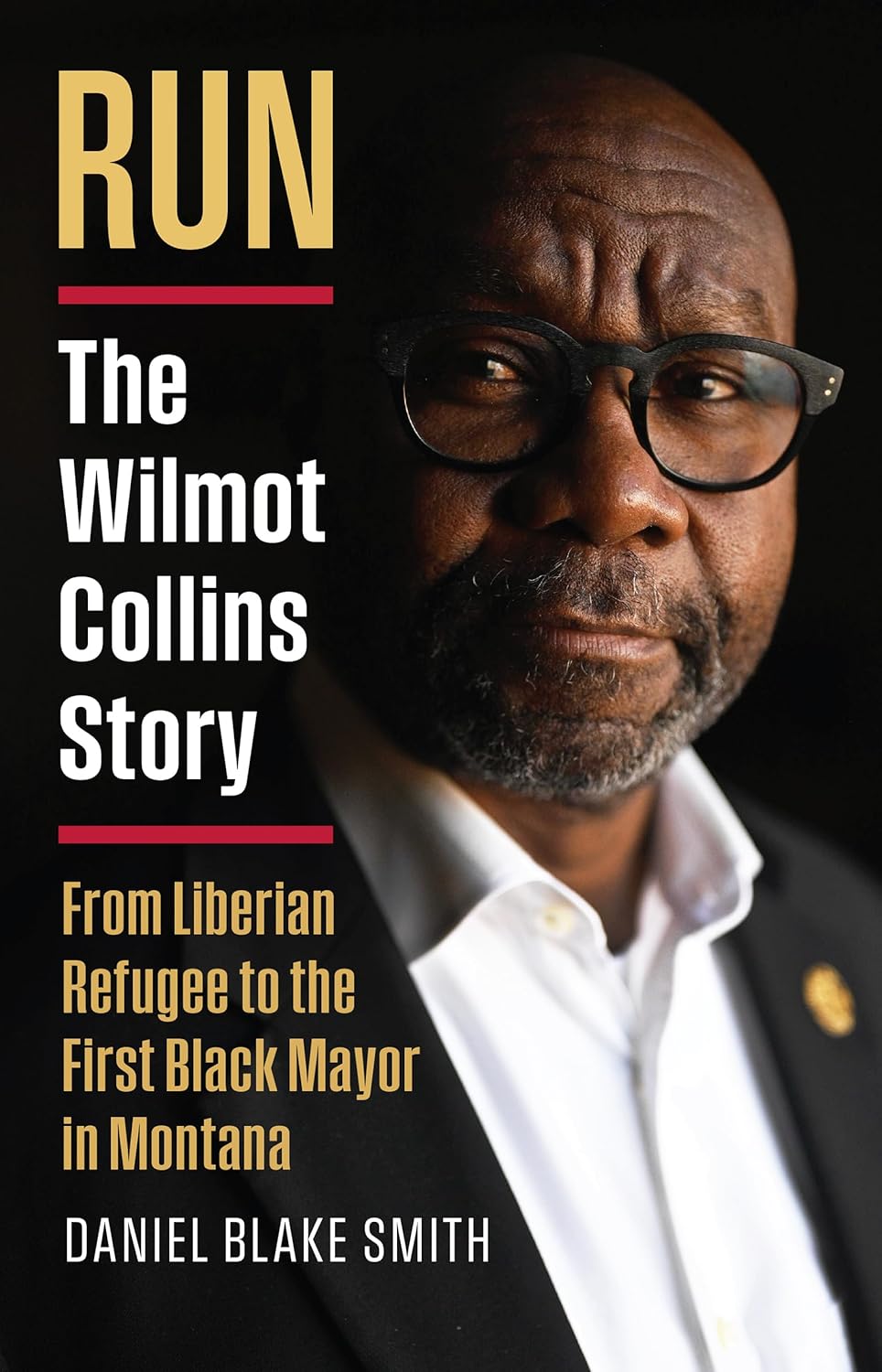

Daniel Blake Smith’s Run is a compelling political biography and refugee narrative about a life shaped by survival, family, public service, and the search for belonging. The book follows Wilmot Collins from the violence of Liberia’s civil war to his historic election as Helena, Montana’s first Black mayor. Smith opens with scenes of hunger, gunfire, and desperate escape, then carries that urgency into the long bureaucratic struggle that separated Collins from his wife, Maddie, and their young daughter. It’s an American immigrant biography with a remarkable trajectory, but its emotional center remains the bond between Wilmot and Maddie as they keep building a future through uncertainty.
The early chapters are the book’s most intense, placing Wilmot and Maddie inside a Liberia where ordinary routines have been overtaken by terror. Smith writes these passages with the momentum of narrative nonfiction, moving between historical context and intimate moments of fear, grief, humor, and devotion. Once the couple escapes, the story becomes an immigration history centered on waiting: waiting for paperwork, interviews, sponsors, approvals, and the chance to reunite. That slower stretch has its own tension because every administrative delay carries a human cost. Wilmot’s persistence gives these chapters warmth, while Maddie’s determination and practical intelligence make her much more than a supporting figure.
When the story reaches Montana, it expands into a thoughtful civic leadership biography. Wilmot takes whatever work he can find, joins the military, becomes active in his church, counsels young people, coaches soccer, advocates for human rights, and gradually becomes part of Helena’s public life. Smith doesn’t separate this community work from Collins’s later political success. He shows that the campaign was built through years of conversations, service, and personal trust. The book also addresses racism directly, including threats and vandalism against the Collins family, while paying equal attention to the neighbors and friends who stood beside them. That balance gives the account a conversational honesty and helps explain why voters eventually saw Collins as one of their own.
As a political biography, Run is especially engaging when it examines Collins’s idea of leadership as service. His mayoral years, policy priorities, public meetings, Senate campaign, and responses to national debates all grow naturally from the experiences that came before them. Smith’s admiration for Collins is clear, and the book sometimes states its lessons more directly than it needs to, but the wealth of family memories and community voices keeps the portrait grounded. Ultimately, this refugee success story is about how citizenship gets practiced in daily life. It presents Wilmot Collins as a gifted connector whose political achievements came from showing up, listening closely, and treating public office as another way to care for his community.
Pages: 168 | ASIN : B0GFPCY9R1:

THE ROAD TO BELONGING: My Journey to Punta Gorda, Belize


The Road to Belonging is, to me, a memoir about retirement that refuses to behave like a quiet sunset book. It starts with Francis Mandewah in the United States, restless after decades of work and still haunted, shaped, and guided by the long arc of his life from Sierra Leone to America. From there, it becomes a search for home, leading him toward Belize, and more specifically, Punta Gorda, where history, diaspora, faith, language, and community begin to converge in ways that feel personal rather than abstract. The book moves through practical decisions, emotional reckonings, cultural discovery, and the literal adventure of driving an aging Hyundai through Mexico, all while returning again and again to one central question: where does a person truly belong?
What I liked most is that the book is deeply sincere. It wears its heart on its sleeve, and honestly, that worked on me. Mandewah doesn’t present belonging as a slogan or a theory. He presents it as something fragile, hard-won, and almost miraculous. The early scene where he helps an older Cambodian woman get home in St. Louis sets the tone beautifully, because it shows how the memoir thinks: belonging is built through acts of care, risk, and recognition. Later, when he meets people in Belize who immediately connect Sierra Leone to Belizean Creole and Garifuna history, the emotional payoff is real. I could feel his relief, his surprise, even his joy. The repeated idea that “God works through people” could’ve become repetitive in weaker hands, but here it becomes the book’s pulse. It links Tom Johnson, Kathleen Lelinski, Sister Rosanne, the Garifuna community, and others into one moral chain of grace. I found that moving.
The prose is often direct, earnest, and unembarrassed by emotion. When it lands, it does so because it’s so unguarded. The details about thrift-store books, the obsessive apartment cleaning to recover a deposit, the church goodbyes, the sense of wonder on that first trip to Punta Gorda, and the warm welcome from the Garifuna parish all give the memoir texture and humanity. I also appreciated the cultural and historical sections on Kriol, Garifuna, East Indian, and Mennonite communities, because they make the book feel bigger than one man’s relocation story. I think the book could’ve benefited from tighter shaping in places. It sometimes circles the same themes, and the explanatory passages can slow the momentum. But even there, I wasn’t bored so much as aware that the book values testimony over polish. It wants to witness. It wants to honor people. It wants to connect dots across continents. I respect that a lot, and by the end, I felt the memoir’s generosity mattered.
I found The Road to Belonging affecting, thoughtful, and unexpectedly expansive. It’s a memoir about migration, but also about aging, gratitude, Black diaspora identity, cultural preservation, and the strange, beautiful way a person can arrive somewhere new and feel an ancient recognition stirring. I came away feeling warmed by it, and more than anything, impressed by its openness and moral clarity. This is a heartfelt book about finding home after a lifetime of surviving. I’d especially recommend it to readers who enjoy memoirs of resilience, faith-centered life writing, immigrant narratives, and books that care as much about community and cultural memory as they do about plot.
Pages: 176 | ASIN : B0FZMXN98H
Mixtape: A Memoir

Mixtape: A Memoir, by Johnzelle Anderson, is a raw, music-shaped life story about growing up as a mixed-race Black boy in Roanoke, Virginia, inside a home marked by abuse, fear, religion, confusion, and deep loneliness, then fighting his way toward self-knowledge, healing, and freedom as an adult. The book moves track by track, using songs as chapter markers, and that choice fits the material so well because memory here does not unfold in a neat line. It hits in waves. Anderson begins with family history and childhood trauma, then carries the reader through questions of race, faith, masculinity, love, work, fatherhood, and identity, all the way to a hard-won sense of peace tied to Sankofa, the act of going back to retrieve what was lost.
The voice is sharp, funny, bruised, and very alive. Anderson can make you laugh on one page and wince on the next, and that emotional swing felt authentic. I admired how plainspoken the writing is. He does not hide behind fancy wording. He just says it. That gives the book a pulse. It also gives the pain nowhere to hide. Some scenes made me angry, especially the childhood sections, because the neglect and cruelty are laid out so clearly. Still, the book never felt stuck in misery. It keeps moving. The track-by-track setup gives the memoir rhythm, shape, and personality. It feels less like a polished performance and more like someone finally telling the truth out loud.
I also found the ideas in the book strong and worth sitting with. The memoir keeps asking who gets to shape a child’s sense of self, and what it costs when that shaping is driven by racism, silence, religion, fear, and other people’s brokenness. I thought the sections on being raised in whiteness while carrying Blackness in his body were especially powerful, and so were the pages where he looks back and sees how adults around him warped his view of his father and of himself. That kind of reflection gave the book depth. It’s not just a record of what happened. It’s an argument for telling the truth about family systems, for naming harm, and for choosing yourself without apology. By the time the memoir reaches Ghana and the word freedom becomes a real personal goal, I felt the emotional release with him. That ending resonated with me.
I would highly recommend Mixtape to readers who like memoirs that are candid, emotionally intense, and full of voice. I think it would be especially good for people interested in stories about survival, race, family trauma, queer self-making, faith, and healing after a rough start in life. More than anything, I came away feeling that Anderson wrote this book because he had to, and that urgency is all over the page. I think that is a big part of why it works so well.
Pages: 392 | ASIN : B0GGDC1GDL
Dear Mama: A Journey Through Poverty, Race, and Resilience
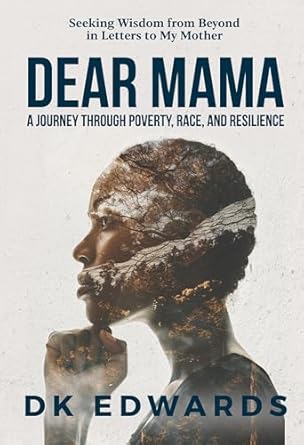
DK Edwards opens his heart in Dear Mama: A Journey Through Poverty, Race, and Resilience, offering a deeply personal account of growing up in an impoverished household. This poignant memoir provides Edwards a chance to reflect on his journey and the sacrifices made by his single mother. With each chapter ending in a heartfelt letter to his mother, Edwards pays homage to her unwavering determination, illuminating how her accomplishments shaped his life and resilience.
The writing is heartfelt, but at times, almost heartbreakingly raw. Edwards doesn’t shy away from the uncomfortable truths about abandonment, hunger, and violence. The book also delves into the complexities of systemic racism with piercing honesty. These moments are recounted with a mixture of youthful confusion and adult clarity, making them deeply impactful. What stands out is Edwards’s ability to weave in nuanced reflections on poverty and resilience. He describes with striking candor the shame of using food stamps, the hunger that drove him to steal from his mother’s purse, and the bittersweet irony of his mother working in social services while their family relied on welfare. Yet, the narrative doesn’t dwell in despair, it showcases his mother’s unwavering determination to provide, her strength in adversity, and the profound impact she had on her children. The story of her helping a struggling client with her limited resources was a moving reminder of her generosity despite their own hardships. Edwards’s prose is simple yet evocative, and his storytelling brims with authenticity. The book left me reflecting on the resilience it takes to transcend generational poverty and the ways systemic inequalities shape lives, even as the human spirit finds ways to persevere.
Dear Mama: A Journey Through Poverty, Race, and Resilience is a heartfelt and relevant memoir that resonates with today’s struggles. The story’s emotional depth and raw honesty make it an engaging read. Edwards’ tribute to his mother is a testament to the enduring power of love and perseverance, offering hope to those facing similar trials. This is a book that deserves a place on the shelves of readers drawn to stories of resilience and the human spirit.
Pages: 113 | ASIN : B0DBZQ3PS1
Dancing Between the Raindrops: A Daughter’s Reflections on Love and Loss

Dancing Between The Raindrops: A Daughter’s Reflections On Love And Loss by Lisa Braxton is the memoir of Lisa’s family, the love and joy throughout the years as well as the hardships, challenges, grief, and loss that come with being a part of a union as strong as the nuclear family. In this book, Lisa reminisces on her being a painfully shy child growing up in Connecticut, her mother’s writing talent and aspirations, becoming aware of and dealing with racism from a young age, taking care of and losing both parents to cancer as well as dealing with breast cancer herself, and so much more. This heartfelt book is a reflection and an homage to the beauty of life and being human, the basic human needs, emotions, and desires, and the fact that the good and the bad are both essential parts of life.
Lisa writes in a beautiful tone, expressing undeniable gratitude and love towards her family members on each page of the book. Her honesty and raw emotions are what set her work apart from similar memoirs. Reading this piece felt like a lifelong friend sitting down for a coffee and telling me about all the stuff I’ve missed out on from the last time we saw each other. It deals with a lot of sensitive topics, including taking care of an elderly parent when they most need you, grief from losing a loved one, and being discriminated against on a racial level, to name a few.
Each chapter being a story of its own makes the book and its message even more powerful and real. One of the stories that touched me the most early on in the book was one of Lisa’s first times dealing with racism in school. Someone had told the African-American kids to go back to where they came from, and just reading about the way Lisa felt at that moment was heartbreaking. She explains that she felt confused because, yes, she has African ancestry, but how can she go back to a place she had never been to? Furthermore, her parents and grandparents were all born and lived in the U.S. The confusion in that little girl’s mind is something that will stick with me as a reader for a long time.
I highly recommend Lisa Braxton’s Dancing Between The Raindrops: A Daughter’s Reflections On Love And Loss to anyone looking for a poignant and touching memoir. The book is a heartwarming tribute to the universal experience of love and loss.
Pages: 155 | ASIN : B0CW1N2JWN


