Blog Archives
Black Is My Ethnicity: American Is My Nationality
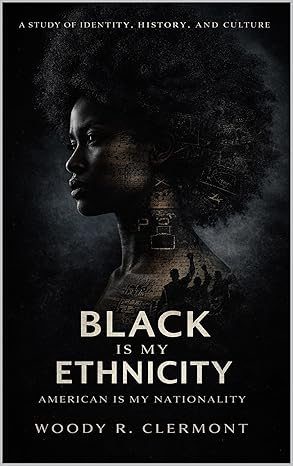

Black Is My Ethnicity, American Is My Nationality argues that Blackness in the United States is better understood not merely as a racial label but as an ethnicity formed through forced displacement, shared historical trauma, cultural reconstruction, and consistent systemic treatment. The book moves from a broad discussion of ethnicity and ethnocentrism into precolonial African civilizations, the wreckage of the transatlantic slave trade, and the making of a new collective identity through language, religion, music, kinship, and foodways. From there, it widens into Reconstruction, suppression, Black economic life, and the modern machinery of exclusion, insisting that redlining, school segregation, employment discrimination, and criminal justice disparities are not scattered facts but parts of one long pattern. Its central claim is clear from the outset and never wavers: Black identity in America is a historically produced peoplehood, and the language of ethnicity names that reality more precisely than the language of race does.
The author writes like someone trying not just to make an argument, but to rescue a framework from distortion, and there are moments when that urgency gives the book real heat. I found the sections on cultural reconstruction especially compelling, because they shift the book from taxonomy into lived human texture: hush harbors, spirituals carrying double meanings, fictive kinship, jumping the broom, AAVE as structure rather than “broken” speech, foodways shaped out of memory and deprivation. Those passages have life in them. They show the book at its strongest when it starts revealing. I also admired how often the author refuses the deadening abstraction that can flatten books like this. The emphasis on survival, adaptation, and continuity gives the work a heartbeat.
I think the book is more persuasive in conviction. There’s a lawyerly quality to the writing, especially in the prefatory and structural passages, that gives the book rigor. The prose favors repetition. Some case studies and examples are vivid, like the Zong, Mansa Musa, Eatonville, or the discussion of how school funding and redlining reproduce inequality. The ideas are powerful. It’s not coy, not detached, and certainly not interested in false neutrality. It wants accuracy, naming, and historical continuity, and it pursues all three with unusual steadiness.
I found Black Is My Ethnicity, American Is My Nationality intellectually earnest, emotionally charged, and most moving when its historical argument becomes cultural witness. It’s not a subtle book, but it’s a deeply intentional one, and its strongest pages carry the weight of someone trying to name a people in full rather than leave them trapped inside an old and inadequate vocabulary. I finished it feeling that, whatever one makes of every turn in the argument, the book has genuine stakes and a real pulse. I’d recommend it most to readers interested in Black identity, American history, ethnicity, and the language we use to describe collective experience, especially those willing to engage a book that is less interested in polish for its own sake than in saying something it believes urgently needs to be said.
Pages: 353 | ASIN : B0FHSH4X4S

Snapshots in Time

Random³ Musings is your candid collection of reflections, rants, and remembrances that blend humor, grief, and unfiltered commentary into a conversation both raw and relatable. Why was this an important book for you to write?
In some ways, it is a therapeutic effort; I look back periodically to review the reasoning and logical thinking, or in some cases, the emotional responses I had recorded. It is important, I think, to encourage readers to engage in their own thoughts and develop their own.
Which section or story was the most difficult for you to write, and why?
In Passing, as it was entirely personal, with some recently passing and the ongoing sorrow of an estranged son.
You admit your biases openly in the book. How do you hope readers with different viewpoints will respond to that honesty?
I don’t have any expectations of a warm reception to some of them, as our current culture is rather explosive and expressed in the worst ways possible. To those who read past the chapter titles and the first few paragraphs, I hope I convey genuine thought or opinion. There are a few chapters I openly poke fun at or poke the bear, as it might be received.
Looking back, do you see Random³ Musings more as a journal of personal growth or as a snapshot of your voice in a particular moment in time?
A little of both, it can be said that all three books in this series are snapshots in time. I do see movement in the three titles, and growth, more growth may come as I review again over time and compare where my thinking has led me to conclude. Thank you for the interview questions, as they most certainly cause me to ponder these things and gather my thoughts that are more current and timely.
Author Links: GoodReads | Facebook | Website | Amazon
As we continue to review, rationalize, and tackle some of what gnaws at us, it is suspect it does to some extent for each of us. It is a worthy effort to go back and revisit these mental exercises in thought when something doesn’t seem to fit or conflicts with thoughts previously resolved. It is healthy and fuel for growth to give weight to questioning such matters of importance. Sometimes these matters evolve, mold, and change. Other times it is our depth of rationalizing and understanding that has changed.


