Blog Archives
Tom’s True Colors
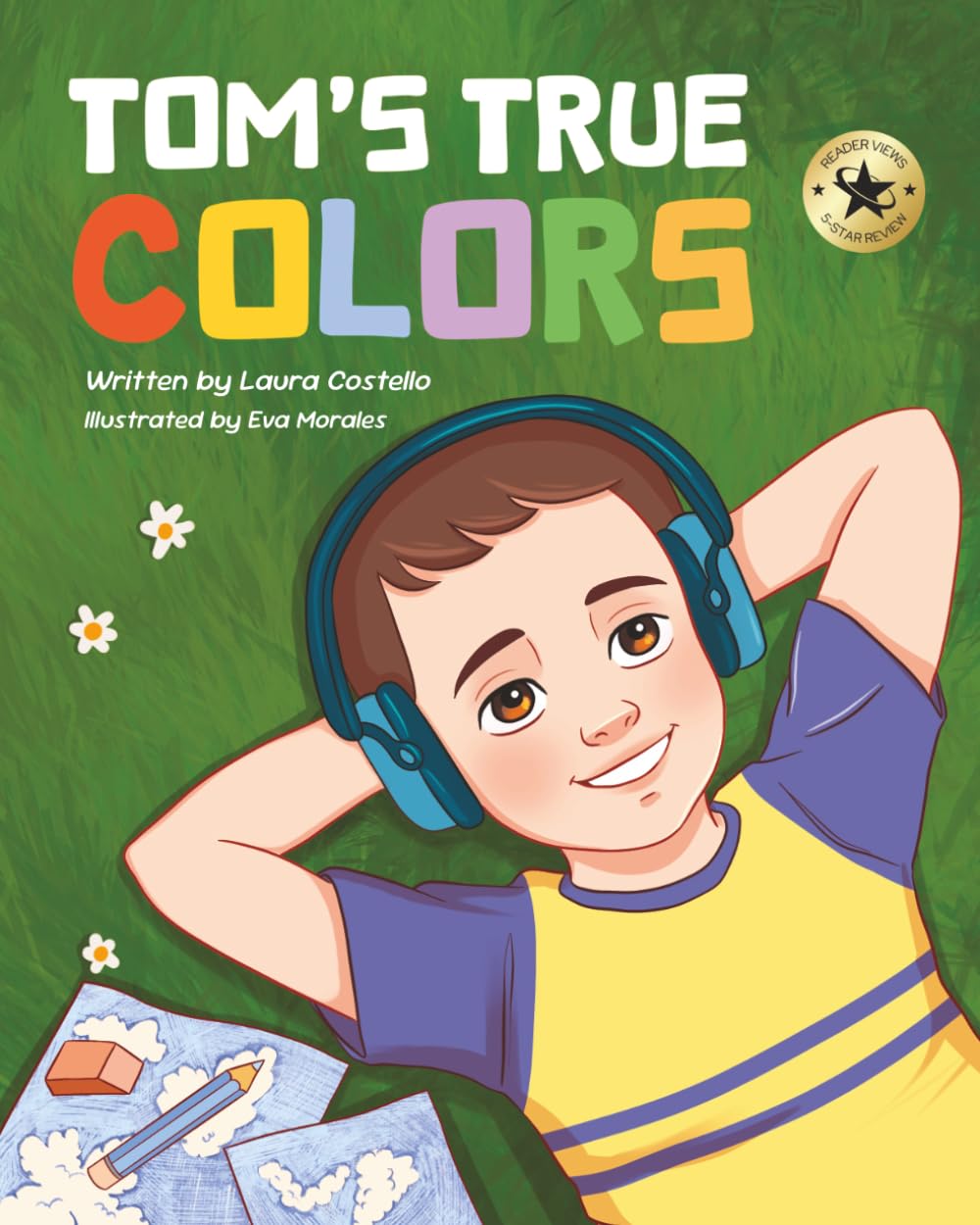

Tom’s True Colors is a children’s book about perception, dignity, and the slow, necessary work of helping a child be truly seen. The book follows Ellie and her autistic brother Tom through an ordinary trip to the park, where small details like Tom’s headphones, his hand-flapping, and the wary attention of other children quietly establish the social world he has to move through. When Ellie later begins to understand what her mother means by Tom’s “true colors,” the story turns toward Tom’s art, which becomes the language through which other children finally meet him with curiosity instead of judgment. By the time the school art contest arrives, the emotional arc feels clear and satisfying: not a transformation of Tom into someone more acceptable, but a change in how others learn to look at him.
What I liked most was the book’s tenderness. It has a soft heart, and it earns that softness. I was especially moved by the early park scenes, where Tom’s joy is rendered with such ease, and by the later moment when Ellie lies awake thinking about how hard it’s been for him to connect with other kids. That passage gives the book a little ache, which I appreciated. It doesn’t pretend that misunderstanding is harmless. I also found the cloud game and the breakfast drawing particularly effective, because they reveal Tom indirectly. We don’t just get told that he’s imaginative, loving, and deeply expressive. We watch those qualities surface in the shapes he sees in the sky and in the red heart he draws for his family. That’s where the book felt most alive to me, less like a lesson and more like a child’s inner world gently opening.
I also admired the book’s central idea. The phrase “true colors” is a clear and child-friendly metaphor, and the book uses it with sincerity rather than cleverness, which suits the age level. I liked that Ellie’s mother draws a distinction between what people notice on the outside and who someone really is on the inside, and I liked even more that Tom’s artwork becomes the bridge between those two things. The story avoids turning Tom into a symbol. He remains a child with preferences, nerves, humor, talent, and shyness, and that grounding is great. The writing itself is direct and purposeful, with enough warmth to keep the message from hardening into instruction.
I found Tom’s True Colors kind, emotional, and refreshingly intent on building empathy without stripping away personality. It understands that inclusion starts with attention, with learning how to read another person more generously, and that’s a meaningful idea to place in front of young readers. I’d recommend this picture book especially for elementary-age children, families talking about autism, and classrooms trying to open conversations about difference in a way that feels approachable but still emotionally real.
Pages: 36 | ASIN : B0GTMRPQ2Y



