Blog Archives
Assumption


Assumption, by Mark Stirling, is a warm, faith-centered companion novel that follows Johnny Promise as he reflects on the people and experiences that shaped his understanding of dignity, disability, and human connection. The book opens in a nursing home, where Johnny forms an unlikely friendship with Bobby Ackerman, a resident with autism and Down syndrome who’s frequently dismissed by the people responsible for his care. Their relationship, built through coffee, cartoons, teasing, and patient attention, establishes the book’s central conviction that everyone longs to be recognized as a person.
From there, the novel widens into Johnny’s own story. After suffering a stroke at twenty, he discovers evidence that the twin sister he was told had died at birth may still be alive. His search leads him to Maura, a deaf young woman who was secretly placed in an institution because an older relative considered her defective. The mystery gives the middle of the book momentum, but the reunion and its emotional consequences are what really matter. Johnny and Maura have to build a sibling relationship as adults, introduce her to a family that believed she was dead, and figure out how love can restore something without pretending the lost years never happened.
Stirling’s storytelling feels like listening to someone recount a meaningful life over coffee. Johnny’s voice is plainspoken, funny, sentimental, and openly religious, with plenty of colorful comparisons and conversational detours. At times, he explains the lesson of a scene after the scene has already made it clear, and some antagonistic characters are drawn in broad strokes. Still, the book’s emotional directness suits its narrator. The strongest passages come from small acts of recognition: Bobby being trusted to help with an ambulance siren, Maura preparing to meet her parents, Johnny learning to live with the visible effects of his stroke, and family members adjusting their lives to make room for one another.
This book will appeal most to readers who enjoy inspirational family fiction, stories about disability and caregiving, and novels grounded in Christian faith. Healthcare workers may find Johnny’s observations about compassion, burnout, and patient dignity especially familiar. It’s also a good fit for readers who value an earnest narrator and don’t mind a story wearing its heart openly. Assumption ultimately asks readers to slow down, look beyond the easiest explanation of another person, and remain curious long enough to discover the life that first impressions conceal.
Pages: 163 | ASIN : B0H3G99WMF

Izzy Can’t Talk But He Can Make Friends


Izzy Can’t Talk But He Can Make Friends! is a warm children’s book about autism, friendship, and communication. The story follows Izzy, a nonspeaking autistic boy who feels nervous around his new neighbor, Jimmy. As the boys spend time together, Izzy learns that friendship can grow through shared interests, laughter, patience, and simply enjoying another person’s company. The book presents Izzy’s speech device, service dog, safe space, routines, and stimming as natural parts of his everyday life.
The story works especially well as a social-emotional learning book for children because the friendship develops through believable little moments. Jimmy accidentally sits in Izzy’s special spot, visits his treehouse, watches Izzy’s favorite cartoon, and discovers that they both love chicken nuggets. Aunt Bee helps Jimmy understand Izzy without speaking for every feeling he has, while Jimmy shows a willingness to listen, apologize, and adjust. That gives young readers a practical picture of empathy and inclusive friendship.
The bright cartoon illustrations make this inclusive children’s book lively and easy to follow. Izzy’s emotions are shown clearly through his face, body language, and changes in color and lighting, including a striking scene where he appears frozen inside a blue block when meeting Jimmy. The pictures also add playful details, such as superhero costumes, toy dinosaurs, Uncle Gus getting stuck in the treehouse window, and Lucky the service dog joining the action. These visual touches keep the book energetic while helping children understand experiences that Izzy doesn’t express through spoken words.
As an autism awareness picture book and friendship story for kids, the book has a clear, encouraging message: communication can take many forms, and connection doesn’t depend on speech. Its straightforward explanations make it useful for families, classrooms, and conversations about neurodiversity, while the humor and familiar childhood activities keep the story approachable. Izzy and Jimmy’s friendship feels satisfying because it grows from curiosity, shared joy, and time spent together.
Pages: 34 | ISBN : 978-1962636087
Izzy Can’t Talk
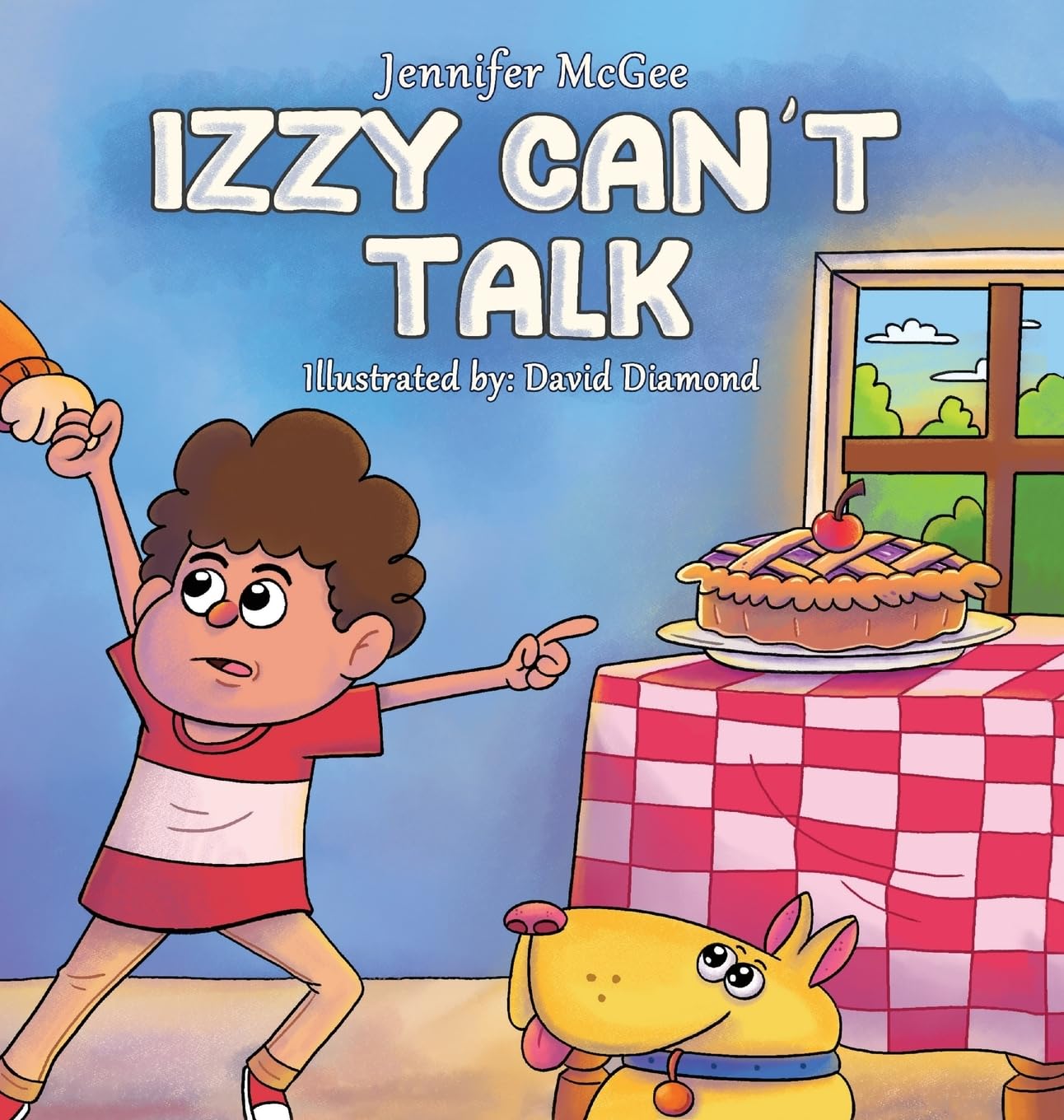
Izzy Can’t Talk, by Jennifer McGee and David Diamond, is a warm and brightly illustrated picture book about a young autistic boy who communicates without spoken words. Izzy lives on a farm with Aunt Bee, Uncle Gus, and his service dog, Lucky. When he becomes excited about Aunt Bee’s razzleberry pie, his family tries to understand what he wants by offering water, a pillow fort, and time on the trampoline. The simple setup gives young readers an easy way to follow Izzy’s growing frustration while recognizing that he has clear thoughts, feelings, and preferences.
The story’s strongest idea is that communication can take many forms. Izzy rocks, jumps, flips a light switch, uses facial expressions, and responds to pictures, but the people around him don’t immediately understand those signals. The book treats this confusion with patience and gentle humor, especially through Uncle Gus’s enthusiastic mistakes and physical comedy. That playful tone keeps the story light while still showing how exhausting it can be when someone knows exactly what they want but can’t make others understand.
David Diamond’s cartoon illustrations give the book much of its personality. The pages use bold colors, exaggerated expressions, and clear visual action, making the emotions readable even before the text is spoken aloud. The pictures also help explain tools such as sign language, picture cards, a service dog, and a speech pad. When Lucky brings the device and Izzy presses the “Eat” button, the moment feels satisfying because the solution gives Izzy direct control over his message rather than asking his family to keep guessing.
This children’s book will be especially appreciated by families, preschool and early elementary teachers, speech-language professionals, and children who are learning about autism or augmentative communication. It could also be meaningful for nonspeaking children who’d enjoy seeing a character whose inner life is active, joyful, and understood. The ending delivers the book’s central point clearly: Izzy can’t talk, but he can communicate. That makes Izzy Can’t Talk a useful and affectionate read-aloud for starting conversations about listening, patience, and giving every child a dependable way to be heard.
Pages: 34 | ISBN : 978-1962636001
Life-Changing Revelation

The Exiled Kin follows a sixteen-year-old Puerto Rican teenager with autism whose world is changed by bullying, betrayal, loss, and the shocking discovery of a truth about the father he thought was gone. What inspired you to create this foundation for the story?
As an autistic author who is also of Puerto Rican descent, I felt it was important to represent my community in my stories. Growing up, I didn’t always see that on paper or on screen, so when I had an opportunity to showcase a character that looked like me, I took advantage of it. Basing my main protagonist, Luke, off my own personal history was easy since I live those experiences in my daily life. An important aspect of autistic individuals is routine, and when that gets broken, disrupted, or upended, it can be difficult to adapt. Luke’s discovery of his father’s whereabouts is a life-changing revelation that would shake anyone’s world. For a teenager with a strong sense of justice and a deep reliance on structure, the impact is even more profound.
How did you approach writing a character whose differences are an important part of him while also showing his humor, strengths, fears, and ambitions?
Authors usually write what they know, and it’s vital to be self-aware of one’s own strengths and weaknesses, and how to apply them so you’re not in a tough situation. An important realization as I got older is that having a disability makes one different, not less. People get so focused on what makes individuals on the spectrum different that they fail to see our similarities. So, fleshing out Luke to showcase his humor, fears, strengths, flaws, and ambitions humanizes him to the reader and thus humanizes people on the spectrum.
The story explores Puerto Rican identity within a late-1990s Tennessee setting. How important was it for you to include cultural experiences, family traditions, and questions of identity in Luke’s story?
I was raised in New England, so I knew and met many people of different backgrounds throughout my young adult life. A highlight of my books that readers have mentioned is that the characters are so diverse that there’s someone relatable for everyone. When it comes to Luke, I felt it was important for the audience to understand his experience as a young Puerto Rican male on the autism spectrum. The best way to do that was to emphasize his family, his culture, and his struggles. Additionally, I grew up in the 2000s when there wasn’t a lot of representation for certain cultures or groups, so making identity a prominent focus in my stories wasn’t mere creative choice; it’s something deeply personal to me.
Can you give us a peek inside the next book in the Looked Down Upon series? Where will it take readers?
So far, I have written and published two books in the Looked Down Upon series, and as I grew as a writer and a person, Luke grew alongside me. I wrote The Exiled Kin right after high school and A Masked Wickedness while in college. Now that I am an adult, we’ll get an idea of what Luke is like as a full-fledged adult in the workforce and what challenges he has to go through in the final book of the trilogy series. Without giving too much away, one of those challenges will involve the Outcasts, a group I introduced in book two. Their return will play an important role in Luke’s journey and the conclusion of the series.
Author Links: GoodReads | X (Twitter) | Facebook | Website | Amazon
But everything changes when Lucas discovers the truth about his father’s supposed death. Furious and determined to bring his deadbeat father to justice, Lucas embarks on a dangerous mission that takes him on a journey of self-discovery and redemption. Along the way, he grapples with issues of faith, love, and the complexities of family dynamics.
Tom’s True Colors
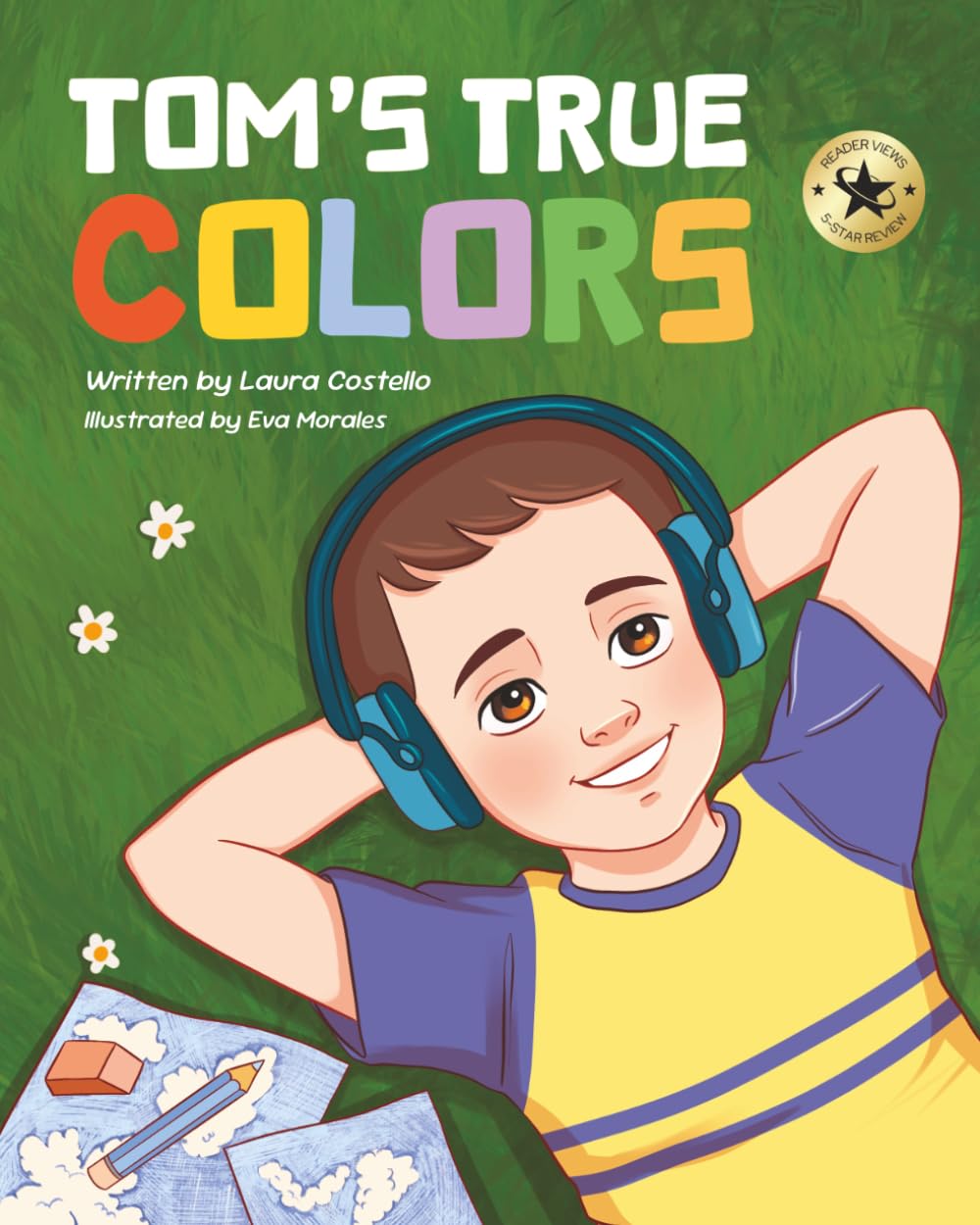
Tom’s True Colors is a children’s book about perception, dignity, and the slow, necessary work of helping a child be truly seen. The book follows Ellie and her autistic brother Tom through an ordinary trip to the park, where small details like Tom’s headphones, his hand-flapping, and the wary attention of other children quietly establish the social world he has to move through. When Ellie later begins to understand what her mother means by Tom’s “true colors,” the story turns toward Tom’s art, which becomes the language through which other children finally meet him with curiosity instead of judgment. By the time the school art contest arrives, the emotional arc feels clear and satisfying: not a transformation of Tom into someone more acceptable, but a change in how others learn to look at him.
What I liked most was the book’s tenderness. It has a soft heart, and it earns that softness. I was especially moved by the early park scenes, where Tom’s joy is rendered with such ease, and by the later moment when Ellie lies awake thinking about how hard it’s been for him to connect with other kids. That passage gives the book a little ache, which I appreciated. It doesn’t pretend that misunderstanding is harmless. I also found the cloud game and the breakfast drawing particularly effective, because they reveal Tom indirectly. We don’t just get told that he’s imaginative, loving, and deeply expressive. We watch those qualities surface in the shapes he sees in the sky and in the red heart he draws for his family. That’s where the book felt most alive to me, less like a lesson and more like a child’s inner world gently opening.
I also admired the book’s central idea. The phrase “true colors” is a clear and child-friendly metaphor, and the book uses it with sincerity rather than cleverness, which suits the age level. I liked that Ellie’s mother draws a distinction between what people notice on the outside and who someone really is on the inside, and I liked even more that Tom’s artwork becomes the bridge between those two things. The story avoids turning Tom into a symbol. He remains a child with preferences, nerves, humor, talent, and shyness, and that grounding is great. The writing itself is direct and purposeful, with enough warmth to keep the message from hardening into instruction.
I found Tom’s True Colors kind, emotional, and refreshingly intent on building empathy without stripping away personality. It understands that inclusion starts with attention, with learning how to read another person more generously, and that’s a meaningful idea to place in front of young readers. I’d recommend this picture book especially for elementary-age children, families talking about autism, and classrooms trying to open conversations about difference in a way that feels approachable but still emotionally real.
Pages: 36 | ASIN : B0GTMRPQ2Y

Freya the Deer

Freya the Deer is a literary coming-of-age novel with the strange shimmer of a fairy tale. It follows Freya Rubenstein, a young woman with autism who moves from Cambridge to a small college in the woods of Washington, carrying with her an intense love of animals, a restless curiosity about the soul, and a way of moving through the world that other people constantly misread. What unfolds is part campus novel, part moral reckoning, part dark fable: Freya falls into love, politics, and danger while trying to hold onto her own fierce sense of truth.
Author Meg Richman writes Freya with real conviction, and that matters because this book could have so easily turned her into a symbol, a lesson, or a bundle of quirks. Instead, she feels singular. Odd, funny, tender, literal, and sometimes almost severe in the way she sees things. I loved how the novel lets the world arrive through Freya’s mind rather than forcing her to translate herself into something more familiar for everyone else. The prose can be lush, but it is not showing off for the sake of it. It feels attached to the character. At its best, the book has that rare quality where the imagery actually deepens the person on the page instead of decorating her. The fairy-tale texture really worked for me. The woods, the red cloak, the animal imagery, the sense that menace and wonder are always standing close together. It gives the novel a charged atmosphere without floating away from real harm.
It was interesting, and at times unsettling, how the book handles morality. Freya is not written as innocent in a simple or sentimental way. She is perceptive, but her perceptions do not always line up with the social scripts everyone else is following, and that makes the novel ask harder questions than I expected. About consent. About ideology. About cruelty dressed up as righteousness. About whether love and truth can survive each other. The campus politics and arguments about justice, Israel, capitalism, race, and activism could have felt schematic, but Richman keeps dragging them back into lived experience, where ideas stop being neat. Some choices are messy on purpose. Some conversations feel jagged. I admired that, even when I was wincing. The book trusts the reader to sit in ambiguity, which I respect. It also made me think about how often people mistake clarity for coldness, especially in someone like Freya, when in fact her honesty may be the most morally serious thing in the room.
I’d recommend Freya the Deer most to readers who like literary fiction that takes risks, especially if they’re drawn to coming-of-age stories with a darker edge, socially engaged novels, or modern fairy tales that are more thorny than cozy. This is not a breezy read, but it is a memorable one. I think it will land best with readers who are willing to follow an unusual protagonist without needing her to become easier or more legible by the end. For me, that was the point. The book asks for patience, openness, and a little courage. I think the right reader will be grateful for all three.
Pages: 206 | ISBN : 978-1578692156
Allan Learns to Talk

Readers meet Allan, a five-year-old autistic boy who does not speak. His silence often leaves him overwhelmed; when the words simply won’t come, he collapses into tears and screams, unable to express what he needs. His sister Ashley worries constantly, unsure how to bridge the gap between her world and Allan’s.
Everything shifts when Allan begins working with a speech therapist at school. She introduces him to sign language, and the discovery feels life-changing. At last, he has a way to share his thoughts. His family, eager to support him, learns to sign alongside him. As Allan gains this new voice, they notice a remarkable change; he glows with happiness.
Allan Learns to Talk by Sharon Austin offers a gentle, motivating, and deeply inspiring story for young readers, especially those who have siblings or friends on the autism spectrum. Austin’s portrayal of Allan’s experience feels authentic and compassionate, allowing readers to view the world through his eyes. The illustrations elevate the narrative, capturing Allan’s intelligence, creativity, and vibrant imagination with striking clarity.
Equally moving is the family’s unwavering commitment to understanding him. Their willingness to learn sign language enriches the story and highlights the power of support and connection. The book deserves a place in school libraries, pediatric offices, and anywhere children and families seek stories that reflect real challenges and real hope.
As Allan grows more confident, spoken words gently emerge, an especially touching moment occurs when he says, “Mom.” Many parents will recognize their own journeys in these pages, making this book both relatable and heartwarming.
Happy Thoughts: Going to the Beach
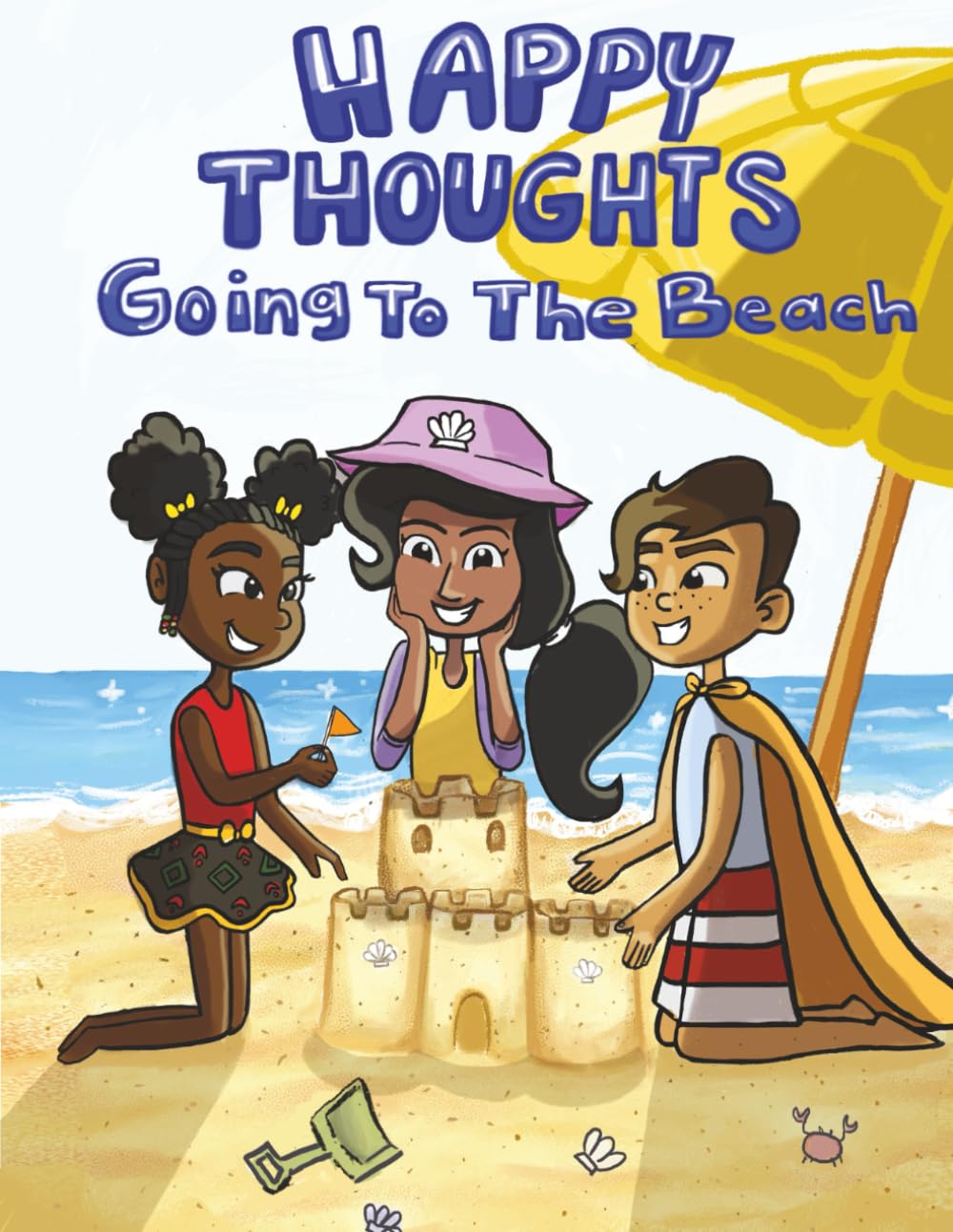
This sweet little children’s book follows Emma, a young girl with autism, as she heads to the beach with her friends Harper and Jerry. The day is full of excitement, sandcastles, and learning moments. Emma communicates using special waterproof cards her mom made, and through her friends’ kindness and understanding, the story shows how love and patience make adventures fun and safe for everyone.
I really liked how real the story felt. It didn’t sugarcoat things but still stayed gentle and positive. The way Emma’s excitement sometimes turns into overwhelm was so true to life, and the way her friends helped her made me smile. The writing is simple, but it fits perfectly for kids. I felt a lot of warmth from it, like a big sunny hug.
What really stuck with me was the message about friendship. Harper and Jerry never judged Emma, and that’s such an important thing for kids to see. The story didn’t feel preachy, just kind. The vibrant, cartoon-style illustrations depict heartwarming scenes of diverse characters. The illustrations are colorful and happy, matching that summer beach vibe. The writing has this rhythm that makes it feel like a conversation with a child, curious, honest, and full of energy.
I’d definitely recommend Happy Thoughts Going to the Beach by Lisa Jacovsky for kids around preschool or early elementary age. It’s perfect for storytime, especially for families or classrooms that want to talk about autism and inclusion in a positive way. It’s the kind of picture book that teaches empathy without even trying too hard. A good one to curl up with before a trip to the beach or anytime you just need a smile.
Pages: 29 | ASIN : B0FHL3Q61L


