Blog Archives
The Difficult Process of Emotional Recovery

Seven Blackbirds follows a law student trapped in an abusive marriage, struggling to protect herself and her infant son, who fights to escape her husband and rediscover who she is away from the abuse. What was the inspiration for the setup of your story?
During the course of writing this novel I was actively raising four children and became pregnant and gave birth to the fifth, so the way motherhood shapes and changes a woman was very much on my mind! I wanted to write about a protagonist who was not strong but became strong, found her voice and truly came into her own—regardless of the consequences for her marriage, which in this case was already rickety. My law studies had really opened my eyes to the impact of the legal system on mothers trying to dissolve the ties of organized society that bound them to their abusers while also trying to make their way through the difficult process of emotional recovery from that abuse. And I have to say that Tulsa inspired me as well. I lived there for several years and developed a deep affection for it. A strong sense of place is important to me as a writer. It grounds a story dealing with difficult subject matter so that the reader can wrap it around her like a cloak and really relate to the characters.
Did you plan the tone and direction of the novel before writing, or did it come out organically as you were writing?
There were maybe four things I was convinced of before I began. I knew I wanted to write about the “afterward” of Kim’s bad situation, that is, not dwell on the abuse, but focus on the recovery process. I knew I wanted to showcase a character who did not grow up in an abusive environment, because that would offer a pat explanation; I wanted this to be a shock and surprise to her, because there’s so much more meat to that story. I knew I was going to include humor because that adds realism—life is funny and sad and everything in between, all mixed up together. Finally, I knew I was going to need flashbacks because the recovery process is quite literally bringing the past back up into the present to meditate on it, digest it, and heal. That’s probably all the planning that went into it. I sketched out a few scenes and let things develop!
What were some themes that were important for you to explore in this book?
Smashing the stereotypes around DV; physical and emotional abuse in the home cuts across all demographic categories.
The way that denial, deflection, minimizing, and holding toxic secrets impedes emotional healing and growth; and conversely, that bravery will get you everywhere!
That growing up means finding the voice of your soul, and trusting that the inner stability that brings will help you ride the waves in the outer world.
That the legal system is imperfect, but when a woman stops viewing herself as a victim in need of rescue by the system, she’s in the best position to wring what she wants out of it.
Were you able to achieve everything you wanted with the characters in the novel?
Yes, for the purposes of this particular novel. Some of the characters do return in the companion volume, “Songs My Mother Taught Me,” so I was able to work with them more and it was and it was fun to discover what came next. “Songs” picks up with our heroine Kim later on, and I was especially pleased to be able to flesh out the relationships within Kim’s family of origin—that’s definitely something that comes to the fore in middle age! I loved working more deeply with her mother and sister, and of course it was a pleasure to see the tiny boy in “Seven Blackbirds” grow into a teen.
Author Links: Amazon | Website
SEVEN BLACKBIRDS
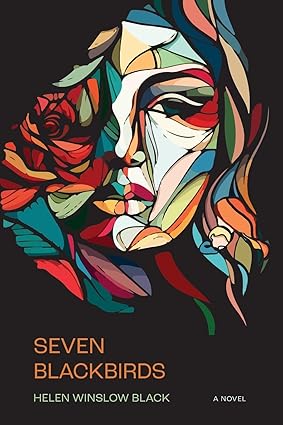

Seven Blackbirds tells the story of Kim, a woman trapped in an abusive marriage, struggling to protect herself and her infant son while trying to reconcile her past hopes with the starkness of her reality. The book moves through moments of violence, fear, and shame, but also into fragile glimpses of self-discovery and resilience. It shifts between memory and present action, weaving together family histories, friendships, and the slow, painful recognition of what love is not. At its heart, it is a book about survival and the small but vital sparks of strength that carry someone through darkness.
The writing is plainspoken, and that’s what makes it sting. There are no flourishes to soften the blows. The scenes of abuse hit hard because they’re described without sensationalism, just matter-of-fact, as if the narrator is bracing herself in silence. At times, I wanted to look away, but I couldn’t. I found myself angry, then sad, then oddly relieved when Kim found small moments of clarity. What struck me most was how the book captured the inner confusion, the push and pull of wanting to believe things will get better, even when the evidence piles up that they won’t. It’s uncomfortable, but it feels real.
Sometimes the pacing slowed in places. I’d get pulled deep into a scene, then taken through passages that felt more like personal notes. But life under control and abuse isn’t tidy. It’s messy, repetitive, and often without resolution. What I admired most was how the book carried its emotional weight without preaching. It didn’t tell me how to feel; it just put me in the room and let me sit there until I had to come up with my own reaction.
By the time I finished, I felt both heavy and grateful. This isn’t an easy book, but it’s an important one. I’d recommend it to readers who want a story that isn’t afraid of discomfort, people who are drawn to voices that speak plainly about pain yet carry a thread of stubborn hope. It would resonate with those interested in women’s stories, in survival, and in the quiet bravery of telling the truth when silence might feel safer.
Pages: 268 | ASIN : B0037UY4U2

Why?
Songs My Mother Taught Me follows three generations of a family navigating life’s challenges and transformations, offering readers an intimate glimpse into their lives. What was the inspiration for the set-up of your story?
This book has the same protagonist as my first novel, “Seven Blackbirds,” which can now be considered somewhat of a prequel; with “Songs,” I wanted to carry our heroine beyond the young adult finding-her-voice-and-coming-into-her-own stage, and into the afterward of established marriage and family life. I’ve accumulated so many heartbreaking stories of challenge and tragedy that hit families absolutely out of the blue in middle life, and I wanted to grapple with that painful, perennial question, “Why?” I wanted to create a story where heartbreak is resolved, and resolved even if you don’t figure out the “why.”
What things do you find interesting about the human condition that make for great fiction?
In childhood, adversity shapes you, but in later life, you shapeit—you are in charge of how you receive, perceive, and respond to it. And that, in turn, is shaped by your childhood. So it goes full-circle, which is sometimes a negative thing and sometimes a positive one; and, if it’s negative, some people can break that pattern, and some can’t.
What were some themes that were important for you to explore in this book?
The different but equal ways women navigate life balance in the 21st century. The importance of extended family support despite our very American desire to be independent and geographically mobile. How we deal with grief when our loss leaves questions that can never be answered. That healing takes courage but pays dividends. That the wisdom of our elders and the songs of the earth are always there and it behooves us to listen.
What is the next book that you are working on, and when will it be available?
My next book is about the teenage daughter in “Songs My Mother Taught Me,” who builds a career as an opera singer. It begins in late childhood so it overlaps somewhat in time with the previous book, because I thought that would be fun, like turning a kaleidoscope and seeing things from a different perspective. I write very slowly, and we’re just in the larval stage here, so eager readers will have to content themselves with the audiobook of “Songs,” which should come out in the Fall, and with my non-fiction humor collection “Eat Pray Drive,” actual pub date tbd but I surmise by the end of the year. You can take a peek at the fun cover on my website.
Author Links: GoodReads | Website
Songs My Mother Taught Me


Helen Winslow Black’s Songs My Mother Taught Me weaves a poignant tapestry of survival, love, and grief, skillfully exploring the intricate threads of family and community. Spanning three generations, the novel examines the complexity of familial relationships, from the protagonist’s fraught dynamic with her mother to the shadow of an abusive ex-husband. Amid these challenges, she forges new bonds and discovers a sense of belonging within her community.
Black’s prose is both poetic and evocative, flowing with an emotional resonance that immerses the reader. The narrative has an almost voyeuristic quality, offering an intimate glimpse into the lives of one family. From the humor of daily interactions to the tenderness of personal growth, the story captures the essence of human experience. This authenticity makes it relatable, whether depicting the triumphs and struggles of marriage, the sacrifices of stay-at-home mothers, or the harrowing reality of abusive relationships. The novel also embodies a distinctly American ethos, reflecting the pursuit of the American Dream and the lingering scars of the 9/11 tragedy.
One of the most striking elements of Black’s work is her exploration of loss and the pervasive tide of grief. The story delves into the myriad ways family members process the death of a loved one, particularly through the eyes of children at various stages of maturity. Their unique responses are both heartbreaking and insightful, offering a raw depiction of how tragedy shapes individuals. The unanswered questions and lingering mystery surrounding the loss deepen the story’s emotional impact and build tension as the plot unfolds.
The novel delivers a rich portrait of three generations navigating life’s challenges and transformations. With its universal themes and authentic portrayal of the human spirit, Songs My Mother Taught Me strikes a balance between humor and heartbreak. It invites readers to laugh, cry, and reflect as they follow this family’s journey through changing seasons and landscapes. For those seeking a deeply moving and thought-provoking read, Black’s novel is an absolute must.
Pages : 344 | ASIN : B0DL3J8QLF




 LITERARY TITAN