Blog Archives
Leaving a Legacy

Diamonds in Auschwitz follows a Jewish woman struggling to survive the brutal realities of Auschwitz who finds a hidden diamond engagement ring in the mud, it brings her a glimmer of hope and a reason to survive. What was the inspiration for the setup of your story?
The idea for this story came to me while reading Wendy Holden’s Born Survivors. In this nonfiction book, she briefly mentions that a woman was able to hold onto her engagement ring during the Nazi occupation and living in the Jewish ghetto. As she entered Auschwitz, she refused to let the Nazis get her ring, so she dropped it outside the gates of the concentration camp. I loved the idea of someone finding the ring while a prisoner there. How could something so beautiful change her life, even though it had no value while living in Auschwitz? The story developed from that image.
It seemed like you took your time in building the characters and the story to great emotional effect. How did you manage the pacing of the story while keeping readers engaged?
I actually wrote all of Samual and Hanna’s story in full first. Then I went back and wrote the second timeline — Rachael and Chaya’s story. I made sure to line up their plotline with Samual and Hanna’s – like having climatic events happen next to each other. It took a little bit of shuffling and organizing!
What were some themes that were important for you to explore in this book?
I really wanted to dig into the idea of living after death — not necessarily in a spiritual-afterlife kind of way, but as a legacy. My characters are all very concerned with this question: If no one knows I lived, did I even exist? I wanted to show how leaving a part of you behind after death — whether a ring, memories, artwork — can give your life purpose. I also wanted to explore the idea of hope. At first, it’s seen as a poison to Rachael. She believes that hope kills faster than the Germans can. But as she finds a reason to live, even after losing everything, she sees that hope survives through even the worst of times. The ring is the physical embodiment of that hope for her and Hanna.
What is the next book that you are writing and when will that be published?
I’m in the editing stages of my second book. It’s set in Charleston after the Revolutionary War. It’s part a retelling of a Shakespeare tragedy, part murder mystery, and part origin story of a real Charleston haunted legend.
Author Links: GoodReads | Facebook | Instagram | Website
Rachael is a resilient Jewish woman imprisoned in Auschwitz during World War II, clinging to the memories of her lost family while enduring the harrowing reality of the concentration camp. Amidst the brutality, she uncovers a hidden diamond engagement ring in the mud—its brilliance offering a glimmer of hope and a reason to survive. As she navigates the perils of camp life, Rachael forms a profound bond with Chaya, a young girl also yearning for connection and comfort in their shared despair.Interwoven with Rachael’s tale are the lives of Samual and Hanna, a young Jewish couple planning for their future while navigating the hardships of Nazi-occupied Prague. Distracted by his life in Prague, Samual initially dismisses the growing threats against their community, focusing instead on the engagement ring he dreams of giving to Hanna. As the grip of the Nazis tightens, their plans unravel, yet their love becomes a beacon of resilience amid escalating fear and loss.Diamonds in Auschwitz illustrates how, when everything seems lost, even the smallest treasures can illuminate the path to freedom and connection. Through Rachael and Chaya’s friendship, and Samual and Hanna’s unwavering love, the story reminds us that even in the bleakest times, humanity can shine brightly.
The Antiquarian
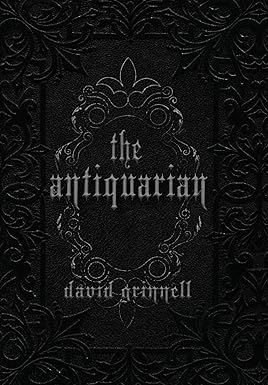

David Edgar Grinnell’s The Antiquarian is a gothic horror novel wrapped in layers of historical research, romance, and creeping dread. Told through the diary entries of Nicholas Ainsworth, a young archaeology student in 1930s England, the book follows his descent from academic ambition into eerie obsession as he investigates deviant burials and unexplained phenomena tied to folklore, vampires, ghosts, and haunted ruins. Set largely in London and Romania, the story blends scholarly curiosity with gothic thrills, all anchored by Nicholas’s emotional entanglements with two women, one from his past, and one disturbingly present.
This book proved far more emotionally immersive than I initially anticipated. The writing is intimate and affecting, owing much to its diary format, which lends a raw, unfiltered quality to the narrator’s voice. Nicholas begins as an idealistic and somewhat innocent student, eager about etiquette, fashion, and academic pursuits, but gradually unravels as his fascination with vampire folklore deepens into an obsessive search for meaning. The tonal shift is subtle yet deliberate. One moment he’s trading quips with his flamboyant uncle over proper dinner attire, and the next he’s recounting a dream of dancing with Irene, his lost love, in a scene that blurs romance and death. The recollections of Whitby Abbey, particularly the rain-soaked farewell, are profoundly melancholic, evocative, atmospheric, and genuinely moving.
The romantic subplot unfolded in a way I did not expect. Sasha, a reserved and enigmatic Russian student, emerges not merely as a romantic figure but as a survivor of profound trauma. Her fixation on deviant burials is not presented as an eccentricity, but rather as a means of processing her past and reclaiming agency. One particularly affecting moment occurs as she and Nicholas conduct research in a dim, sweltering archive. Their quiet rapport, marked by hesitant humor and growing trust, offers a rare glimpse of tenderness amidst the surrounding gloom. Yet, this intimacy is complicated. Nicholas remains burdened by the unresolved sorrow of his first love, Irene, whose memory casts a long, spectral shadow over his developing feelings. The interplay of romance, grief, and an ever-present sense of the uncanny maintains a charged and uneasy tension throughout the narrative.
What stands out most in The Antiquarian is its masterful use of setting and atmosphere. Grinnell evokes a distinctly Jamesian sense of antiquarian horror, complete with shadowed libraries, decaying records, forgotten castles, and legends murmured more than told. One particularly memorable scene involves Sasha reciting reports of vampire burials while Nicholas, initially skeptical, finds himself gradually and unwillingly drawn into the enigma. The narrative expertly sustains an air of uncertainty, never confirming whether the forces at work are spectral, vampiric, or psychological. This refusal to offer a clear resolution enhances the novel’s gothic sensibility. The ambiguity is deliberate, and it lingers long after the final entry is read.
I would recommend The Antiquarian to readers who appreciate historical horror that is both intellectually rich and emotionally resonant. Those drawn to the works of M.R. James, The Historian, or similar narratives where scholarly protagonists confront ancient terrors armed only with their wits and fragile resolve will find much to admire here. The novel is haunting, atmospheric, and surprisingly moving. It stirred a blend of nostalgia, unease, and quiet sorrow, an emotional complexity that elevates it well beyond conventional genre fare. For those seeking a gothic tale that engages both the heart and the mind, this is a compelling and rewarding choice.
Pages: 424 | ISBN : 1959860232

Diamonds in Auschwitz
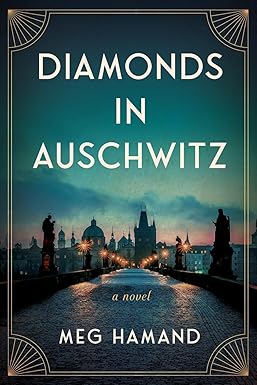
Diamonds in Auschwitz by Meg Hamand is a gut-wrenching novel set during World War II, centered on Rachael, a Jewish woman struggling to survive the brutal realities of Auschwitz, and Samual, a man trying to build a future in a Prague crumbling under Nazi occupation. Their stories orbit a ring, an engagement ring found buried in the mud, a small glittering symbol of hope, memory, and devastating loss. Through vivid, often painful prose, Hamand paints a picture of resilience, shattered dreams, and the stubborn pulse of humanity in the darkest places.
The writing in this book just grabbed me by the heart right from the first page. Hamand’s descriptions of Rachael clawing through mud, finding what she thinks is just a rock, only to later discover it’s a diamond ring, hit me like a punch to the chest. It’s not just the horror of her surroundings; it’s the tiny spark of something beautiful refusing to be snuffed out. Hamand’s style is sharp but full of heart. No flowery nonsense, no wasted words. I found myself rereading sentences like, “Grief had replaced the marrow of her bones,” because they felt true. You can almost feel the mud in your hands, the cold in your bones, the ache that never quite goes away.
One aspect that particularly struck me was Hamand’s ability to use small, carefully chosen details to convey a much larger emotional impact. Like when Rachael keeps the ring dirty on purpose, leaving a bit of mud on it because it reminds her of her daughter Catarina’s brown eyes. That killed me. It’s such a small thing, but it shows how survival isn’t always about food and shelter; it’s about finding reasons to still feel something when everything around you tells you not to. Samual’s chapters brought a different kind of heartbreak. Watching him risk everything to buy that ring for Hanna, then seeing the city he loved crumble into silence and hatred, felt like watching someone lose their home inch by inch, day by day. I was rooting for him, even knowing full well how history tends to end for characters like him.
There were moments when the book was honestly hard to read. Not because the writing dragged, but because Hamand doesn’t flinch away from showing what Auschwitz really was: a machine for killing hope just as much as it killed people. Scenes like Rachael debating whether to throw herself into the electrified fence, or the eerie way she describes the fog she imagines to block out her surroundings, hit me harder than any graphic violence could have. This book hurts, but it’s the kind of hurt that feels important. Like you’re being trusted to sit with someone else’s pain instead of being shielded from it.
Diamonds in Auschwitz isn’t just a story about survival; it’s a story about memory. About the tiny, stubborn things people hold onto when everything else has been taken from them. I would absolutely recommend this book to anyone who loves deeply emotional historical fiction, or who wants a story that punches you in the gut but leaves you grateful for having felt it. Fans of Kristin Hannah’s The Nightingale or Anthony Doerr’s All the Light We Cannot See will feel right at home, though “home” might not be the right word when you’re sobbing into a crumpled tissue at midnight.
Pages: 340 | ASIN : B0DXH3GMWW
Honesty in Writing

Ciao, Amore, Ciao follows a jaded journalist whose career is fading fast, who discovers an old WWII photo in his dying father’s home, and after posting it online, he begins to uncover long-buried secrets and a dark legacy that needs to remain hidden. What was the inspiration for the setup of your story?
The inspiration was both cathartic—I began the novel a week after my dad passed away, and I hardly even recall writing the first draft—and to tell the story of my family, a family of no ones, and the story of boys whose sacrifices were conveniently forgotten by the very people who sent them to their deaths. I guess you could say the inspiration was personal: a personal account to try and make sense of what happened—to me, to my uncle (who was one of the tens of thousands who vanished into the Russian steppes in 1943), and my dad, who spent a life living with the wounds of that tragedy.
Some events in the book bear chilling similarities to real-life events. Did you take any inspiration from real life when developing this book?
A lot of the novel is based on “true events”, including many of the scenes with the narrator watching his dad’s slow passing. The war scenes, too, were taken from hundreds of sources and a decade’s worth of research. I tried to meld all those soldiers’ recollections into the novel so that the novel remains true to what those boys suffered in Stalingrad. I think that’s what resonates in the novel, the “truth” of it. When you read those scenes, it’s sobering to remember that hardly any of it came from imagination. They’re just a retelling of stories told by survivors, and diaries and letters from those who, like my uncle, never came home. Not even their bodies, they just vanished into the ice. The tragedy was both what happened to them during those horror-filled days of their retreat, and what happened to the survivors because it was over a decade before any of their recollections were allowed to be published. Not until the mid-’50s did Italy begin to understand the true depth of the disaster. By then, of course, Italy was already in a hurry to move on to a new future, and that entire history was conveniently forgotten by everyone except those who were there, and those families who had to find a way to deal with that unspeakable heartbreak.
What was one of the hardest parts of Ciao, Amore, Ciao for you to write?
Writing about my family and my dad was difficult because the novel could only work if I wrote honestly. And honesty in writing is the most difficult thing of all because there’s no hiding once you choose to go on that path. Reliving the moment when I saw my dad, the night he left, and I had come to the hospital alone to see him there in his bed—that was hard. I edit a lot, that’s part of my process, but for that scene, I wrote it once and never went back to it again. Sometimes, a first take is all it takes, and editing that scene would have been to try and polish a raw emotion. That’s never a good idea because instinct is to try and change things, to make the “hero” a better man or whatever.
What is the next book that you are working on, and when can your fans expect it to be out?
My next novel is Book 2 in Alex Lago’s series, set in South Africa. The “hero” this time around is the legendary South African golfer, Bobby Locke. I know, golf, right? But Locke is a perfect metaphor for the true hero of the book, Johannesburg, in all its tragic, violent colour. Similarly to both my previous novels—Ciao, Amore, Ciao, and Tracks: Racing the Sun—it’s a dual-timeline historical fiction/mystery/autofiction. Yes, maybe one day I’ll find an actual genre! But probably not. My novels are about emotion, and this new one tells the story of a man who spent his life running from them. And what that cost his family was unimaginable. I expect it to be published in 2026, the manuscript is virtually complete.
Author Links: GoodReads | X (Twitter) | Facebook | Website | Amazon
In the winter of 1942, an Italian army of young men vanishes in the icefields of the Eastern Front. In the summer of 1945, a massacre in Schio, northeastern Italy, where families grieve the dead, makes international headlines.
In present-day Veneto, an ordinary man is about to stumble onto a horrifying secret.
Alex Lago is a jaded journalist whose career is fading as fast as his marriage. When he discovers an aged World War II photo in his dying father’s home, and innocently posts it to a Facebook group, he gets an urgent message: Take it down. NOW.
Alex finds himself digging into a past that needs to stay hidden. What he’s about to uncover is a secret that can topple a political dynasty buried under seventy years of rubble. Suddenly entangled in a deadly legacy, he encounters the one person who can offer him redemption, for an unimaginable price.
Told from three alternating points of view, Martini’s World War II tale of intrigue, war, and heartbreak pulls the Iron Curtain back to reveal a country nursing its wounds after horrific defeat, an army of boys forever frozen at the gates of Stalingrad, British spies scheming to reshape Italy’s future, and the stinging unsolved murder of a partisan hero.
Ciao, Amore, Ciao is a gripping story of the most heroic, untold battle of the Second World War, and a brilliantly woven novel that brings the deceits of the past and the reckoning of the present together.
Ciao, Amore, Ciao


Sandro Martini’s Ciao, Amore, Ciao is a soul-wrenching blend of memoir and historical fiction that begins with the quiet unraveling of a family and ends with the thunderous echoes of a nation’s buried past. Told through the eyes of a grieving son, the story moves between present-day Italy and fragments of a family’s long-buried secrets, tracing the last days of the narrator’s parents while peeling back layers of memory, guilt, and unresolved trauma. It’s a story of death and love, fathers and sons, and the way history bleeds into the present, whether we ask for it or not.
This book left me aching. Martini’s voice is raw and self-deprecating, not overly polished, which makes it feel incredibly relatable. I loved how he didn’t try to wrap up his grief in a neat little bow. Instead, he let it run wild through the streets of Piovene, scream through the halls of a hospital, and settle into the quiet spaces of a father’s old car. And the prose is beautiful. Sharp and vivid, like a Polaroid that won’t stop developing. There were passages where I had to stop and breathe, not because they were hard to understand, but because they were so true.
The ideas in this book haunted me. Martini doesn’t just write about family loss; he goes after the rot that lies underneath nations and legacies. There’s bitterness here—about fascism, about immigration, about how Italy remembers and forgets its sons. But there’s also a weird kind of love buried in all that anger. The kind of love that’s too painful to talk about directly, so it comes out sideways, in jokes and cigarette smoke and rusting old cars.
I’d recommend Ciao, Amore, Ciao to anyone who’s lost a parent, anyone who’s tried to understand their family too late, or anyone who thinks history lives only in textbooks. This book is messy, emotional, and full of ghosts. But it’s also deeply honest and strangely comforting, like a long night drive with someone who knows when not to talk. I wouldn’t say it’s easy reading, but if you let it, it’ll stay with you long after the last page.
Pages: 426 | ASIN : B0DXLC2LJC


