Blog Archives
Jazz Crazy

A Guide to Jazz in Japan maps out the complex, pulsing scene of Japanese jazz with detailed entries on clubs, musicians, jam spots, and the culture that surrounds them. Why was this an important book for you to write?
I’ve spent a lot of time at jazz clubs in Tokyo and Yokohama and have always found it fascinating. After writing for various publications, including my own website, I wanted to consolidate the most important information, opinions, and recommendations to share with others. It’s an exciting world, and a side of Japanese culture that most people usually don’t experience. I also find it a real contrast with some other parts of Japanese arts, but in very interesting ways. For me, it’s a culmination of my writing and reporting over many years, as well as my passion for not just jazz, but music in general.
What were some ideas that were important for you to share in this book?
I wanted to share how big the jazz scene is. I focused mainly on Tokyo and Yokohama, but the whole of Japan is quite jazz-crazy. I always thought the jazz scene would gradually disappear as people stayed home to watch TV. I worried the pandemic would wipe out the clubs. However, overall, it has been resilient and is at its most vibrant ever now. I also wanted to show how the character of the jazz scene has changed. It used to be for whiskey-drinking, cigarette-smoking salarymen, but now jazz clubs are filled with all kinds of people, all ages, various interests. Having more women musicians is another significant change. And all the players are better than ever. Japanese culture can sometimes seem imitatively creative, and jazz is certainly an African American invention. However, Japanese jazz improvisation shows a deeply creative spirit that surprises me every time I see it in action.
What makes the jazz scene unique in Japan compared to other countries?
It’s bigger. I’ve been to many large cities around the world, and all of them have a jazz scene, but Tokyo and Yokohama have over a hundred clubs with live jazz every evening. The scale is immense. There are also numerous local neighborhood clubs, which you’d mainly go to if you live close by. Distances are large in Tokyo, too, so having a club near the station where you live is welcome. There is tremendous variation, with all styles and forms of jazz represented in different clubs. Many of them are very inventive, while others are progressive, and a core group remains very traditional. That makes for a great mix and great variety on any given evening. Japanese culture has a traditional undertwo to it, so that forms of expression, music, art, cuisine, film, or whatever, have staying power. Luckily, that applies to jazz too, so you often hear very traditional jazz. However, younger players, and some of the stalwarts from the 1960s, play very cutting-edge jazz. It’s that tension that makes it unique.
What do you hope is one thing readers take away from your book?
I think the book serves as a guidebook, but it’s also filled with observations about the relationship between jazz and Japanese culture. Even if you’re not visiting, there’s a lot in there. As an observer and writer for so many years, there are many things I love here, a few I really can’t stand, but a lot more I find fascinating. I hope the book will provide visitors with an opportunity to explore beyond the usual tourist spots (which are often great, albeit crowded at times) and gain a deeper understanding of the culture from a different perspective. I want readers to understand the creative spirit that’s packed inside Japanese jazz. It’s an interesting side of Japan that’s not exactly hidden, but wonderful to discover.
Author Links: GoodReads | X | Facebook | Website Author | Website Book
With bonus essays on Japan’s unique jazz history, culture, and community, A Guide to Jazz in Japan helps you explore and understand one of the largest and most vibrant jazz scenes in the world. From hip backstreet clubs to talented musicians, the practical information and informed suggestions help make your trip—or your life—in Japan more interesting, fun, informed—and jazzier.
A Guide to Jazz in Japan
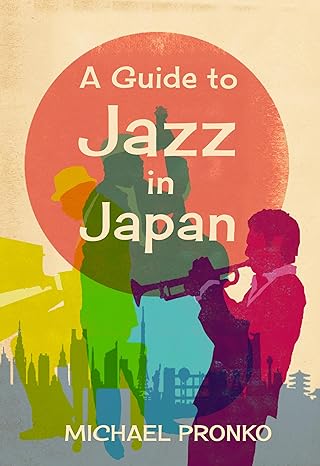

Michael Pronko’s A Guide to Jazz in Japan is more than just a directory of Tokyo’s jazz clubs—it’s a love letter to a city’s hidden rhythm. The book maps out the complex, pulsing scene of Japanese jazz with detailed entries on clubs, musicians, jam spots, and the culture that surrounds them. It’s part guidebook, part memoir, and part cultural essay, told with the warmth of someone who’s not only observed this world for decades but been deeply moved by it. From intimate back-alley venues in Kichijoji to storied mainstays like Shinjuku’s Pit Inn, Pronko captures the flavor of a scene that lives in shadows, thrives in basements, and beats with an energy all its own.
What struck me most was the clarity and sincerity of Pronko’s voice. He doesn’t write from a distance. He writes like someone who’s spent years leaning on club counters, sipping whisky, letting drums and saxophones rattle his bones. The descriptions of venues are vivid, practical, and full of soul. There’s no marketing gloss here. He tells you when a club’s cramped, when the food’s just okay, when you’ll need to duck past the bassist to get in. That honesty makes the whole book feel trustworthy. His passion for the music and the people who play it bubbles through every sentence.
But it’s the cultural insight that really elevates the book. Pronko dives deep into why jazz has taken root in Japan in such a powerful way—how the quiet devotion of its fans mirrors the precision of the music, how musicians practice and play with a kind of reverent intensity, how clubs have become sanctuaries of expression in a society that prizes decorum. The essays toward the end of the book, especially those on the history of jazz in Japan and its fit within the broader cultural landscape, are fascinating. He writes with affection, but not blind admiration. He notes the silences, the exclusions, the places still hidden from outsiders. It’s generous and sharp all at once.
I’d recommend A Guide to Jazz in Japan to anyone curious about music, travel, or Japanese culture. Jazz lovers will find it invaluable, like a backstage pass to a thriving, undersung world. But even if you’ve never set foot in a club, you’ll find something to love here. The writing sings, the details spark, and the emotion lingers. This is a guidebook, yes, but it’s also a beautiful meditation on place, passion, and the way music makes a foreign land feel like home.
Pages: 358 | ASIN : B0DZZCSXVM




 LITERARY TITAN