Blog Archives
How We Tell the Story
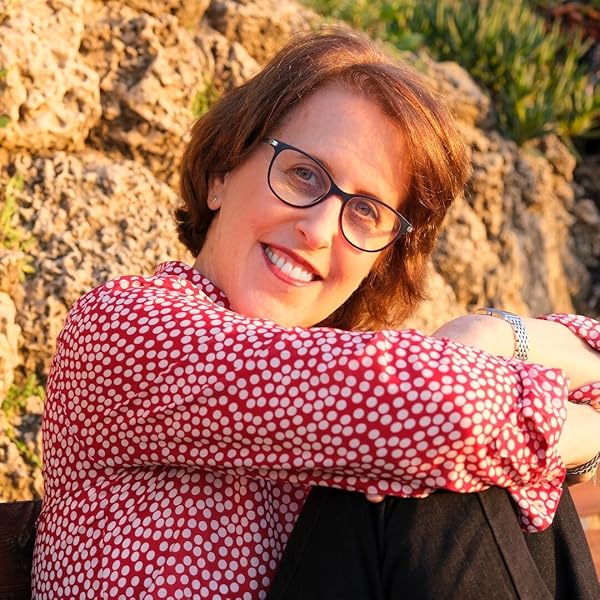
Landed: A yogi’s memoir in pieces & poses is a deeply personal exploration of identity, culture, and the search for belonging. Why was this an important book for you to write?
I’ve been writing about identity, culture, home, and the search for belonging for years. It was as if I was obsessed or possessed. I wrote in longform narrative, personal essay, compression, flash, circular structure, acrostic, prose poem, you name it. Writing it in full, in book-length form, helped get it out of my system. To see my way to the finish line. To take the final steps in my journey from point A to point B and to move on, beyond.
What were some ideas that were important for you to share in this book?
Shortly after returning to Israel in 2011, I began a blog called Open to Israel for my yoga students, family, and friends in the US, Jewish and not Jewish. I wrote about celebrating the holidays, about sending my son to the army, about voting in my first election, about navigating the bureaucracy. I wanted to show what life was like here in this tiny, complicated, misunderstood country. The more I wrote, the more I sensed my mission: to show life in Israel for people who don’t know or understand its complexities, its history, its importance, and its presence. To show, as Martha Engber writes in her review of my book, the lightness, darkness, and in between rainbow colors.
In addition, I write about change and choice, freedom, and selfhood. There is so much we cannot control in the world, but we do control how we tell the story.
What was the most challenging part of writing your memoir and what was the most rewarding?
Hands down, the structure was the most challenging part of this book. The story of my seven-year journey written in seven long sections—in present, past, and [yoga] poses—was obvious because seven is significant in both yoga and Judaism. I chose to tell the narrative in present tense and through poses but jumped back in time, in the past tense (indicated with year and place), thematically. Between each of the seven-year sections is a short scene about learning the seven chakras or spiritual energy channels in yoga, beginning from the root/pelvis and ending at the crown of the head, as learned in class with my first teacher, Rodney Yee, in Oakland, California circa 1996. I was convinced the structure could be the death of the manuscript and wasn’t sure how to revamp it.
After Vine Leaves Press sent me an offer of publication, I felt understood, seen, and validated. That seemingly convoluted structure was redeemed. My greatest reward. It worked.
What do you hope is one thing readers take away from your story?
Decades ago, when working in Paris and immersing myself in French, I learned the idiomatic expression “être bien dans sa peau,” literally translated as to be comfortable in one’s skin. At some point in my intense, new relationship with a Frenchman, I lost my sense of self. Only 23, I lost my way, my voice, my identity. And from that point on, I no longer felt comfortable in my own skin.
Home is a given for many people. But for me, it felt shaky. My one takeaway for readers is how important it is to stay true to yourself, your core, your home.
On a side note, I want to share that in today’s world—a completely different one from when I started writing about Israel—I sign my emails with “The region where I live is fragile. Please treat my words with care.” Thank you for reading my work.
Author Links: GoodReads | Facebook | Website | Amazon
American-born Jennifer traces her journey—both on and off the yoga mat—reckoning with her adopted country (Israel), midlife hormones (merciless), cross-cultural marriage (to a Frenchman) and their imminent empty nest (a mixed blessing), eventually realizing the words her yoga teachers had been offering for the past twenty-three years: root down into the ground and stay true to yourself. Finally, she understands that home is about who you are, not where you live. Written in experimental chapterettes, Landed spans seven years (and then some), each punctuated with chakra wisdom from nationally-acclaimed Rodney Yee, her first teacher.
Landed: A Yogi’s Memoir In Pieces & Poses


Landed: A Yogi’s Memoir in Pieces and Poses, by Jennifer Lang, is a deeply personal exploration of identity, culture, and the search for belonging. Lang, torn between the United States and Israel, grapples with feeling like an outsider in both places, constantly navigating the expectations of each. Her struggle is mirrored within her family, where two opposing approaches to their Jewish heritage—one modern and flexible, the other more traditional and rigid—create an ongoing internal tug-of-war.
This memoir traces Lang’s journey as she seeks to find herself in the space between these conflicting worlds. Drawing on both her writing and yoga practice, she embarks on a quest to discover which culture and location she can truly call home. Lang delves into her personal history and the challenges of being caught between two distinct yet intertwined identities through a series of essays and reflections. Lang’s writing shines in its portrayal of the complexities faced by Jewish women—whether in their connection to Israel, to their families, or to their own sense of self. Her storytelling is both witty and introspective, weaving in moments of self-discovery alongside the backdrop of yoga poses that serve as metaphors for her emotional journey. She offers readers a poignant look at life in Israel, vividly depicting both the beauty and the turmoil that coexist there. Her compassion for the land and its people is evident, as is her keen awareness of the personal and political struggles that shape daily life. Throughout the memoir, Lang’s internal conflict is palpable, inviting readers to reflect on their own definitions of home and belonging. The raw honesty with which she portrays her emotional and spiritual battles allows the reader to connect with her on a deeply personal level. Her reflections serve as an inspiration to anyone navigating the difficult balance between familial obligations and self-discovery, encouraging others to look inward and consider what truly feels like home.
While Landed will likely resonate most with women both younger and older, it offers valuable insights for anyone striving to find peace within themselves amid external pressures. In a world where societal and familial expectations often overshadow personal growth, Lang’s memoir paves the way for self-exploration and empowerment, making it a must-read for those seeking to prioritize their own journeys of self-discovery, regardless of age or circumstance.
Pages: 267 | ASIN: B0DB97P6FP

I Freed Myself From Everything

Places We Left Behind shares your experiences of making a marriage work despite differences in culture and religion and even identifying where ‘home’ is. Why was this an important book for you to write?
When I was little, I remember my parents casting judgment on close friends after she left her husband and their two sons circa 1973. I remember my mother tsk, tsking that you never know what goes on behind closed doors.
Twenty-something years later, behind our doors, my husband and I flirted—and fought—about core issues: country and religion. For years, I thought our struggles were more intense and our issues more divisive than other marriages in my midst. Sure, I didn’t know what went on behind anyone else’s doors, but I envied friends who grew up in the same community/culture/country or who shared the same religious views/practices as their spouses.
While growing our family, we moved in search of home. Every time we met new people, I sensed an inability for them to digest our backstories: where we were born, how we met, why we had such a hard time planting roots. No matter how many times I shared the facts, I felt misunderstood or invisible, similar to how I felt in my family life.
Writing our story was my way of validating it—us—and why we stayed together despite our differences. It was also my way of trying to make sense of the choices we made, the deals we struck, the crossroads we reached. And in so doing, it reminded me of everything on my imaginary list of what I wanted in a life partner. Of love.
What were some ideas that were important for you to share in this book?
How crucial it is to stay awake and not become complacent in a relationship. How important it is to understand the meaning of compromise in a couple/family. How imperative it is to be open to change.
I appreciated the candid nature with which you told your story. What was the hardest thing for you to write about?
The lowest of our marital low points, the sleeping back-to-back in a bed of anger, the uttering of ugly thoughts, the acknowledgement of selfish and self-centered feelings. The chapters that made me teary not during the writing as much as while rereading and editing: 4 : 1, Truth or Lie? Heavy, Back in White Plains, Slay.
I understood that the only way to write this story was to turn the camera on myself, to reveal my underbelly. To stop pointing a finger at my husband and to accept the part I’d played in our marriage. And nothing about that was easy.
Writing in untraditional prose felt necessary; at times and ironically, the words did not suffice. By pushing conventional boundaries, I freed myself from everything that had encaged me, namely the role of Good Jewish Daughter/Wife/Mother (and Jewish Guilt). Long, long overdue.
What is one thing you hope readers take away from your story?
The importance of following your heart while maintaining a sense of self in a relationship. When I agreed to practice my inherited religion Philippe’s way, I let go of and lost myself.
On the writing front, the importance of playing on the page, which is both freeing and cleansing.
Author Links: GoodReads | Facebook | Website | Instagram
When American-born Jennifer falls in love with French-born Philippe during the First Intifada in Israel, she understands their relationship isn’t perfect.
Both 23, both Jewish, they lead very different lives: she’s a secular tourist, he’s an observant immigrant. Despite their opposing outlooks on two fundamental issues—country and religion—they are determined to make it work. For the next 20 years, they root and uproot their growing family, each longing for a singular place to call home.
In Places We Left Behind, Jennifer puts her marriage under a microscope, examining commitment and compromise, faith and family while moving between prose and poetry, playing with language and form, daring the reader to read between the lines.



 LITERARY TITAN