Blog Archives
Family History and Trauma

Breaking the Cycle: The 6 Stages of Healing from Childhood Family Trauma looks at how childhood environments shape the views we develop for ourselves and how we relate to the world and others. How much research did you undertake for this book, and how much time did it take to put it all together?
It came from over a decade of clinical and personal experience, and it took about a year or so to write.
What were some ideas that were important for you to share in this book?
I wanted to do my best to capture many different experiences of family history and trauma.
What is one thing that you hope readers take away from Breaking the Cycle?
That it is okay to acknowledge your history and work towards greater awareness and healing. Many want to do this without blaming their caregivers, and I want them to feel safe to do so if that is their journey, while also validating those who find that their healing requires them to acknowledge wrongs that were done to them. All stories and experiences of healing are personal and unique.
Author Links: GoodReads | Twitter | Instagram | Facebook | Website | Amazon
Understanding our trauma is not about blame, but about understanding, learning, and growing. In most cases, our caregivers did the best they could with the tools they had, often while dealing with external or internal stressors as well. With the world’s increasing understanding of trauma, this paves the way for understanding and growth.
Survivors of childhood family trauma typically go through 6 stages in their path to healing: pre-awareness, uncovering, digging in, healing, understanding, and nurturing.
Using elements from her clinical work, as well as personal experience, Gillis provides support and tips for survivors navigating these 6 stages.
No matter where you are in your journey — only just uncovering, becoming more aware, or supporting a loved one in their process —this book will help.
Breaking the Cycle: the 6 Stages of Healing from Childhood Family Trauma
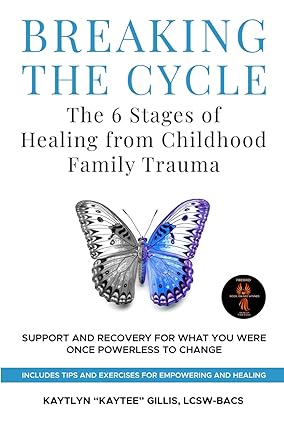

Breaking the Cycle: The 6 Stages of Healing from Childhood Family Trauma by Kaytlyn Gillis offers a comprehensive and accessible approach to addressing and healing from childhood trauma. Gillis, with her expertise in psychotherapy, adeptly navigates the complex terrain of family trauma, presenting it in a manner that resonates with a broad audience. The book’s structure methodically guides readers through the various stages of recognizing and confronting childhood trauma. It starts with the initial realization of its existence, progresses through understanding and acceptance, and culminates in the essential steps toward healing. Gillis enhances her narrative with practical examples and exercises, making the book a source of insight and a tool for personal growth.
From a psychological perspective, integrating family psychology principles with therapeutic practices in Gillis’s work is noteworthy. This blend results in a text that is both intellectually stimulating and universally accessible, catering to readers from diverse backgrounds and stages of life. Gillis emphasizes the equal importance of each section in understanding and resolving trauma. The book illuminates the need to recognize trauma’s presence in one’s life and the journey toward addressing it, underscoring the importance of understanding one’s family dynamics.
The distinction between functional and dysfunctional families is particularly enlightening, offering clarity on the origins of complex emotional experiences. A significant aspect of the healing process, as Gillis discusses, involves understanding the history of one’s caregivers. This exploration can reveal patterns of behavior inherited from previous generations and help in reframing personal experiences and self-worth. This process is not just about understanding but also about forgiveness and personal growth. Gillis’s work is particularly relevant in the current climate of increased awareness and openness about mental health, especially among younger generations. Her book serves as a valuable resource for those dealing with childhood trauma, mental health professionals, students, and anyone interested in exploring the human psyche.
Breaking the Cycle is an insightful read and a testament to Gillis’s contributions to psychotherapy and literature. Her ability to transform complex psychological concepts into accessible knowledge is commendable. This book is a vital resource for anyone on a journey of healing or seeking a deeper understanding of the human condition. I eagerly anticipate future works from Kaytlyn Gillis.
Pages: 309 | ASIN : B0C9GCYXZ3




 LITERARY TITAN