Blog Archives
Individual Responsibility

The Way to World Peace is a bold manifesto arguing that world peace is not a fantasy but the next evolutionary step for humanity, if we are willing to change how we think, govern, and see one another. Why do you believe this idea’s time has now come?
The time has come because humanity no longer has the luxury of delay. For most of history, our conflicts were destructive but limited. Today, they are not. We now possess the ability to destroy civilization through nuclear war, environmental collapse, or the breakdown of our own social systems. When a species develops that level of power, it must also develop the wisdom to use restraint. That is where we are.
We are also more connected than ever before. Our economies, communication systems, and environmental challenges are global. There is no such thing as a distant war or an isolated crisis. The pressures we feel are signs that the old model of fear and deterrence is no longer sustainable. Peace is no longer an abstract ideal. It is a requirement for survival.
In your view, what is the single biggest obstacle to world peace right now?
Fear. Fear has shaped our institutions, our policies, and our understanding of security.
We have built systems based on the belief that violence is inevitable. That belief sustains militarization and justifies deterrence. Violence is not inherent in our DNA. It is learned behavior, reinforced over generations. When we accept war as a permanent condition of life, we remove our responsibility and power to change it.
The greatest obstacle is not a particular nation or ideology. It is the assumption that peace is unrealistic. As long as humanity believes that assumption, it will continue preparing for war and calling it security.
How do communities begin shifting from fear-based thinking to unity?
The shift begins with individual responsibility. Governments reflect the level of awareness within the societies they govern. When individuals disengage and assume that leaders alone are responsible, little changes.
Communities move toward unity when people redefine strength. Strength is not domination. It is the ability to forgive, to cooperate, and to manage conflict without violence. It requires the same level of organization and commitment that we have historically devoted to war. It also requires raising children with the expectation that peace is possible.
Unity does not eliminate disagreement. It changes how disagreement is handled. When enough individuals reject fear as a guiding principle, the culture begins to change.
What gives you the most hope about humanity right now?
The longing for peace.
Across cultures and nations, people want stability, dignity, and a future for their children. That desire has never disappeared. It is evidence that peace is aligned with our nature.
Humanity has changed before. Practices once considered normal are now widely rejected. That tells me we are capable of growth. The same human mind that rationalized war can choose cooperation.
What gives me hope is that more people sense that the current path cannot continue. Awareness is growing. When enough individuals understand that peace is necessary for survival, change will follow.
Author Links: GoodReads | Facebook | Website | Amazon
In The Way to World Peace: An Idea Whose Time Has Come, Kenneth Paul Callison argues that war, nuclear weapons, environmental collapse, and fear-based politics are not inevitable facts of life, but learned failures of human consciousness. Drawing on history, science, philosophy, and universal spiritual principles, this provocative book challenges the belief that violence is part of our nature and offers a radically different path forward.
From nuclear deterrence and global conflict to collective awakening and universal law, Callison explores why humanity has normalized suffering. Peace can be achieved when individuals and societies shift from fear, separation, and control to compassion, responsibility, and unity. This is not a utopian fantasy, but a call to evolve: to run peace with the same intention and discipline that humanity has long applied to war.
If you believe the world can do better and that humanity’s survival depends on it, this book will challenge how you see history, power, and your role in shaping the future.
Read it now and join the movement toward a peaceful, unified human race.
The Way to World Peace: An Idea Whose Time Has Come
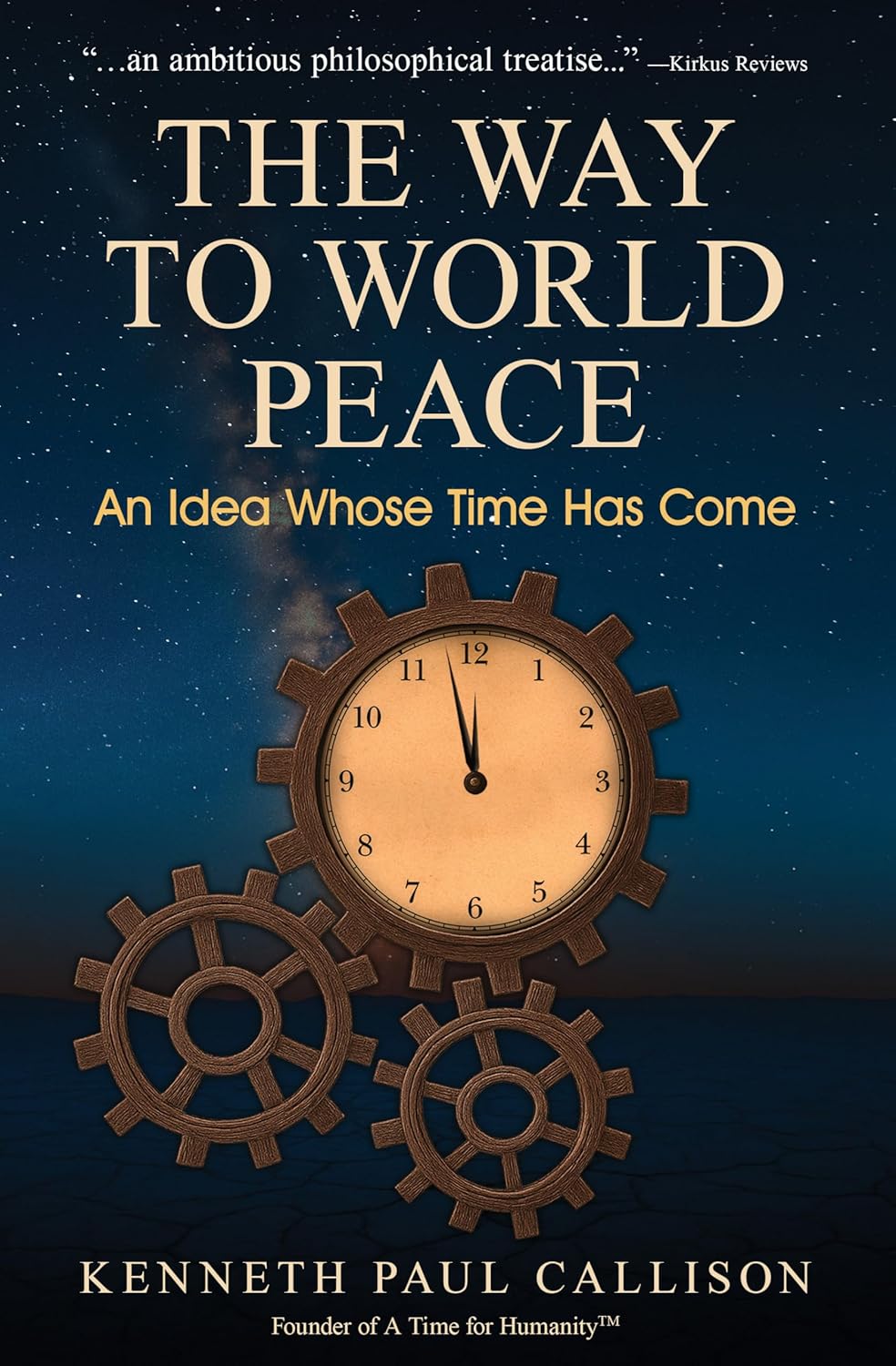

The Way to World Peace: An Idea Whose Time Has Come lays out Kenneth Paul Callison’s argument that humanity sits on the edge of self-destruction and spiritual breakthrough at the same time. He walks through war, nuclear weapons, poverty, government, and violence, then blends in ideas about universal law, vibration, the “fifth dimension,” race consciousness, genetics, and collective awakening. The book frames peace not as a vague wish, but as a concrete shift in how our species thinks, feels, and organizes itself, and it keeps returning to the claim that world peace is both necessary for survival and fully possible in practice.
I like how blunt Callison is about war and deterrence. His description of nuclear stockpiles, the arms trade, and the economics of militarization hit hard, and it stirred a heavy, angry kind of sadness in me. The early chapters on conflict and government land especially well, because he grounds them in numbers, history, and clear language. At those points, the argument feels urgent and practical, and I caught myself thinking about nightly news stories in a different way. Sometimes, the writing circles back to ideas, but that steady rhythm did help the message stick with me.
The shift into spiritual language created a different reaction in me. When he talks about universal law, vibration, fifth-dimensional consciousness, or the species as “God’s brain,” I felt both curious and skeptical. The metaphors are vivid and sometimes beautiful, and they gave me a way to feel peace as more than a policy goal, almost like a natural state of mind that we wandered away from. I caught myself nodding along to the emotional truth. The prose swings between very direct, almost plainspoken commentary on politics and these big mystical claims. The sincerity behind it is obvious, and I never doubted that the author truly believes every word. That sincerity moved me more than some of the specific spiritual frames did.
I came away feeling that this is a heartfelt and earnest manifesto that wants to shake people awake, not a quiet, gentle read. I would recommend it to readers who enjoy big-picture thinking about war, peace, and human evolution, and who are open to a blend of political critique and spiritual speculation. If you like books that challenge the status quo, that talk frankly about nuclear weapons and poverty, and that also invite you to think about consciousness and collective destiny, this will speak to you. This book is a window into how many people feel about the crisis of our time and the hope that we can evolve into something better.
Pages: 214 | ASIN : B0GFNT66HY



