Blog Archives
Mind The Gap: Scaling Businesses Across Cultures
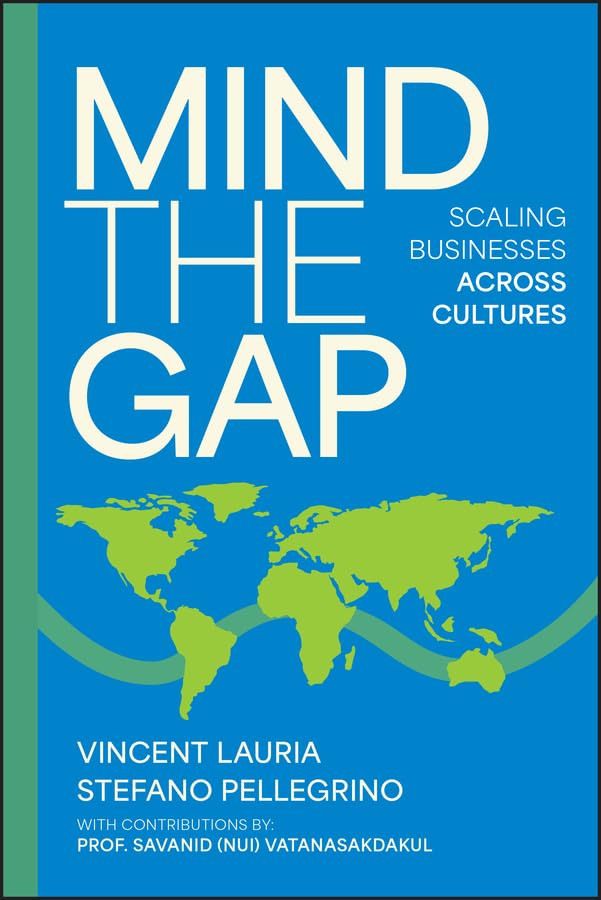

Mind the Gap, by Vincent Lauria and Stefano Pellegrino, is a thoughtful, experience-rich guide to the human complexity of global expansion. Drawing on venture capital, law, entrepreneurship, and lived cross-cultural experience, the book explores what happens when companies try to grow across borders and discover that contracts, products, hiring plans, leadership habits, and even the meaning of “yes” don’t travel as cleanly as expected. From the failed Vietnamese deal over a last-minute $20,000 request to the lessons of Golden Gate Ventures, Carro, MoneySmart, Tata and Docomo, livestreamed commerce in Asia, and the dangers of an overbroad “Africa strategy,” the book argues that scaling internationally is never just a market-entry problem. It’s a test of humility, presence, adaptation, trust, and cultural imagination.
What I enjoyed most was the book’s insistence that business is not abstract. Deals are human, the authors remind us, and I felt that idea gathering emotional weight as the chapters moved from strategy into listening, code-switching, hiring, team management, and social responsibility. The early story in Hanoi could have been treated as a simple cautionary tale about trust, but the book does something more interesting with it. It lets the discomfort linger. That moment of bafflement becomes a doorway into a larger truth: what looks irrational from one cultural vantage point may be operating by a different logic entirely. I found that both sobering and oddly hopeful. The book doesn’t romanticize cultural difference, nor does it flatten it into tidy business-school categories. Instead, it asks the reader to become more observant, more patient, and less intoxicated by their own assumptions.
The writing is clear, practical, and at its best when it lets stories carry the weight of the lesson. I especially appreciated the chapters on transcreation and cultural code-switching because they move beyond the thin idea of “localization” into something more alive. A product cannot simply be translated into another market. It may need to be reimagined through local habits, values, infrastructure, and desires. That distinction feels vital. The book is strongest when it blends framework and anecdote, as in its discussion of why remote launches can mislead companies, why an on-the-ground presence reveals truths no spreadsheet can, or why the phrase “yes” might signal acknowledgment, hesitation, politeness, or refusal depending on context. The steadiness of the advice gives the book its usefulness, while the stories keep it from becoming sterile.
I came away from Mind the Gap with the sense that global business, done well, requires a rare combination of ambition and reverence. The authors believe in expansion, but not in conquest. They believe in growth, but not in arrogance. That balance gives the book its quiet authority. It’s a smart, generous, and unusually grounded read for founders, investors, executives, operators, and anyone preparing to build across cultures, especially those who already know that success abroad will demand more than confidence and capital. I’d recommend it to readers who want a practical business book with a human pulse, one that treats cross-border growth not as a formula to master, but as a discipline of attention.
Pages: 310 | ISBN : 978-1394381487

Cultural and Emotional Intelligence

In The Asia Code, you assert the notion that deals in Asia are won less by perfect pitches than by patience, trust, emotional intelligence, and the art of being known. Why was this an important book for you to write?
I wrote The Asia Code because I noticed a persistent gap in how Western professionals approach business in Asia. Many arrive armed with brilliant strategies and flawless pitches, only to find deals stalling. I wanted to shift the focus from merely conquering markets to genuinely understanding the cultural and emotional intelligence required to build lasting partnerships.
Was there a specific business experience or cultural misunderstanding that first revealed this lesson to you personally?
Early in my career, I witnessed a major deal in Japan nearly collapse because the Western team pushed for immediate contractual commitments, misreading the room entirely. It became clear to me then that in many Asian business cultures, the contract is the beginning of the relationship, not the end of the negotiation. Trust must precede the transaction.
How do you personally distinguish authentic relationship-building from strategic networking?
Strategic networking often feels transactional; it is about what someone can do for you right now. Authentic relationship-building is an investment of time and empathy without the expectation of immediate return. It involves listening, showing respect for cultural nuances, and demonstrating that you value the person as much as the potential business opportunity.
If readers take away one lesson from the book, what do you hope it is about: trust, patience, and human connection?
I hope readers realize that patience is not a delay tactic; it is a vital component of trust-building. In a world obsessed with speed and automation, genuine human connection remains the most powerful and enduring currency in global business.
Author Links: GoodReads | Website | LinkedIn | Amazon
As technology accelerates and markets become more automated, the ability to build authentic human connections has become the most valuable and rarest skill in business. Nowhere is this truer than in Asia, where deals are made between people, not companies. A deep personal connection, grounded in cultural understanding, is what separates a transactional relationship from a transformative, multi-million-dollar partnership.
The Asia Code is the essential playbook for any professional looking to scale up their game in the world’s most dynamic markets. This is not a theoretical guide; it is a practical, hands-on toolkit for mastering the human element of business in Asia. It provides the cultural intelligence you need to decipher the unwritten rules that govern success across the three critical markets that will define the future of the global economy:
Japan
South Korea
China
Inside, you will learn to:
Decode the Asian Mindset: Go beyond surface-level etiquette to understand the cultural logic that drives decisions in each country.
Master the Art of Connection: Build the trust and rapport that are the foundation of all successful ventures in Asia.
Navigate the Deep Waters: Turn cultural complexity from a barrier into your greatest strategic asset.
Close with Confidence: Learn the unwritten rules of negotiation, communication, and marketing that truly win deals.
In a world that thinks AI will replace us, The Asia Code is a powerful reminder that in Asia, the human factor is, and always will be, the key to outstanding success. This is the one book every professional serious about succeeding in Asia must have in their toolbox.
Ready to master the human element in Asia? Click ‘Buy Now’ to unlock The Asia Code.
The Asia Code: A Million-Dollar Handshake: How to Build Relationships That Win in Asia

The Asia Code is a practical, story-driven guide to doing business in Japan, China, and South Korea, built around the idea that deals in Asia are won less by perfect pitches than by patience, trust, emotional intelligence, and the slow art of being known. Author Gadi Sznajder frames Asian business as a world where the real negotiation often happens beneath the spoken one, in the silence after a presentation, the dinner after the meeting, the questions about family, or the careful preservation of face. Through examples like Innovate Corp misreading a Japanese boardroom, Antoine fumbling a Seoul relationship by treating culture as a checklist, and Michael Chen losing a Chinese partnership despite fluent Mandarin, the book keeps returning to one central truth: business is personal before it’s transactional.
What I liked most is the book’s insistence that cultural intelligence can’t be reduced to etiquette. That gives the whole thing a warmer pulse than many executive guides have. The strongest moments are the ones where Sznajder pulls the reader away from surface behavior and toward motive, especially in his discussions of guanxi, mianzi, nemawashi, ringi, jeong, nunchi, and pali-pali. I found the Japanese sections particularly elegant because they capture the ache of ambiguity, that strange Western discomfort when silence feels like refusal but may actually be an invitation to listen harder. The writing can be grand, with Tokyo boardrooms gleaming, tea being poured slowly, and whole business cultures unfolding like weather systems. That style works beautifully. It makes abstract ideas feel lived-in.
I also appreciated the way the book returns to its central wisdom from several angles, letting the idea settle in rather than simply stating it once and moving on. The message that relationships matter more than transactions gains weight through repetition because each chapter refracts it through a different cultural lens. Frameworks like BRIDGE, TRUST, and ADAPT give the reader practical handles without pretending that human encounters are simple, and Sznajder’s humility keeps the book grounded. The Korean field notes were especially memorable to me, with their sharp observations about visible busyness, after-hours obligation, loyalty, and even the theater of leaving a car at work. Those details gave the advice a grainier texture and made me trust the book more because it felt observed.
I appreciated The Asia Code as a reflective argument for slowing down, paying attention, and taking people seriously. Its best idea is also its simplest one: the “code” isn’t really a code at all, but a disciplined way of showing respect before asking for commitment. I’d recommend it to executives, founders, consultants, and sales leaders preparing to work in East Asian markets, especially those who are smart enough to know that data alone won’t carry them across the room.
Pages: 213 | ASIN : B0GSD2SHTB
Butterfly Effects of Globalization

MERRY-GO-ROUND BROKE DOWN features nine connected stories that lead back to a high-stakes hostage crisis in a Manhattan hotel in 2008. Where did the idea for this novel come from?
We borrowed the structure from Arthur Schnitzler’s 1897 play La Ronde. In that play, the characters are connected through a chain of sexual relationships. In our book, the characters are connected through money.
Merry-Go-Round Broke Down explores the butterfly effects of globalization. The hostage crisis that brings the story together reflects both the darker side of globalization and its unintended consequences: in a tightly interconnected world, the same forces that create winners can also create losers.
What is it that draws you to the thriller genre?
We wanted to write a serious book that could also reach a wide audience. We thought the thriller genre—with its suspense and fast pace—would be the right vehicle for telling a complex story and the best way to bring the story of globalization to life.
Do you have a favorite scene in this thriller? One that was especially fun to craft?
My co-author and I have different favorites. Hers is the third chapter, about Simon, a British proprietary trader. Mine is the eighth chapter, about Arkady, the son of a Russian oligarch. Both stories are fast-paced and dramatic, with surprising endings.
What is the next book you are working on, and when will it be available?
We are working on a few different projects, but no timetable yet.
Author Links: GoodReads | Amazon
Fall 2008. The Waldorf Astoria New York. Two armed men storm the hotel’s famed bar and hold the occupants hostage: an American corporate raider, a Chinese tycoon, a British hedge fund manager, a Japanese housewife-turned-celebrity, a Mexican undocumented worker, a Wall Street bond salesman, and a Norwegian environmentalist.
Who are these terrorists? What do they want? And what ties them to their captives?
Merry-Go-Round Broke Down is a genre-breaking novel that explores globalization’s “butterfly effect”: how choices made in one corner of the world ignited an unstoppable chain of consequences that upended lives across continents.
Individual Responsibility

The Way to World Peace is a bold manifesto arguing that world peace is not a fantasy but the next evolutionary step for humanity, if we are willing to change how we think, govern, and see one another. Why do you believe this idea’s time has now come?
The time has come because humanity no longer has the luxury of delay. For most of history, our conflicts were destructive but limited. Today, they are not. We now possess the ability to destroy civilization through nuclear war, environmental collapse, or the breakdown of our own social systems. When a species develops that level of power, it must also develop the wisdom to use restraint. That is where we are.
We are also more connected than ever before. Our economies, communication systems, and environmental challenges are global. There is no such thing as a distant war or an isolated crisis. The pressures we feel are signs that the old model of fear and deterrence is no longer sustainable. Peace is no longer an abstract ideal. It is a requirement for survival.
In your view, what is the single biggest obstacle to world peace right now?
Fear. Fear has shaped our institutions, our policies, and our understanding of security.
We have built systems based on the belief that violence is inevitable. That belief sustains militarization and justifies deterrence. Violence is not inherent in our DNA. It is learned behavior, reinforced over generations. When we accept war as a permanent condition of life, we remove our responsibility and power to change it.
The greatest obstacle is not a particular nation or ideology. It is the assumption that peace is unrealistic. As long as humanity believes that assumption, it will continue preparing for war and calling it security.
How do communities begin shifting from fear-based thinking to unity?
The shift begins with individual responsibility. Governments reflect the level of awareness within the societies they govern. When individuals disengage and assume that leaders alone are responsible, little changes.
Communities move toward unity when people redefine strength. Strength is not domination. It is the ability to forgive, to cooperate, and to manage conflict without violence. It requires the same level of organization and commitment that we have historically devoted to war. It also requires raising children with the expectation that peace is possible.
Unity does not eliminate disagreement. It changes how disagreement is handled. When enough individuals reject fear as a guiding principle, the culture begins to change.
What gives you the most hope about humanity right now?
The longing for peace.
Across cultures and nations, people want stability, dignity, and a future for their children. That desire has never disappeared. It is evidence that peace is aligned with our nature.
Humanity has changed before. Practices once considered normal are now widely rejected. That tells me we are capable of growth. The same human mind that rationalized war can choose cooperation.
What gives me hope is that more people sense that the current path cannot continue. Awareness is growing. When enough individuals understand that peace is necessary for survival, change will follow.
Author Links: GoodReads | Facebook | Website | Amazon
In The Way to World Peace: An Idea Whose Time Has Come, Kenneth Paul Callison argues that war, nuclear weapons, environmental collapse, and fear-based politics are not inevitable facts of life, but learned failures of human consciousness. Drawing on history, science, philosophy, and universal spiritual principles, this provocative book challenges the belief that violence is part of our nature and offers a radically different path forward.
From nuclear deterrence and global conflict to collective awakening and universal law, Callison explores why humanity has normalized suffering. Peace can be achieved when individuals and societies shift from fear, separation, and control to compassion, responsibility, and unity. This is not a utopian fantasy, but a call to evolve: to run peace with the same intention and discipline that humanity has long applied to war.
If you believe the world can do better and that humanity’s survival depends on it, this book will challenge how you see history, power, and your role in shaping the future.
Read it now and join the movement toward a peaceful, unified human race.
The Way to World Peace: An Idea Whose Time Has Come
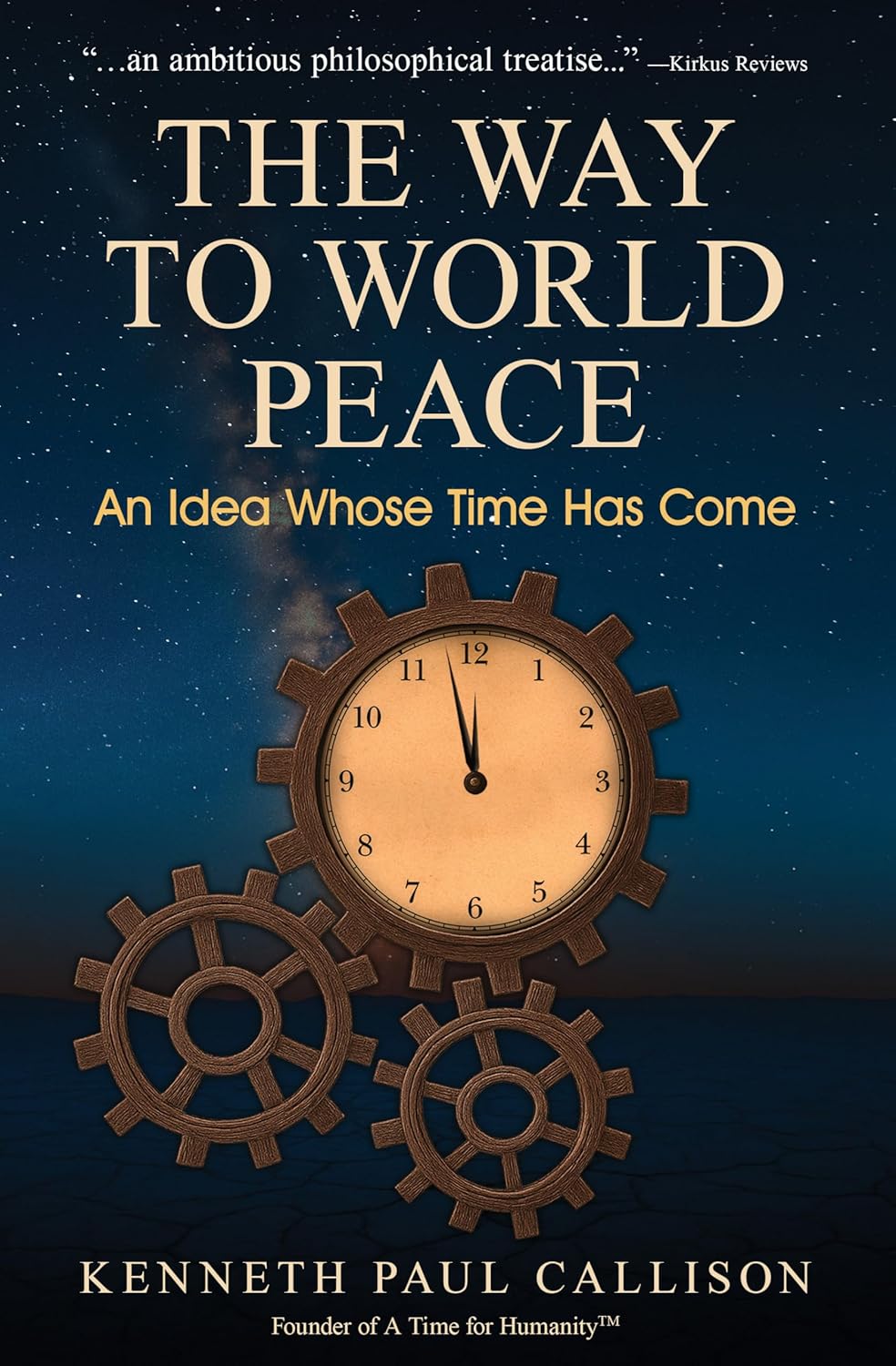

The Way to World Peace: An Idea Whose Time Has Come lays out Kenneth Paul Callison’s argument that humanity sits on the edge of self-destruction and spiritual breakthrough at the same time. He walks through war, nuclear weapons, poverty, government, and violence, then blends in ideas about universal law, vibration, the “fifth dimension,” race consciousness, genetics, and collective awakening. The book frames peace not as a vague wish, but as a concrete shift in how our species thinks, feels, and organizes itself, and it keeps returning to the claim that world peace is both necessary for survival and fully possible in practice.
I like how blunt Callison is about war and deterrence. His description of nuclear stockpiles, the arms trade, and the economics of militarization hit hard, and it stirred a heavy, angry kind of sadness in me. The early chapters on conflict and government land especially well, because he grounds them in numbers, history, and clear language. At those points, the argument feels urgent and practical, and I caught myself thinking about nightly news stories in a different way. Sometimes, the writing circles back to ideas, but that steady rhythm did help the message stick with me.
The shift into spiritual language created a different reaction in me. When he talks about universal law, vibration, fifth-dimensional consciousness, or the species as “God’s brain,” I felt both curious and skeptical. The metaphors are vivid and sometimes beautiful, and they gave me a way to feel peace as more than a policy goal, almost like a natural state of mind that we wandered away from. I caught myself nodding along to the emotional truth. The prose swings between very direct, almost plainspoken commentary on politics and these big mystical claims. The sincerity behind it is obvious, and I never doubted that the author truly believes every word. That sincerity moved me more than some of the specific spiritual frames did.
I came away feeling that this is a heartfelt and earnest manifesto that wants to shake people awake, not a quiet, gentle read. I would recommend it to readers who enjoy big-picture thinking about war, peace, and human evolution, and who are open to a blend of political critique and spiritual speculation. If you like books that challenge the status quo, that talk frankly about nuclear weapons and poverty, and that also invite you to think about consciousness and collective destiny, this will speak to you. This book is a window into how many people feel about the crisis of our time and the hope that we can evolve into something better.
Pages: 214 | ASIN : B0GFNT66HY



