Blog Archives
The Son of Poetry
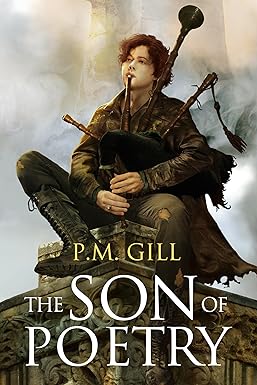

The Son of Poetry is a contemporary coming-of-age novel wrapped in folklore and urban grit. At its core, it follows Louis Song, a high-achieving and emotionally frayed teenager navigating high school in Edinburgh while being unwittingly drawn into a mysterious, supernatural conflict. The story spirals out from a single unsettling encounter with a trio of schoolyard bullies and unfurls into something deeper and stranger—intertwining ancient Celtic myth, school rivalries, emotional trauma, and questions of identity, fate, and power. With alternating character perspectives and a keen focus on inner conflict, Gill weaves together the ordinary and the uncanny until they’re nearly inseparable.
I didn’t expect this book to affect me the way it did. It starts like a gritty YA drama with sharp edges and painful truths. Gill doesn’t flinch from the ugliness of teen angst, class tension, or casual cruelty. But then something slips into the cracks of the real world—an invisible force, a memory that doesn’t belong, a tug of fate—and that’s when I couldn’t look away. The prose can be raw and jagged. But it’s also lyrical in strange, surprising bursts. I found myself drawn to Louis not because he was brave or brilliant, but because he was painfully human. His quiet ache, his confusion, the moments he second-guesses himself all felt real. His voice, at times, hit me in the gut. And Collin Gannet is one of the most sharply drawn, unforgettable characters I’ve read in a long time.
That said, part of the book’s charm is how it doesn’t rush to explain everything. The pacing takes its time, often drifting into rich layers of lore and dreamy, metaphysical turns that feel more like an immersive experience than a straight path. Some of the fantasy elements are elusive. It adds mystery and atmosphere, inviting the reader to lean in and wonder. A few of the side characters appear just briefly, like passing spirits, and it left me curious and hungry for more. These unexpected textures gave the story a raw, unfiltered energy. It didn’t feel like a polished fairy tale—it felt alive, and brimming with pain, wonder, and a quiet kind of magic.
I’d recommend The Son of Poetry to readers who love literary fiction with a supernatural bent—people who can sit with mystery and don’t mind feeling a bit off-kilter. Fans of The Secret History, Skellig, or The Ocean at the End of the Lane will find something here to love. It’s a story that haunts, confuses, and occasionally sings, just like poetry should.
Pages: 526 | ASIN : B0DBV9XM4J

The Divine Irony Book 1: Pandora


The Divine Irony: Book 1, Pandora by Demetre Jasmin dives headfirst into a story about two friends, Trent and Alex, navigating an infernal and surreal journey that merges myth, existential dilemmas, and interpersonal tension. What starts as a desert misadventure spirals into an exploration of Hell itself, complete with trials inspired by the Seven Deadly Sins, existential revelations, and questions of identity and fate. Jasmin’s blend of urban grit, dark fantasy, and spiritual allegory creates a vivid, harrowing adventure.
From the intense desert scene that transitions into their plunge to the underworld, every detail is vivid and immersive. The imagery of Hell is grotesque yet captivating: the ominous Pandora’s Door, the gate of Envy, and Leviathan’s menacing presence all feel alive and heavy with meaning. These aren’t just set pieces; they are metaphors for the characters’ personal struggles. The characters, particularly Trent, are the beating heart of the narrative. He is compelling, layered with a mix of pride and vulnerability that makes him relatable. I appreciated how Jasmin handled this complexity, especially when Trent’s internal conflict mirrors the trials of Hell. The scene where Trent uses his Pride to fend off an attack is both thrilling and thought-provoking, showcasing how his strength is also his potential downfall. That said, I sometimes get the sense that Alex is more of a reactive participant than an active one, which, to me is a minor drawback in an otherwise rich character dynamic.
Jasmin’s prose is a mix of gritty realism and lyrical intensity. The dialogue occasionally leans into exposition or forced humor. When Apollyon quips about the trials being “entertaining,” it feels more for the reader’s benefit than natural to his character. Still, the humor and modern colloquialisms add a much-needed breath to the heavier themes of identity, sin, and redemption.
The Divine Irony is a thrilling, darkly imaginative read that balances action with introspection. It’s a perfect choice for fans of Good Omens or Dante’s Inferno who crave a modern twist. If you enjoy stories where flawed, relatable characters grapple with cosmic stakes, this book will keep you hooked. Just be prepared for an intense, twist-filled ride.
Pages: 215 | ASIN : B0DMPK8BNT

Out of Embers and Shadows
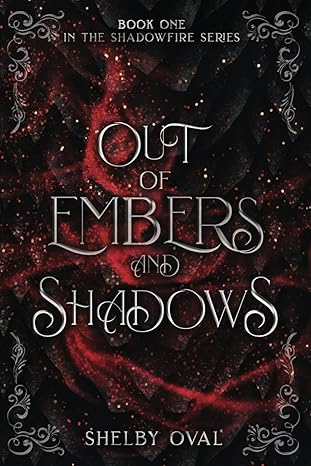
Shelby Oval’s Out of Embers and Shadows, the inaugural book in the Shadowfire series, is an electrifying dive into a world ravaged by war, shadowy intrigue, and deeply human struggles. It follows Lora, a tough, sarcastic, and resourceful heroine, as she navigates a treacherous landscape filled with dragons, shadow armies, and uneasy alliances. The story’s gripping opening plunges readers into chaos, setting the stage for a journey that is as much about survival and loyalty as it is about uncovering the truth of Lora’s past.
One of the things I liked most about this book is its biting dialogue and unflinching narration. Lora’s internal monologue brims with wit and a kind of hard-edged vulnerability that makes her instantly relatable. Early scenes, like her survival atop a dragon she initially sees as an enemy, are charged with tension and dark humor. Her complex dynamic with Garrison and the dragon Emir adds layers of intrigue, blending mistrust, dependence, and reluctant camaraderie. Oval balances world-building with action, but at times, the pacing in these moments felt slightly rushed, leaving some character motivations a bit hazy.
The world-building is where Oval truly shines. The eerie descriptions of villages turned to ash are haunting and atmospheric. The author draws readers into a richly detailed setting where dragons, shadow armies, and magical powers are not just elements of fantasy but deeply integrated into the fabric of the story. Certain moments, such as Lora’s mysterious transformations or the glowing silver fire connected to her spark intrigue, but I think it would benefit from a bit more detail.
What stuck with me most was the emotional weight behind Lora’s quest. She’s driven by a desperate need to rescue her friend Kacey, whose fate looms like a shadow over the story. Oval has crafted scenes that fairly pulse with emotion. These moments make the stakes feel real and personal, even as the plot escalates into broader political and magical conflicts.
Out of Embers and Shadows is an enthralling start to a series that promises epic battles, deep betrayals, and a heroine who refuses to back down, no matter how stacked the odds. Fans of dark fantasy, morally complex characters, and dragons (especially snarky ones) will find much to enjoy here. While it leaves some questions unanswered, this book sets up its sequel with a tantalizing sense of anticipation. I’d recommend it to readers who love the grit of The Priory of the Orange Tree and the emotional stakes of Sarah J. Maas’s works.
Pages: 560 | ASIN : B0D29F1Q99
Hunting Demons

ShadowBane follows twins bound not only by blood but by their role as formidable demon hunters who each are taking on the role of demon hunting for different personal reasons. What was the inspiration for the setup of your story?
The original inspiration was a nightmare I had where Demons were attacking our home. It was really intense, really frightening. I woke up to my dog howling and growling at the door. I checked the whole place, thinking maybe someone had tried to break in, but everything was fine. When I came back to bed, my dog sat sideways on my chest, staring alertly at the door for about an hour. He’s never done that before or since.
It was really unsettling, and it had me wondering if there was any stock in the nothing that animals can sense otherworldly entities. I don’t believe in that stuff, but I thought it might make a cool story. So the original idea was “a guy and his dog hunting demons,” and that eventually transformed into “two twins and their pet tiger hunting demons in feudal Japan.”
Shura and Jin may be twins, but they have unique personalities. What character did you enjoy writing for? Was there one that was more challenging to write for?
I definitely enjoyed writing Jin more. I had a lot of fun with his and Wallace’s dynamic (once he stops being such a jerk), and I liked peeling back the layers of his surly personality over the course of the novel. I love anti-hero characters, and Jin was no exception. He’s got this weird honor code where he can do some terrible things in pursuit of his goals, but his goals are noble and he pursues them even at great personal risk. He’s weirdly selfless. I can’t help but root for the guy like that, hoping he can both achieve his goals and change for the better.
Shura was more difficult to write because I had to step further outside my own experiences. As someone who has spent her life being constantly overlooked, underestimated, and dictated to, she’s built up a lot of resentment for the very society she’s trying to rise up in. She’s cunning and ambitious, but she also is insecure about her place in the world and her ability to achieve her goals, all the while feeling this immense pressure due to her lineage. It’s a powerful mix of fears and driving factors, and it took me a while to distill it all into a clear, consistent worldview that also evolved throughout the narrative. It was a challenge, but I’m glad I took the time to work through it.
What kind of research did you do for this novel to ensure you captured the essence of the story’s theme?
So much research… I read two books about the cultural significance of the yokai (non-human beings in Japanese folklore) just to get a feel for it, then combed through a list of hundreds of yokai to find the ones I wanted to represent in the novel. I also had to do a ton of historical and mythological research, everything from creation myths to major wars to tiny details like the proper way to hand over a weapon, honorific usage, or the differences in men’s and women’s kimonos.
Then I worked with a translator to create all the names (places and people) and in-world terms. I followed real Japanese naming conventions for locations and any fictional terms have a real meaning in Japanese. For example, Shikōken, the bloodline from which Shura and Jin are descended, translates to “supreme sword.” It was a ton of work, and although I took some creative liberties when I felt it better served the story, I tried to faithfully portray the spirit of feudal Japan and pay due respect to a truly fascinating culture & period of history.
Where does the story go in the next book and where do you see it going in the future?
Well, I won’t want to spoil too much, but if ShadowBane is the story of Shura and Jin operating as a duo and being driven apart by their own choices, the sequel will explore how they function once they can’t rely on each other. You get a glimpse of that in ShadowBane, and it takes a heavy toll on both of them. Amidst a full-scale war, things get pretty dire, and then there’s that ominous prophecy hanging over their heads…
A Schism of Souls will be a trilogy, and I have the ending all planned out, even if the minor details haven’t worked themselves out yet. To say much about the third book would heavily spoil the second, so I’ll just say that Book 2 sees some major plot threads resolved. If you had a lot of questions in ShadowBane, the sequel will see them answered.
Author Links: GoodReads | X (Twitter) | Facebook | Website | Amazon
One womb, one soul, two fates. One will rise. One will fall.
Shura and Jin are the last of a divine bloodline, operating at the bloodiest fringes of society where they wield might and magic against the demons they are sworn to destroy. For Shura, it’s the only way to restore honor to her lineage and claim her rightful place in the world. For Jin, it’s a matter of begrudging duty—and escaping the influence of the three kings vying for control of the continent.
In their pursuit of the sadistic cult behind the demons’ resurgence, the twins find themselves hunted by an ancient demon harboring a blood vendetta, and are forced to set aside past grudges and seek the kings’ alliance. When Shura discovers a chilling prophecy, she fears that even her newfound allies may not be enough to stem the rising tide of shadow.
Even the palest chance of victory will come at a brutal price. But the prophecy never foretold whose fate would settle the debt: Shura’s or her brother’s.
Our Intricate Whole

A Maiden’s Wish: A Novella follows two sisters who are offered a glimpse of a better life from a powerful shaman. What was the inspiration for the setup of your story?
Initially, I aimed to tell a much shorter morality tale about two friends: a vain and misguided young woman and her humbler companion who are both offered a wish-making proposition by a supernatural entity. The entity promises fame and fortune to the one but warns that this fate will be achingly empty. In contrast, to the other woman, it promises an eternally rewarding life laden with hardships and heavy burdens. “You will not see the fruits of your efforts in this lifetime,” the entity tells the humble woman who desires to use her talents for humanity’s goodwill. “But they will echo across eternity.”
This concept, set in modern times, was eventually abandoned in favor of A Maiden’s Wish, which plays to some of the same narrative beats but has a much richer journey, more ideas, and (in my opinion) a superior ending.
Bayelle and Evora experience a vast range of emotions as they come to realize the cost of the choices they make. Are there any emotions or memories from your own life that you put into your characters’ lives?
Bayelle and Evora represent the internal struggles I’ve contended with as a young woman, especially in the flippant, sometimes predatory internet sphere. Evora is the identity I chose, along my social media path, to reject: male manipulation, self-objectification, and abuse of beauty for “likes” and flattery. Conversely, Bayelle embodies my frustrations and deepest longings as a woman and, indeed, a human being: the desire to love, be loved, and impress an eternal impact upon the world through my creative skills.
Bayelle encounters opposition from worldly wickedness, oppressive opinions, and erroneous religious teachings along her journey, representative of our culture’s current divisions in the realms of feminism, “red pill” society, and the Christian church. As I have come to triumph over the flaws and failings in each of these groups, I developed the satisfaction I have been privileged to bestow upon Bayelle at the peak of her struggle.
What were some themes that were important for you to explore in this book?
Mankind has a warped view of what constitutes a fulfilling life, and it also holds a warped perception of women. As a race, we’re made for so much more than the glazed-eyed, hazy-minded daily grind. You can own as much “stuff” as you like; the stuff won’t fit into the hole in your heart. It can’t plug up and force away the sadness we sometimes feel or keep joy locked inside. Beauty, in its physical form, will erase its bloom from every face that weathers enough time and exposure to this world. The good news? That’s okay.
Appearances are one small and impermanent part of our intricate whole, and beauty that penetrates no deeper than one’s moisturizer cannot affect a grander purpose. A Maiden’s Wish asks our divisive culture to be realistic and seek deeper things than what is readily seen. Women are beautiful, and our femininity distinguishes us from men, but visuals don’t make or break us, just as they don’t make a book interesting beyond a fleeting glance. Women are not toys, commodities, objects (whether exploited by self or others), or beings of inferior purpose and intellect, all tailored for the same purpose—we are equals under God and accountable to none but Him.
Will there be a follow-up novel to this story? If so, what aspects of the story will the next book cover?
The power of this story, for me, is its brevity and finality; I do not anticipate a sequel or spin-off, but I’m sure it will have “spiritual successors” of a sort. The book’s themes, gentle magical varnish, and the nature of the characters within made for a wonderfully appealing writing process that might be cathartic to explore in a different, unrelated world and plot.
Author Links: Goodreads | Website | Amazon
The human heart harbors many desires—some fulfilled, others forgone. But young Bayelle and her sister have a guaranteed chance at a better life in the form of a powerful shaman who can grant them each one wish. When dreams and reality clash and the dust of their decisions settles, Bayelle and Evora discover what is truly worth wishing for… and the consequences of entrusting one’s future to the forces of magic.
A coming-of-age and morality tale.
A Sinister Love

In A Sinister Love, by Spencer Hixon, we are introduced to Scribble, a demoness abruptly reassigned from her mundane clerical duties to a role she never anticipated: a Sinister on Earth. Tasked with tempting her assigned human, Paul, into sinning, Scribble struggles not from a lack of cunning, but because she tends to talk more than she tempts. Deciding that a physical presence might improve her odds, she assumes a succubus body with the help of her enigmatic new boss. As Scribble navigates her new form, she not only charms Paul into offering her a job but also grows unexpectedly close to him, leading to unforeseen emotional complications. Is her discomfort due to the new body, or could she be falling for a human?
Hixon’s portrayal of Scribble as an avid reader adds an unexpected layer of relatability to the demoness, making her journey from timidity to bravery quite compelling. Similarly, Paul is a thoughtfully crafted character whose struggles with mental health add depth and relevance to the narrative. The character of Rotworm is vividly realized—his sleazy demeanor is palpable, yet he delivers surprises that leave readers eager for more. While the novel excels in character development and a gripping plot, I feel that some areas seemed a bit underexplored and could benefit from further elaboration. Despite these minor gaps, this book remains a highly engaging read, especially for those who appreciate a blend of supernatural elements with human emotional dilemmas. Hixon’s work is a commendable addition to the genre, promising a level of intrigue that will keep readers looking forward to the next installment.
Spencer Hixon’s A Sinister Love masterfully blends the supernatural with the profoundly human, crafting a narrative that is both entertaining and emotionally resonant. Through the eyes of Scribble, a demoness finding her footing among humans, readers are treated to a story that challenges the traditional boundaries of genre fiction. This book is sure to delight those who enjoy tales of personal growth, supernatural intrigue, and the complexities of love, making it a worthy addition to any reader’s collection.
Pages: 344 | ASIN : B0D1F6FS5K
The Door to Trilesk

The Door to Trilesk by Shannon Holly is an evocative tale that delves into the journey of self-discovery and embracing one’s true identity. The story centers on Kate, a young woman who inherits the traveler gene from her family lineage, a trait her mother, Janice, vehemently opposed activating. The narrative begins when Janice decides to sell Aunt Esmerelda’s house, compelling Kate to visit the place that holds the key to her suppressed memories. As Kate spends time in the house, she begins to recall the summer she spent there with her aunt at the age of eight. These resurfaced memories awaken her latent traveler abilities, setting her on a path of conflict with her mother to preserve the house and her freedom. Through this struggle, Kate not only embraces her true self but also unlocks the potential to rescue her aunt from mysterious captors.
Set firmly within the fantasy genre, The Door to Trilesk captivates with its imaginative realms and magical dimensions. Holly skillfully blends the present with the past, creating a seamless narrative highlighting self-acceptance’s importance. Kate’s journey is a poignant reminder that one cannot escape their true nature. Suppressed for years, her traveler gene reactivates when she reconnects with her past, leading her to abandon her former career aspirations in favor of a fulfilling life as a traveler. Holly’s writing is both accessible and engaging, guiding the reader effortlessly through the transitions between past and present. The vivid descriptions of Kate and Esmerelda’s experiences create a realistic portrayal, though Janice’s character development introduces a layer of ambiguity, making the reader question the reality of these events. The male characters serve as a backdrop that highlights the strength and complexity of the female protagonists, adding a unique dynamic to the story. The narrative’s mystery, especially surrounding why Janice’s door leads to a dark dimension, adds an intriguing layer that keeps readers engaged and eager to uncover more.
The Door to Trilesk is a compelling read that combines magical elements with a heartfelt exploration of identity and personal growth. Shannon Holly’s talent for storytelling shines through, making this book a worthwhile addition to the fantasy genre.
Pages: 227 | ASIN : B0CW9FRJPQ



 LITERARY TITAN