Blog Archives
I’M FINE!: A Practical Guide To Managing Your Emotions To Strengthen Relationships With Loved Ones And Yourself


I’m Fine! is a short and personal guide to emotional awareness written for men who grew up being told to toughen up, get on with it, and never cry. Rob Nugen walks through why that “I’m fine” script is often a lie, how emotions actually work as signals, what happens when we suppress them, and how men can start feeling and expressing them in healthier ways. The book moves from basic ideas about emotions, through stories of suppression, masking, and meltdown, into practical tools for working with anger, fear, sadness, happiness, guilt, shame, and gratitude, before landing in deeper topics like connection, loneliness, self-care, and living with an open heart.
I really enjoyed the way Rob writes. The tone is warm, plain, and direct, and he keeps it grounded in his own stories instead of hiding behind theory. The images he uses stick. The inbox full of unread emotional “emails,” the “Meeseeks” standing in for neglected feelings, the little boy trying to write “Jr.” on a Nerf football and then shredding it in shame, these landed for me much more than abstract advice ever could. I also liked the structure. Each chapter ends with simple reflection questions, so the book nudges you to actually do something with what you just read instead of nodding along and forgetting it ten minutes later. The style is conversational, but the content is serious, and that mix makes some heavy topics feel more approachable.
I found his core message both simple and powerful. Emotions are not defects. They are messengers that hang around until you listen, and when you finally let them move, they change. That shows up everywhere in the book, from his delayed grief over his grandfather’s death, to the fear sitting under his anger, to his description of “self-care” that quietly turns into avoidance and numbing. I appreciated how strongly he leans toward agency without sliding into blame. He honors the fact that childhood and culture shape us, then keeps coming back to the question, “What can I choose now.” Sometimes I wanted a bit more engagement with bigger social factors, like work, class, or culture outside his own experience, since most of the examples are straight, Western, and personal. That said, the honesty and humility soften that gap for me. He is not preaching from on high. He is saying, “Here is what I did wrong, here is what helped, try what fits.”
By the end of the book, I felt a steady mix of hope and practicality. The closing chapters on self-care, connection, and “practicing emotional awareness” do a good job of tying everything together into daily life, instead of leaving the reader with one big cathartic moment and no follow-through. Rob’s invitation to “pay it forward” by handing the book on to another man, with a written note, is a lovely touch that fits the whole spirit of the project. I finished the last pages with a real sense that the book is less a lecture and more a hand on the shoulder.
I would recommend this book to men over 30 who feel competent on the outside and quietly lost or numb on the inside, especially those who grew up with “men don’t cry” as a background rule. It would also be useful for partners of men like that, and for coaches or group leaders who work with men and want simple language and relatable stories to point to. If you want a straight-talking, very relatable guide that makes you feel less alone while giving you concrete ways to start feeling more, I think this one is worth your time.
Pages: 150 | ASIN : B0FYNH5WNC

Pathways to Inner Peace
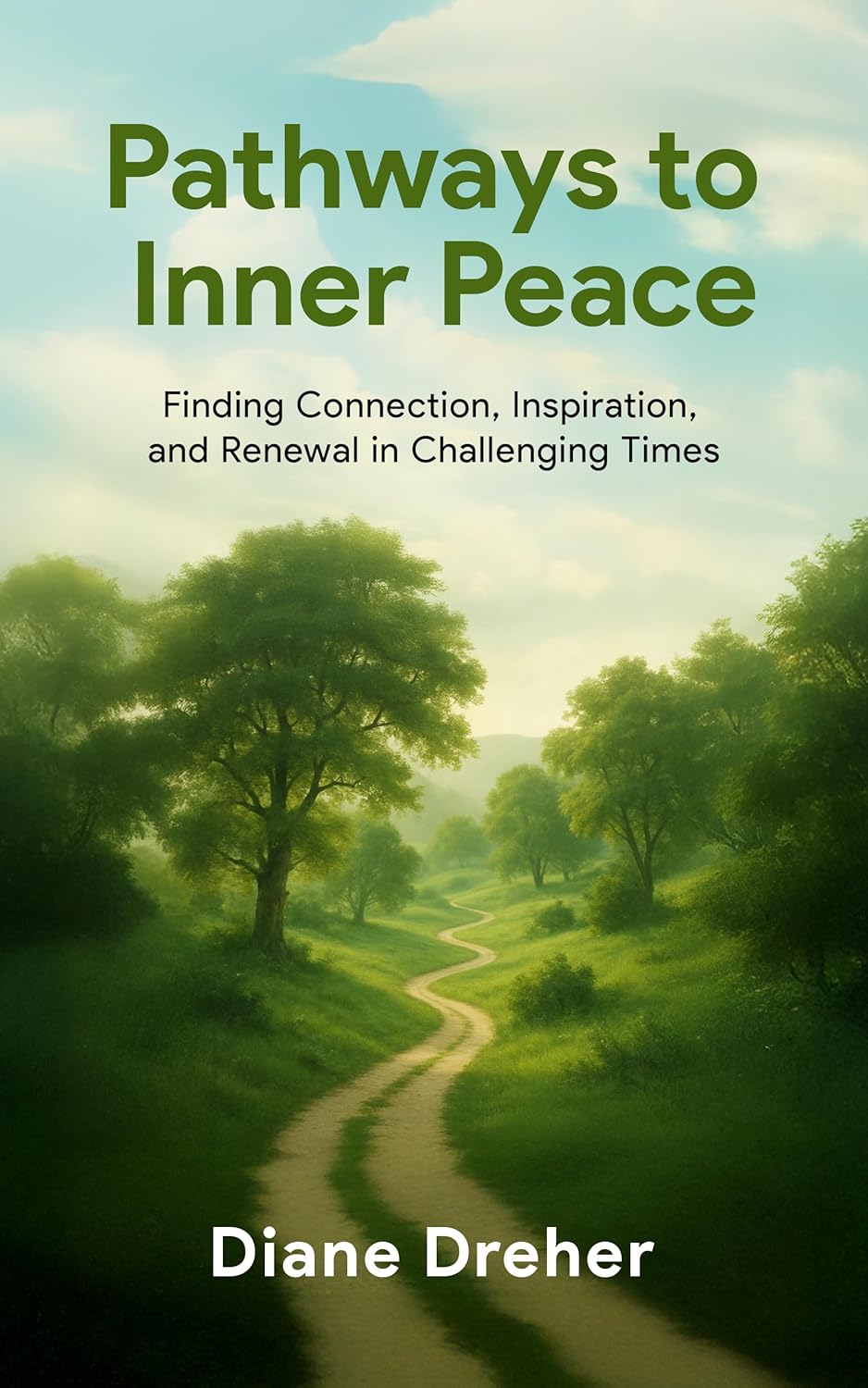

Diane Dreher’s Pathways to Inner Peace is both a personal guide and a practical workbook. The book lays out nine distinct “paths” toward cultivating a calmer, more connected life. These include mindful presence, community, kindness, nature, meditation, purpose, intuition, the arts, and joy. Each chapter weaves together ancient traditions, modern psychology, and Dreher’s own lived experiences. The structure invites the reader into a nine-week journey, with small daily practices designed to build connection and hope. What I appreciated most was how the book blends personal vulnerability with research and timeless wisdom, making it feel accessible while still grounded in depth.
As I moved through the book, I felt an unexpected closeness to the author. She shares the rawness of her losses, the grief of losing loved ones, and how she used these pathways to rebuild her life. That honesty softened the book’s guidance, keeping it from feeling like just another self-help manual. I found myself pausing at the exercises, wanting to try them instead of rushing ahead. The way Dreher speaks about awe in nature or the simple healing of a mindful breath resonated with me. It reminded me of things I know in my bones but often forget. The writing has a gentleness to it, a kind of quiet encouragement that never feels preachy.
Certain points about mindfulness or the benefits of nature are repeated across chapters. The repetition itself becomes a practice, a reminder that peace is found in consistency. The research citations were helpful, but I preferred when she leaned into storytelling and metaphor. That’s where her voice shone brightest. I especially loved her descriptions of everyday moments, like sipping coffee while watching a sparrow at a feeder. Those simple images made the ideas feel real and relatable.
I walked away with a sense of calm and a handful of practices I want to try. I’d recommend this book to anyone who feels scattered or disconnected, especially in these uncertain times. It’s not a book you rush through; it’s one you live with, week by week. If you’re open to small daily steps, if you want to reclaim a little hope and steadiness, then this book will meet you exactly where you are.
Pages: 229 | ASIN : B0FJRQTLMV



