Blog Archives
Celebrating Small Victories
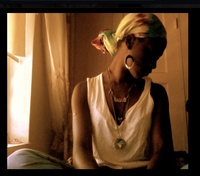
Lalibela is a book of poetry that wanders through memory, love, pain, Blackness, faith, and survival, shared through snapshots of memories filled with real emotions that hit the reader hard, and amplify the realities of Black life. What inspired you to write this particular collection of poems?
I am so grateful for the opportunity to talk about this collection.
This work was part of an intended series, picking up from where a previous work, Black Architects, left off. There was this and a prequel to Black Architects called Dearest. Unfortunately, the latter was stolen from my storage unit, but Lalibela survived. I was very much moved by my community and the struggles that I witnessed/experienced. When I look around me, there are people living unglorified lives, battling day in and day out to survive. I also see triumph, I see joy, I see grit, I see humor, I see love. The scene of backs breaking under hard work, celebrating on Sundays in church and lending a hand, set a very heartfelt rhythm in my mind. This was the rhythm to which my hands went to work to capture the sanctity of what we lived. The pieces, in turn, celebrate simply getting through the day and all other seemingly small victories.
I was also partly inspired by “Of the Coming of John” by W.E.B DuBois as well as the Allegory of the Cave by Plato. Being in the motions of experience sometimes means that the very thing that is taking place is lost on your eyes precisely because of its proximity to you. The burden, weariness, revelations and love carried by the protagonists in these two stories felt familiar to me. Having experienced the world outside of my neighborhood and family inspired an awakening of sorts that stirred a deeper love and admiration for the persons around me.
I love my community and I wanted to do justice to show just what made it so special to me. I was inspired by the coming architects of our tomorrow, (specifically my niece who was around 1 at the time and my nephew who was just a fetus), that will inherit and take charge of the world that I must one day forfeit. It was important to me to pass down my own legacy within the greater legacy of this community. I wanted to explore the nuances of ‘home’ and in a lot of ways this is my letting go of what I think ‘home’ should look like. The neighborhood is in the hands of a different young now; that narrative of its character no longer belongs to me, it belongs to the coming generation of architects that must rise to the task of defining and defending it.
Were there any poems that were particularly difficult to write? If so, why?
Most of the poems were difficult to write. The time they were written, in 2018, was turbulent for me. There was a death in my community, one that I managed to blame myself for and I was battling a number of things personally. Among these battles were crippling panic attacks. I would become completely incapacitated for any number of hours and then once I was functional again, I would hit the page. During this time, I thought a lot about mortality and I wondered about the things that really mattered in life. I found myself in this picture of the universe, small and mighty and I was thus able to blend easier into the flow of things on a larger scale. I realized how my life meant more when spent in communion with the Most High and in service of those around me. Being a vessel for Christ in this way meant that I had to be pure, so the task was to confront the world in me in writing and to speak truth to power as an honest and accurate witness to all that occurred within my realm. This made it difficult to write because I would have to face those lives and those faces who were written into the lines of each of the pieces. I had to live the baring of soul that made me feel naked – in the eyes of the Lord and the eyes of the people on whom I depended on and whom depended upon me. I felt so exposed. The lesson was this: there really is no hiding place in all of Creation.
How did you go about organizing the poems in the book? Was there a specific flow or structure you were aiming for?
I wanted the poems to speak to one another, so I arranged them in a way that they kind of flow into each other. Here’s a fun fact: you know how most movies have a love scene or a romantic storyline? I wanted to integrate that into the pulse and beat of the collection so I wrote “And When On Days” to give the collection that added bit of romance. The collection creates a certain type of world, like a mini neighborhood, and I wanted every representation and expression of love present in it.
Have you received any feedback from readers that surprised or moved you?
I think that when the Most High puts it in the hearts of man to be moved by these words from my soul, then there will be more readers. As of now, any feedback is welcomed and the invitation is extended to chance upon these waters in time.
Author Links: GoodReads | Amazon
Lalibela holds within its reams the fatigue and redemption of a working class family of the African Diaspora in the West. The lively avenues, bus routes, love lives and cultures preserved in memory and in real-time as if frozen in place from another, happier time. Retaining a legacy of teaching its young hard truths about survival, identity, achievement, failure, faith, death, resilience, life, love and hate.
As concepts evolve, facts change and truth disrobes, Lalibela is an expression and legacy of survival. Within this small community with limited resources people ponder existentially, pray colossal prayers, and resuscitate grit mouth-to-mouth. Named after a town in Ethiopia that is home to the legendary rock hewn churches, Lalibela is the sanctuary for a piece of mind and a direction to that inner place of belonging that travels with us all as we navigate our various and difficult realities. Simply, Lalibela is home.
God’s Saving Grace

Bethesda is a collection of poems that moves through faith, pain, identity, womanhood, and longing with a voice that is raw and unguarded. What inspired you to write this particular collection of poems?
I would have to say that my inspiration came from Christ and the state of the Church. I remember watching someone preach online and the topic of the sermon was John 5: 1-12 in the Bible. As I watched, the name “Bethesda” came to me, and it was in these moments that I knew the title/subject matter of a new collection would be Bethesda. This was back in 2021, and the work was about 4 years in the making. At the time before seeing the sermon, I had been experiencing a dry season and hit a bit of a writer’s block. When the concept for the new work came, the inspiration to write set in, and the drought lifted. Along the way, life happened, and the writing stopped for a little while. There was, however, a time in 2024 when revisiting the work that I had done, and this is when I decided to follow through on compiling the pieces, writing two-thirds of the work to completion. Looking back, I understand that it took me that long to live through the questions I had been carrying. It took time to build the resolve to have the confidence to be honest and forthcoming in the pieces.
I was also inspired by my heroes – those that I know in real life, like my mother, my father, my siblings, my elder cousin, and members of my church community. I was inspired by how they handled pain, discouragement, stagnation, and defeat. Using my own observations about how these folks managed life’s struggles, I was able to paint the picture of a speaker who was a conglomerate of these figures, including myself. This force moved through the pieces on a journey of redemption to liberation. Dr. Maya Angelou’s work, life, and testimonies were also places I frequented during this excavation of soul. I am truly standing on her shoulders as I work to become a better writer and person in this existence. If I can dare to be so unguarded in my work, it is because she paved the way and showed first that there was nothing to fear – that if anything, it was the world that should fear the storm within me.
How did you decide on the themes that run throughout your poetry book?
It was twofold, really. For the most part, in the first drafts of the collection, I just wrote about what was important to me and what I saw being issues in mankind. I turned to sermons that I had attended, in person and online, over the years, as well as to topics/issues that were socially and culturally relevant. I wanted the work to be encompassing, inclusive, and reflective of the journey a person takes when contemplating a walk with Christ in this modern day.
As the narrative builds through the pieces of the work, different themes become apparent in the topics the speaker decides to pursue: themes of wrestling with God, despair, redemption, heartbreak, self-loathing, longing, faith, belief, the dismal state of the world, and God’s saving grace. The middle of the work is dedicated to exposing and fleshing out issues with which the speaker must face a confrontation, like heartbreak and longing. The ending of the work is dedicated to the resolve that comes with the acceptance of God’s saving grace and confrontation.
The messages transferred on a Sunday morning inspired me to be reflective about the current soul condition of mankind, and the urgency communicated, instilled, and awakened within me, inspired the stark honesty in the lines. I wanted the collection to be a gathering place for those who did not quite have it right yet but were still unrelentingly trying. The themes came together on their own, really, as I set out with the intention to have the reader confront themselves in the lines. I knew a transformative collection meant that I had to be vulnerable if I wanted the Lord to shine through my testimonies.
Did you write these poems with a specific audience in mind, or was it a more personal endeavor?
My intention with these poems was to be as inclusive as possible. I wanted to appeal to the heart, soul, and conscience of the reader. The journey was simultaneously a personal endeavor and one that ambitioned the collective, universal heart.
I found that the transformation that I had experienced through confrontation and deconstruction for the
sake of these pieces (and for my own sake, if I’m honest) would be made available to the reader as they
journeyed from the beginning of the work to its end. This made it even more imperative to be honest and
unrelenting because there is a lot at stake: being an example of the power of the Grace of God and
exemplifying the transformative power of faith. I strongly believe that the audience will reveal themselves to be those who are open to letting the Lord into their problem areas and those who are searching for and
genuinely seeking a relationship with the Most High.
Bethesda, this house of Grace built by words, was constructed to be a gathering place for those who find
themselves ill at ease in today’s world order. Under its covering, one may find the opportunity to secure their redemption and begin the process of true liberation. At the crux of Bethesda is a journey to the increased intimacy with God that results from a genuinely contrite heart looking for God. Walking through the shadow of doubt, the reader is a witness to the perils of the world and the bravery of faith that comes as a result of persisting through the questions.
How has this poetry book changed you as a writer, or what did you learn about yourself through writing it?
I really had to fight with myself to believe that the reader would care about the issues I was bringing to light. I had to push myself to be what I requested of the reader: vulnerable. And then came the question of impact: how would the audience be affected?
These battles forced me to come to terms with the power of testimony. Using the example of testimonies I experienced in the Church, I saw firsthand that people may or may not see themselves in my story. The power comes in that somewhere in existence, my act of daring to be true and sharing would take our collective soul to another level of liberation in the current scheme of universal oppression gripping the heart of mankind. I walked so that someone else can run, even if that is just one person, and even if they have never heard of my book(s). It is a testament, testimony, and witness to the Grace of God on a whole other level, and I realized that these are things that matter most to me.
Though I abstracted and amplified certain things in the pieces, I had to evolve to a place where my own journey and past and present and all the things don’t shame me anymore. In full transparency, it’s a journey that I am still on, but I was obedient to the call to model what I saw to have transformative power in the world/Church. Bravery really does look different in the eyes of the brave.
Author Links: GoodReads | Amazon
Rendered from the Biblical porch where the sick, blind, deaf, and ailing were said to have lived and found reprieve, Bethesda frees the reader to a celebration of life, even in the places where it hurts the most. It explores what it means to be whole and moving as well as broken and stuck. Stuck in helplessness. Stuck in mercy. Stuck in hopelessness. It is a journey of the wondering of how one can give birth to the sometimes elusive tongue of healing. Bethesda is the victory of small steps away from the porch of heartbreak, longing, confusion and suffering.
In this barren womb of world order, we the lost, losing, finding and found, are a nation – an army. Take this journey through a fractured mind on the proverbial porch – that gathering place we now call Bethesda.
Lalibela


Lalibela is a book of poems that wander through memory, love, pain, Blackness, faith, and survival. The pieces move like snapshots. One moment you are in a kitchen full of noise and life, then suddenly you are in protest lines, then in the quiet of a bedroom at dawn. The writing drifts between tenderness and ache. It lifts up children, calls out to lovers, mourns wounds, and still finds space for hope. The book feels like a long conversation with a friend who has lived deeply.
The voice here is raw in a way that feels familiar. The plain language makes the emotion hit harder. I could hear the author’s breath in the short lines and the pauses. Some poems read like whispered confessions. Others feel like a shout in the street. I found myself thinking of certain imagery long after I turned the page. The children who glow under the sun. The exhausted women who work three jobs. The hearts that learn to love with both hands. The neighborhoods full of cracked paint and stubborn joy. These moments made me sit back for a second and just feel.
I also loved the way the author writes about Black life. There is pride and rage and humor and longing. The poems praise Black boys and girls with a kind of awe. They honor Black mothers with reverence. They admit to fear and sorrow. They insist on dreaming even when the world tries to shut the dreams away. I felt a kind of warmth in those pages. I felt seen. The writing leans into common objects and everyday scenes.
I would recommend Lalibela to readers who want poetry that talks straight and loves hard. People who care about community, identity, and the quiet bravery of getting through each day will find something here. It is a book for anyone who wants to feel close to another human being for a little while.
Pages: 70 | ASIN : B0FG147WCC

Bethesda

Bethesda is a collection of poems that moves through faith, pain, identity, womanhood, and longing with a voice that is raw and unguarded. The book feels like a spiritual and emotional journey, one that circles back to God again and again while navigating the heaviness of lived experience. Each poem stands on its own, but together they read like a layered confession. Grief, hope, Blackness, gender, memory, and divine yearning all braid together. The writing pulls from moments of despair and moments of revelation. The themes feel deeply personal yet still universal.
Reading this book stirred something in me. I kept feeling the author’s honesty press against me. Her words feel unfiltered in a way that made me stop more than once just to sit with the weight of what she had said. Sometimes the writing felt soft and vulnerable, then suddenly sharp, almost like a cry I wasn’t prepared for. There is a rhythm in these pages that made me sway between empathy and awe. The way she writes about faith hit me hardest. It felt like I was watching someone reach for God through fog. I felt the hunger in the lines about doubt. I felt the exhaustion in the moments she confessed her confusion.
I also found myself loving the poems that center on Black identity, womanhood, and generational ache. There’s courage in the writing and also a kind of weariness that comes from living too much too early. Sometimes the poems wander. Sometimes they dig straight down. But the variation gave the book its shape. I enjoyed how the language feels both poetic and conversational. There’s an unpolished beauty here. Some lines left me feeling protective of the speaker, and other lines felt like a rallying cry. I especially appreciated how the writer handles inner conflict. It isn’t neat. It isn’t solved. It just lives on the page.
I walked away feeling like this book is for anyone who has ever fought with themselves and still tried to choose hope. It’s for readers who want poetry that feels lived in and not curated. It’s for people who are navigating faith or identity or heartbreak and need a voice that says I’ve been there too. I would recommend Bethesda to those who enjoy emotional, spiritual, and introspective poetry that doesn’t shy away from the hard parts of life.
Pages: 109 | ASIN : B0F7HZJX6D
My Love Letter

Black Architects is a lyrical tapestry of poems and meditations that transforms Blackness into a sacred hymn that’s part prayer, part protest, and all love. What inspired you to write and publish this collection?
Well, first I want to thank you for the opportunity to reflect on the work. It was inspired by an incident that was racially charged, which occurred at a job that I had. I remember feeling the lowest that day, though refusing to let them see me cry. On the train ride home, I started to write this soliloquy/prayer, declarations if you will, by hand in protest. Every time I wrote a line I felt a sort of redemption that I knew, if no body else, the Almighty would be witness to me climbing out of the hole I was in. In that job space, and other spaces, I felt the compression and pressure of having to hide the majority of my identity. Though I dared anyway, in some ways, to embody the ideals, culture, and depth of what I encompass as a black woman, I felt the battle every single day to be, speak, do, and exist otherwise. Aversion for true expressions of blackness is so intricately and subtlety interwoven in the fabric of our society, that it becomes easy for that aversion to manifest, and the smart from it is hard at times to pinpoint, but undeniably experienced. Black Architects was born from this. It came as protest, as a resistance to extinction. It is my love letter to and celebration of black people, written to those who continue to build our legacies in this world. The architects are the young, middle aged and seasoned who see themselves as caring about this world, being architects of thought, experiences and manifestations that will lead people to honor themselves, despite how others may dishonor them. The work was also inspired by the community where I live. I see black faces, in all variety, everyday. Working, playing, growing, having setbacks, prospering, loving. So it was important to tap into this pulse of the people and show us in even the mundane aspects of living. In this predominately black community, we still don’t control resources or have many businesses, so in a way Black Architects is also how one dreams to be the architect that lives just beneath the surface in each of us.
How did you approach balancing vulnerability and defiance in your writing about Black identity?
I balanced the two by just being honest about my experience. I let my love for mankind in general shine through as an act of defending an oppressed identity, like I would for any other people I see being stifled. I practiced a sort of curiosity as though I was both outsider and member of the community, which informed the observations presented in the work. It was important for me to come straight from the heart and to say everything with my chest despite resistance because my only audience at the time of the work’s conception, was myself and the Almighty. Both of whom it is impossible to lie to, and I wanted to extend that courage to the reader. It came from love’s protest and can be seen as Love’s defense of me, who at the time of writing felt deeply wounded and dangerously vulnerable. That day at work, and many others in that work environment, I suffered almost disparaging defeat. The part of me that refused to die found a home in the larger tradition of struggles of black identity, and expanded within the honesty and authenticity of expression.
In the process of writing, I felt the support of my 10,000, my ancestors – and all of heaven, really – witnessing and celebrating with me. Even so, I knew I risked offending and that is also where defiance set in. There are some who expect that every other identity can be celebrated without question but when black people unite in this way, it is threatening. I’ve noticed and experienced that the black voice tends to be sacrificially inclusive, speaking for every and each, with associations to other black people only assumed, rarely explicit. Even in this interview as I express my love for black identity, I feel compelled and forced, almost, to remind about my love for other groups as if my expression of solidarity with my community would mean otherwise. Why is this?
We, like other groups, are not monolithic and I tried to show some of our diversity. I was not trying to speak for a whole group of people. These lines are simply a testament of how a single mind sees blackness and they are for any others that can see and celebrate this too. Being unapologetic about love is something I’ve had to practice and my fondness, deep affection and concern for my people, I hope, is apparent. Honesty, truth and love are the only ways to truly touch and reach people. In keeping with this reminder I was able to maintain the balance between the vulnerability and defiance so palpable in the work.
What were some themes that were important for you to explore in this book?
Vulnerability is one of them. In all our function and dysfunction, we are bared for the world to see. This work came through me while I was on the train, with my writing pad open for all onlookers to see – to some pleasing, and to others distasteful. Still the courage to be – considering and despite – persisted. Love is another theme. The multi-dimensional and variety of ways that we do exist and persist conveys, I hope, the beneficence of the Almighty who avenges the oppressed and reinforces the poor in spirit. We’re inspired to have this joy that for little reason, be. Redemption is also a theme. The work ends calling forth the youth, painting a picture of the architects of better days to be birthed from the sowing of this work.
Which artists, writers, or ancestral voices guided you while writing this book?
Christ Jesus guided me to be unflinchingly honest about the triumphs and despair of being a black woman. His walk on Earth inspired me to endeavor the universal heart through love and appeal to the cosmic conscience in man transcending identity throughout the work.
Emperor Haile Selassie I, the quintessential, cosmopolitan man, was a huge inspiration. His concern for the world has always been apparent to me, though his love for his own people never to diminish. Reflecting on the heights chartered by his words, inspired the loftiness of description in the text.
Dr. Maya Angelou was a huge influence. She took on the challenge so well of expressing her love for her people and for all people simultaneously and effortlessly. So I felt less alone in taking on the mission of this work.
They both were so masterful with the written/spoken word, that I could only dream to pave my own path and trajectory with their light as my guide.
E. E Cummings also has a quote in the same tradition of how the work was born: “To be nobody but yourself in a world which is doing its best, night and day, to make you everybody else – means to fight the hardest battle which any human being can fight; and never stop fighting.” Black Architects bandages the mind broken from this fight.
I identified with Frantz Fanon’s Black Face, White Masks and I ambitioned to be as astute an observer as he when it came to communicating and constructing the plight and positionality of the black architect.
I was also listening to this one Nina Simone song on repeat while composing the collection: it’s called “You’ll Never Walk Alone”. The work was written matching the ebb and flow and climax of her piece. It is very much woven into the every line of Black Architects.
Lastly, Marcus Garvey was a model because like Garvey in the whirlwind in one of his infamous speeches, I wanted this voice – this celebration – to be witness to the love and defiance enduring through time in the blood, DNA, genes and generations of a people. It is a message to the people at that job and in the world at large that they/it can never kill my spirit. Love, which I have chosen, will always outlast hate and though I may have died in battle that day, I am destined to be resurrected in the coming generation of architects that will redeem this world, black and otherwise.
Author Links: Instagram | Website
Black Architects is all the variations of ‘Black’ and ‘Excellence’ paired together. It is a rallying cry and celebration that interweaves an account of a people’s triumphs, their weaknesses, their shortcomings and their aspirations. It is a picture of what it is like to be Black in America. It is a protest against the monotony of invisibility of the Black plight in a Western purview demanding a reinvention of how we love ourselves: that we do love ourselves and our seed.
Black Architects

Black Architects by Regina Shepherd is a symphonic celebration of Blackness in its many shades, shapes, and histories. The book unfolds as a lyrical prayer, a hymn to identity, love, and survival. It reads like a tapestry woven from poems, affirmations, and meditations, each line drenched in rhythm and reverence. There’s no plot to follow, no characters to cling to, only the pulse of language that paints the beauty and burden of being Black. Shepherd’s words are both intimate and universal, like a whisper passed down generations. It’s a work of devotion, and at times, defiance.
The writing is lush. I found myself rereading certain lines, letting the repetition of “Black” sink in until it became something sacred. It’s not just a descriptor, it’s a chant, a heartbeat, a home. There’s a rhythm in the way Shepherd builds her world, one that feels alive, like she’s conducting a spiritual ceremony through words. The imagery is vivid, the sound of it musical. It’s not always easy to grasp every metaphor, but that’s part of its power, it demands presence, not quick understanding. I could feel her pride, her pain, her joy, all twined together.
I also enjoyed how the book blurs the line between poetry and prayer. It’s vulnerable and fierce at once. The repetition might feel heavy-handed to some, but to me, it felt necessary. Shepherd insists that Blackness be seen, named, celebrated, again and again, until the world can’t look away. There’s so much love in these pages, and also a quiet kind of rage, a refusal to let beauty be forgotten or erased. It made me think about legacy, about ancestry, about the sacredness of existing in a world that often misunderstands you.
I’d recommend Black Architects to readers who love poetry that breathes, who find comfort in rhythm and repetition, and who crave writing that feels alive. It’s for anyone who wants to experience words not just as text but as ritual. This book would resonate deeply with artists, dreamers, and anyone who carries history in their bones. It’s not light reading, it’s immersive, emotional, and raw, but it’s worth every page.
Pages: 55 | ASIN: B09RGYC7FQ



 LITERARY TITAN