Blog Archives
Your Path of Happiness: The Credit Union Playbook for a Successful Retirement
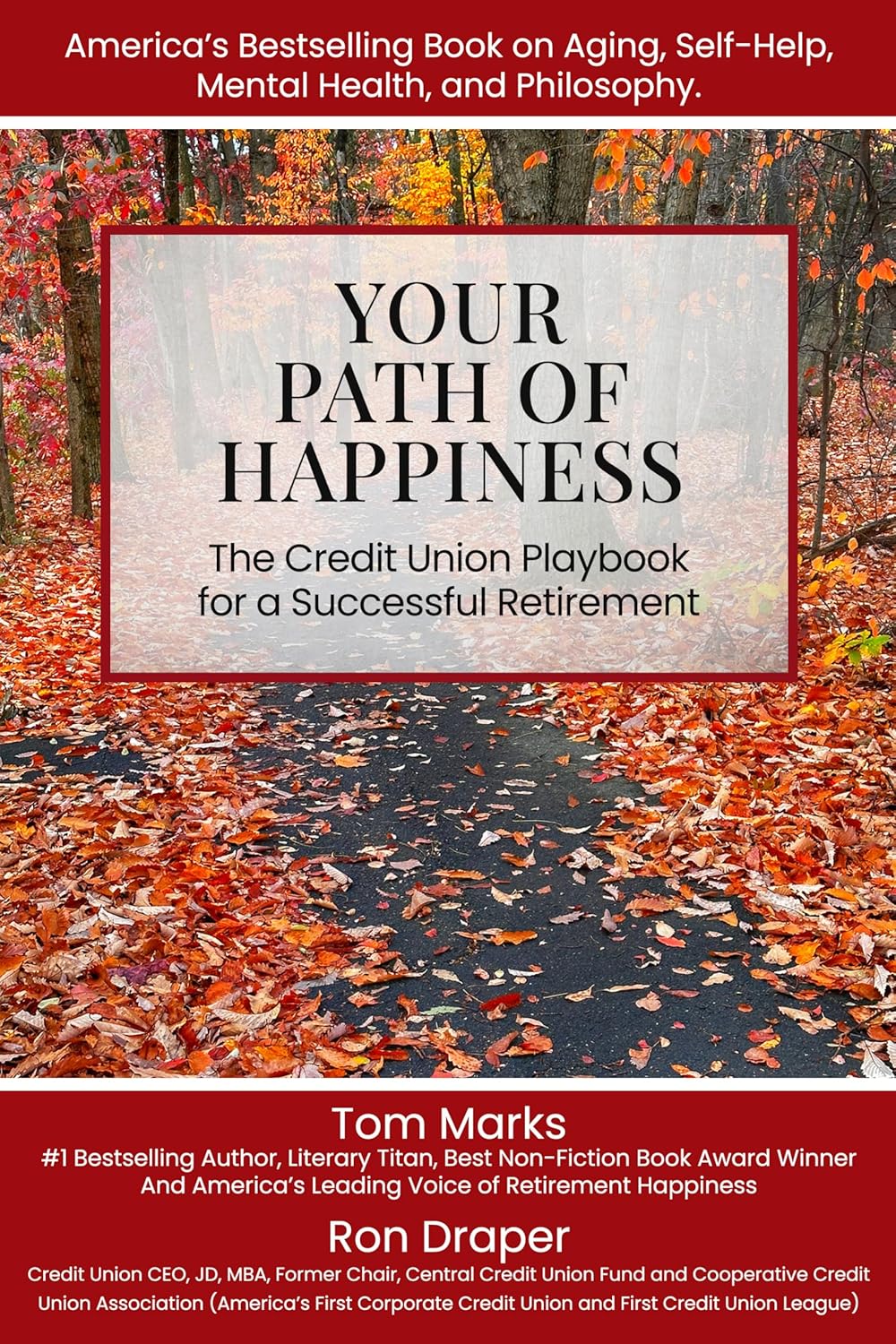

Your Path of Happiness by Tom Marks and Ron Draper is a thoughtful and expansive guide to retirement that argues financial readiness is only the beginning of a well-lived later life. The book moves between history, philosophy, personal reflection, credit union advocacy, and practical emotional counsel, tracing a line from Ninomiya Sontoku’s Gojoukou and the idea of hōtoku, or repayment of virtue, to modern credit unions and their responsibility to older members. At its heart, though, this is less a manual about money than a meditation on identity, gratitude, simplicity, self-empathy, creativity, and the difficult question of who we become when work no longer tells us who we are.
Marks and Draper write with a looseness that can be funny, tender, and unexpectedly piercing, especially when they talk about the emotional disorientation of retirement. Tom’s struggle with lists, schedules, and the hollow ache of losing professional purpose felt honest in a way many retirement books avoid. I also admired the book’s insistence that happiness isn’t something retirees arrive at after checking off a bucket list, but something practiced daily through smaller, humbler gestures. The gratitude lists, with their hummingbirds, mountain views, family names, and ordinary domestic comforts, gave the ideas texture. So did the recurring stories of credit unions as places of continuity, whether through Ron’s childhood memory of root beer lollipops or the book’s broader reverence for institutions that remember people across decades rather than transactions.
I liked that the authors aren’t afraid of odd angles, such as the “hamster wheel” of retirement busyness, the danger of possessions becoming a second career, or the beautifully eccentric Rule of Two Trees from the Samuel Jurkovič Peasant Cooperative. Those moments give the book a moral imagination beyond standard retirement advice. Another strength of the book is its generosity of perspective. Marks and Draper don’t treat retirement as a private puzzle to be solved alone, but as a shared human passage shaped by family, community, memory, and service. I appreciated how the book widens the frame beyond individual planning and asks institutions, especially credit unions, to see retirees not as a declining demographic but as people still rich with purpose, wisdom, and belonging. That sense of social responsibility gives the book a deeper moral weight, making its advice feel less like self-improvement and more like an invitation to care better for one another.
I came away from Your Path of Happiness feeling that its real subject is dignity. Retirement, in this book, isn’t a retreat from usefulness but a chance to recover a truer rhythm, one shaped by gratitude, creativity, generosity, and a less punishing relationship with the self. The book succeeds because it treats happiness not as a slogan, but as a discipline of attention. I’d recommend it to retirees, people approaching retirement, credit union leaders, and anyone trying to understand the emotional weather of later life with more patience and grace.
Pages: 335 | ASIN : B0H2WQ7WSG



