Blog Archives
Navigate the Emotional Terrain

Downriver shares your story, starting with your childhood in Florida and continuing through the invasion of Iraq, the collapse of your marriage, and the aftermath of a Wall Street crash—all woven together with heartfelt prose and stirring poetry. Why was this an important book for you to write?
Downriver began as something deeply personal—a collection of journal entries and poems I wrote over the years to process grief, trauma, and the disorientation that came with life after war. At first, I wrote it for myself. It was never about creating a book; it was about survival. Writing became my way to navigate the emotional terrain that followed combat, heartbreak, and the collapse of what I thought life was supposed to look like.
For a long time, the manuscript sat untouched. But as I watched more veterans take their own lives, I felt a responsibility to finish it—not just as a form of personal closure, but as a way to contribute something honest to the conversation around healing, identity, and hope. I waited until my youngest child reached adulthood before publishing. I needed the time and distance to share something this vulnerable with the world. In the end, I wrote Downriver because I had to. I’m sharing it now because I believe it might help someone.
What was the most challenging part of writing your memoir, and what was the most rewarding?
The most challenging part was learning to shift from writing for my own catharsis to crafting a story that others could truly connect with. In the beginning, I was still working through many of the emotions tied to my experiences, and that made it difficult to shape a clear narrative. It took time—and distance—to move from simply processing events on the page to telling a story with structure, rhythm, and emotional accessibility for the reader.
The most rewarding part has been the connection it created—first with friends and mentors who read early drafts and offered honest feedback and encouragement, and now with a broader audience. Knowing that my words might resonate with someone else, especially another veteran or anyone navigating loss or identity, gives the project purpose beyond my own healing. If Downriver helps even one person feel seen or less alone, that will be the greatest reward.
How has writing your memoir impacted or changed your life?
The writing process has unfolded over decades—it’s been a companion through the many seasons of my life. In revisiting old journal entries and poetry, I could see not only how my writing evolved, but how I evolved as a person. Writing Downriver gave me the space to reflect on where I’ve been, what I’ve endured, and how my perspective has shifted with time.
It taught me to embrace life’s unpredictability—to see it less as a straight path and more as a river, full of twists and turns that shape us along the way. More than anything, it helped me reconnect with what truly matters: family, purpose, and peace of mind. Writing this memoir didn’t just help me make sense of the past—it helped me let go of it.
What do you hope is one thing readers take away from your story?
In writing Downriver, I tried to “show, not tell”—to invite readers into the story rather than prescribe what they should take from it. In that way, the book often feels like a kind of Rorschach test: what you see in it may reflect where you are in your own journey, or where you’ve been. Everyone brings their own lens, and I welcome that.
That said, my hope is that Downriver prompts readers to reflect on their own lives—to find moments of connection, resilience, or healing within the story. And if it helps even a few readers deepen their sense of empathy—for veterans, for family members, or even for themselves—then I’ll consider the book a success.
Author Links: GoodReads | X (Twitter) | Facebook | Website | Amazon
Downriver: Memoir of a Warrior Poet
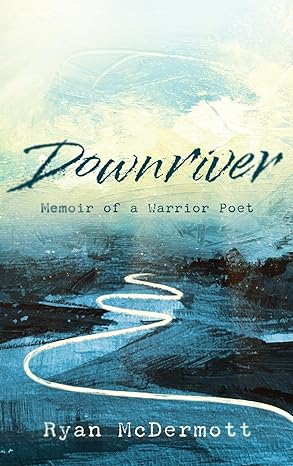

Ryan McDermott’s Downriver is a gripping, soul-baring journey through war, love, loss, and redemption. Told with brutal honesty and poetic depth, the memoir follows McDermott from his childhood in Florida through the invasion of Iraq, the collapse of his marriage, and the aftermath of a Wall Street crash—all woven together with heartfelt prose and stirring poetry. What sets Downriver apart is how it tackles both battlefield chaos and the quiet devastation of postwar life, showing that the real war often begins once the uniform comes off.
Right away, I was pulled in by how personal this book feels. McDermott doesn’t hold back. He opens with a harrowing moment—bruised and bloodied after a home invasion, alone in a city apartment, stripped of everything but memory. That raw vulnerability never lets up. He takes us through childhood in a fractured home, trying to make sense of who he is without a father. Chapters like “Foreclosing of a Dream” hit hard; the foreclosure wasn’t just on a house, but on his sense of stability and identity. It’s not often you read a military memoir that starts this far upstream, and I appreciated that McDermott let us walk with him through every bend of the river.
The writing, at times, just knocked the wind out of me. His use of poetry throughout—like the haunting “Remains of the Night”—adds emotional punch in all the right places. When he writes about leaving for war in “Saying Goodbye,” or about the surreal emptiness of returning home in “Coming Home,” I didn’t feel like a reader. I felt like I was there, sitting beside him, taking the same blows. His style is clean and unpretentious, yet layered with meaning. Even the way he describes seemingly mundane things—like living off canned tuna in a DC apartment—feels heavy with metaphor. This guy doesn’t just tell you what happened. He makes you feel why it mattered.
That said, it’s not all poetry and heartbreak. There’s grit here. There’s leadership, courage, and a whole lot of failure-turned-growth. I loved the chapters about his early military training, particularly “Becoming a Leader.” The scenes of combat are vivid but not glorified, and what stuck with me wasn’t the action but the moral gray zones, the toll on the soul. I saw echoes of The Things They Carried and even a bit of Catcher in the Rye, but with more sand, steel, and stock market crashes. When he pivots into his postwar life—working at Lehman Brothers during the 2008 collapse, then spiraling—it’s not a smooth arc. It’s jagged, messy, human. Just like real life.
In the end, this book left me with a deep respect for what veterans face—not just in uniform, but in the years that follow. Downriver isn’t just about surviving war. It’s about surviving everything after. I’d recommend this book to anyone who wants to understand the emotional aftermath of war, or who’s ever felt lost and tried to find meaning through pain. It’s a must-read for fans of memoirs, veterans, poets, and anyone wondering what resilience really looks like when the river turns dark.
Pages: 294 | ASIN : B0DYRH1GLN



 LITERARY TITAN