Blog Archives
Moral Danger

The Founding Scroll follows a ledger-trained merchant’s daughter who accidentally touches a run-shifting guild scroll labeled Vow of Accord / Twelfth Hand, leaving her Oathbound and forging the beginnings of the Vowforged. What was the inspiration for the setup of your story?
The inspiration came from a blend of gaming, anime, and real-life responsibility. I’ve spent years playing games like New World, World of Warcraft, and Elder Scrolls Online, and I’ve always loved how life-skills, crafting, and non-combat systems give players identity and purpose beyond fighting. Those systems feel lived-in, and they make the world believable. I wanted that same feeling in The Founding Scroll.
Anime such as Shield Hero also influenced the story, especially the idea of power that isn’t glamorous or chosen, but forced upon someone who never asked for it. Seren doesn’t begin as a warrior or a savior; she’s trained to track, record, and survive through systems. When she touches the scroll, the power she gains isn’t freedom; it’s obligation. That idea mirrors real life far more than traditional hero narratives.
Seren doesn’t just gain power; she gains public responsibility. How did you approach writing leadership as something morally dangerous as well as necessary?
Leadership in this story is shaped by my own experiences with responsibility, particularly decisions made through co-parenting, where the right choice isn’t always the one that benefits you personally. Sometimes leadership means choosing stability, protection, or fairness for others, even when the outcome costs you something. That tension is at the heart of Seren’s growth.
I wanted leadership to feel exposed and irreversible. Once Seren becomes visible, every decision she makes carries public consequences. There’s no version of leadership where she can please everyone or walk away unscathed. That moral danger, knowing that even the best choice will still hurt someone, is what makes leadership necessary, but never comfortable. Power in this world isn’t about dominance; it’s about carrying the weight of impact.
What role does the in-world codex play for you as a storyteller?
The codex is the structural backbone of the world. As a storyteller, it allows me to build a setting that feels governed rather than improvised. It defines how oaths function, how systems interact, and why consequences exist. Instead of magic being vague or reactive, it operates through rules that characters must learn, challenge, and sometimes exploit.
Beyond the page, the codex represents a larger creative vision. It’s designed to support expansion into multiple formats, whether that’s tabletop storytelling, interactive experiences, or visual adaptations, without losing internal consistency. I’ve always felt that many fantasy worlds are missing connective tissue between mechanics and meaning. The codex lets me fill those gaps, creating systems that feel discoverable, intentional, and alive.
Where does the story go in the next book, and where do you see it going in the future?
The first book is designed to complete a full rise-and-trial arc. Seren’s journey establishes her as a leader whose influence comes not from force, but from trust, trade, and the systems she helps shape. By the end of the story, she earns legitimacy, but that legitimacy comes with a visible cost. The world begins to recognize that her voice doesn’t just affect people; it affects how power itself moves.
The next book expands the scope of the story while deepening its relationships. As Seren’s influence grows, so does the complexity of leadership, particularly around partnership and responsibility. The world is structured so that growth feels earned, layered, and discoverable, where progress comes from systems, cooperation, and long-term choices rather than brute force. This is also where familiars take on a more prominent role. They aren’t pets or accessories; familiars aren’t pets in this world, they’re reflections of trust, role, and responsibility. They reinforce identity and function, shaping how individuals and groups operate together rather than acting as isolated sources of power.
Looking further ahead, the series explores legacy. It asks what happens when systems, oaths, institutions, and alliances become larger than the people who created them. As influence scales, those systems begin to strain, and Seren must confront whether they can evolve without losing the values they were built on. The familiars, like the people bound to them, become part of that question: what is chosen, what is inherited, and what endures.
Each book builds outward from personal survival, to shared leadership, to long-term consequence, while leaving room for future stories that explore different perspectives within the same world. At its core, the series isn’t just about gaining power, but about deciding what kind of world that power ultimately sustains.
Author Links: GoodReads | X (Twitter) | Facebook | Website | Amazon
Seren has spent her life balancing ledgers, not shaping history. But when she accidentally binds herself to an ancient guild oath—the Vow of Accord—her quiet world is pulled into a system far older and more dangerous than she imagined.
In a realm where contracts shape reality and trust is a form of power, Seren must navigate guild politics, rival merchants, and unseen forces that seek to control what she represents. Leadership is earned, not claimed. Every promise carries weight. And every decision leaves a mark.
The Founding Scroll is a system-driven fantasy about leadership, responsibility, and the cost of building something others depend on. Blending immersive worldbuilding with moral tension, it offers a fresh take on power—one forged through cooperation rather than conquest.
⭐ Perfect for readers who enjoy:
Guild-focused fantasy
Strategic worldbuilding
Moral leadership dilemmas
Progression with real consequences
The Founding Scroll
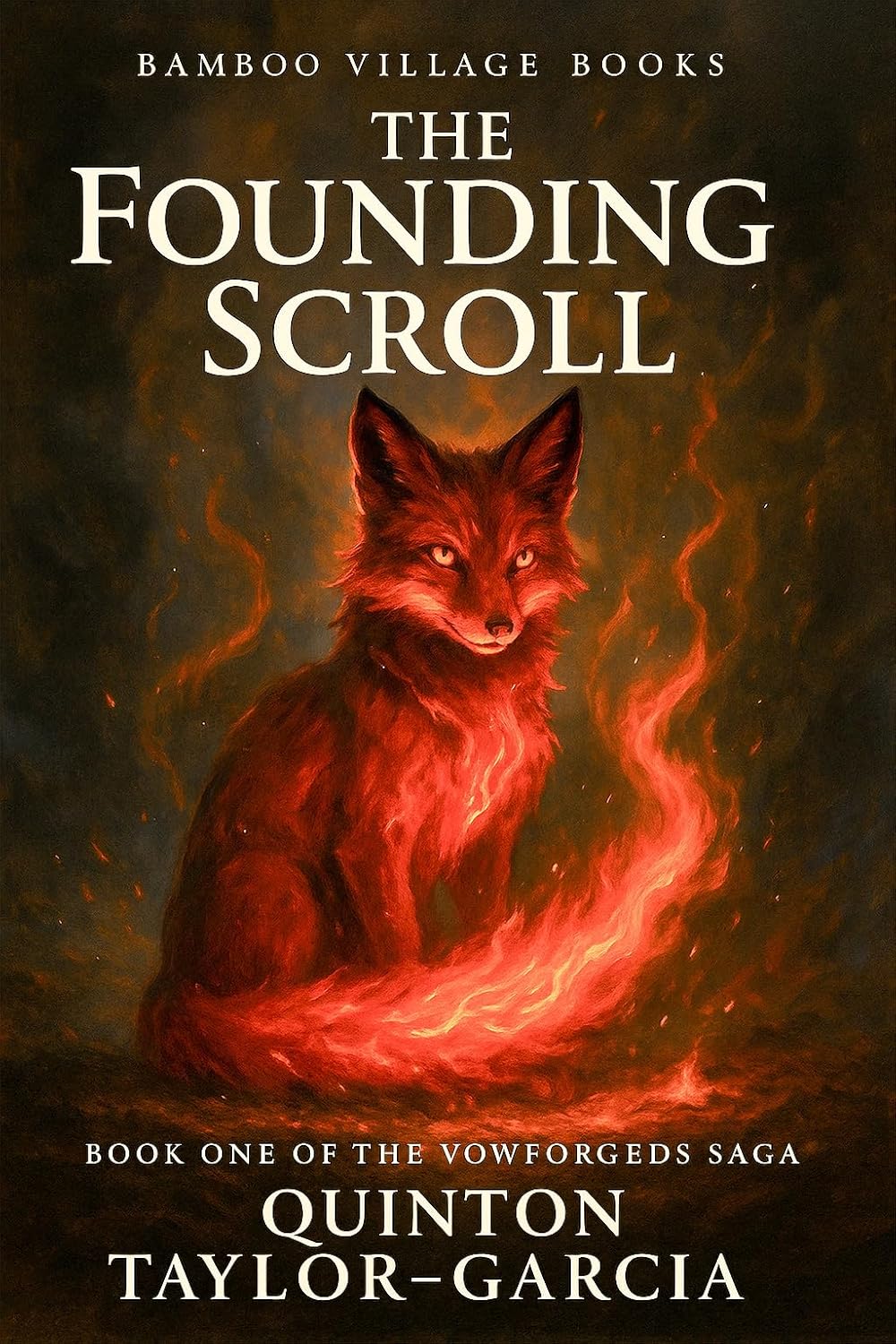

Seren starts as a ledger-trained merchant’s daughter in Ember City, practical, tired of being small, and then stumbles into a document that refuses to stay “just paper”: a cold, rune-shifting guild scroll labeled Vow of Accord / Twelfth Hand with the cheerful warning that “the price burns all.” When she touches it, she becomes Oathbound and accidentally-foundational, forging the beginnings of the Vowforged and learning that in this world, contracts aren’t metaphors, they’re leverage you can feel in your bones. The story escalates from street-level trade grit to guild warfare and road-ambush politics, culminating in a convoy betrayal where Ashmark turns the “collaboration” into bait for Dominion’s masked raiders and their glass-coin smoke. Seren answers by writing survival into the air itself, an enforced cohesion oath that frightens even her allies, while, elsewhere, Corvus watches the board with the calm appetite of someone who enjoys the word due.
What surprised me most was how physical the “bureaucratic magic” feels. The book makes ink behave like weather: pressure, heat, the metallic taste of consequences. When Seren throws authority around, it isn’t a triumphant sparkle-burst; it’s more like biting down on a live wire and deciding you’ll smile through it anyway. I loved that tonal choice. It keeps the power fantasy from floating away on easy hero fumes, every oath reads as a bruise you chose on purpose. And the guild dynamics scratch that MMO itch in a way that’s less “stats screen” and more “social aggro”: alliances form because they’re useful, then turn because usefulness rots. Even the quiet moments after violence land, smoke ribbons, stunned survivors, someone counting heads twice because grief can’t do arithmetic yet.
The lore is deep and detailed, with systems, factions, titles, and mechanics. I kept coming back because Seren’s arc is thorny in a satisfying way: she doesn’t merely “become strong,” she becomes responsible in public, which is a rarer, harder transformation. Her relationships sharpen that conflict: Ronan’s steadiness, Lyra’s prickly competence, Mira’s strange gentleness, Kael’s smile that always seems to be hiding a second smile. And when Seren etches that “Unity Oath” into the night, half rescue, half brand, I felt the moral temperature spike: leadership as shelter, leadership as subtle captivity, the same blade held two ways.
If your shelves are filled with epic fantasy, progression fantasy, LitRPG-adjacent guild politics, hard-magic oaths, found-family under siege, and grim road adventure, you’re the target audience for this book, especially if you like your victories paid in soreness rather than confetti. In spirit, it reminded me of Mistborn-era Brandon Sanderson: the same pleasure of rules-driven power, but with more mud under the fingernails and more menace in the fine print. If you want a fantasy where promises are not spoken but forged, and where the bill is always on its way, this one delivers. The Founding Scroll is a story where every vow is a weapon, and every victory leaves a mark.
Pages: 484 | ASIN : B0GFQBWZQQ



