Blog Archives
A Dark, Morally Ambiguous Story
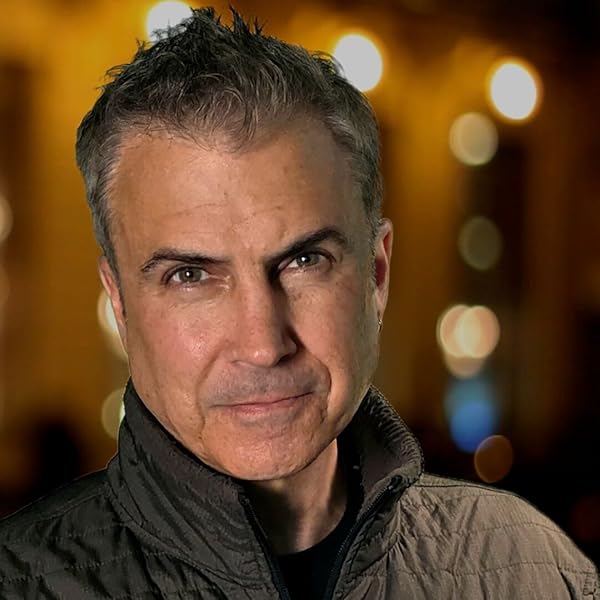
The Grotesque follows three people, each broken in their own ways, who are haunted by childhood trauma and seeking to escape it and control their own futures. What was the inspiration for the setup of your story?
My original concept was to tell a story about three people who each saw the world in very different ways due to their individual experiences. I envisioned a scene of three people sitting together in a café that sat across from a park. In the park would be a father, yelling corrections out to his young son as they tossed a football back and forth. One of the three in the café might perceive a wonderful father-son moment, something they never had as a child. The second might feel disgusted or angered by the sight of a father berating his son for not being good enough. And the third might feel heartbroken by the sight of the young boy, nearly in tears, trying and failing to please his dad, too afraid to tell his father that he clearly doesn’t enjoy football. The exact same sight, but three different perspectives based solely on individual experience.
Of course, this would be a boring scene to write at length, let alone read. But I loved the idea behind it. And the most interesting aspect, to me, was the exploration of how three such people might have very similar backgrounds but react in extremely different ways due to slight differences in their original perspectives. And trauma seemed a fitting place to start since it would create such a larger, more intricate reaction across their entire lives.
I felt that your book delivers the drama so well that it flirts with the grimdark genre. Was it your intention to give the story a darker tone?
I love the grimdark comparison! Yes – absolutely, my intent was always for this to be a dark, morally ambiguous story. The first image I had for this story was the little boy hiding beneath the bed, which became a recurring theme throughout the story. Things were never going to lighten up much from there.
My characters were affected by childhood trauma—physical and/or emotional. So, while what happened to each of them was definitively wrong, their responses to it would always be much less black and white. They’re each responding to the darkness that shaped them, all while living in a society that never stepped up to help them when they needed it most, so they’re naturally going to be skeptical of the world. While they’re dependent on their own survival instincts, they also feel a responsibility to save others from suffering their same fates, but lack the role models to guide them. So it’s fitting that the story would involve characters who do seemingly horrible things, but for reasons they believe are morally good. And some of their decisions will accordingly go very wrong.
What were some themes that were important for you to explore in this book?
There are several themes that I hope will emerge from The Grotesque. Family is a big one, both actual and found. Within that, there’s also the theme of self-reliance and how it may be in conflict with our connection to the world, specifically in seeking help when we need it most. These also impact the ideas of perceived guilt and assumed responsibility.
The biggest theme, though, to me, is the question of how we see ourselves in the world. The person we feel we could be versus the person we think we actually are in everyday life versus the person others see. This gets played out a lot in the Frankenstein comparisons within the novel. And it encompasses the entire story as a question of perspective itself and how it shapes the ways we might interpret the world, ourselves, and each other.
What were some goals you set for yourself as a writer in this book?
There were several variations of this story. In converting the original screenplay version into a novel, I wanted two things: to get it on paper, and to explore all the tiny details of every scene – details that you don’t add to a screenplay. That first novel version was a tad boring and overwritten. It was also light on emotion, which was the point of telling the story in the first place.
For the rewrite, I wanted to find a way to dig deeper into the minds of my characters and to really see the world through their eyes. In other words, I wanted to learn to become a much better writer than I’d previously been. I also wanted to ‘find my voice as a writer.’ You hear that phrase a lot when reading books on writing, and I’d never fully understood it before, until I really started to narrow down what it was that I loved about certain other writers.
I also wanted to free myself from caring how my writing might sit with a general crowd. Of course, I want people to like, even love my book, but it doesn’t need to be everyone. I know my writing style won’t be for everyone. And that’s okay. I needed to do what was right for me and for the story I had to tell.
Author Links: GoodReads | BlueSky | Facebook | Website | Amazon
It was their house. He had no right. No right at all. But that man took what he wanted, just to cap off that sad little boy’s already unspeakable childhood. And for the next thirteen years, that pathetic useless child would cower and hide, hallucinate and obsess. Thirteen years. Until the past started circling back.
This Halloween, one way or another, things are going to change.
Because the focus of that boy’s obsession—that desperate, failing dancer—has an agenda of her own: to escape his watchful eye and rid herself of the volatile boyfriend who takes anything he wants. To live the dream she’s worked so hard to achieve.
For Katrina, Jared, and Michael, every dream for the future is forever chained to the traumas of their childhoods. But it all ends when they become integral parts of a deadly masquerade to absolve the guilt-ridden secrets of the past.
No more living in the shadows. It’s time to spotlight the ugly truth. In a world where the innocent are broken, beaten, and betrayed, everything is a dance. Everyone is the audience.
It’s time to make it or break it all.
The Grotesque


The Grotesque is a dark novel that dives headfirst into trauma, obsession, and the blurred edges between reality and delusion. The story shifts perspectives between characters who are each broken in their own ways. Katrina, a dancer clawing through rejection and danger. Jared, a haunted figure battling inner demons and visions that blur into nightmares. And Michael, a man desperate to control his own narrative. Their paths intersect in a cityscape soaked with menace, hallucination, and fleeting moments of hope. What begins as a tense character study unravels into something stranger, almost dreamlike, where memory and horror bleed together and nothing feels entirely safe.
The writing has a raw, abrasive energy, like it’s trying to peel back a layer of skin. I couldn’t look away. Foy writes with an eye for the grotesque, both in the literal violence that shadows the characters and in the quiet cruelties they turn inward on themselves. Some scenes made me tense up, almost angry, but that anger was directed at the world he was showing me, not at the prose. The language is sharp, cynical, often bitterly funny, and it fits the mood. It’s not elegant in a polished sense, but it’s alive, and I felt its pulse.
There were moments I loved too. Small sparks of connection, odd flashes of warmth, even in the middle of so much darkness. Those moments felt like stolen breaths, like someone opening a window in a suffocating room. They didn’t last long, but they mattered.
Reading The Grotesque felt to me like stepping into the fractured, hallucinatory world of American Psycho, only with more aching humanity flickering beneath the horror. I’d recommend The Grotesque to readers who aren’t afraid of stories that claw under the skin. If you want tidy resolutions or comforting escapes, this isn’t your book. But if you’re drawn to characters who stumble through shadow and survive in fragments, and if you’re willing to sit with unease, you’ll find something here that lingers.
Pages: 348 | ASIN : B0FPLW71S1




 LITERARY TITAN