Blog Archives
The Killing Gene


The Killing Gene is a science thriller with a crime heart, following a genetic research team that stumbles onto something terrifying: a gene pattern linked to violent behavior and serial killers. We watch Dr. Howard Kensington, a grieving father turned biotech founder, build Genican and chase cures for disease, only to end up creating a tool that could help law enforcement hunt down the Red Hook serial killer and maybe predict who might kill in the future. Around him orbit people with their own baggage and secrets: the brilliant and guarded geneticist Tatyana Mirzo, the entitled and connected Kevin Lynn, a powerful old-money family with skeletons in Alaska, loud protest groups, and a hungry reporter trying to connect all the dots. The book moves from lab benches and boardrooms to murder scenes and FBI files, and keeps coming back to one big question: what happens to society if we start treating violence as something written into DNA.
The writing is straightforward, almost chatty in places, and full of backstory. We get whole chapters digging into Howard’s grief after losing his children, Tatyana’s near assault at a college party, and Malcolm Lynn’s brutal history in Skagstown, and those scenes are vivid in a raw, sometimes uncomfortable way. The Red Hook murders are ugly, and the violence can be graphic, but it fits the world the book is building. The prose can be rough around the edges. There are run-on sentences and moments where a tighter edit would have helped the tension land harder. I still found myself turning pages because the characters feel relatable and messy.
What stuck with me most, though, were the choices the author makes around the ideas. This is very much a science thriller, but it reads like a long argument with itself about free will, blame, and what we call evil. The early sections about IVF, “designer” kids, and the search for an “emotional gene” set the stage, and later chapters lean into the consequences: Genican building massive DNA databases for the FBI, activists like Gladys Turner shouting outside the building, and a reporter using leaks and hunches to tie the killing gene to the powerful Lynn family. We see how quickly a medical discovery can slide into surveillance, how tempting it is for governments and agencies to use new tools to sort people into “safe” and “dangerous.” A scene where Maggie lays out her theory that the same pattern shows up in both the Red Hook murders and old Alaska crimes really pulled me in, because it shows how seductive these neat genetic answers can be, even when the human stories under them are chaotic and tragic.
I also appreciated that the book lets its characters wrestle with the ethics in everyday ways, not just in speeches. Tatyana’s trauma around male violence colors how she looks at the killing gene work. Howard’s pain over his children pushes him to take sketchy donations and bend rules because he cannot stand seeing another family feel helpless. The Lynns use money and influence to steer science toward profit and protection of their name. Even the protest leader with her “Leave God’s Work Alone” group is more than a caricature, because you can feel the fear underneath her rage. There are moments when the story leans into melodrama, and the CIA angle near the end ramps the stakes up to almost global-thriller levels, but the core questions stay grounded: if a test said your child had a higher chance of violence, what would you do, and what should society be allowed to do with that information?
I would describe The Killing Gene as a thought-driven science and crime thriller with big ambitions and a lot of heart. If you enjoy stories that blend genetics, serial killers, family secrets, and media intrigue, and you like chewing on “what if” questions about DNA and justice long after you close the book, this will be up your alley. It feels especially suited to readers who enjoy medical and tech thrillers, fans of moral gray areas, and anyone curious about where real-world gene testing might lead if pushed a little further into the dark.
Pages: 200 | ASIN : B0FNXZZS79

When to Fire
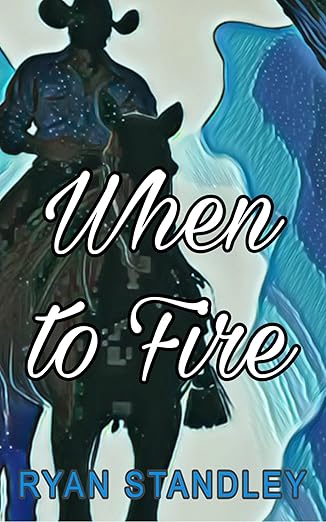
When to Fire, Ryan Standley’s latest novella, is a captivating blend of classic Western grit and mind-bending science fiction. What begins as a traditional tale of a legendary gunslinger on the run evolves into a narrative filled with unexpected twists reminiscent of Planet of the Apes. Standley’s ability to merge these genres creates a story that is both surprising and thrilling. The novella introduces us to a trio of infamous bandits: Chaske, Euna, and Matt Frimm, known as the Pistol Kid. Their exploits across the frontier, robbing banks to fund the Native cause against an oppressive federal government, form the story’s foundation. When a heist goes awry, Chaske is killed, leaving Euna and Matt to navigate a dangerous path of survival, rebellion, and personal discovery—all while chasing the mystery of Matt’s missing parents.
Initially, the plot unfolds with a familiar, almost predictable rhythm. The Pistol Kid channels a Robin Hood-like charm, a rogue with a noble heart hidden beneath his swagger. Euna, too, follows a well-worn archetype of the strong, determined outlaw. Yet, as the story progresses, these familiar tropes give way to something far more intricate. After an audacious bank heist spirals into chaos, the narrative takes a sharp turn. Matt gains access to a mysterious power that transforms him into a “Seer,” granting visions of the past and future. This newfound ability elevates him from a sharpshooting outlaw to a near-supernatural force. Standley uses these powers to craft exhilarating action scenes, where Matt’s precognitive edge allows him to dominate gunfights with uncanny precision, solidifying his place as a larger-than-life hero.
Despite its brevity, When to Fire develops its characters with remarkable depth. Matt’s powers serve not only as a narrative device for thrilling action but also as a lens to explore both his and Euna’s motivations, vulnerabilities, and shared history. Euna’s ultimate fate is revealed early, yet this knowledge heightens, rather than diminishes, the emotional stakes and tension as the story unfolds. Standley’s novella excels as a fusion of cowboy adventure and speculative fiction, anchored by an intriguing central mystery. The hints at a broader mythology suggest a world ripe for further exploration, leaving readers eager for a sequel that could delve deeper into its lore. If there’s a flaw, it’s that When to Fire ends too soon. Its rapid pace keeps the story moving but leaves little time to fully savor the rich world Standley has created. Just as the momentum reaches its peak, the novella concludes, leaving readers yearning for more.
In When to Fire, Ryan Standley delivers a thrilling and imaginative ride, seamlessly blending the grit of the Wild West with the wonder of science fiction. It’s a story that sticks with you, not just for what it is but for the tantalizing promise of what it could become.
Pages: 126 | ASIN : B0DX8CBT8N


