Blog Archives
Technology and Community

Accidental Tribes follows eight students in an experimental school program who must learn to work together while confronting family struggles, digital cruelty, and the hidden agendas of adults. What were some sources that informed this novel’s development?
As the mother of a teenage boy and someone who has spent decades using technology to create positive social impact, I wanted to write for the generation growing up inside the systems my generation helped build but hasn’t quite finished shaping. Questions about identity, belonging, and responsibility became very personal: What are we asking young people to navigate, and how closely are we listening to them?
Teenagers were essential to the book’s development. Every chapter went to a council of teen readers, who marked what worked in green and what didn’t in red. Chapters came back bleeding. I rewrote them. Their responses helped me understand where I was reaching them and where an adult’s assumptions were getting in the way.
My work in technology and community building also shaped the story. I’ve seen how people can use the same tools to create opportunities, hurt one another, or find connection. I wanted those possibilities to live inside a mystery, through choices readers could experience alongside these eight teenagers.
How did the question of meeting one’s future self shape David’s search for stability and Antoni’s struggle to imagine an independent future?
That question asks them to imagine having a say in who they become. It can be difficult to picture a future when so much of your attention goes toward managing the present.
For David, the grounding idea is to pick one thing to hold on to when everything around him seems to be falling apart. He doesn’t have to solve everything at once. Having that one thing gives him somewhere to begin, even while the rest remains uncertain.
For Antoni, imagining his future self opens the question of what he wants for his own life, beyond other people’s expectations. Can he picture an independent future before he knows how to reach it?
I wanted both experiences to leave room for uncertainty. You may not know who you’ll become, but you can find something to ground yourself in and begin making choices from there.
How did you approach Jamie and Patty’s history while allowing Jamie’s desire for friendship to coexist with anger that apologies cannot resolve?
I wanted to let both feelings remain true. Jamie can want friendship and still be angry about what happened. Wanting someone close doesn’t mean the hurt has disappeared, and an apology doesn’t automatically restore trust. Bullies must understand the repercussions of their actions, which can sometimes last for decades.
Teenagers can hold so many conflicting emotions at once. They can miss someone, resent them, want an explanation, and wish things could return to how they were. I wanted not only Jamie, but all Unlucky 8, to have that complexity without being hurried toward conclusion.
With Patty, I wanted room for the person beyond the harm she caused, while still allowing that harm to matter. Their history asks something difficult of both of them: how do you move toward another person when you cannot undo what happened?
What guided your portrayal of Dr. Miryam’s manipulation, especially when her methods complicate the belonging and responsibility she hopes to teach?
I kept returning to the responsibility that comes with having power over young people. Dr. Miryam’s hopes for these students don’t settle the question of whether her methods are justified. Her choices still deserve scrutiny.
There is a contradiction in trying to teach responsibility while controlling what others know and the choices available to them. Belonging becomes complicated, too, when the person offering it also holds power over you.
I wanted readers to question her alongside the students. Adults ask teenagers to be honest, accountable, and thoughtful about consequences. We owe them those same things.
Author Links: GoodReads | Instagram | LinkedIn | Website | Amazon
At an underfunded public school in Times Square, eight teens facing expulsion or worse are given one last chance: Experiment 359, a thirty-day test designed to prove they can change.
Hacked grades.
AI-generated humiliation.
Anonymous social media accounts.
One disastrous week that put them all in the same room.
They aren’t friends. Some are enemies. And none of them trusts the others.
Then they uncover something no one expected them to find. The deeper they dig, the stranger things get.
To save themselves, eight outsiders who can barely look at one another will have to do the one thing nobody expects.
Trust each other.
Because the eight are about to discover one thing no one warned them about: they aren’t the only ones being tested.
Perfect for fans of One of Us Is Lying and Truly Devious, Accidental Tribes is a sharp, funny, digital-age YA coming-of-age mystery book about misfit teens, online identity, grief, second chances, secrets, and the unexpected family you find when everything goes wrong.
Escala’s Wish


Escala’s Wish is a sweeping, bighearted fantasy adventure built around a wonderfully clever premise: a banished pixie must remove the “boulders” obstructing the True Cycle before she can return home. Escala begins her journey believing the task involves literal stones, but every encounter draws her toward a deeper understanding of responsibility, sacrifice, and love. The result feels like a spirited tabletop campaign shared beside a tavern fire, complete with dangerous creatures, ancient magic, lively banter, and a party of companions you’ll quickly enjoy traveling alongside.
Escala herself gives the story its spark. She’s curious, impulsive, funny, wounded, and often gloriously unaware of how strange she sounds to everyone around her. Her repeated declaration, “No one touches the faerie,” begins as a defensive reflex and gradually becomes a moving measure of trust. Roedyn’s steady devotion, Harper’s sharp-edged affection, Sticky’s oddball wisdom, Rihanna’s enduring friendship, and Wigfrith’s irrepressible storytelling each reveal a different kind of love. Together, they turn Escala’s quest into an emotional education that feels earned through shared danger and small acts of care.
David James tells the story through Wigfrith, a gnome bard performing for a crowded tavern, and that framing gives the novel its distinctive personality. Wigfrith interrupts, jokes with his listeners, explains the lore, and reminds us that stories are communal experiences. The adventure itself is generous and exuberant, moving through fey courts, haunted ruins, traveling circuses, monster-filled forests, a dragon’s hoard, and a tower opening onto the Void. Its humor and graphic action sit comfortably beside sincere conversations about grief, belonging, family, and the choices that give love its meaning.
By the final battles, the many threads have tightened around the question Escala has carried from the beginning: What does love actually ask of us? The answer arrives through action, loss, forgiveness, and choices made when everything is at stake. Even amid spectacular magic, the novel’s most memorable moments are deeply personal, from a hand finally accepted to a sacrifice freely offered. Escala’s Wish is a warm, wild, and emotionally generous fantasy that shows the greatest magic begins when love becomes a choice.
Pages: 536 | ASIN : B0G1XRP6DW

Supernatural Protagonists

Rage of the Skinwalker follows a supernatural detective agency during World War II as its unlikely team investigates murder, espionage, racism, and a fascist conspiracy amid the history of the American Southwest. Where did the idea behind this novel come from?
Rage of the Skinwalker builds on the first three books of the Case File From the Nightfall Detective Agency, especially Trail of the Zombies, which delved into what happened to Native American Students at United States-sponsored boarding schools, and combines what is happening with current events involving people who have been detained in camps, even though many have lived here for years or decades, by drawing on what happened to Japanese Americans during World War II.
What did you want readers to experience in the opening chapters?
I want them to enjoy the adventure and mystery while gaining an appreciation of the history of what happened to these persecuted groups in that time period.
How did you approach creating a world in which supernatural beings coexist with historical figures and real events?
I wanted to create a world that would be plausible and believable where our supernatural protagonists are accepted and are agents of justice. Eleanor Roosevelt and Harry Truman were chosen because both figures, while by no means saints, are considered agents of tolerance and inclusion in history.
What was the greatest challenge of writing Rage of the Skinwalker?
Building on the last question, making a believable and exciting mystery-horror tale that does not strain reality, honors the history of the time, while hopefully sending a message to readers about what is going on around them in the present day.
Author Links: GoodReads | X (Twitter) | Facebook | Instagram | Website | Amazon
World War II has plunged the world into darkness. But while armies clash across continents, something evil is moving unseen through the chaos.
Vampire detective Tori Jacobsen and werewolf investigator Abraham Mueller are recruited for a classified government mission. They expect to hunt spies, saboteurs, and traitors. Instead, they uncover impossible murders and a conspiracy reaching far beyond the battlefield.
Every clue draws the Nightfall Detective Agency closer to a terrifying truth. An alliance of evil and greed is feeding on fear, hatred, and war itself, manipulating history from the shadows to forge a future where tyranny can never be defeated.
To stop it, Tori and Mueller must enlist old allies and unravel a mystery before the darkness consuming the world becomes permanent.
Because if evil wins this war…
Reality itself may never recover.
The first thrilling novel in an all-new Nightfall Detective Agency trilogy.
Perfect for fans of supernatural mysteries, historical horror, occult conspiracies, and high-stakes thrillers where the monsters fighting for humanity may be its last hope.
When Darkness falls, Nightfall answers.
The Fight to Save the World Begins Now!
The Dawning

Zoe Nauman’s The Dawning is an ambitious young adult portal fantasy built around faith, free will, and the seductive pull of power. In Amaris, the former celestial Arielle has sacrificed her wings and immortality to guide a collection of increasingly divided clans. Her frustration makes her vulnerable to Abaddon and the dark ruler Sephtis, who transform her into the formidable Sathariel. Meanwhile, a prophecy summons three wounded teenagers from Earth, Fatiha, Cosmo, and Jiyanu, whose blood may provide the key to containing her. It’s a large-scale story filled with dragons, underwater kingdoms, living trees, stone giants, magical gateways, and enough sacred objects to keep the heroes constantly moving.
I think the book’s most compelling idea is that Sathariel’s fall grows from recognizable emotions. Her resentment, loneliness, and desire to be appreciated give the temptation of darkness a personal foundation. The three Yasha reflect that emotional focus in different ways: Fatiha carries the pain of betrayal, Cosmo lives with grief and anxiety, and Jiyanu struggles with anger after witnessing terrible violence. Their experiences make the novel as interested in emotional recovery as it is in battles and prophecy. Nauman also creates some memorable settings, particularly Mariam’s ocean realm, the Vanavashtha forest, and the dragon riders’ mountain home. The multilingual names and spiritual traditions give Amaris a deliberately multicultural identity, while the scene in which leaders of several Earth religions unite against Sathariel makes the book’s message especially clear.
Readers of Madeleine L’Engle’s A Wrinkle in Time will recognize a similar blend of interdimensional adventure, spiritual symbolism, and young people confronting a darkness that thrives on fear and conformity. Like L’Engle, Nauman treats love as an active force. Her approach is broader and more ensemble-driven, moving among clan leaders, celestial beings, villains, and the three teenagers. That scope gives the story an epic quality, though it also means the opening half carries a substantial amount of mythology, prophecy, and explanation before the Yasha arrive. The prose favors vivid sensory description and states its moral ideas plainly, creating a style that feels accessible and earnest.
What I liked most was the novel’s belief that unity requires choice. The people of Amaris don’t overcome their differences because they suddenly agree on everything. They choose to cooperate because protecting one another matters more than preserving old divisions. The final confrontation gives that principle real emotional weight, and victory comes with a cost that keeps the conclusion from feeling too tidy. The Dawning is a sincere, imaginative fantasy about turning grief into purpose, resisting the appeal of control, and finding strength in people whose lives and beliefs differ from your own. It leaves Amaris secure for the moment, while giving the wider series plenty of magical and emotional territory to explore.
Pages: 313 | ASIN : B0GX3CW7R2
The Best of Both Worlds

Disheartened follows a woman living a separate life in 1860 and 2020, remembering everything as she drifts between the two, struggling to protect the people she loves in two different centuries. How did the concept of E.V.E. first develop?
The concept of E.V.E. (Essence Voyager Era ― the inherited gift of having the ability to live two parallel lives on two separate planes of existence as the soul travels nightly – essentially falling asleep on one plane and awakening to a new day on a new plane) came about due to a strange dream I had in the summer of 2009. I immediately started writing the first book in the E.V.E. series, Essence. After it was published in 2011, it grew into a series of four books that centered on Jocelyn (Sidney’s younger sister) and Jackson’s relationship. The Spirit Quest series is a spinoff of the original series, except this series focuses on Sidney’s experience with E.V.E.
Sidney carries the memories of two different lives. What was the greatest challenge in writing her perspective?
The greatest challenge with this particular character and period was researching from both perspectives (North and South) for the 1860 era and trying to offer a varying perspective of the 2020/Covid era experience, which we all lived through.
Foreknowledge plays a central role in the novel. How would you respond to the question of whether knowing the future is a gift or a burden?
Different members of different families who have inherited the gift (or curse) of E.V.E. have expressed their opinions of it. Some believe it to be a gift that allows them to experience the best of both worlds. Others feel it is a curse because despite knowing what the future holds, they are almost helpless to stop it in any meaningful way.
What lies ahead for the Spirit Quest series?
The third installment in the series, Foreshadowed, is due to be released later this year. The span of the novel covers the day after the 1860/2020 presidential elections through the first shots fired at Fort Sumter. It focuses on the personal challenges Sidney faces with the global pandemic, extended family pressure, and navigating increasing political division that is tearing apart the country in both of her lives.
Author Links: GoodReads | X (Twitter) | Facbook | Website | Scarlett Ink Publishing | Amazon
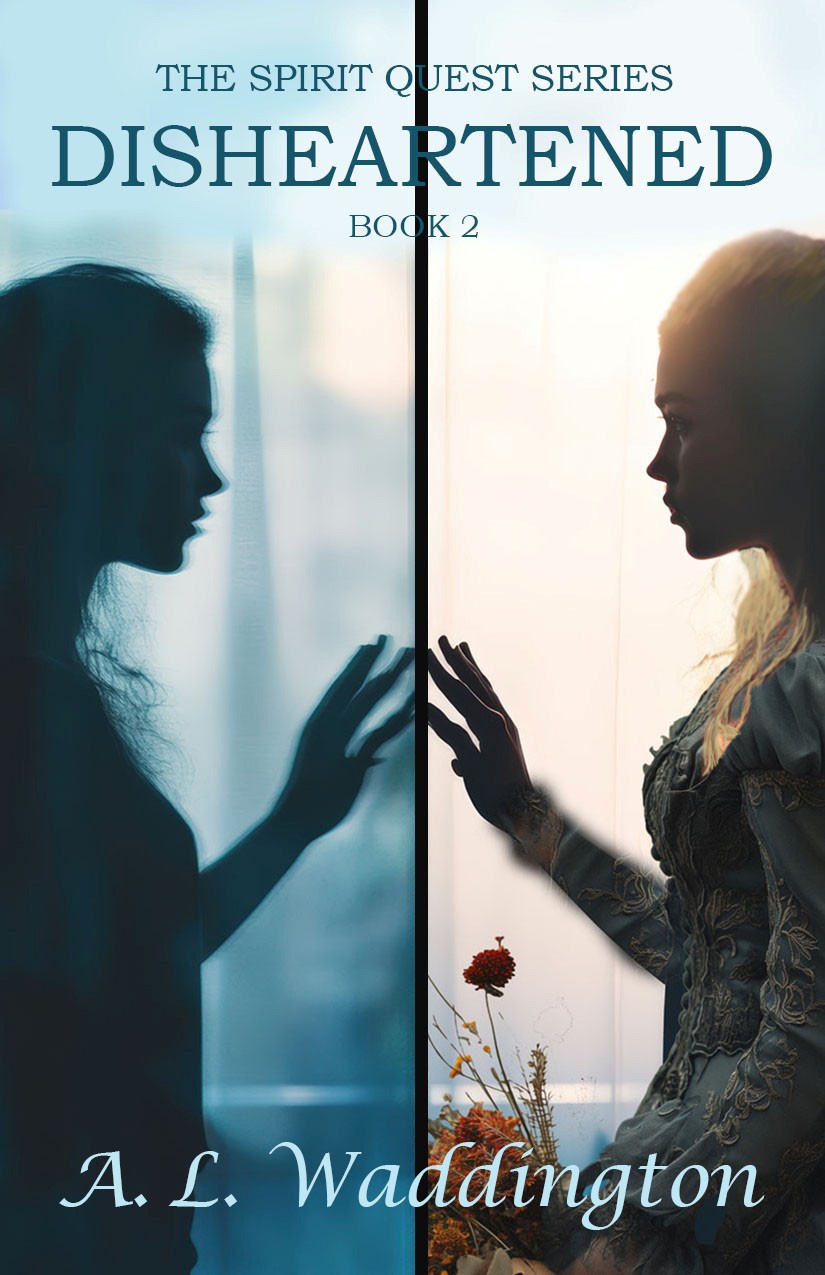
Gifted or cursed with the inherited ability of E.V.E., Sidney is forced into the inconceivable ― her 1860 self-watches on the eve of the American Civil War as the Northerners and Southerners dismantle the fabric of the nation. Whereas her 2020 self-witnesses the extreme Progressives and Liberals under the guise of the Democrat umbrella shred away the decency of the American Culture on a world-wide stage and making the USA the laughingstock of the globe.
Sidney is heartbroken watching everything her loved ones and countrymen from her other life fought to preserve be undone by a minute mindless minority of entitled fanatics and a political party so hell-bent on spreading violence and hate, they would rather burn the nation to the ground than relinquish power.
But what can she do? Can one small voice change the mind of millions with hate in their heart? Can she find her way back to the solace she once treasured in both her lives?
A Gray Cat Showed Up One Saturday

The Great Contagion follows an ancient, sharp-witted cat with a human soul who helps a man confront a deadly sickness sweeping the land. What was the inspiration for the setup of your story?
The idea for The Great Contagion came to me when I was working on Cat Sidhe, another novel in The Merliss Tales series. Cat Sidhe takes place about fifty years after the events in The Great Contagion. I mentioned that the results of a great plague were still visible at the time of Cat Sidhe. After calling attention to this plague numerous times, I decided that I needed to find out what had happened. The result of that exploration was The Great Contagion.
More interesting is the idea for Merliss herself who is based on a real feline. A very thin, sickly, gray cat showed up on our driveway one Saturday and tried to get into our breezeway. We gave it some food and then took it to an emergency vet. The cat had no microchip and was not terminally ill. She was suffering from a respiratory infection, an eye infection, malnutrition, and thousands of fleas. In other words, she needed antibiotics and TLC. A few hundred dollars later, we left the vet with a new cat named Smokey, who was the sweetest lap kitty you can imagine. We never knew how old Smokey was, possibly pushing twenty. She spent her last two and a half years being spoiled by us. Thanks to Smokey, I felt inspired with the idea for an ancient gray cat in a fantasy setting.
What drew you to writing a fantasy centered on healing rather than conquest or warfare?
Many fantasy stories centered on conquest and warfare focus on protagonists occupying the upper strata of society. If you want your characters to directly influence events and you’re dealing with politics and warfare, the characters will need to be in positions of power. I wanted to write stories about characters outside the circles of political and military power and show them dealing with events outside their control, struggling to have an impact on their environment. The healing arts are one area in which a relatively low-status character can impact many others, including high-status characters. Healers also travel through villages and the countryside as part of their work.
How do you build tension in a story that unfolds at a measured pace?
The Great Contagion is composed of numerous subplots that interact and conflict. Some of the subplots center on conflicts and problems related to the people. Others revolve around Merliss, the old gods, and other magical creatures. There is also a subplot involving Merliss and the local cat population. All the subplots are tied together by the contagion, and Merliss is a witness to all the events described. I build tension by staggering high points from the various subplots and planting seeds to set the stage for later scenes of intense action. The level of action increases throughout the book.
What is the next book you are working on, and when will it be available?
The next book in The Merliss Tales series is The Forging of Merliss. The origin tale, this novel is set thousands of years in the past and will tell how Merliss’s spirit came to occupy the body of a cat. I hope to release this book by spring 2027.
Author Links: GoodReads | BlueSky | Website
Merliss is no ordinary cat. She’s a young girl’s spirit trapped in a cat’s body. While the magic that banished her has snatched away her ability to speak to humans, it has given her a life spanning millennia. For centuries she has lived with the cunning folk, assisting their efforts to heal the sick and ward off malevolent creatures. Now a bleeding sickness has thrown the medieval community into chaos.
The cunning man Hailaird and his apprentice Fendrel are in danger from the disease. The life Merliss has worked so long to build is in jeopardy. Before she entered the cat, she had trained to be a shaman. Do her centuries of experience hold a secret to a cure? But disease isn’t her only nemesis.
A pair of malevolent creatures have crossed the moor into the forest, threatening more havoc. With disease and monsters ravaging the land, Merliss is hard-pressed to survive. It couldn’t be worse, until a mob looking for a scapegoat turns its wrath on Merliss. Tooth and claw and magic may not be enough.
Life-Changing Revelation

The Exiled Kin follows a sixteen-year-old Puerto Rican teenager with autism whose world is changed by bullying, betrayal, loss, and the shocking discovery of a truth about the father he thought was gone. What inspired you to create this foundation for the story?
As an autistic author who is also of Puerto Rican descent, I felt it was important to represent my community in my stories. Growing up, I didn’t always see that on paper or on screen, so when I had an opportunity to showcase a character that looked like me, I took advantage of it. Basing my main protagonist, Luke, off my own personal history was easy since I live those experiences in my daily life. An important aspect of autistic individuals is routine, and when that gets broken, disrupted, or upended, it can be difficult to adapt. Luke’s discovery of his father’s whereabouts is a life-changing revelation that would shake anyone’s world. For a teenager with a strong sense of justice and a deep reliance on structure, the impact is even more profound.
How did you approach writing a character whose differences are an important part of him while also showing his humor, strengths, fears, and ambitions?
Authors usually write what they know, and it’s vital to be self-aware of one’s own strengths and weaknesses, and how to apply them so you’re not in a tough situation. An important realization as I got older is that having a disability makes one different, not less. People get so focused on what makes individuals on the spectrum different that they fail to see our similarities. So, fleshing out Luke to showcase his humor, fears, strengths, flaws, and ambitions humanizes him to the reader and thus humanizes people on the spectrum.
The story explores Puerto Rican identity within a late-1990s Tennessee setting. How important was it for you to include cultural experiences, family traditions, and questions of identity in Luke’s story?
I was raised in New England, so I knew and met many people of different backgrounds throughout my young adult life. A highlight of my books that readers have mentioned is that the characters are so diverse that there’s someone relatable for everyone. When it comes to Luke, I felt it was important for the audience to understand his experience as a young Puerto Rican male on the autism spectrum. The best way to do that was to emphasize his family, his culture, and his struggles. Additionally, I grew up in the 2000s when there wasn’t a lot of representation for certain cultures or groups, so making identity a prominent focus in my stories wasn’t mere creative choice; it’s something deeply personal to me.
Can you give us a peek inside the next book in the Looked Down Upon series? Where will it take readers?
So far, I have written and published two books in the Looked Down Upon series, and as I grew as a writer and a person, Luke grew alongside me. I wrote The Exiled Kin right after high school and A Masked Wickedness while in college. Now that I am an adult, we’ll get an idea of what Luke is like as a full-fledged adult in the workforce and what challenges he has to go through in the final book of the trilogy series. Without giving too much away, one of those challenges will involve the Outcasts, a group I introduced in book two. Their return will play an important role in Luke’s journey and the conclusion of the series.
Author Links: GoodReads | X (Twitter) | Facebook | Website | Amazon
But everything changes when Lucas discovers the truth about his father’s supposed death. Furious and determined to bring his deadbeat father to justice, Lucas embarks on a dangerous mission that takes him on a journey of self-discovery and redemption. Along the way, he grapples with issues of faith, love, and the complexities of family dynamics.
Looked Down Upon: The Exiled Kin

Jordan Lopez’s Looked Down Upon: The Exiled Kin is a big-hearted coming-of-age novel that blends family drama, young romance, social conflict, psychological suspense, and a dangerous quest for justice. Set in late-1990s Tennessee, it follows sixteen-year-old Luke Ramirez, an autistic Puerto Rican teenager whose carefully ordered life begins to unravel as he faces bullying, betrayal, grief, and a devastating secret about the father he believed was dead. Luke’s recurring visions of the sinister Masked Haunter give the story an unsettling edge, turning his private fears into a presence that follows him as the stakes rise.
Luke is the clear emotional center of the book. His literal thinking, sensory experiences, anxiety around change, and desire for independence shape the story. Lopez lets him be funny, stubborn, frightened, romantic, angry, and courageous, which gives him the fullness of an actual teenager trying to understand himself. His struggle with faith is especially compelling because it’s tied to concrete losses: his grandmother’s illness, his father’s absence, his family’s secrets, and his uncertainty about whether suffering has any meaning.
The strongest part of the novel is the circle of relationships surrounding Luke. Bonnie and Drew are lively, loyal companions whose teasing and arguments make the friendship feel lived-in, while Luke’s mother and grandmother bring warmth, cultural identity, and generational complexity to the Ramirez household. Bonnie’s fierce devotion gradually becomes one of the book’s most affecting threads. Even Natalie’s mistakes contribute to the novel’s larger interest in guilt, forgiveness, and second chances. The story repeatedly returns to the idea that family can be inherited, chosen, repaired, and sometimes painfully confronted.
Lopez tells the story with an earnest, direct style that keeps the emotions close to the surface. The plot moves quickly through school confrontations, romance, bereavement, institutional prejudice, domestic abuse, and physical danger, creating the heightened momentum of a young adult adventure with the emotional intensity of a family melodrama. Some characters are drawn in broad strokes, but that boldness suits a story built around moral choices and urgent consequences. The later chapters, in which Luke and his friends pursue the truth about his father, bring the book’s themes together in an action-heavy climax that tests Luke’s courage without separating it from his vulnerability.
At its core, Looked Down Upon: The Exiled Kin is about a young man discovering that being supported doesn’t make him dependent, being afraid doesn’t make him weak, and being autistic doesn’t place any limit on his capacity for love, purpose, or heroism. Lopez has written an intensely personal story that speaks openly about exclusion while celebrating loyalty, self-advocacy, cultural pride, and the difficult work of moving forward. With fierce heart and hard-won hope, Looked Down Upon turns an exiled boy’s search for belonging into a powerful declaration that no one is defined by the people who underestimate them.
Pages: 316 | ASIN : B0CCHKXMFY


