Blog Archives
A Story of Great Courage

Winter Comes in June is a post-apocalyptic sci-fi novel that weaves survival, science, and sorrow through the fractured memories of a family navigating life after an asteroid shatters Earth. What inspired the choice to tell the story through diaries and multiple family perspectives?
I have always wanted to write a dynamic and interesting post-apocalyptic novel where family members share their experience through their memories recorded after an Extinction Level Event. The inspiration to tell the story this way came from another science fiction novel written by a writer, Sheri Tepper, titled The Visitor. It also dealt with a world shattered by an asteroid impact. I felt that by telling this story through several individual voices adds depth to each character and makes them more sympathetic.
How did you balance the technical accuracy of the science with the personal emotional arcs?
In preparation to make this novel a reality, I read several fiction and non-fiction books dealing with asteroid impacts and their awesome destructive power that affected our planet’s evolution in the distant past. The personal emotional arc for each character is unique. Their reaction to the imminent asteroid collision and the life after the impact is also deeply personal. I tried to project realistic human emotion into the story, to make it character-driven. This is a story of great courage in the face of apocalyptic horror and the triumph of the human spirit. In my novel, everyone is touched by a world-shattering tragedy that my characters are able to overcome by their strength, their will, and their humanity.
Did you base the lunar Armstrong base or the Amira Event on any real scientific models or speculative research?
The lunar base Armstrong in my story was partially based on several proposed NASA projects since the first landing on the Moon in 1969. The original NASA plans were to build a permanent manned science base on the Moon. There were several interesting proposals, which were scientifically well grounded but were ultimately canceled because of the lack of proper funds and the danger of long-term exposure to the low gravity of the Moon, which would have had many negative effects on the astronauts’ health. The Amira Event described in my novel is, of course, purely fictional, but is based on the solid scientific data on what an asteroid this size can do if it had struck Earth. The rock that supposedly had killed the dinosaurs was only five to six miles long. In my story, the Amira asteroid was twice as big and caused much more damage.
What do you hope readers take away from the emotional aftermath portrayed in the story, beyond the survival elements?
In my opinion, a good book, just like a painting in a museum or a good movie, must provoke an emotional response. Skipping the survival elements, where the reader can reasonably guess the characters’ motivation and personality, I hope that the readers can take away with them the strong emotional impact and try to place themselves in the fictional character’s position. I believe that my readers will find inspiration from the main characters through their words and actions that often speak louder than words. I also hope that they can learn that no matter what happens, one must never abandon hope. I would also advise them to remember the ancient Greek myth about Pandora’s Box. When she opened the box out of curiosity, all the terrible things came out into the world. But at the bottom of the box, the Hope remained. Our species has survived many great catastrophes and challenges in the distant past. I hope that we are better prepared to face any type of disaster and emerge from it deeply scarred but ultimately victorious.
Author Links: GoodReads | Amazon
Winter Comes in June
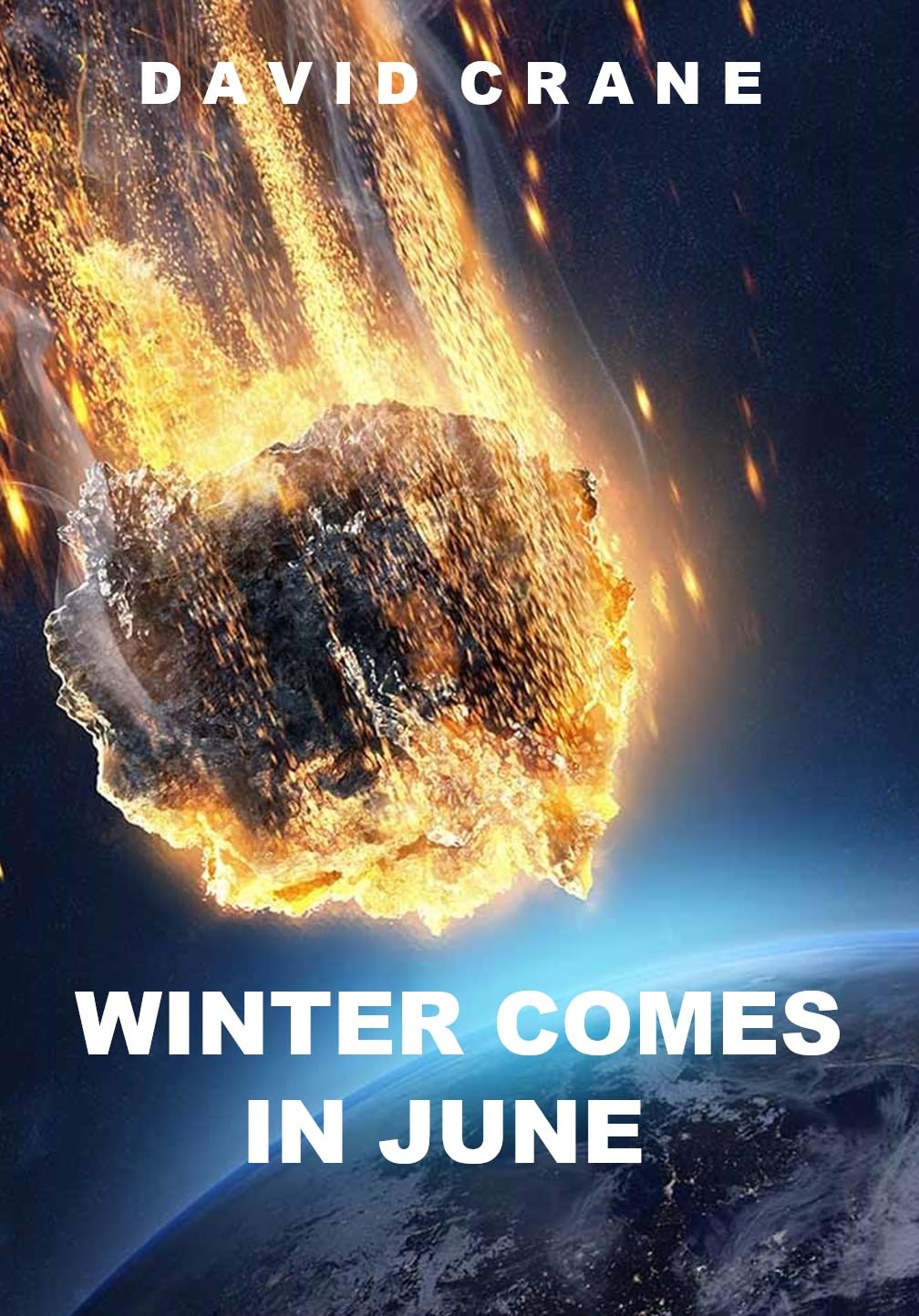

Winter Comes in June is a gripping and emotionally charged sci-fi survival novel that blends hard science with raw humanity. Set in a post-apocalyptic world scarred by the devastating Amira Event, a massive asteroid strike, the book unfolds through the voices of Sunday Rain and her parents, Oksana and Michael. The story moves between the sterile safety of the Moon’s Armstrong base, the grounded resilience of life on Earth, and the reflections of survivors trying to rebuild amidst ruin. It’s a chronicle of love, legacy, and loss as told by a young woman trying to understand the past by reading the diaries of those who lived through the unthinkable.
What struck me first was the immediacy of the voice. The writing is blunt, sometimes even crude, but in a way that feels honest and necessary. The characters speak the way real people might in a world gone sideways, candidly, with humor and despair all tangled up together. The author doesn’t waste time dressing things up. Instead, the rawness of the narration pulls you in. I felt like I was sitting beside Sunday or watching Oksana float down a Moon corridor. There’s something deeply personal in how the characters observe beauty, process trauma, and navigate love and fear. It’s not tidy, and that’s what makes it believable.
What also stood out to me was the heart behind the science. The book is packed with believable technical detail, from lunar base life to asteroid composition, but it never lets the science drown out the human stories. Michael and Jenny’s romance is sweet, grounded, and tender. Oksana’s guilt and pride as she watches disaster unfold from afar is gutting. The scenes between characters, whether they’re sitting at a breakfast table or staring up at the sky, hit harder than any explosion or battle could. The asteroid might be the monster in the sky, but it’s the people who give this book its weight.
Winter Comes in June is a story about surviving not just a planetary catastrophe, but the emotional aftershocks that follow. It’s not polished or flowery, but it’s deeply moving and hard to forget. I’d recommend this book to readers who like post-apocalyptic fiction with brains and heart, fans of Andy Weir or Emily St. John Mandel. If you want a sci-fi novel that feels less like a blockbuster and more like a diary, this one’s for you.
Pages: 294 | ASIN: B0F9VW85SH




 LITERARY TITAN