Blog Archives
God Is For Us and Not Against Us
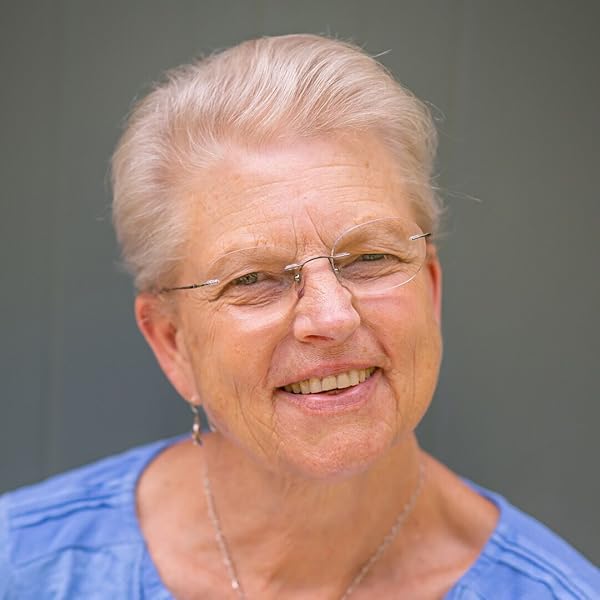
A New Song is a deeply personal, spiritual, and practical guide to reviving love and connection within a Christian marriage. Why was this an important book for you to write?
I wrote this book to dig into my life to rediscover and clarify my experience of the Lord’s work in my life and marriage – what He had taught, and was continuing to teach me about myself, and how He had worked, and was continuing to work in my marriage. We go along from day to day, and it is easy to lose the details of the past. It can be important to go back and recapture and articulate them not only for ourselves, but to share them with others. I had completed a certification program to be a life coach. I wanted to focus on helping Christian women who were struggling in their marriages, as I had. I had always wanted to write a book. This was the perfect opportunity.
I appreciated the candid nature with which you wrote your story. What was the hardest thing for you to write about?
The hardest thing for me to write about was probably my mother’s death and its impact on me. It was very personal, but its impact was so strong and far reaching, I couldn’t leave it out. Our past shows up in our present giving us an opportunity for healing.
What were some ideas that were important for you to share in this book?
The three most important ideas for me to share in this book were the three main topics. The first was that we create our own reality – the reality we experience – by how we think and what we focus on. The second was the importance of releasing everything, including our spouse, to God. Letting go, getting out of the way and trusting Him fully to work. The third was to then focus on our self and our growth – to become more and more the person God is calling us to be in our life and marriage.
What do you hope is one thing readers take away from your story?
I hope readers take away that there is hope. That God is for us and not against us and that if we release our relationship to Him, He will do amazing things!
Author Links: Facebook | Facebook 2 | Website
Do you love the Lord and seek to follow Him in all areas of your life, including your marriage? In A New Song, Miriam Hampton outlines a path to God’s peace, love, and harmony in your relationship with your spouse.
Are you wondering what went wrong after your marriage began so well? If you’re feeling alone, frustrated, unloved, or unsupported, A New Song shares a message of faith for your life. Using biblical principles, this book will guide you to refocus, release, and renew your central relationship.
In your journey through the pages of A New Song, you will discover how to be the catalyst for new love and life in your marriage by:
Returning to love through refocusing
Abiding in the peace of God’s presence, letting go, and letting Him work in ways you could not imagine!
Growing into the fullness of who God made you to be and keeping your marriage growing
Author Miriam Hampton, a certified life coach, has fifty years of experience in her own marriage. Walking with God through Christ, she has seen their marriage grow from a codependent/alcoholic relationship to the happy, healthy one it is today.
Bring new life into your most important relationship today!
Available in Kindle and paperback. Click ‘Look Inside’ to begin reading now.
A New Song
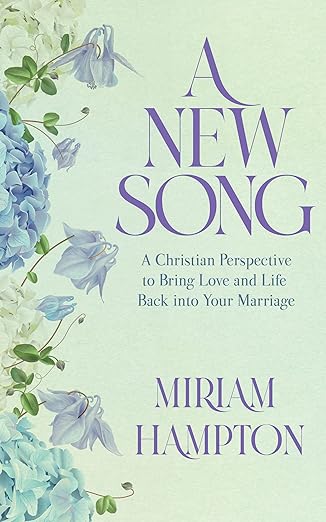

Miriam Hampton’s A New Song is a deeply personal, spiritual, and practical guide to reviving love and connection within a Christian marriage. Drawing from her own journey through addiction, depression, and the slow rebirth of intimacy with her husband, Hampton delivers not just advice, but lived experience. The book is structured around three powerful phases: Refocus, Release, Renew, each meant to bring clarity, healing, and transformation. It’s not your usual “how-to” manual. It’s more of a heart-to-heart, with God right at the center.
One of the most striking aspects of Hampton’s writing is her unflinching honesty. From the very beginning, she invites readers into the idealistic early days of her marriage in the 1970s, an era of creativity and youthful optimism. Yet, she does not shy away from revealing how swiftly those dreams were tested by the realities of addiction, emotional isolation, and personal despair. Her vulnerability is both poignant and powerful. In the chapter titled “Our Past in Our Present,” Hampton recounts a moment so raw, admitting she sometimes wished her husband wouldn’t return home due to his drinking, that it’s impossible not to feel the weight of her anguish. And yet, the transformation that follows, born of faith, reflection, and persistent emotional work, feels deeply authentic and profoundly moving.
I also really loved the section about “refocusing.” Hampton goes deep into the psychology of our thoughts and emotions, especially our brain’s negativity bias. She writes, “What we focus on expands and creates the reality we live in.” It’s such a simple truth, but she explains it with warmth and clarity, not fluff or preachiness. The example she gives, where she catches herself in a negative thought pattern and instead chooses to respond with love, was practical and made me feel like I could do it too.
What surprised me was how seamlessly Hampton mixes neuroscience, scripture, and practical coaching tools. In “Your Brain and You,” she breaks down how subconscious programming affects marriage dynamics without sounding like a textbook. Her conversation around “ANTS” (Automatic Negative Thoughts), inspired by Dr. Daniel Amen, was spot on. I found myself underlining whole paragraphs, especially when she described the spiritual tug-of-war for our focus and how affirmations and gratitude can help us rewire our reactions. It’s the kind of stuff you want to stick on your fridge or journal about.
A New Song is as much about personal transformation as it is about marriage. I’d recommend it to anyone, especially women, who feel like they’re stuck in relational patterns that keep repeating. It’s faith-based, no doubt, but even if you’re not Christian, the emotional truths ring clear. This is for people ready to stop pointing fingers and start looking inward. It’s honest, hopeful, and filled with grace. It gave me not just insight, but courage.
Pages: 208 | ASIN : B0BRBKWP9N

A Happier, Wider State of Mind

The River Beyond the Dam: Shooting the Rapids of Progressive Christianity: A Memoir shares with readers your journey looking for a church that breaks from traditional dogma and focuses on being better community members and climate activists. Why was this an important book for you to write?
In a word, I couldn’t find anything like it. I stumbled into a progressive church almost by accident, encountering an old strand of Christianity so unlike the Christianity I knew (and had rejected) that it blew my mind. Why didn’t I know about this before? The only books I could find along this line were by religious professionals—clergy, theologians—exactly the kind of book I would never have picked up after rejecting the faith.
Yet my new experience was not simply an interesting discovery I wanted to share—it was changing deep thought habits in me. I had an American habit of judging others, of turning sour when disappointed, and trying to live as a modern person, one who sweeps away various disappointing heritages. And these narrowing habits were being replaced by—can I say it? A happier, wider state of mind.
I thought maybe a personal memoir, with a regular person’s findings of what church can be in this real world of ours, might reach and surprise general readers, especially those who, like me, had thrown out the baby with the bathwater.
What were some ideas that were important for you to share in this book?
I wanted to encourage a deeper look at the common conclusion that we would “be better off without organized religion,” even though I tended to agree with some of that, about hidebound religion. I wanted to see if I could get beneath the accrued barnacles of social control that put a few white males on top and get a look at the magnificent whale beneath those metaphorical barnacles. Just as important, I wanted to challenge the idea that, in spiritual matters, solo traveling is essentially the same as traveling with a community. Last, that churches can help pull together responses to the interconnected challenges of our time.
I appreciated the candid nature with which you told your story. What was the hardest thing for you to write about?
Yowza. I was sorely tempted to exclude some of the personal stuff, like my silly overreaction to getting testy at the council meeting. As a worrier type of introvert, I would have liked to keep the personal at arms-length from the discoveries I wanted to talk about. But something told me to bite the bullet—that the story required I get real, get personal.
What is one thing you hope readers take away from your story?
Whether or not you choose church for yourself, I hope that in your activism, whether on the environment or on race and gender equality, you will be open to finding allies in unexpected places. And that your daily life becomes happier.
Author Links: GoodReads | Twitter | Website
She experiences firsthand what she cannot get from a solo journey, including what it is to support Native Americans, and how Black womanist theology can make her a better white ally of Black women. Paddling the river, she is helped around fallen trees of biblical mistranslation and anti-woman dogma. After a cold-water crash, she repairs her canoe and emerges joyful again with a new, more flexible strength. Looking ahead, she follows clues about how the river is changing other churches–renewing and making them better neighbors and climate activists.
The River Beyond the Dam: Shooting the Rapids of Progressive Christianity

Growing up, going to Church was just something I had to do. I did not really understand the purpose, as my mother would drop me off for Sunday school and mass while she went for coffee and bagels with friends, only to return to pick me up. Church was an obligation, and as I grew older, I questioned more and more about it, drifting further off and away. Much like Jean Waight’s canoeing analogies, I felt stuck on a rock or headed for waters that just were not part of the enjoyable experience I had heard about and hoped for. I never felt the close-knit family and support system that everyone told me Church should be. As I grew older, my distrust and dislike for patriarchy and intolerance of LGBTQ+ issues caused me to drift further away from Christianity.
One of the first things readers will notice is the woodblock prints that open each chapter. They are like a small window into what is to come. Reading Jean Waight’s memoir, The River Beyond the Dam: Shooting the Rapids of Progressive Christianity, I felt like I was talking to a friend, someone who really got what I was thinking when it came to Church. Her blunt and direct approach to sharing her story was inspiring. In her book, she reminds readers what the real purpose of community is. It is not sitting in a building singing hymns; it is coming together to improve the community by buying diapers for those in need or taking on the coal industry standing with the Lummi. She does not just accept that men take leadership roles in the Church; instead, she brings feminism to the forefront of the discussion, saying it isn’t enough just to have women in leadership roles; they need to actually be treated as equals and allowed to hold leadership positions over men. Jean actively questions the dogma surrounding religion and holds those around her to higher standards, not settling for the status quo.
The River Beyond the Dam is not a book that readers can pick up and read cover to cover. If they do, they are missing a great deal. Each chapter is a chance for reflection and unpacking preconceived notions. Jean references multiple resources, providing insights that back up her thought process. Providing a full bibliography at the end of the book allows readers to continue their own research and personal journey after reading this memoir. For those who feel the Church is a lost cause, her story offers a glimmer of hope, a chance that, while slow, change can come if enough people put in the work.
Pages: 247 | ASIN : B0C2BGC4N9



 LITERARY TITAN