Blog Archives
Choosing Well In All Of Our Tasks

Remembering Freedom invites intellectually curious Christians and philosophy readers into a conversation about truth, conscience, relationships, happiness, and what it means to exercise freedom well. What do you believe the classical philosophical tradition can contribute to contemporary conversations about human nature?
Philosophy used to progress in more or less a linear fashion. Someone would wonder something about the physical world, come up with a theory which best described what was observed, and develop ideas surrounding this theory. Others in the line of tradition would, in turn, read these theories, accept or reject them for any number of rational or pragmatic reasons, and develop their own theories to correct their predecessor’s which better explained what we could observe. Take for example the notion of a “person” as an individual subject with agency, autonomy, etc. The notion of person we hold today is actually absent from much of classical philosophy; it is a Christian injection in order to explain the Trinity. So, for early Christianity, Plato and Aristotle’s work might have been valuable, but wrong and lacking some key elements that would only be developed later on in light of a new factor (how there could be three distinct Persons within one Being). In this, classical philosophy actually fits the strictest definition of a “science:” humans developing theories to best determine what is observed. Sometimes what is observed changes through better tools, revelation, etc; sometimes what best explains that data changes.
So it progressed from age to age, each generation in conversation with those who had come before – almost never simply accepting but always revising. This tradition of building upon the shoulders of those who came before continued until, in the grand scheme of things, very recently.
In Remembering Freedom, I talk about Descartes and his novel idea to reject everything that had come before so as to somehow establish a mathematically certain base upon which he could really know things. Now, it’s not fair to Descartes to suppose he came up with his novel theory in a vacuum by himself. This idea was already growing and festering among the leading academics and scientists of his day. Descartes is merely the first operable articulation of an idea he himself inherited from his own surroundings. This being said, the skepticism he introduced as the platform from which we are supposed to build is pretty radical – and has remained influential throughout the ages. His Meditations presents something new in several ways. From changing what kind of knowledge do humans consider “real” to how do we get to that knowledge, everything to how we interact with our predecessors was changed, called into question, and, over the course of several years, ultimately rejected for this new position.
Here’s the irony, though. Descartes’ position is that you begin from a place of complete and utter rejection, to come to each fact on your own verification in order to see whether it’s true. His successors, however, don’t largely follow his starting point. They actually enter into conversation with Descartes, begin building upon his deficiencies, and, essentially, “do philosophy” pretty much the same way humans always have done philosophy. The difference between classical and modern philosophy, then, isn’t so much how we do philosophy; the difference is in the underlying premises surrounding epistemology.
Modern philosophy brings up existential questions about human nature that are, in short, absurd – but because of their underlying premises, are difficult to refute. Because of this, allowing the Classical Philosophical Tradition a seat at the table does more than merely provide historical context to philosophy; it allows this school to actually be part of the conversation again. And conversation with those who have come before is pretty universal when it comes to philosophy, classical or otherwise. Classical philosophy challenges the premises prevalent today, and asks questions which avoid the absurdist/invincible pitfall much of philosophy post Descartes has fallen into.
Classical philosophy is not the ultimate gem of answers. It got many things wrong. Descartes and his successors have in fact brought up many valid and legitimate things problematic in classical philosophy, particularly surrounding the subjectivity of human senses and experience. But that doesn’t make Plato and Aristotle irrelevant. Rather than throwing them out, perhaps we should do what humans have always done – revise, add, and cautiously reject. Phenomenology is one such study that has begun to do this, and I look forward to it gaining more traction as the academic world moves forward.
Anamnesis is an important concept in your discussion of conscience. How would you introduce that idea to a reader encountering it for the first time?
Anamnesis is a very technical philosophical term in the Christian tradition, so I think this question is really valid. It is, as you said, important in Remembering Freedom’s discussion on conscience. In fact, it’s such a crucial point in the book that the remembering part of the title is a direct reference to anamnesis, borrowed from the Platonic idea that all knowledge is really a remembering of sorts. Though I like to think of it more as a re-cognating (recognition).
Many people might equate “anamnesis” with “conscience;” and we could forgive those who, in the interest of simplification, try to do so. In fact, for a very first-time encounter with the word, it’s not a bad stab at it: anamnesis is a function of our soul which helps us recognize what is good, and call evil what it is. Sounds a lot like the conscience, when described like that!
The key difference is that word “recognize,” and that’s where conscience and anamnesis take almost parallel roads. Conscience, strictly speaking, is tied to the will. It is what causes me to actively choose the good thing, since conscience seeks to understand the good. Anamnesis, on the other hand, is a recognition and a resonance with the good when I encounter it, as if it were already written upon my soul. In Remembering Freedom, I used the example of buying my Father a Father’s Day card. The conscience tells me it is good to honor my Father on that day (in this case that honor looks like getting him a card), but anamnesis tells me to get this particular card, because in this card I recognize (or realize, or fulfill) my relationship with him. I am simply more myself and can recognize myself as more fully me by doing this good thing – a good thing which is only good because God has ordained it to be so. As I put it in the book, “whereas conscience would have me seek to honor [my father], anamnesis would cause me to honor him according to my personality, which is precaused by the way in which I recognize what is legitimately good.” Conscience does the good, but anamnesis recognizes and encounters it on a deeply personal level.
I do not think that, truly, anamnesis and conscience can be ever fully separated. It’s not really possible to comprehend or talk about one without the other; the difference is subtle – but important. For Remembering Freedom, knowing the good and recognizing it is prior to actually doing it. And knowledge is a deeply personal activity: it is me, a person, getting to know and recognizing another Person, who is God. I do really think that without the Christian element, the distinction between conscience and anamnesis is negligible and perhaps even nonexistent. For my book, it is primarily a recognition of God, the prime good that we all desire in one way or another. And so, even though we see concepts about knowledge and memory as far back as Plato (a pagan), how we deal with it here in this book is something related, but different – and definitively Christian. I think anamnesis is the discussion in the book which comes closest to what some would class theology rather than philosophy.
In the years to come, more work needs to be done to formalize and clarify the distinction between the two and the operation of anamnesis as a function of the intellect as opposed to conscience which is a function of the will.
How can readers move from intellectually understanding these ideas to applying them in everyday decisions?
To start, one might say that there is a danger in intellectually understanding anything. Because humans are both physical and intellectual, we can sometimes suppose that just because we understand something we therefore have risen above the physical reality of that thing. Just because I know that Luke Comb’s song, Ain’t No Love in Oklahoma, for example, gives me a rush of adrenaline, and just because I know the reason for this adrenaline is because it reminds me of the thrill I used to get during rodeo season, that doesn’t therefore mean that I can expect to listen to the song and not feel that adrenaline rush. We could even go into depth about what adrenaline is, what causes it, its affects on the brain, and, through self knowledge, the relative good or bad decisions I personally make when under an adrenaline high. From this I would even know what it means for my mood the rest of the day, whether I should listen to it as a warm up before having a sensitive conversation, winding down for the night, etc.
None of this knowledge, though, makes me immune to the adrenaline rush. Though I might understand what will, could, does, or is happening, the thing itself is still happening around or to me. So it is with more chemical, instinctive realities such as adrenaline; so it is with more anthropological realities such as, you know, having a body. So this is the first point of moving from an intellectual understanding to an application in real life: these intellectually understood realities are not abstract things. They exist here and now, in the life around you, whether you understand them or not. And merely talking about them does not then mean that the intellectual has risen above the physical. The physical reality and consequences of objective reality exist and apply.
I think that word of caution really sums up the mechanism by which readers move from intellectual reading philosophy to “applying” them in real life, too: these ideas are in the here, not the abstract out there. Understanding these things allows us to know what we are looking for here in the real world, and equips us to really recognize what is truly happening.
For readers of Remembering Freedom specifically, remember that this book is constructed around a simple syllogistic premise: a) you are most happy when you choose to do what really makes you happy, b) in order to do that you must be free to actually choose that thing, therefore, c) in order to be free, you must first know (or recognize) what really makes you happy. It might seem like humans are creatures with infinite choices, each with the potential to make them happy; really, though, that’s not the case. It might seem like pleasure is a source of happiness, and indeed pleasure is in itself good; but often pleasure is merely a lesser good, not the real thing your heart was yearning for (that yearning would be, in a sense, anamnesis which recognizes and finds fulfillment when correctly addressed.) While you are shopping and feel the urge to buy all the carbohydrates in sight, are you really wanting carbs? Or are you hungry, and the choice that would make you truly happy is grabbing a small snack to raise your blood sugar and continuing with your predetermined list? Either way, just because you might recognize the reality of what is happening, that doesn’t therefore mean you’re immune to the chemical and physical things influencing your desires in that moment. You can’t understand your way out of reality.
You might think that the questions about happiness in Remembering Freedom are bigger questions than low blood sugar and grocery shopping, but the principles are exactly the same: choosing well in all of our tasks allows us to live as authentically ourselves, unique as we are. “How do I know things?”, “What do I truly want in life?”, and “What inhibits my ability to choose that thing?”, are everyday questions that can apply to our thoughts and actions, big or small. To recognize and apply the intellectual ideas of Remembering Freedom in the outside world, start there.
Author Links: GoodReads | X | Facebook | Website
Remembering Freedom is designed to be both engaging and practical, articulating abstract concepts through real-life stories from marriage, military deployments, and more to show how “abstract” things look in the real world. If you are looking to enter into discussions, or if you find yourself wondering how on earth we got to the point we are at now, Remembering Freedom is the book for you.
Remembering Freedom
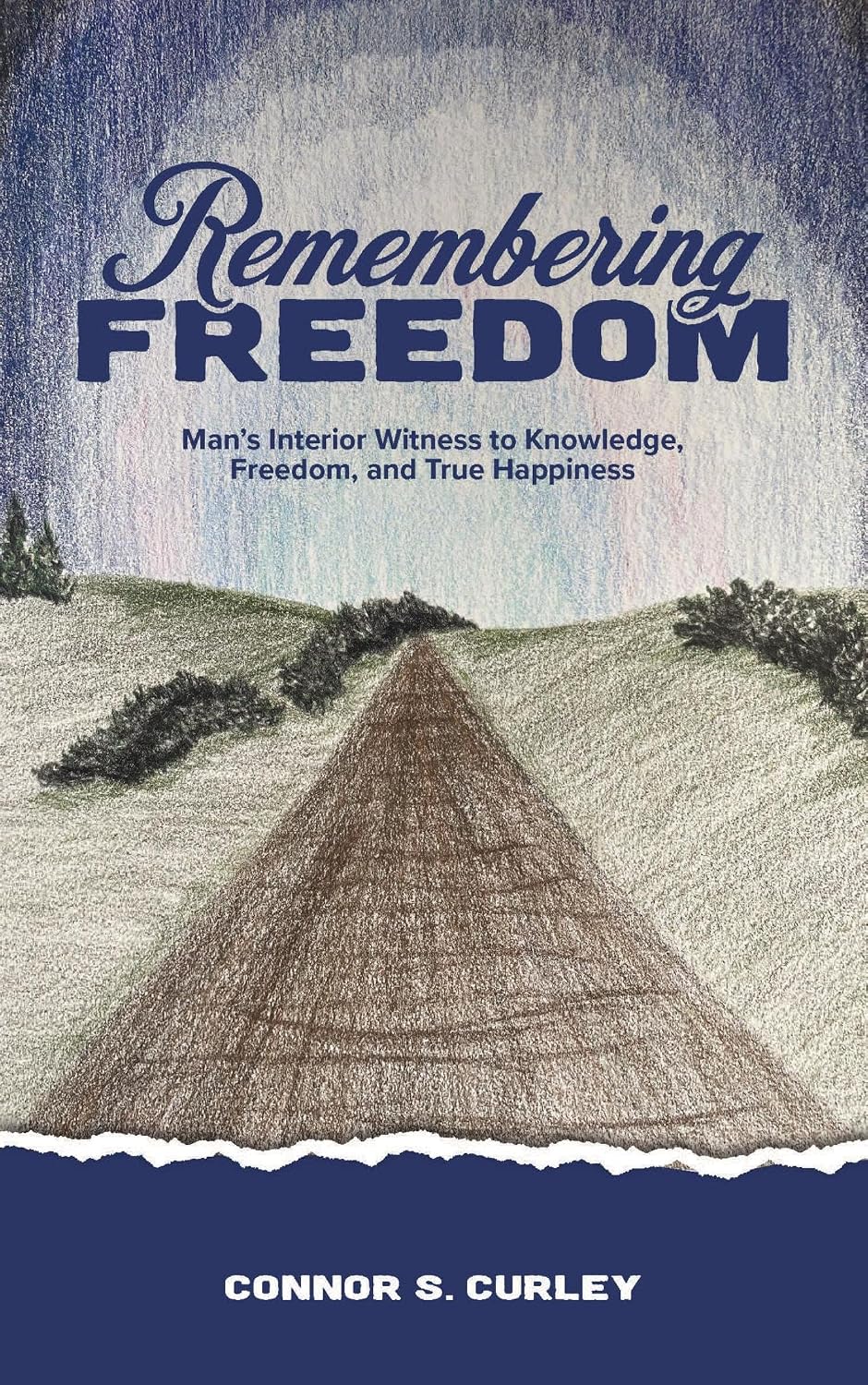

In Remembering Freedom, Connor S. Curley takes on a question that shapes nearly every part of our lives: What does it actually mean to be free? His answer begins with an exploration of how we know what’s true, moves through an examination of human nature, and eventually arrives at the relationship between freedom, conscience, and happiness. Drawing heavily on Catholic intellectual tradition, particularly Thomas Aquinas, Karol Wojtyła (Pope John Paul II), and Joseph Ratzinger (Pope Benedict XVI), Curley argues that genuine freedom is rooted in our ability to recognize and pursue what is good. At the center of his argument is the conviction that truth is objective and ultimately personal, because truth finds its fullest expression in God. It’s an ambitious philosophical project that invites readers to reconsider some of their most basic assumptions about knowledge, personal autonomy, and the purpose of human life.
One of the book’s most interesting features is how Curley connects ideas that we often consider separately. His discussion of knowledge establishes the groundwork for understanding the human person as a union of body and soul, while his examination of conscience introduces the idea of anamnesis, an interior recognition of goodness that directs us toward truth. These concepts come together in his treatment of freedom, where he distinguishes the classical understanding of freedom as the pursuit of the good from the modern emphasis on unrestricted choice. Curley draws on an impressive range of philosophical and theological sources, moving between Plato, Aristotle, Aquinas, Descartes, and more recent Catholic thinkers. His use of stories and practical examples, from the tragedy of Oedipus to a soldier’s encounter with a rattlesnake, helps bring abstract philosophical concepts into everyday experience. These moments are especially engaging because they allow readers to see how the questions he’s exploring play out in actual human decisions.
Curley’s writing has the unmistakable personality of someone who genuinely enjoys a spirited intellectual conversation. He’s comfortable challenging prevailing assumptions, questioning established arguments, and occasionally wandering down an interesting philosophical side road. That conversational energy gives the book a distinctive voice, although the arguments themselves can become quite dense. Readers will encounter substantial discussions of epistemology, teleology, natural law, and the operations of the soul, often supported by extended quotations from other thinkers. Curley’s interpretation of modern philosophy is particularly sweeping, and his account of its relationship to contemporary understandings of freedom invites further debate. He also makes clear that his argument proceeds from a Christian understanding of God, an important consideration when evaluating his conclusions. Perhaps the book’s most compelling thread is its insistence that human beings are fundamentally relational. Our freedom, dignity, and happiness are intimately connected to our relationships with God and one another, a theme that gives the more technical philosophical discussions a meaningful human dimension.
Remembering Freedom will likely appeal most to intellectually curious Catholics and other Christians who want to explore the philosophical foundations of their beliefs, especially those interested in Thomism, personalism, and the relationship between faith and reason. Readers who enjoy G. K. Chesterton, Josef Pieper, or John Paul II will find familiar ideas developed and connected in interesting ways. It would also make a worthwhile choice for a philosophy reading group, particularly one whose members enjoy wrestling with challenging ideas and discussing them together. Some familiarity with classical philosophy or Catholic theology will certainly help, and readers approaching these subjects for the first time may want to take the book slowly. Curley’s concluding reflections on intellectual humility and the importance of genuine dialogue offer a fitting destination for the journey. His larger invitation is to approach knowledge as an encounter with reality and with other persons, and to understand freedom as something that develops through the pursuit of truth and goodness. The book is particularly suited to readers who enjoy conversations that continue long after they’ve turned the final page.
Pages: 237 | ASIN : B0GX35TDFW

SOLAR COASTER: The Untold Story of the Solar Industry and One Man’s Journey Leading with Soul


SOLAR COASTER by Jared Schoch is part business memoir, part history of the modern American solar industry, and part reflection on faith, purpose, and leadership. Schoch traces his path from an ambitious young professional in high tech and corporate energy to an early leader in solar, eventually helping build TurningPoint Energy. Along the way, he explains why the phrase “solar coaster” fits an industry shaped by changing tax credits, politics, utility rules, interest rates, supply chains, technology, and public opinion. What gives the book its personality, though, is that Schoch treats all of those professional twists as part of a larger personal journey. From the beginning, he connects business decisions with the question of what makes work meaningful and argues that purpose should sit at the center of a career.
Some of the most engaging sections for me come from Schoch’s years at SunEdison, where the young solar industry feels unpredictable, competitive, and full of possibility. He describes losing major deals, learning how utilities actually make decisions, developing relationships in rural communities, and eventually winning projects that changed his career. His stories give the reader a useful insider’s view of how solar projects come together through a complicated mix of finance, land, regulation, politics, community support, and persistence. His account of SunEdison’s later collapse also becomes one of the book’s strongest business lessons. After watching rapid expansion, excessive spending, and executive pride undermine the company, Schoch sums up what he took from the experience in five words: “Ego kills great companies.” That line captures Schoch’s larger belief that character and judgment matter just as much as strategy.
The story becomes more personal as Schoch moves through the difficult SOLON years and eventually starts TurningPoint Energy. Building the company becomes the clearest example of his ideas about resilience, disciplined risk, teamwork, and what he calls soul-driven leadership. He recounts putting his own money into projects, enduring years-long development processes, abandoning projects that no longer made sense, and learning how to build a company around talented people who could eventually operate without him. He’s also unusually open about how demanding that kind of life became. The pandemic and his midlife struggles force him to reconsider his health, family life, work habits, and priorities. Those chapters make the business successes feel more complete because Schoch is willing to examine what all that striving required from him personally.
Faith is the thread connecting nearly every part of SOLAR COASTER. Schoch talks openly about prayer, discernment, Jesuit spirituality, generosity, and his belief that God has guided the major turns in his life. His recurring prayer, “Give me the wisdom to see the path, and the courage to walk it,” works almost like a summary of the book’s philosophy. Schoch doesn’t keep spirituality in a separate compartment from business. He presents it as the moral framework behind decisions about employees, partners, money, philanthropy, risk, and eventually his own exit from TurningPoint Energy. The later chapters make that framework even more explicit, with discussions of strengthening the soul, surrounding yourself with “A+ players,” recognizing the importance of timing, and developing a company culture that can survive beyond its founder. His decision to step away at forty-eight, after years of succession planning, gives those ideas a practical conclusion.
What I liked most after reading SOLAR COASTER is how closely Schoch connects the growth of an industry with the growth of a person. The book covers more than two decades of solar development, from an emerging technology struggling for credibility to a major part of America’s energy system, while showing a career changing alongside it. Schoch clearly loves the solar business, including its maddening uncertainty, and his firsthand experience gives the industry sections energy and authority. At the same time, his final measure of success has less to do with megawatts, money, or titles than with whether his work helped other people and whether he followed the purpose he believed he was given. By the end, his exit from daily management, his renewed attention to family and spiritual life, and his continued concern about climate change all feel like natural extensions of the same question that drives the entire book: what should we do with the opportunities, talents, and time we’re given? SOLAR COASTER answers that question through the story of one career, but its real subject is how a person builds a life around work that feels worth doing.
Pages: 272 | ASIN : B0H8DYN9MB
Glimpses of Grace

Glimpses of Grace is a slim book of personal essays that traces Judith Bowen’s life from childhood memories, through motherhood and a long career in occupational therapy, into the tender, uncertain terrain of aging and vision loss. Each essay lingers on a moment that could easily be overlooked: a lizard in the Texas sun, an anxious night waiting for an adopted daughter to arrive at JFK, a blue parakeet chirping in a retirement home, a solo trip to Chicago when her eyesight is failing. What ties these scenes together is her search for “glimpses of grace,” small flashes of connection, courage, and meaning that show up in ordinary days, in loss, in illness, and in the simple kindness of other people. The book is both a life story and a gentle meditation on how we learn to see differently when our literal sight starts to fade.
The writing is straightforward and visual, almost like sitting in a quiet room while someone pulls out old photographs and tells you the stories behind them. Bowen keeps her language simple, and that choice works well with the material. The scenes at the orphanage and in those early days with Mary, her adopted daughter, hit me hard. They felt calm on the surface and very raw underneath, which is not easy to pull off. The essays about her dogs and neighbors could have turned cute or saccharine, but the details save them: the wet blue toddler shoes, the towel over a beloved dog’s face, the way a neighbor’s glasses slip down his nose when he is scared about his wife. The pacing is unhurried, yet that slower rhythm also gives the book its reflective, almost prayerful mood.
What I enjoyed most was how Bowen writes about losing her sight and asking for help. Those chapters could have been technical or grim. Instead, she treats each new limitation as an invitation to another kind of connection. She lets a former student teach her Tejano dance in class. She talks with a young Algerian airport escort about teaching. She trusts strangers to walk her back when she gets turned around on Chicago streets. There is faith in the book, and a sense of the sacred, but it is held lightly, through images and encounters rather than sermons. The theme of “grace” is spelled out clearly for readers. Even with that, the honesty about fear, fatigue, and grief keeps the ideas grounded. She never pretends that transformation is easy, only that it is possible.
I would recommend Glimpses of Grace to readers who like reflective, real-life stories rather than plot-driven narratives. If you are caring for aging parents, living with illness or disability, adjusting to retirement, or trying to make peace with a life that has not gone in a straight line, this book will probably feel like good company. Folks who enjoy spiritual memoirs that are gentle rather than dogmatic, and anyone who believes that small, ordinary moments can change us, will find a lot here. It is quiet, warm, and steady, and for the right reader, that will be exactly what is needed.
Pages: 123 | ASIN : B0FL6XG768
Shooting Up: A Memoir of Love, Loss, and Addiction

Shooting Up is Jonathan Tepper’s memoir of growing up as a blond American missionary kid in San Blas, a rough working class neighborhood in Madrid that became one of Europe’s main heroin markets during the AIDS crisis. He moves from childhood scenes of handing out tracts to yonkis in the park to the birth and growth of Betel, his parents’ faith based rehab community, and then into the years when AIDS, overdoses, jail, and sheer bad luck tear through the people they love. The book blends family story, street life, and spiritual struggle and it slowly tracks how those experiences shape Tepper’s own sense of faith, vocation, and home.
On the surface, the voice is very calm and clear, almost plain, yet underneath I could feel grief and shock moving like a current. Tepper writes about heroin, dirty syringes, and AIDS wards with a reporter’s eye and a son’s heart, and that mix hit me hard. The early chapters, where the kids fold pamphlets at the coffee table and then walk out among needles on the ground, feel almost playful until you realize what you are actually seeing. I liked how he lets small details carry the weight, like the sound of the lifts rattling in a housing block or a junkie’s burnt fingers from falling asleep with a cigarette. The style stays very readable, but it is not simple; it keeps coming back to the same people, the same corners of San Blas, and each return adds another layer of history and hurt. I thought of them long after a chapter ended, as if they were people I knew and might meet again.
I also liked the way the book handles faith and power. Missionary stories often slide into self-congratulation; this one does not. Tepper shows the costs of his parents’ calling on everyone in the family, and he lets the contradictions sit in the open. I admired his father’s courage and stubborn love, and at the same time, I felt uneasy at how the boys had so little say in the life they were given. The book lets me feel both things at once and does not tidy it up with easy lessons. I appreciated that the addicts are never just “souls to save” or cautionary tales; they are friends, tormentors, stand in uncles, people with awful choices and a strange kind of honor. The scenes in the rehabs and hospitals, and the constant roll call of who relapses, who disappears, who dies, left me tired in a good way, like I had walked a long road with them. When the narrative jumps forward, and we see what became of Betel and of Tepper himself, it felt earned.
I came away thinking of this book as both a love letter and a lament. It is a love letter to a very broken neighborhood, to parents who were flawed and brave, and to the addicts who trusted them enough to risk change. It is a lament for the lives that burned out in the years when heroin and AIDS cut through Spain and the state and the church were slow to respond. I would recommend Shooting Up to readers who care about memoir, about addiction and recovery, about faith lived in messy real life rather than in slogans. It will suit anyone who wants a story that is gripping and easy to read but not easy to shake off, and who is willing to sit with pain, compassion, and complicated gratitude all at once.
Pages: 311 | ASIN : B0G1FFWSL9
Seek Him in Faith

Poetry to Ponder: Joy in the Morning – Hope on the Horizon is a deeply personal collection of poems that traces moments of your life through heartbreak, faith, illness, loss, and eventual hope. What first moved you to put these poems together as a collection?
Some of these poems were published in my first book, “Journey to Joy: An Inspirational Memoir”. It is a compilation of poetry and prose. A critique received from another editor was that he would like to see the poems as a stand-alone book. Because I kept writing through new experiences of pain and loss, I decided it was time for a new book. As noted, this book not only focuses on my personal crises but also on the cultural crises we are all experiencing currently. It includes many new poems as well as some previously published ones that happen to fit the overall theme. I also wanted to offer a solution to the human crises, which, I believe, is found in my faith. As I am getting older, I also did not want the poems to be left in my desk drawer. I wanted to share my message of hope with the world while I am still able.
Were there poems that felt especially difficult to write or revisit?
Yes. “Laughing Stock” reminded me of the confusion and pain of not being taken seriously when, as a teenager, my barely formed self-identity was being derailed by vision loss, and no one took me seriously. “No Voice” was also extremely hard to relive. I have forgiven but not forgotten the pain of that experience. The poems that reflect the stresses of single parenting and heartbreak, such as “Heartburn”, “Why?”, and “I Broke My Heart”, all caused me to relive the pain that gave rise to those poems. Recalling my cancer diagnosis is not so painful anymore as I am in my 30th year of survivorship. The memory of abandonment still stings when I re-read “Shattered Joy” and “Deedless Words”.
How do ordinary moments help sustain faith during extraordinary pain?
A visit or phone call from a friend, a moment of laughter, or even recalling some precious interactions with my children when they were small, reminds me that there can be joy even in the midst of tragedy. A moment of humor, even when poked at me, can momentarily alleviate pain. Above all is the knowledge that God is always accessible through prayer and that I can bring my burdens to Him at any time.
What message do you most want readers to carry with them?
Trials and hardships are part of the human condition, but our Creator is never far away and offers help to those who seek Him in faith. Endurance builds character, and our time of suffering is redeemed when we can offer hope and encouragement to others who are currently where we used to be. In God’s economy, pain is never wasted.
Despite the turmoil, division, and unrest in our world, my prayer is that the reader will embrace the grace, truth, and love Jesus offers and experience the joy and hope He promises to those who find refuge in Him.
Author Links: Publisher’s Page

The author accentuates the trauma of personal relational upheaval, as well as society’s brokenness and confusion that create misery for so many. Humanity’s rejection of our Creator’s order–intended for our flourishing–results in chaos and suffering. However, there is promise of hope in restored joy for those who take refuge in God’s solution for the human dilemma.
In the first section, Joy in Crisis, the author bares her soul as she recounts the signs of her failing vision during her early teens, how people reacted, and her embarrassment at their ridicule. She poignantly shares the trials and triumphs of adjusting to her new reality.
The poems move through the devastation of a dysfunctional marriage, divorce, and her journey as a legally blind single mom raising two young children. Her anger and pain are profound and palpable as she cries out to God for relief. When cancer shows up, shortly after divorce and her mother’s death, her agony deepens as she wonders why her prayers are not being heard.
The author’s faith is on display as she struggles through the aftermath of betrayal, the stresses of motherhood and cancer treatment. The deaths of her father and sister intensify her grief. She wrestles with God, unable to grasp all that is happening, but never loses her faith. She surrenders to the realization that God is using these trials to mature her and deepen her dependence on His love and faithfulness. Over time, she begins to comprehend that there is purpose in her suffering, and offers understanding and encouragement to others in their trials.
Several poems on friendship emphasize the importance of a compassionate community in our seasons of grief. Some point out the pain of abandonment by trusted friends who don’t show up when we need them. Others remind us that even in our hard times, we can be wounded healers for those who are grieving.
The strength of her faith is evident as the author recognizes God’s faithfulness despite unanswered questions. She acknowledges that while God has been reliable on many fronts, her finite mind can never fully grasp His plan and purpose, so she must simply trust Him when the answers don’t come.
There are moments throughout the book where humor and lightheartedness alleviate the emotional intensity—recalling funny moments with kids, the author poking fun at herself as she grows old, etc.…
Culture in Crisis highlights the moral and spiritual decline in our world as lawlessness and rebellion increase. Man’s inhumanity to man and the unraveling of our culture are emphasized. The author does not flinch from addressing controversial issues that contribute to the confusion and pain plaguing our society.
Several poems present Biblical truths regarding our Creator’s righteous demand for our allegiance and our willful estrangement from Him. They emphasize God’s love and compassion for mankind, His mercy for those who seek Him, and His just punishment for those who do not.
In Hope on the Horizon, the book culminates in the promise of a final resolution to the human condition—a Holy God’s offer of salvation through Jesus, His Son, sent to bear humanity’s sin and guilt. The message is clear for all who choose to accept it. The promise of ultimate joy and deliverance is available for all who will receive it.
The book is replete with relevant quotations from the Holy Bible, confirming the author’s Christian faith that has carried her through all these ordeals. The closing poems celebrate a joyful future, free from grief or turmoil, one for which every human heart yearns.
Poetry to Ponder: Joy in the Morning—Hope on the Horizon

Poetry to Ponder: Joy in the Morning – Hope on the Horizon is a deeply personal collection of poems that traces the author’s life through heartbreak, faith, illness, loss, and eventual hope. Across three sections, Joy in Crisis, Culture in Crisis, and Hope on the Horizon, the author shares raw moments from vision loss and divorce to cancer and grief, all anchored in her Christian faith. The poems move back and forth through decades of lived experience, showing how suffering collides with belief, and how trust in God becomes her lifeline when everything else falls apart.
What hit me first was how honest this book feels. There is no polish-for-show here. The pain is right on the page. I felt it in poems about broken relationships, motherhood, betrayal, and sitting alone with fear in the middle of the night. Some lines made my chest tight. Others made me nod quietly like, yes, I know that feeling. The writing is simple and direct, sometimes almost conversational, and that worked for me. It felt like someone sitting across the table telling me her story, not trying to impress, just trying to tell the truth.
Emotionally, this book took me on a ride. I felt sad, angry, encouraged, and strangely comforted, sometimes all in the same section. The author leans hard into her faith, especially when facing cancer, divorce, and deep family wounds, and while that may not land the same for every reader, I respected how unwavering she is. Her belief is not soft or vague. It is bold. She talks about God like someone she has wrestled with, cried with, and leaned on when she had nothing left. That kind of spiritual grit stayed with me. I also loved the moments of humor and everyday life sprinkled in, kids making messes, awkward memories, and small joys. Those lighter bits gave me room to breathe between heavier poems.
The book reminded me that suffering does not cancel purpose, and that telling your story matters, even when it hurts. I would recommend this book to readers who enjoy faith-based poetry, anyone walking through grief or illness, and people who want something real, reflective, and hopeful to sit with slowly. This is not a book you rush. It is one you dip into, one poem at a time, especially on hard days. If you want heart, honesty, and a steady message of hope through pain, this one is worth your time.
Pages: 176 | ISBN 978-1-961266-25-4
Redeeming the Post-Affair Divorce: Heal Your Life, Restore Your Faith After Infidelity Breaks Up Your Marriage
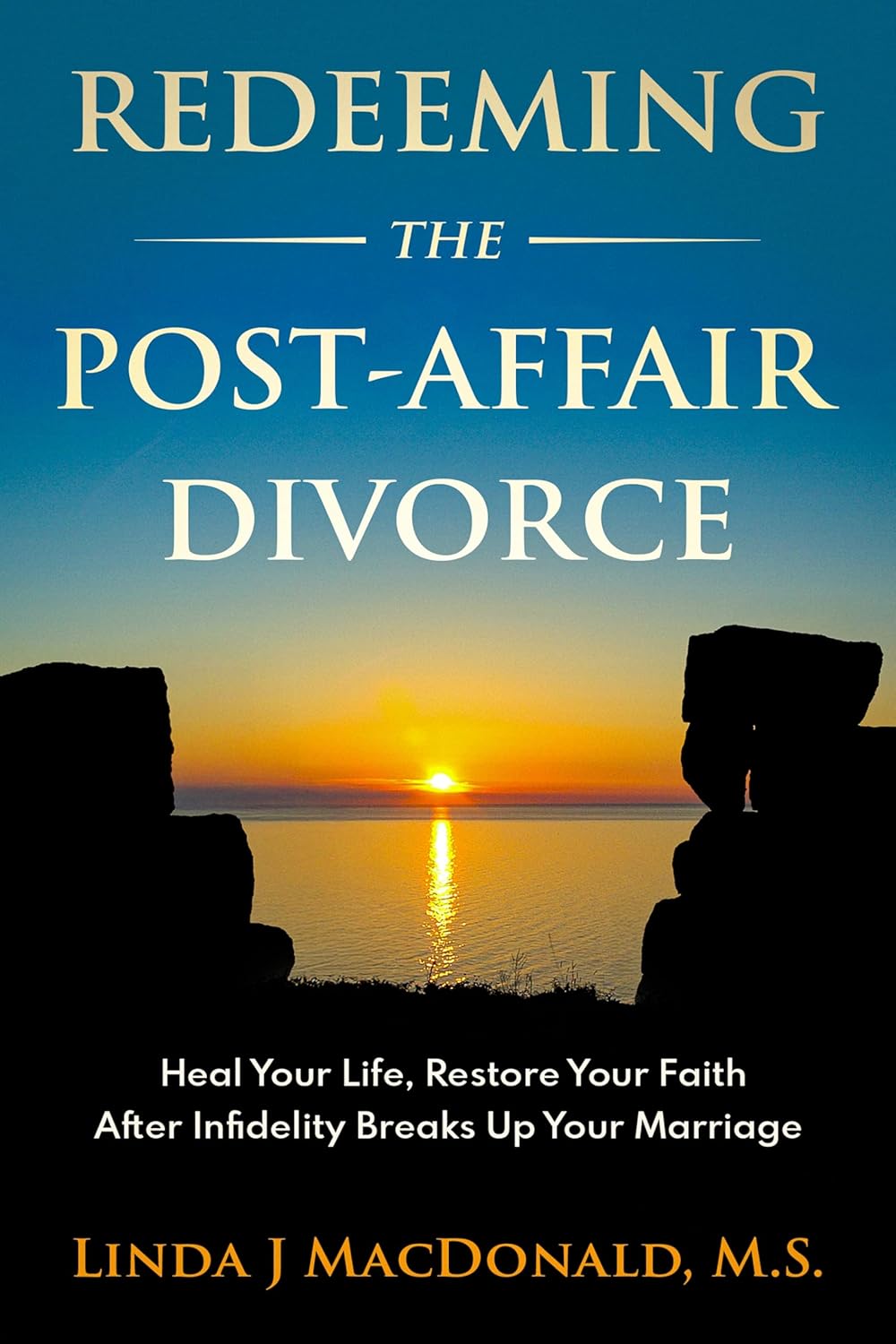
Redeeming the Post-Affair Divorce by Linda J. MacDonald is a faith-forward recovery guide for people who got hit with a one-two punch. Infidelity, then an unwanted divorce. MacDonald maps a healing path in seven big steps, starting with naming the damage and shame, then digging into what drives cheating, then calling out the lies and the mental spin, then rebuilding faith, then working through anger and forgiveness, and ending with a push toward a new life with purpose.
I felt genuinely cared for as I read. The voice is tender and steady. It also feels gutsy. She puts her own story on the page as a hand on your shoulder. I respected that mix of memoir and guidance. It kept things relatable. It kept things real. I also liked her insistence on community and support, not lone wolf grit.
‘SECTION III: Revealing the Source’ resonated with me personally. It made me stop blaming myself on reflex. I have done that for too long. I kept replaying old scenes, hunting for my “part.” This section told me to look under the surface. It flat-out says infidelity rarely happens in a vacuum. I felt relief, then anger, then this weird calm. The whole ‘pull back the curtain’ idea felt true to my experience, and it helped the story make sense. The lines “You were not the cause. You were caught in the fallout” felt like someone seeing me, and removing weight from my shoulders.
The ideas land with force. Some sections were really emotional for me. The book does not play cute with the pain. It names the fallout as huge and lasting, and it refuses to shame the reader for still feeling wrecked. The forgiveness material stood out to me. It pushes forgiveness as a way to get free, not a way to fake peace or invite more harm. I found that framing both brave and sane.
I would recommend this book to Christian readers who feel spiritually rattled after betrayal and divorce, and who want guidance with both heart and backbone. It also fits helpers, pastors, and close friends who want to understand the mess without tossing out cheesy lines. It is not a light read. It is a solid companion for hard days, tearful nights, and the long slog back to yourself.
Pages: 414 | ASIN : B0FTTHJBZZ



