Blog Archives
Reel Racism: Birth of a Divided Nation


Reel Racism: Birth of A Divided Nation is an ambitious, impassioned examination of racism as both a historical machinery and a narrative weapon. Woody R. Clermont begins with human origins and the shared African inheritance of humanity, then moves through caste, feudalism, slavery, Reconstruction, scientific racism, and the cultural afterlife of The Birth of a Nation. The book’s central argument is clear: racism survives not because it is true, but because stories, laws, schools, films, and economies have repeatedly taught people to treat its lies as common sense. Clermont’s close reading of Griffith’s film, especially the way it turns the Ku Klux Klan into redeemers and transforms Black freedom into white nightmare, gives the book its sharpest through-line.
The book is at its strongest when Clermont connects grand systems to intimate wounds, such as the stripped ancestry of Black Americans, the cruelty of being told to “go back” to a place slavery violently severed from memory, or the way Griffith’s burning cross moved from cinematic invention into real-world terror. I found those moments genuinely affecting. They have heat, but also grief. Clermont writes with the urgency of someone who isn’t merely studying a subject, but taking apart a machine that has touched his own life. That personal pressure gives the book a pulse, and when he describes Griffith’s artistry as both undeniable and dangerous, I felt the complexity of that judgment. Beauty, in this book, is never innocent when it’s placed in service of a lie.
The writing is often rich, sweeping, and morally charged, with passages that lean almost sermon-like in their cadence. I admired that intensity. It gives the book force and emotional gravity, especially in the sections on the Middle Passage, lynching mythology, prison gerrymandering, and the conversion of Black bodies into political or economic currency. Clermont ranges from genetics to caste, from Julie Chen’s eyelid surgery to Nathan Bedford Forrest, from Black Wall Street to active citizenship, and occasionally, I wanted a little more compression. Still, the ideas are compelling because they’re tied together by a persuasive moral logic: hierarchy keeps changing costumes, but the hunger to dominate, categorize, and profit remains disturbingly familiar.
By the end, I felt that Reel Racism is less a detached history than a work of reckoning, one that asks readers to see propaganda not as old film stock but as a living force that still shapes policy, memory, and imagination. Its conclusion, with its call for truthful education, economic repair, justice reform, coalition-building, and active citizenship, feels earned because the book has spent so much time showing how deep the damage runs. This is a thoughtful and fiery book, and I’d recommend it to readers interested in race, American memory, film history, Reconstruction, and the long afterlife of white supremacist storytelling.
Pages: 204 | ASIN: B0FX568FWH

You May Conquer: Facing What Others Have Met
You May Conquer tells story after story about people who faced hardship that could have crushed them, yet they rose anyway. The book moves from biblical figures to modern leaders and shows how adversity becomes a teacher rather than a punishment. It blends faith, history, and personal reflection in a way that feels steady and grounded. The whole message circles one big idea. We gain real authority only when we walk through fire and come out changed.
As I read, I felt myself pulled into the rhythm of the writing. It is direct. It is serious. It carries a calm confidence. Sometimes I wanted more softness. Other times, the sharp edges felt right because the stories themselves carry weight. I liked how the authors didn’t try to polish hardship into something pretty. They just showed it for what it is and let the lessons rise from the ashes. The mix of scripture and history worked for me. It gave the book a wide lens and made the message feel universal.
I also found myself reacting to the ideas more than the prose. The writing is clear and steady, but the ideas hit like steady waves. The book pushes you to look inward, sometimes more deeply than you expected. It doesn’t yell its point. It just keeps nudging you to ask better questions about pain, about response, about what shapes character. I appreciated that. It made me feel both challenged and comforted. And honestly, it reminded me that authority is something we grow into. It is not a badge. It is a scar that healed well.
I’d recommend it to readers who want strength more than inspiration, readers who enjoy reflection, readers who welcome faith-based themes, and readers who appreciate stories that stretch across centuries to show a single truth. If you’re carrying something heavy and want a book that doesn’t pretend life is easy but still believes you can rise, this one is for you.
Pages: 207 | ASIN : B0FXJ9941M

The Truth About Us: How America Invented Black Stereotypes
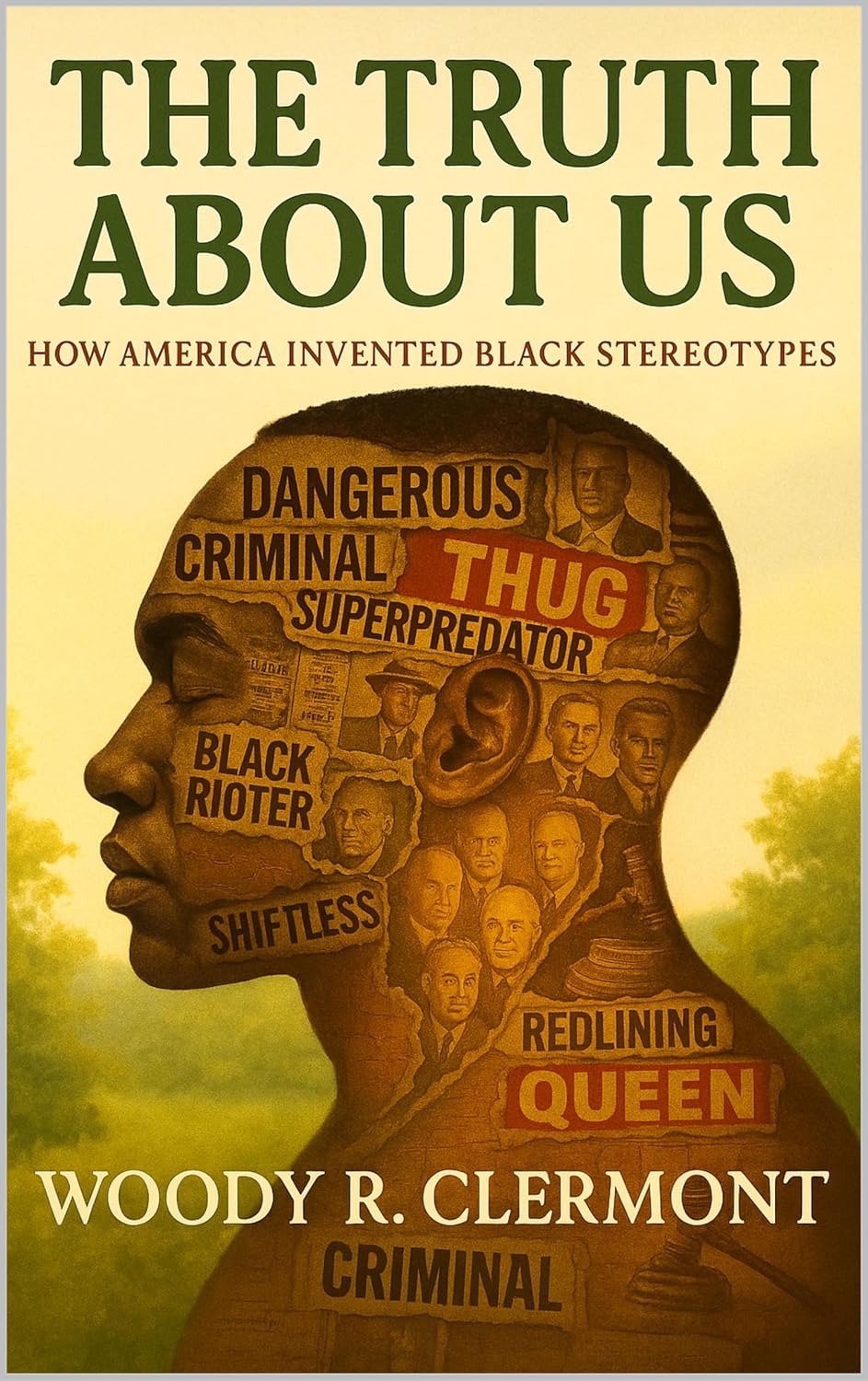
The Truth About Us lays out a clear, forceful account of how America built and sustained racist stereotypes over centuries. The book traces these lies from their earliest invention, through law, science, religion, media, economics, and public policy, and shows how they still shape modern life. It moves chapter by chapter, dismantling myths about Black laziness, violence, intellectual inferiority, family structure, and more while grounding each point in historical evidence and data. At its heart, the book argues that the stereotypes themselves, not Black people, are the real inventions, the real systems, and the real national problem.
The writing is sharp and steady, and it pulls you in quickly. The author does not hide behind jargon or distance. Instead, he speaks plainly about how propaganda became policy and how those policies still mark the country today. I appreciated the way he blended history with modern examples. He shows old lies living inside new systems, and the connections hit hard. The weight of what he described, especially the deliberate crafting of myths in science and religion, stirred something heavy in me. Yet I kept turning pages because the argument is so well built and the evidence so clear.
I also found myself moved by the emotional current that runs under the facts. The book insists that the story of Black people is far bigger than oppression, and that truth adds warmth and hope to the harder chapters. When the author talks about Black excellence as a pattern, not an exception, I felt inspired. He writes with a kind of grounded pride, and I could feel that pride rising through the pages. Even in the sections about media stereotypes or mass incarceration, I sensed a push toward something better. The writing made me feel frustrated at what has been done, but also energized by what could be repaired if people were willing to face the truth.
I think this book is powerful because it does not stop at exposing lies. It points to what must replace them. Towards the end, it reads almost like a call to rebuild the country with honesty, imagination, and real courage. I would recommend The Truth About Us to readers who want a clear understanding of how racial myths were constructed and how deeply they shaped America. It is especially good for people who think they already know this history, because it pushes past the usual surface summaries and asks you to look at the machinery underneath.
Pages: 228 | ASIN : B0G2SLZF4S
From Taino Suns to Phoenix Flames: A Story of Haiti

The book tells the sweeping story of Haiti from its Indigenous roots to its revolutionary triumphs and modern struggles. Clermont begins with the Taíno people, their cosmology, agriculture, and spiritual life, then moves into the violence of colonization, the contradictions of Enlightenment ideals, and the brutal realities of slavery. From there, he charts the rise of figures like Toussaint Louverture, Dessalines, and Sanité Bélair, weaving in battles like Vertières where Haiti shattered French imperial dreams. Later chapters explore U.S. interference, the persistence of Vodou, and the promise of Haiti’s future. It’s not just a history, though, it’s a vision for rebirth, framed by the phoenix metaphor of destruction and renewal.
Clermont doesn’t write like a detached historian; he writes like someone deeply tied to the soil and spirit of Haiti. In the first chapter, when he describes the Taíno as “one of the most organized and spiritually rich Indigenous cultures in the Caribbean” and details their cassava-centered agriculture and sacred ceremonies. I felt pulled into a world that history books usually skim over. It made me slow down and imagine life before conquest, and it set the emotional tone for the devastation that followed. The writing has a rhythm to it, almost like spoken word, that makes the past feel alive.
At times, though, the style feels heavy-handed. In The Butchers chapter, the descriptions of Columbus’s cruelty, like mutilations and dog hunts, are brutal and vivid. I appreciated the unflinching honesty, but the intensity made it hard to read in long stretches. That said, I think that was Clermont’s point: he wants readers to sit with the horror, not brush past it. His refusal to soften the edges gave the later stories of resistance, like Boukman’s Bois Caïman ceremony or Capois-La-Mort’s charge at Vertières, an even sharper impact. The contrast between oppression and defiance came through strongly.
What I liked most was the forward-looking vision in the final chapters. When Clermont compares Haiti’s potential to countries like Singapore and Rwanda, he takes a risky leap, but it’s also inspiring. He sketches ideas like diaspora investment, cultural exports, and digital startups with a mix of practicality and hope. The “Phoenix Rising” section especially stood out. It felt like a manifesto, not just a history. I could sense his belief that Haiti’s story isn’t finished, and that belief rubbed off on me. I don’t know if every blueprint he offers is realistic, but the spirit behind them is contagious.
I came away both educated and moved. This book isn’t just for history buffs; it’s for anyone who wants to understand Haiti beyond clichés of poverty and disaster. It’s for readers who like stories of resilience, who don’t mind raw truths, and who can appreciate a mix of scholarship and passion. Personally, I found it powerful and memorable. It made me rethink what I thought I knew, and it left me hopeful for what Haiti might still become.
Pages: 236 | ASIN : B0FP9N1MZM


