Blog Archives
Bridging the Gap

In Youth Truth, you reflect on the students you encountered as a school resource officer, the crises they faced, and the adults who reached out to them. Why was this an important book for you to write?
This book was never just a book for me—it was a responsibility.
As a School Resource Officer, I saw kids carrying far more than they should have to—those slipping through the cracks, those acting out because they didn’t have the words, and those who looked fine but were struggling in silence.
What stayed with me is this: it’s rarely the big interventions that change a life—it’s one adult, one moment, one question asked the right way.
But I also saw good parents, teachers, and mentors who cared deeply and still didn’t feel equipped to reach these kids. Conversations were being missed—not from a lack of care, but a lack of confidence and tools.
That’s why I wrote Youth Truth: Engaging in Conversations That Can Change Lives.
I wanted to bridge that gap—turn real, front-line experiences into something practical people can actually use when it matters most.
Because I’ve lived this truth: connection heals what correction can’t.
And too many moments are being missed—sometimes with consequences we can’t take back. This book is about helping more adults show up in those moments, because one brave, genuine conversation doesn’t just change a moment—it can change, or even save, a life.
Stories like Jon’s imagined meal or Jane’s struggle with addiction are deeply affecting. How did you choose which stories to tell?
Those stories stayed with me long after the moment passed—that was my first filter.
I chose stories that represented patterns I saw over and over again: youth feeling unseen, unheard, or carrying pain they didn’t know how to express. I also chose ones that reflected different kinds of struggle, so more readers could see a piece of someone they love—or themselves—in those pages.
And I was intentional about this: every story had to serve a purpose. Not just to move people emotionally, but to help them understand what’s really going on beneath the surface and how they can show up differently.
Because these aren’t just stories—they’re windows into moments where the right response could change everything.
Did you ever feel tension between letting stories speak for themselves and explaining their lessons?
Absolutely—there was a real tension there.
The stories are powerful on their own, and I never wanted to over-explain or take away from their truth. But I also knew that if I left them without guidance, some of the most important lessons could be missed—especially for adults who are already unsure how to navigate these moments.
So I was intentional about both: letting the stories be felt, and then giving just enough insight and practical takeaways to help readers actually use what they just experienced.
Because for me, this book wasn’t just about telling stories—it was about making sure those stories lead to action, better conversations, and real connection when it matters most.
What did you most want readers to understand about youth in crisis?
More than anything, I wanted readers to understand that youth in crisis aren’t trying to be difficult—they’re trying to be understood.
What looks like anger, withdrawal, or defiance is often pain, fear, or confusion they don’t have the words for yet. And too often, we respond to the behavior instead of the need underneath it.
If adults can pause, get curious, and lead with connection instead of correction, everything shifts.
Because at the core of it, most youth in crisis aren’t pushing people away—they’re quietly asking, “Will someone see me, hear me, and stay?”
Author Links: Facebook | Website
This gripping book delves into the raw, unfiltered world of today’s youth. Their lives are way more complex than most realize. It is a compelling and poignant exploration of the challenges faced by young souls, bringing to light the often overlooked and misunderstood battles they fight.
In Youth Truth, discover the essential guide to navigating the tough conversations that matter most to today’s youth. This compelling narrative empowers parents, educators, and mentors to approach sensitive topics with empathy and understanding, creating safe spaces where young voices feel valued and heard. From the haunting realities of suicide and bullying to the silent battles of eating disorders, this book unveils the raw struggles faced by a generation yearning for connection.
Written by a retired law enforcement officer and School Resource Officer, Youth Truth is more than just a collection of stories; it is a clarion call for compassionate dialogue. Learn the right questions to ask and how to engage meaningfully with the youth in your life. By fostering open conversations, you can profoundly impact their lives, helping them navigate their challenges with resilience and strength. Join the movement to bring understanding and compassion to the forefront of youth engagement.
Youth Truth: Engaging In Conversations That Can Change Lives


Youth Truth is a compassionate and story-driven work of nonfiction in which author Carlamay Sheremata, drawing on her years as a school resource officer, reflects on the lives of young people standing at the edge of crisis and the adults who either reach them or fail to. The book moves through a series of case-based chapters on suicide, addiction, sexual coercion, identity, abuse, eating disorders, self-harm, and bullying, always circling back to one central claim: a life can change when a young person feels truly heard.
What stayed with me most was the book’s insistence that intervention rarely begins with brilliance. More often, it begins with a question, a hunch, a small act of care, like noticing a boy’s hollow face and handing him a cafeteria card, or recognizing that a teen who has nowhere left to go still knows which office feels safe enough to enter.
I enjoyed the book’s emotional candor. Sheremata doesn’t write from a great height, and that matters. She writes close to the ground, inside school hallways, cramped kitchens, ambulances, offices with doors half shut, the ordinary places where unbearable things are quietly carried. Jon’s imagined waffle breakfast, so painfully vivid because he’s starving, is the kind of detail that lands with a thud. So is Jane clutching the last cigarette before returning to rehab, or Cameron, tangled in gang expectations, coming alive at the possibility of working with food. These moments give the book its pulse. I felt, again and again, that Sheremata understands something essential about young people in distress: they are often dismissed as dramatic when they are being most truthful. The book is strongest when it trusts those intimate particulars and lets them do their work.
The book’s deepest strength is its moral clarity. Sheremata is not coy about what she believes. She believes adults should show up, listen better, speak more honestly, and stop mistaking control for care. I respected that conviction. At the same time, I did fee that the writing can be a bit repetitive, and the reflective passages sometimes spell out lessons that the stories have already made beautifully obvious. But even there, I understood the impulse. This is not a detached literary exercise. It’s a book written by someone who has seen too much suffering to hide behind polish. The prose is straightforward, yet it carries real feeling, and the ideas feel urgent because they’ve been earned in lived encounters.
Youth Truth is moving, sincere, and unsettling in the best way, because it asks whether the young people around us are less unreachable than we claim and more neglected than we admit. I finished it thinking not only about the youth in these pages, but about the adults around them, and how often salvation arrives in the form of patient attention. I’d recommend this book especially to parents, teachers, counselors, coaches, and anyone who works closely with adolescents, though I think it could also reach careful teen readers who want to feel less alone. It’s heartfelt, useful, and humane, and that combination makes this book highly recommended.
Pages: 121 | ASIN : B0DJ7M94GW

A Little Boys Blues
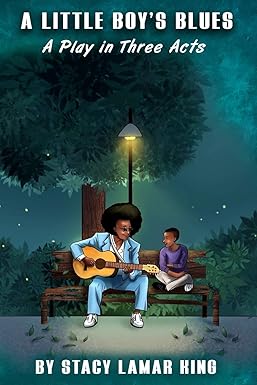

A Little Boys Blues, just twelve years old, carried an unusual weight of blues. He couldn’t articulate his feelings with words, but when his fingers danced across his guitar strings, everyone understood. Navigating life through conversations with old friends, new acquaintances, siblings, and neighborhood characters, he moved through his days gathering wisdom and sharing just as much through his remarkable talent. Life’s complexities—relationships and our place in the world—aren’t easy to unravel at any age. Yet, Little Boy learns that the right people can ease the journey, especially when communication happens soul to soul.
A Little Boy’s Blues, a three-act play by Stacy Lamar King, explores a multitude of adult themes through Little Boy’s eyes and his myriad interactions. Roaming the city with his ever-present guitar, affectionately named Wanda, he discovers that music’s universal language touches people in ways words never could. The talent and melodies within him create a healing magic for himself and others. The story is a rich tapestry: part parable veiled in riddles, part imaginative fantasy, and part straightforward dialogue. Little Boy’s world, and those who inhabit it, prove far more expansive than the pages might suggest. Interpersonal relationships and family bonds, especially between father and son, thread through every interaction in the play. Reflecting on his own father’s absence, Little Boy finds solace among various father figures and supporters. As he navigates the many forms of love and the sting of loss, he must learn to process these complex emotions. The music residing deep within his soul offers comfort, yet the blues that have settled in him are not easily lifted. Little Boy’s joys and sorrows unfold openly, allowing readers to journey alongside him as time progresses. The play’s duality is one of its most compelling aspects. It is both deeply relatable in its depiction of everyday life and profoundly intricate in the depth of its themes. By the conclusion, Little Boy emerges as a friend whose future we are deeply invested in and earnestly hopeful for.
A Little Boy’s Blues is a poignant and deeply moving play that resonates on multiple levels. Stacy Lamar King weaves a narrative that is both simple and profound, capturing the essence of life’s complexities through the innocent yet wise perspective of a twelve-year-old musician. This work stands as a touching exploration of the human spirit, making it a must-read for anyone seeking depth and authenticity in storytelling.
Pages: 102 | ASIN : B0859MCDQP


